
How to Grow Horseradish in Australia
Horseradish is a hardy perennial grown from crowns or root cuttings for its pungent root. Plant in late winter to spring, or early autumn. Lay cuttings flat about 3 cm deep and 30 to 50 cm apart in deep, loose, well-drained soil. Grow it in a large pot or sunken tub, because any broken root reshoots. Dig the roots in winter from the second year.

| Sun | Full sun to light shade |
|---|---|
| Water | Deep weekly soak; never waterlogged |
| Soil | Deep, loose, well drained, pH 6.0 to 7.5 |
| Feed | Light; compost ahead, little nitrogen |
| Spacing | 30 to 50 cm |
| Depth | About 3 cm, laid flat |
| Germination | Leaves show in 2 to 4 weeks |
| Harvest | 30 weeks; mainly year two |
| Container | Yes; at least 40 L, 40 cm deep |
| Frost | Hardy; tops die back in winter |
| Use | Root grated raw; young leaves too |
Horseradish (Armoracia rusticana) is a hardy perennial in the cabbage family, Brassicaceae, grown from crowns and root cuttings for its hot, pungent root. It grows in most Australian gardens and bites hardest where winters are cold, as in Tasmania and on the tablelands. Most trouble starts when it goes into the open vegie patch, where every broken piece of root can grow into a new plant.
Three mistakes that matter
- Planting it loose in the vegie patch. Deep, spreading roots reshoot from any piece left at digging, so one plant can take over a bed. Grow it in a large pot or sunken bottomless tub, as in Site, soil and setup.
- Feeding it like a leafy crop. Rich, high-nitrogen feeding grows lush leaves and a tangle of forked side roots instead of one thick root. Dig compost in before planting, then feed lightly as in Care by growth stage.
- Leaving the same roots for years. Roots about a year old usually have the best flavour, while older ones turn woody, pithy or hollow. Lift and renew the clump each winter from the second year, as in Harvesting Roots.
When to plant
Plant crowns and root cuttings while the soil sits between 10°C and 25°C. That means late winter to spring, as dormant crowns begin to shoot, or early autumn. One planting is enough, because horseradish is perennial and the side roots saved at each harvest restock the pot or bed.
| Zone | Example cities | Plant | Harvest | Notes |
|---|---|---|---|---|
| Tropical | Darwin NT; Cairns, Townsville QLD; Broome WA | May-Jun | Sep-Nov | Marginal: roots stay mild without cold winters. Plant in the dry season; dig 16 to 24 weeks on. |
| Subtropical | Brisbane, Sunshine Coast, Bundaberg QLD; Coffs Harbour NSW | Apr and Aug-Oct | Jun-Aug | Grows well but milder. Give afternoon shade and even water, and dig in the cool months. |
| Arid and semi-arid | Alice Springs NT; Broken Hill, Dubbo NSW; Mildura VIC | Jun-Jul | May-Aug | Plant in winter to settle before summer. Afternoon shade, deep mulch and steady water carry it through the heat. |
| Temperate | Sydney, Newcastle, Wollongong NSW; Melbourne, Geelong VIC | Sep-Nov and Feb-Mar | May-Aug | Plant as crowns break dormancy in spring, or in early autumn. Melbourne's colder winters can give hotter roots than Sydney's. |
| Mediterranean | Perth, Bunbury WA; Adelaide and the SA coast | Sep-Oct and Mar | May-Aug | Plant in spring before the soil dries, or in early autumn. Dry summers need mulch, shade and deep weekly water. |
| Cool and alpine | Hobart TAS; Canberra ACT; Ballarat VIC; Armidale NSW | Sep-Nov and Feb-Mar | Apr-Aug | Cold winters give the most pungent roots. Plant once soil reaches 10°C; frost after dieback can sharpen flavour. |
In warm zones, plant in the coolest months of the window, because heat and drought stress can leave roots woody and mild.
Site, soil and setup
Choose the spot as if for good, because an established clump is hard to shift. Deep, loose soil grows long, straight roots that are easy to lift whole.
| Get the bed right | What to do |
|---|---|
| Sun | Full sun or light shade; afternoon shade helps in hot inland and northern gardens |
| Soil | Loose, well drained and at least 25 cm deep, with stones and old roots removed; roots rot in waterlogged soil |
| pH | 6.0 to 7.5; below 6.0, dig in garden lime or dolomite lime at 100 to 200 g per square metre 4 weeks before planting |
| Bed preparation | A 5 cm layer of compost, or 5 to 10 cm of well-rotted cow or horse manure, dug in 4 to 6 weeks before planting |
| Containment | Sink a bottomless tub, an old bucket or a length of pipe about 30 cm wide and 60 cm long, and plant inside it |
| Rotation | A permanent spot needs no rotation; avoid ground where cabbage-family crops had white blister rust, which survives in soil and debris |
Container growing
A pot is the surest way to keep horseradish in check, and harvest becomes a matter of tipping it out. Use a pot of at least 40 L, 40 cm wide and 40 cm deep. Fill it with good potting mix and a few handfuls of compost. Any horseradish suits a pot: plant one crown or up to three root cuttings.
Potting mix and compost can carry Legionella bacteria. Wet the mix first, wear gloves and a face mask to handle it, and wash your hands afterwards.
- Water: keep the mix evenly moist from spring to autumn and check it daily in hot weather; the leaves flop when the pot runs dry.
- Feed: fish and seaweed blend at 25 mL per 9 L, fortnightly from mid-spring to late summer.
- Position: sun or part shade; move the pot into shade on the hottest days to save water.
- Renewal: harvest and replant each winter, as in Harvesting Roots.
Planting Crowns
Horseradish starts from a crown (a piece of root with a growing tip) or a root cutting. Seed is rarely sold and slow to form a clump.
Crown division
To make crowns, lift an established clump with a fork while it is dormant. Cut it into pieces with a sharp spade or knife. Pieces with a growing tip establish fastest, though any piece of root can grow. Let large cuts dry for a few days before planting. For cuttings, trim pencil-thick side roots 15 to 30 cm long. Cut the top square and the bottom on a slant, so the right end goes up. See dividing perennials for the method.
Planting out
Due to quarantine restrictions and our shipping policy, we cannot send horseradish to the Northern Territory, Tasmania or Western Australia. Elsewhere, crowns (sold as horseradish rhizomes) and horseradish cuttings both go in the same way.
- Dig a shallow trench about 3 cm deep and as long as the root, and lay the root flat in it.
- Keep any shoot or square-cut top pointing up; setting that end slightly higher also works.
- Plant a crown upright, with its growing tip just below the surface.
- Space plants 30 to 50 cm apart in the ground, or about 15 cm apart in a large tub.
- Water in with seaweed solution, then keep the soil moist but not wet.
- Expect the first leaves in 2 to 4 weeks.
Care by growth stage
Steady moisture and a light hand with feeding decide the root. An autumn planting shoots, waits out winter and carries on from leaf growth in spring; an established clump repeats the seasonal rows every year.
| Stage | Water | Feed | Watch for |
|---|---|---|---|
| Shooting, weeks 1 to 4 | Moist, never soggy, until the leaves show | Seaweed solution at 30 mL per 9 L at planting, then fortnightly until the leaves unfold | Snails and slugs on the first leaves |
| Leaf growth, spring | A deep soak about once a week in dry spells | None in well-prepared soil; in poor soil, blood and bone at 100 g per square metre, once in spring | Caterpillars and white blisters under the leaves |
| Full leaf, summer | Deep weekly soaks; a 5 cm mulch holds the moisture | None; extra nitrogen grows leaf and forked roots | Leaves flopping in heat; lower leaves browning; tall stems of small white flowers, which are normal |
| Root filling, autumn | Evenly moist; never dry then drenched, which leaves roots woody or soft | None | Caterpillars, often worst in autumn in warm areas |
| Dieback and harvest, winter | Ease off as the tops die; keep pots from drying out | None | Yellowing tops, the sign to dig; rot in wet soil |
If growth stalls in poor soil, a light dose of all-purpose controlled release granular (NPK around 14-5-10), scratched in each spring, can help. Hoe weeds while the plants are small; once the big leaves fill in, few weeds can compete.
Cutting Back
Cutting back keeps the clump tidy and steers the plant's energy into one thick root rather than many thin ones.
- Snap off lower leaves as they brown during the season.
- For straighter roots, pull the soil back from the top of the main root when the leaves are about 30 cm tall. Rub off the side roots there, leave the lower roots alone, keep two or three leafy shoots and firm the soil straight back. Repeat once, 4 to 6 weeks later.
- Pull any shoot that appears outside the pot or bed edge, with as much root as comes up.
- Cut faded leaves to the ground once they die down in late autumn, or before new growth in spring.
- Compost the leaves but never live roots: leave unwanted roots in a bucket of water until they rot.
Companion planting
Horseradish crowds out most neighbours, so give it its own pot or corner and keep other crops beside it rather than in it.
Grows well with
- Beans and peas in a nearby bed, which are not brassicas, so cabbage white caterpillars pass them by.
- Lettuce and other quick salad crops beside a potted clump, since they need no digging near its roots.
Keep apart
- Cabbage, broccoli, turnips and radishes, which share its caterpillars and white blister rust.
- Asparagus and rhubarb, permanent crowns that its spreading roots would invade.
Harvesting Roots
Dig once the leaves yellow and die back, from late autumn to early spring while the plant is dormant. Where winters stay mild the tops may not die back, so dig in the coolest months shown for your zone. A few frosts first can strengthen the flavour.
- Take a light first harvest from about 30 weeks, but expect the main crop from the second year.
- Loosen the soil with a garden fork well out from the clump, then lift it whole.
- In a pot, tip the clump out and take up to half the thick roots.
- Keep the thick main roots for the kitchen and set pencil-thick side roots aside for replanting.
- Sift the soil for every broken piece, which would otherwise reshoot.
- Replant the best crowns or cuttings straight away, into fresh mix for pots.

Whole roots keep for up to about three months sealed in the fridge, or buried in damp sand in a cool, dark place. Grate only a month's use, cover it with vinegar at once, before it turns bitter, and keep the jar in the fridge. Grated root kept in vinegar is a home preserve, so follow CSIRO's preserving advice, as vegetables kept without enough acid can carry botulism.
Peel and grate the root raw, outdoors or in a well-ventilated spot, because the fumes sting the eyes and nose. Add it to a dish at the last moment, since heat drives off the pungency.
Common problems
Mild, weak-flavoured roots. Warm winters, heat and drought stress all give milder roots; see When to plant for the fix in warm zones.
Thin, forked roots. Rich feeding, compacted or stony soil and roots left unstripped all split the root into branches; see Three mistakes and Cutting Back.
Soft, rotting roots. Waterlogged soil rots the roots, often over a wet winter; move the clump to a pot or a raised bed. Read more
Pests and diseases
Horseradish is rarely troubled by pests, but as a brassica it shares a few with cabbage and broccoli.
Cabbage white butterfly (Pieris rapae) and diamondback moth (Plutella xylostella). The butterflies are white with black wing spots, and the diamondback moths, often called cabbage moths, are grey-brown. Both lay eggs whose green caterpillars chew holes in the leaves. The caterpillars feed from spring to autumn, and warm areas often see the worst damage in autumn. Cover young growth with fine insect mesh, squash eggs and caterpillars, or spray a Bt (Bacillus thuringiensis) insecticide, following its label. Read more
White blister rust (Albugo candida). Small white blisters form on the leaves and burst to release powdery spores, worst in cool weather with heavy dews. Pick off and bin affected leaves. A copper fungicide is allowed on horseradish under an APVMA minor use permit. Follow the permit's rate, check your state's chemical rules and wait a day before harvesting.
Garden snail (Cornu aspersum). Snails, and slugs with them, graze the new leaves as they push through the soil in spring. Hand-pick them at night, and clear the weeds, boards and stones they hide under by day. Read more
Prevention first
- Turn a few leaves each week from spring to autumn to find eggs and caterpillars early.
- Pull cabbage-family weeds nearby, which host white blister rust.
- Water the soil in the morning rather than the leaves, so the foliage dries before night.
- Clear dead leaves and old tops each winter, since white blister rust survives in plant debris.
Tips
- Eat the young leaves. Pick a few tender leaves in spring for salads or cook them as greens, leaving most of the clump to feed the root.
- Use it for wasabi-style heat, but know the difference. Grated horseradish can stand in for wasabi, a different plant; for other long roots, see burdock and parsnips.
- Keep animals off it. The volatile oils in the plant can badly inflame an animal's stomach, so plant horseradish where stock and pets cannot graze it.
Questions
When should I plant horseradish in Australia?
Plant crowns or root cuttings while the soil is 10°C to 25°C. Temperate and cool gardens plant September to November and February to March. Perth and Adelaide plant September to October and March. Subtropical gardens plant April and August to October, arid gardens June to July, and tropical gardens May to June.
How do I stop horseradish spreading through the garden?
Grow it in a pot of at least 40 L. In the ground, plant inside a sunken bottomless tub or a pipe about 30 cm wide and 60 cm long. At harvest, sift out every piece of root, because each one can reshoot. Drown unwanted roots in a bucket of water until they rot rather than composting them.
When is horseradish ready to harvest?
Dig when the leaves yellow and die back, from late autumn to early spring. A light harvest is possible from about 30 weeks, but the main crop comes from the second year. Roots about a year old usually taste best, and older ones can turn woody or hollow.
Why is my horseradish not hot?
Warm winters, heat and drought stress all give milder roots, and horseradish is most pungent where winters are cold. Grated root also loses its heat quickly, so mix it with vinegar straight away. Cooking drives the heat off, so add it to hot food at the last moment.
Can you grow horseradish in a pot?
Yes, and a pot is the easiest way to keep it contained. Use one of at least 40 L, 40 cm wide and deep, with good potting mix and some compost. Plant one crown or up to three cuttings, keep the mix evenly moist, and tip it out to harvest each winter.
Can you eat horseradish leaves?
Yes. Young leaves are good raw in salads or cooked as greens, with a milder version of the root's bite. Pick a few in spring and leave most of the clump to feed the root. Keep stock and pets away from the plant, as its volatile oils can harm animals.
Grow it


More edible produce guides
All edible produce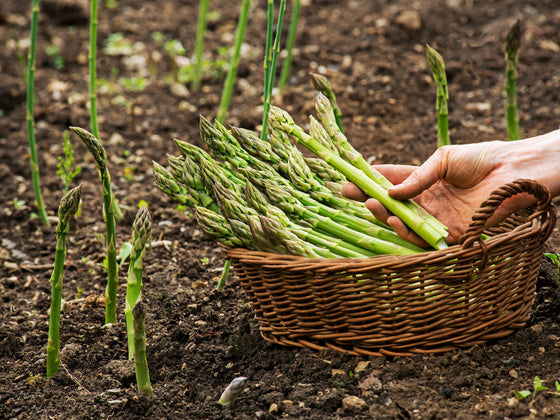
Asparagus
How to grow asparagus from seed in Australia: raising seedlings, planting crowns, a bed of its own, when to start picking spears and cutting back the fern.
| Position | Full sun |
|---|---|
| Depth | Seed 1 to 2 cm |
| Spacing | 30 to 40 cm |
| First pick | Third spring from sowing |
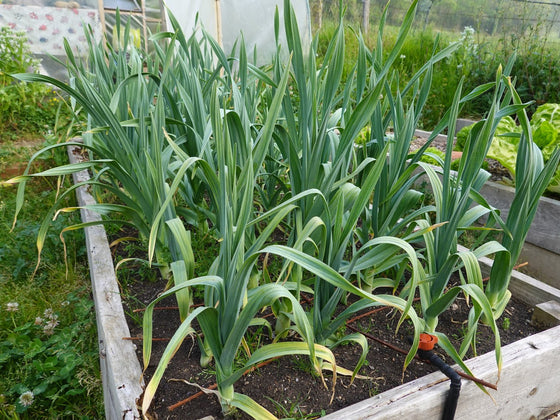
Elephant garlic
Also sold as Russian garlic. Plant the large cloves in April or May, keep the bed weeded and watered, and use the finger test to judge when the bulbs are ready.
| Position | Full sun, 6 hours or more |
|---|---|
| Depth | 5 cm of soil over tip |
| Spacing | 20 to 30 cm |
| First pick | 6 to 8 months |
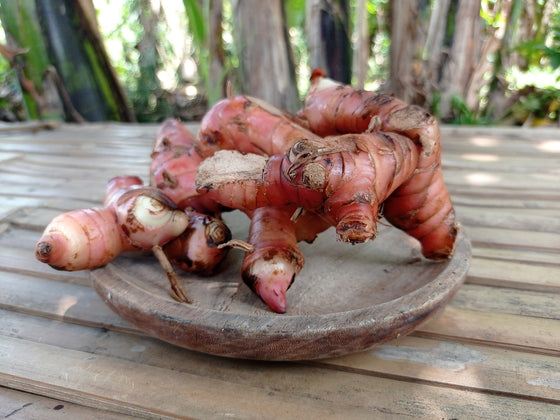
Galangal
Grow Thai red and lesser galangal from rhizomes in Australia: planting months for six zones, pre-sprouting, pots for frosty areas, feeding, pests and harvest.
| Position | Morning sun, afternoon shade |
|---|---|
| Depth | 5 to 7 cm, buds up |
| Spacing | 30 to 45 cm |
| First pick | 17 to 43 weeks |
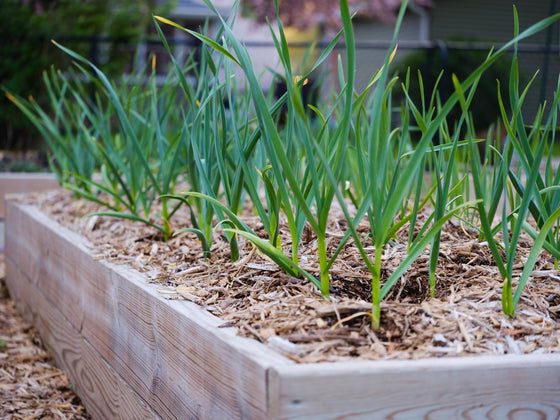
Garlic
When to plant garlic in each Australian climate zone, how deep and how far apart, feeding through winter, and how to tell when the bulbs are ready to lift and cure.
| Position | Full sun, 6 hours or more |
|---|---|
| Depth | Tip 2 to 5 cm deep |
| Spacing | 10 to 15 cm |
| First pick | 22 to 39 weeks |