
How to Grow Yacon in Australia
Yacon is a frost-tender perennial grown for crisp, sweet storage roots. Plant sprouted crown pieces, never the eating roots, 3 to 4 cm deep and 50 cm to 1 m apart after the last frost. Keep moisture even and feed potassium rather than heavy nitrogen. Dig six to seven months later, once the tops die back, and keep the crowns to replant.

| Sun | Full sun or light shade |
|---|---|
| Water | Regular, even moisture; never soggy |
| Soil | Rich, loose, deep and free-draining |
| Feed | Moderate; potassium-rich, go easy on nitrogen |
| Spacing | 50 cm to 1 m |
| Depth | Crowns 3 to 4 cm |
| Germination | Not grown from seed; plant sprouted crowns |
| Harvest | 25 to 30 weeks |
| Container | Not suited to pots |
| Frost | Frost tender; plant after the last frost |
| Use | Peeled roots raw, stir-fried, roasted or in soups |
Yacon (Smallanthus sonchifolius) is an Andean perennial in the sunflower family, Asteraceae, grown for crisp, juicy roots that taste a little like nashi pear. It is not yam bean (jicama), nor Jerusalem artichoke, its far more invasive cousin. A crown piece can reach about 2 m in a season, and a common mistake is planting the tuber you eat, not the crown.
Three mistakes that matter
- Planting a storage root. Once snapped off the crown, the brown storage roots (the tubers you eat) cannot grow shoots, so one planted alone simply rots. Plant a piece of the reddish crown from the base of the stem, with buds on it, as Planting Crowns describes.
- Planting before the last frost. Leaves are damaged at about -1°C, and the crop needs its whole season to fill its roots, so an early start gains nothing. Start crowns under cover where frost lingers and plant them out once it has passed.
- Digging roughly. The storage roots are brittle, and a snapped or skinned root soon rots in storage. Lift the whole clump with a fork from well back, as Harvesting Tubers describes.
When to plant
Yacon is described as day-neutral, so where frost never comes a sprouted crown can go in during most months. The table below gives each zone's best window. Everywhere else, plant after the last frost, once the soil holds 10°C or more. It is a perennial, so one planting a year is enough, and each harvest supplies the crowns for the next.
| Zone | Example cities | Plant | Harvest | Notes |
|---|---|---|---|---|
| Tropical | Darwin, Katherine NT; Cairns, Townsville QLD | Apr-Jul | Oct-Feb | Plant in the dry season. Warm lowlands usually give smaller roots than cooler highland gardens. |
| Subtropical | Brisbane, Sunshine Coast, Bundaberg QLD; Coffs Harbour, Lismore NSW | Aug-Oct | Apr-Jul | Frost-free coastal gardens can plant crowns in any month. Tops usually die back by May. |
| Arid and semi-arid | Alice Springs NT; Broken Hill, Dubbo NSW; Mildura VIC | Aug-Sep | Apr-Jun | Start crowns in pots under cover and plant out after the last frost. Mulch deeply and water steadily. |
| Temperate | Sydney, Newcastle, Wollongong NSW; Melbourne, Geelong VIC | Oct-Nov | Apr-Jul | Plant once frost has passed. In frost-free, well-drained coastal gardens, crowns can go back in straight after harvest. |
| Mediterranean | Perth, Bunbury WA; Adelaide and the SA coast | Oct-Nov | May-Jul | Water deeply through the long, dry summer. Where frost is rare, replant crowns straight after the winter harvest. |
| Cool and alpine | Hobart, Launceston TAS; Canberra ACT; Ballarat VIC; Orange NSW | Oct-Nov | Apr-Jun | Start crowns under cover and plant after the last frost. Store crowns frost free over winter. |
At the cold edge of a window, start crowns in pots under cover, as Planting Crowns describes. The crop takes six to seven months, so a crown planted late in the window has less time to fill its roots before autumn frost.
Site, soil and setup
| Get the bed right | What to do |
|---|---|
| Sun | Full sun in cooler districts; the leaves tolerate part shade, and light afternoon shade helps in hot inland gardens |
| Soil | Rich, loose, deep and free-draining; growth is poor in heavy clay, so raise the bed or build a mound on clay |
| pH | Tolerates acid to weakly alkaline soil; on strongly acid soil add dolomite lime at 100 to 200 g per square metre, 4 weeks before planting |
| Bed preparation | Loosen the soil with a fork, then dig in a 5 cm layer of compost and pelletised chicken manure at 100 g per square metre; or mix in a controlled release all-purpose granular (NPK around 14-5-10) at the label rate |
| Shelter | A spot out of strong wind, which shreds the large leaves and can snap tall stems |
Skip beds where root-knot nematode has galled earlier crops.

Planting Crowns
Yacon is grown from pieces of the crown (the knobbly rootstock at the base of the stems), not from seed. Due to quarantine restrictions and our shipping policy, we cannot send yacon crowns to Western Australia or Tasmania.
Preparing crowns
A crown carries reddish rhizomes (swollen underground stems) studded with buds. Break it into pieces about 8 to 12 cm long, each with at least two buds. Keep the pieces dark, covered with slightly damp sand, sawdust or coir, so they do not dry out. Plant them as soon as the buds begin to sprout.
Planting out
- Set each piece with its buds facing up, 3 to 4 cm deep.
- Space pieces 50 cm to 1 m apart, in rows 70 cm to 1 m apart.
- Water in with seaweed solution at 30 mL per 9 L.
- Mulch well with straw; shoots push up through it, as potatoes do.
- Water lightly until shoots show, since a wet, cold bed can rot the crown.
Starting in pots
Where frost lingers, plant crown pieces in pots or a foam box of potting mix about two months before the last frost. Keep them warm and in good light, in a greenhouse or on a warm verandah. Harden off the young plant (accustom it to outdoor sun and wind) over about a week, then plant it out after the last frost.
Care by growth stage
Steady water and potassium make the roots; heavy nitrogen makes a huge plant over small roots. Weeks count from planting and shift with climate.
| Stage | Water | Feed | Watch for |
|---|---|---|---|
| Shooting, weeks 1 to 6 | Light, only when the top few centimetres dry | Organic: seaweed solution at 30 mL per 9 L, fortnightly. Synthetic: none needed if granular went in at bed preparation | Snails on new shoots; late frost, so cover shoots on cold nights |
| Leafy growth, weeks 6 to 14 | Deep, regular soaks, more often in hot, dry spells | Organic: fish and seaweed blend at 25 mL per 9 L, fortnightly. Synthetic: an all-purpose soluble (NPK around 23-4-18) at half the label rate, fortnightly | Whitefly under the leaves; wind damage in exposed spots |
| Root swelling and flowering, weeks 14 to 26 | Deep and even, since dry spells then soakings split roots | Organic: sulphate of potash at 30 to 50 g per square metre, watered in once, and liquid potash at the label rate, fortnightly. Synthetic: a fruiting and flowering soluble (NPK around 15-4-26) at the label rate, fortnightly | Roots pushing through the soil; yellow daisy flowers from late summer |
| Dieback, weeks 26 to 30 | Keep moisture even to the end; never let the bed turn soggy | Nothing | Frost or cool weather browning the tops, the signal to dig |
Once the leaves close over, their dense shade keeps weeds down. As roots swell, some push up through the soil. Cover them again with soil or mulch, so snails and sun cannot damage them. In windy spots, tie tall stems to a stake, because a stem blown over can split the crown and let rot in.
Companion planting
Young yacon grows slowly, which leaves room for quick crops between the plants before its leaves close over.
Grows well with
- Lettuce, picked before the yacon canopy shades it out.
- Radish, ready within weeks, long before the yacon needs the room.
- Peas, sown between young plants in spring as a short early crop.
Keep apart
- Jerusalem artichoke, a relative that can hold diseases over from year to year and spreads through the bed.
- Sunflower, a close relative that shares its pests, including greenhouse whitefly.
Harvesting Tubers
Lift yacon six to seven months after planting, once the top growth has died back; the roots keep sweetening as the tops fade. Flowers alone do not mean the roots are ready. Where the tops never die back, as in the tropics, dig about 25 to 30 weeks after planting.
- Cut the stalks back to about 10 cm.
- Loosen the soil with a fork well back from the stems.
- Lift the whole clump, pulling up on the stems to support the brittle roots.
- Snap the brown storage roots off the crown, and wash off the soil without breaking the skin.

| Part | What it looks like | What to do with it |
|---|---|---|
| Storage roots | Large, smooth, brown-skinned, like a sweet potato or dahlia tuber | Dry in the sun for up to 2 weeks, then store cool, dark and dry for some months |
| Crown and rhizomes | Knobbly, reddish, with purple-white buds, at the base of the stems | Replant at once in warm, well-drained gardens; elsewhere keep them over winter as Preparing crowns describes, or in a pot of damp, sandy soil, away from frost |
Store only whole, unbroken roots, somewhere with good air flow, and eat broken ones first.
Peel off the brown outer skin and the thin inner skin, which tastes resinous. Eat the flesh raw in salads, or stir-fry, roast or add it to soups.
Common problems
Crown pieces never shoot. Drying out or mould in storage, or a cold, soggy bed, usually kills the buds; see also Three mistakes that matter.
Split or cracked roots. Soggy soil or big swings between dry and wet split the swelling roots; keep moisture even, as Care by growth stage describes.
Bland roots. Freshly dug yacon often tastes watery, because its sugars develop after harvest; store it for a few weeks, or sun it first.
Huge plants, small roots. Too much nitrogen, or too little time before frost, sends growth into leaves; follow the feeds in Care by growth stage.
Roots soften or rot in storage. Broken skin, dampness or warmth lets rot in, and roots stored in warm, dry air wrinkle and go soft; see Harvesting Tubers.
Wilting on hot afternoons. The big leaves lose water faster than roots can supply it on sunny days, even in moist soil; check the soil before watering again.
Pests and diseases
Yacon is generally resistant to pests and diseases, though the five below can trouble it.
Garden snail (Cornu aspersum). This introduced snail is widespread in Australian gardens and chews the soft new shoots in spring. It also grazes any roots left poking through the soil. Pick snails off after dark or after rain. Read more
Greenhouse whitefly (Trialeurodes vaporariorum). This is among the main pests of yacon overseas, and it also breeds on sunflower, a close relative. Adults and nymphs suck sap and leave sticky honeydew, which grows sooty mould. Parasitic wasps, lacewings and ladybirds usually keep it in check. Read more
Spiralling whitefly (Aleurodicus dispersus). This tropical pest is established in coastal Queensland from the Torres Strait to Bundaberg and in the Northern Territory, which lists yacon as a host. Look for white wax laid in spirals under the leaves, with honeydew and sooty mould. Hose or wipe off early colonies and bag the waste, never compost it. Avoid insecticides, which usually make it worse by killing the lacewings and ladybirds that control it.
Root-knot nematode (Meloidogyne spp.). Nematodes damage yacon roots, and root-knot nematodes are very common in Queensland soils. Plants look stunted and unthrifty, and roots carry lumpy galls. Rest a galled bed as weed-free bare ground or under a nematode-resistant crop, and dig in compost before replanting. Read more
Cucumber mosaic virus (genus Cucumovirus). This aphid-borne virus has infected yacon in the field overseas, and weakened plants follow. It occurs in Australia and has more than 1,200 host plants worldwide, including weeds such as sow thistle. Pull out and bin any stunted plant with mottled or yellow-patched leaves, and never keep its crown. Read more
Prevention first
- Replant crowns only from vigorous, healthy plants.
- Keep sow thistle, nightshade and other weeds out of the bed, since they harbour the virus and aphids.
- Choose a bed free of nematode galls, as Site, soil and setup describes.
- Never move soil or crowns from a galled bed to a clean one, and clean soil off tools between beds.
Tips
- Bandicoot a few early roots once the soil starts to heave at the base of the plant. Dig carefully in from the side, and leave the crown in place.
- Slice peeled roots straight into water with a squeeze of lemon juice, because the flesh browns quickly once cut.
- In mild winters, dig soon after the tops die. Left too long, the crown sends up new shoots and the roots may rot.
- Check the bed before replanting it with another crop. In frost-free ground, a missed piece of crown often sprouts again the next season.
- Chop the dead stems and leaves into mulch or the compost heap after harvest, rather than leaving them lying on the bed.
Questions
Can I grow yacon from a tuber bought to eat?
No. The brown storage roots cannot grow shoots once they are separated from the crown, so a root planted on its own rots. Plant a piece of the reddish crown from the base of the stems, with at least two buds. Keep crown pieces from each harvest to replant.
When is yacon ready to harvest in Australia?
Usually six to seven months after planting, once the tops have died back in autumn or early winter. In most gardens that falls between April and July. The roots keep sweetening as the tops fade, so wait for dieback, but dig soon after in mild districts before the crown reshoots.
Why does my yacon taste bland?
Freshly dug yacon often tastes watery. Its sugars develop over the first few weeks after harvest. Store the roots somewhere cool, dark and dry for a while, or leave them in the sun for up to two weeks first. Peel off both skins before eating, since the skin tastes resinous.
Is yacon the same as Jerusalem artichoke or jicama?
No. Yacon and Jerusalem artichoke are both sunflower relatives with tall stems and yellow flowers. Yacon is far less invasive and makes large, sweet storage roots. Jicama is yam bean, a climbing legume whose root is also crisp but which grows from seed.
Can you grow yacon in Canberra or Hobart?
Yes, as a summer crop. Start crown pieces under cover in spring and plant them out after the last frost. Frost blackens the tops in autumn, which is the signal to dig.
How do I store yacon crowns until spring?
Keep them somewhere dark, covered with slightly damp sand, sawdust or coir so they do not dry out. In cold, wet districts a pot of damp, sandy soil works well. Plant them as soon as the buds begin to sprout, after the last frost where frost is a risk.
Grow it

More edible produce guides
All edible produce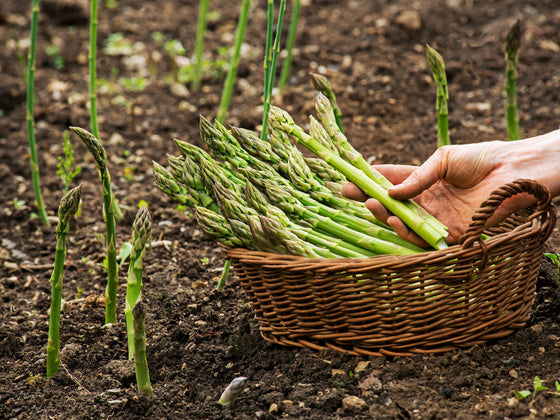
Asparagus
How to grow asparagus from seed in Australia: raising seedlings, planting crowns, a bed of its own, when to start picking spears and cutting back the fern.
| Position | Full sun |
|---|---|
| Depth | Seed 1 to 2 cm |
| Spacing | 30 to 40 cm |
| First pick | Third spring from sowing |
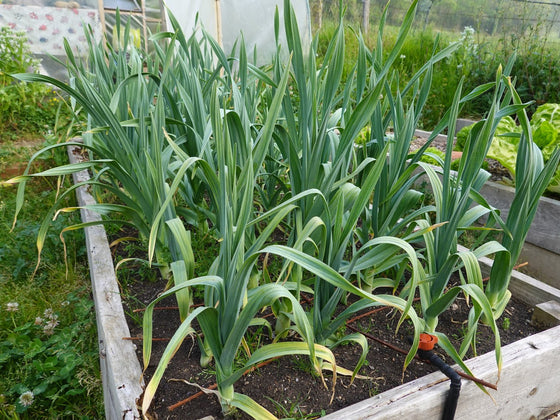
Elephant garlic
Also sold as Russian garlic. Plant the large cloves in April or May, keep the bed weeded and watered, and use the finger test to judge when the bulbs are ready.
| Position | Full sun, 6 hours or more |
|---|---|
| Depth | 5 cm of soil over tip |
| Spacing | 20 to 30 cm |
| First pick | 6 to 8 months |
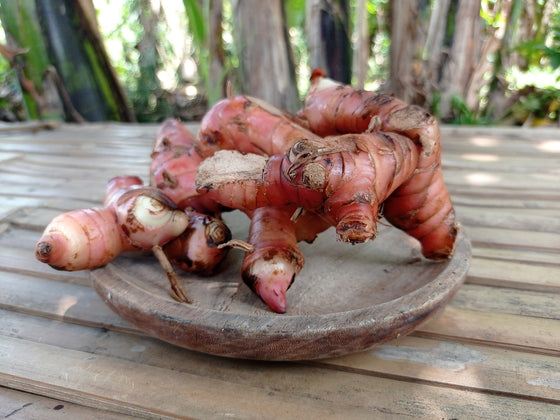
Galangal
Grow Thai red and lesser galangal from rhizomes in Australia: planting months for six zones, pre-sprouting, pots for frosty areas, feeding, pests and harvest.
| Position | Morning sun, afternoon shade |
|---|---|
| Depth | 5 to 7 cm, buds up |
| Spacing | 30 to 45 cm |
| First pick | 17 to 43 weeks |
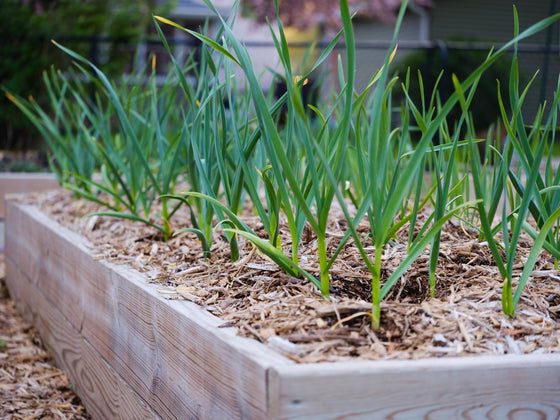
Garlic
When to plant garlic in each Australian climate zone, how deep and how far apart, feeding through winter, and how to tell when the bulbs are ready to lift and cure.
| Position | Full sun, 6 hours or more |
|---|---|
| Depth | Tip 2 to 5 cm deep |
| Spacing | 10 to 15 cm |
| First pick | 22 to 39 weeks |