
How to Grow Turmeric in Australia
Turmeric is a frost-tender tropical perennial grown from rhizome pieces, not seed. Plant pieces 5 to 7 cm deep and 15 to 30 cm apart once the soil holds 20°C, usually in spring. Keep the soil moist but never waterlogged, and feed through summer. Dig the rhizomes 9 to 10 months later in warm zones, when the lower leaves yellow and the stems fall.

| Sun | Full sun to light shade |
|---|---|
| Water | Evenly moist in leaf; dry in winter |
| Soil | Loamy, compost-rich and free-draining |
| Feed | Medium; fortnightly liquid feeds, potassium later |
| Spacing | 15 to 30 cm (black turmeric 30 to 45) |
| Depth | 5 to 7 cm |
| Germination | Shoots in 2 to 3 weeks when warm |
| Harvest | 39 to 43 weeks; sooner in cool zones |
| Container | Pot of 40 L or more |
| Frost | Frost tender; keep dormant rhizomes frost free |
| Use | Fresh or dried rhizome in curries and drinks |
Turmeric (Curcuma longa) is a leafy tropical perennial in the ginger family, Zingiberaceae, grown for its orange rhizomes (swollen underground stems) and white flower spikes. It thrives in warm, wet Queensland summers and grows as far south as Sydney, dying back each winter and shooting again in spring. The mistake most gardeners make is planting into cold soil, where the pieces rot before they sprout.
Three mistakes that matter
- Planting into cold soil. A rhizome sitting in cold, damp soil does not shoot, and it often rots instead. Wait for the soil warmth given in When to plant, or start the pieces early in warm pots, as Pre-sprouting describes.
- Letting the soil stay wet. Turmeric cannot stand waterlogging, least of all in winter, when the rhizome sits dormant (resting, with no leaves). Plant in free-draining soil or a raised bed, and stop watering once the tops die down.
- Digging too soon. In warm zones rhizomes take 9 to 10 months to mature, so a clump lifted while its leaves are still green gives a small harvest. Wait for the signs described in Harvesting Rhizomes.
When to plant
Plant once the soil holds at least 20°C, the warmth turmeric needs to produce shoots, which in most gardens means spring. Plant once a year: an established clump shoots again by itself as the soil warms.
| Zone | Example cities | Plant | Harvest | Notes |
|---|---|---|---|---|
| Tropical | Darwin NT; Cairns, Townsville, Mackay QLD; Kununurra WA | Oct-Dec | Jun-Sep | Plant with the wet season build-up, on mounds so rain drains; dig in the dry season. |
| Subtropical | Brisbane, Gold Coast, Bundaberg QLD; Coffs Harbour, Lismore NSW | Sep-Nov | May-Aug | Plant once spring soil warms; lift after the winter die-back, or leave clumps in the ground. |
| Arid and semi-arid | Alice Springs NT; Mildura VIC; Broken Hill, Dubbo NSW | Oct-Nov | May-Jun | Give afternoon shade, drip water and thick mulch; lift or pot up before the inland frosts. |
| Temperate | Sydney, Newcastle, Wollongong NSW; Melbourne, Geelong VIC | Oct-Nov | May-Jul | Grows in the ground around Sydney; in Melbourne, grow in pots started under cover. |
| Mediterranean | Perth, Bunbury WA; Adelaide and the SA coast | Oct-Nov | May-Jun | Mulch and water through the dry summer; wet winters rot dormant rhizomes, so lift them or use pots. |
| Cool and alpine | Canberra ACT; Ballarat VIC; Orange, Armidale NSW; Hobart TAS | Oct-Nov | Apr-May | Pots only: start under cover, move out after frost, and return to a greenhouse by April. |
A late planting still grows, but the shorter season gives smaller rhizomes. At the cool edge of any window, start the pieces in pots on a seedling heat mat and plant out after the last frost.
Site, soil and setup
| Get the bed right | What to do |
|---|---|
| Sun | Full sun to light shade; heavy shade reduces the harvest. In hot inland and western gardens, choose morning sun and afternoon shade |
| Shelter | Out of strong wind, in a warm spot away from frost |
| Soil | Loamy, rich in compost and free-draining |
| pH | About 5.5 to 7; below 5.5, add dolomite lime at 100 to 200 g per square metre, 4 weeks before planting |
| Bed preparation | Organic: dig in a 5 cm layer of compost, and pelletised chicken manure at 100 g per square metre at planting. Synthetic: mix in a controlled release all-purpose granular (NPK around 14-5-10) at the label rate at planting |
| Heavy or wet soil | Plant on a raised bed or mound 15 to 30 cm high |
| Mulch | A thick layer, such as chopped sugarcane mulch, straight after planting |
Rotate the bed, and grow a legume such as beans between turmeric crops. Where root-knot nematode is present, beans host it too, so leave the bed bare and weed free for a season instead. Black turmeric (Curcuma caesia) is a separate species from north-east India, not a colour form of turmeric, and it differs in the ways below. Ginger and galangal, its relatives, are separate crops and are not covered here.
| Feature | Turmeric | Black turmeric |
|---|---|---|
| Botanical name | Curcuma longa | Curcuma caesia |
| Cut rhizome | Bright yellow to orange flesh | Bluish-black flesh with a camphor scent |
| Leaves | Plain green | A deep violet streak along the leaf |
| Light | Full sun to light shade | Heavier shade |
| Spacing | 15 to 30 cm apart, in rows 30 to 45 cm apart | About 30 to 45 cm apart |
| Water | Even moisture, never waterlogged | Steady moisture; it is sensitive to drought |
| Main use | Fresh or dried in curries and drinks, and as a food colouring | Grown mainly as an ornamental; its bitter taste limits kitchen use |
Container growing
Pots suit every zone, and they are the surest way to grow turmeric where frost comes, because the plant can move under cover for winter. Use a pot of at least 40 L, about 40 cm across, filled with a quality potting mix. Both turmeric and black turmeric grow well in pots, and black turmeric, which likes more shade, suits a shaded patio.
- Watering: keep the mix evenly moist while the plant is in leaf, and check pots daily in hot weather, as watering pots in summer explains.
- Feeding: fish and seaweed blend at 25 mL per 9 L, fortnightly from the first shoots until the leaves yellow.
- Position: warm and sheltered, with morning sun and afternoon shade in hot districts.
- Winter: once the tops die down, keep the mix almost dry, and move the pot into a greenhouse or bright shed before frost.

Planting Rhizomes
Turmeric is grown from pieces of rhizome, not seed, planted in spring or started early in warm pots. Due to quarantine restrictions and our shipping policy, we cannot send turmeric or black turmeric rhizomes to the Northern Territory, Tasmania or Western Australia.
Pre-sprouting
- Choose firm, plump pieces about 6 to 8 cm long, each with at least two buds.
- Where a piece has been cut, let the cut end dry for a few days first, which reduces rot.
- Half-bury the pieces, buds up, in a shallow tray or small pots of damp potting mix.
- Keep them at about 21°C on the heat mat, and the mix barely moist.
- Plant out once shoots show and the soil holds the warmth When to plant gives.
Planting in the ground
Whether a piece arrives as a rhizome or a crown, plant it the same way.
- Set each piece 5 to 7 cm deep, with the buds facing up.
- Space turmeric 15 to 30 cm apart, in rows 30 to 45 cm apart, and black turmeric 30 to 45 cm apart.
- Water once, then keep the soil just moist, not wet, until shoots emerge.
- Shoots usually appear in 2 to 3 weeks in summer warmth, and often take longer in cooler spring soil.
- Put a label beside each planting, because nothing shows above ground for weeks.
Planting out sprouted pieces
- Harden off (accustom young plants to outdoor sun and wind) for about a week.
- In frost areas, wait until the last frost has passed.
- Plant with the rhizome 5 to 7 cm down and the shoots above the soil.
- Water in with seaweed solution at half strength, 15 mL per 9 L.
Care by growth stage
Warmth, steady moisture and a dry winter rest decide the harvest. Weeks count from planting and run shorter where autumn cold ends the season early, so go by the stage the plant shows.
| Stage | Water | Feed | Watch for |
|---|---|---|---|
| Planting to shoots, weeks 0 to 6 | Just moist, never wet; a light watering about once a week if the soil dries | Organic: nothing, the bed preparation carries it. Synthetic: the controlled release granular mixed in at planting | Pieces that turn soft instead of shooting |
| Leafy growth, weeks 6 to 16 | Deep soak when the top few centimetres dry; never let the soil dry out | Organic: fish and seaweed blend at 25 mL per 9 L, fortnightly. Synthetic: an all-purpose soluble (NPK around 23-4-18) at the label rate, fortnightly | Grasshoppers chewing leaf edges; weeds crowding young shoots |
| Flowering and rhizome growth, weeks 16 to 30 | Even and regular; extra water and afternoon shade in heat above 32°C | Organic: pelletised chicken manure at 100 g per square metre, then sulphate of potash at 30 to 50 g per square metre, watered in. Synthetic: a fruiting and flowering soluble (NPK around 15-4-26) at the label rate, fortnightly | Yellowing patches in summer, a sign of rot or nematodes; mulch wearing thin |
| Leaves yellowing, weeks 30 to 43 | Water less, but keep the soil evenly damp, never dry then soaked | Nothing | Lower leaves yellowing and stems falling, the signal to harvest |
| Winter rest, until spring | Keep dry; water once a week only in a long dry spell | Nothing | Frost, and cold, wet soil, which rot the dormant rhizome |
Where winters are frost free, leave clumps in the ground; they shoot again in spring. Where frost comes, cut the dead tops to the ground, then lift the rhizomes or move pots under cover. Lifted pieces often dry out before spring, so in cold districts a potted clump kept almost dry under cover is the surer replanting stock.

Companion planting
Turmeric grows well beside low crops and light shade, and badly after crops that share its soil pests.
Grows well with
- Coriander, a short crop that fits along the edges of the bed.
- Onion, which sits low along the sides of a row without shading it.
- Corn, whose light shade suits turmeric in hot summers.
Keep apart
- Ginger in the same bed or the bed before, since it shares rhizome rot and root-knot nematode.
- Tomato and carrot in the bed before, where root-knot nematode is present, since both host it.
Harvesting Rhizomes
Harvest once the lower leaves turn yellow and the stems dry and fall over, about 9 to 10 months after planting in warm zones. Where autumn cold ends the season sooner, lift at die-back and expect smaller rhizomes.
- For a few pieces at a time, dig at the side of the clump and leave the rest growing.
- To take the whole clump, lift it with a fork, working well out from the stems.
- Dig 20 to 30 cm down to bring up the whole root ball.
- Rub off loose soil by hand, then break the clump into pieces.
- Cut off the stems with secateurs, 1 to 2 cm above the rhizome.
- Store the pieces kept for replanting in a cool, dry, frost-free place until spring.

Wrap fresh, unpeeled rhizomes loosely and keep them in the vegetable crisper, where they usually last a few weeks. For longer keeping, peel and freeze them, then grate them straight from frozen. Wear gloves, because the juice stains skin, clothes and cutting boards.
The leaves are useful too: wrap fish in them for cooking.
Common problems
Leaves yellow and collapse in autumn. This is usually the normal winter rest; harvest, or leave the clump as Care by growth stage describes. Soft rhizomes or galled roots point instead to the problems in Pests and diseases.
No shoots weeks after planting. Cool soil slows sprouting, so a firm piece is still alive while a soft one has rotted; see Three mistakes that matter.
Brown, scorched leaves. Hot afternoon sun or dry soil stresses the broad leaves; give the afternoon shade and extra water in heat that Care by growth stage describes.
Small rhizomes. Heavy shade, a short warm season or a crowded clump reduces the harvest; divide old clumps, as Tips describes.
No flowers. Flower spikes form on clumps left undisturbed for a year, so a clump lifted every season seldom flowers.
Potted plant does not return in spring. A dormant rhizome in cold, wet mix rots, so keep winter pots almost dry, as Container growing describes.
Pests and diseases
Turmeric is usually free of serious pests, and rot in wet soil is the bigger risk.
Rhizome rot (Pythium spp.). These water moulds are common in soil and thrive in wet conditions, rotting the rhizome, roots and stem base. Plants yellow in patches, and the stems pull away easily. Pull and bin affected plants, and plant only in free-draining soil.
Root-knot nematode (Meloidogyne spp.). These microscopic soil worms are very common in Queensland soils, and ginger is among their usual hosts. On turmeric they gall the roots and shrink the rhizomes, leaving plants stunted and unthrifty. Rotate beds, and dig in compost, which feeds the nematodes' natural enemies. Read more
Giant grasshopper (Valanga irregularis). This large native grasshopper, found from about Sydney north, chews the leaf edges and shoot tips of many herbaceous plants. Its nymphs feed from September to March, through turmeric's growing season. Pick them off by hand in the early morning, when they bask on top of the foliage. Read more
Prevention first
- Plant only firm, healthy pieces, with no soft or dark patches.
- Grow in free-draining soil or a raised bed, as Site, soil and setup describes.
- Rotate beds as Companion planting describes, and dig in compost before each planting.
- Water the soil rather than the leaves, and keep winter beds dry.
Tips
- Leave one clump undisturbed for a year to see its white flower spikes. Cut them early in the morning and stand them in water straight away for the vase.
- Divide each clump every 3 to 4 years and replant fresh pieces, so the bed does not crowd itself.
- Pick leaves only sparingly while the plant grows, since it needs them to build the rhizomes.
Questions
When do you plant turmeric in Australia?
Plant once the soil holds at least 20°C. That is September to November in subtropical gardens, and October to November in temperate, Mediterranean and arid gardens. In the tropics, plant with the wet season build-up. In cool areas, start pieces in pots under cover and move them outside after frost.
Can you grow turmeric from shop-bought turmeric?
It may sprout, but federal biosecurity advice asks gardeners not to plant food bought for eating, since it can carry pests and diseases. Shop rhizomes may also be treated to stop sprouting. Instead, buy rhizomes sold for planting from a reputable Australian supplier, and plant pieces about 6 to 8 cm long with at least two buds.
How long does turmeric take to grow?
About 9 to 10 months in warm zones. The rhizomes are ready once the lower leaves yellow and the stems fall over, in late autumn or winter. Where autumn cold ends the season sooner, lift at die-back and expect a smaller harvest. A few pieces can be dug from the side of a clump earlier.
Why is my turmeric turning yellow and dying in autumn?
Usually it is going dormant for winter, and it shoots again in spring. It is the time to harvest, or to cut the dead tops down and keep the soil dry until spring. In frost areas, lift the rhizomes or move pots under cover. Soft rhizomes or galled roots point to rot or nematodes instead.
Can you grow turmeric in Melbourne or Canberra?
Yes, in pots. Start the pieces under cover in spring, move them outside once frost has passed, and bring them into a greenhouse or bright shed by April. The season is short, so expect a smaller harvest than in Queensland.
What is the difference between turmeric and black turmeric?
They are separate species. Turmeric, Curcuma longa, has orange flesh and is the kitchen spice. Black turmeric, Curcuma caesia, has bluish-black, camphor-scented flesh and a violet streak on its leaves. It is bitter, likes more shade and is grown mainly as an ornamental.
Grow it

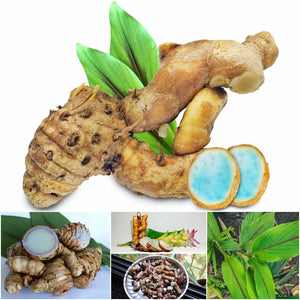
More edible produce guides
All edible produce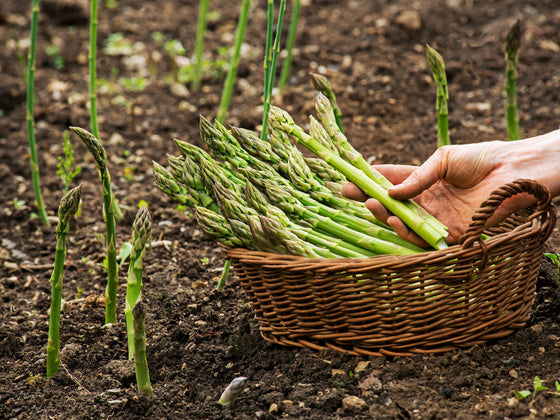
Asparagus
How to grow asparagus from seed in Australia: raising seedlings, planting crowns, a bed of its own, when to start picking spears and cutting back the fern.
| Position | Full sun |
|---|---|
| Depth | Seed 1 to 2 cm |
| Spacing | 30 to 40 cm |
| First pick | Third spring from sowing |
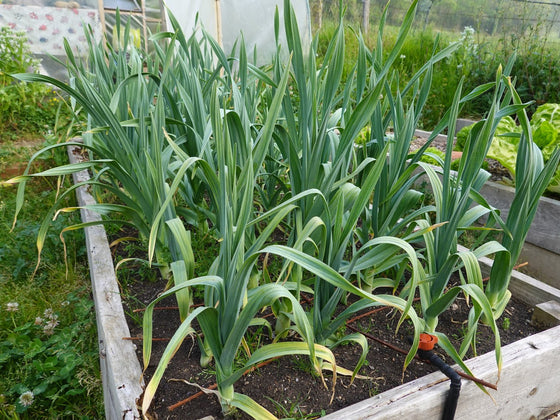
Elephant garlic
Also sold as Russian garlic. Plant the large cloves in April or May, keep the bed weeded and watered, and use the finger test to judge when the bulbs are ready.
| Position | Full sun, 6 hours or more |
|---|---|
| Depth | 5 cm of soil over tip |
| Spacing | 20 to 30 cm |
| First pick | 6 to 8 months |
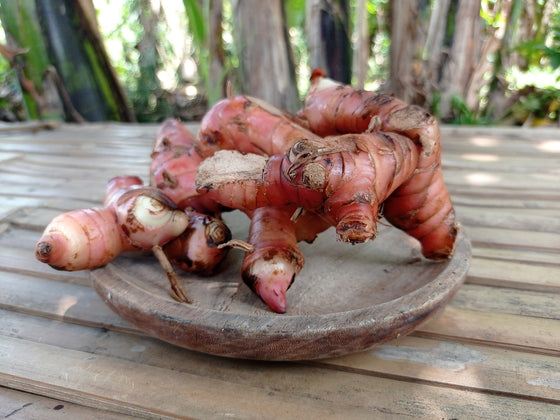
Galangal
Grow Thai red and lesser galangal from rhizomes in Australia: planting months for six zones, pre-sprouting, pots for frosty areas, feeding, pests and harvest.
| Position | Morning sun, afternoon shade |
|---|---|
| Depth | 5 to 7 cm, buds up |
| Spacing | 30 to 45 cm |
| First pick | 17 to 43 weeks |
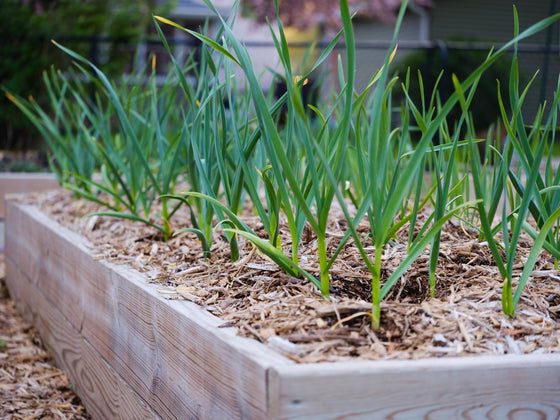
Garlic
When to plant garlic in each Australian climate zone, how deep and how far apart, feeding through winter, and how to tell when the bulbs are ready to lift and cure.
| Position | Full sun, 6 hours or more |
|---|---|
| Depth | Tip 2 to 5 cm deep |
| Spacing | 10 to 15 cm |
| First pick | 22 to 39 weeks |