
How to Grow Strawberries from Runners in Australia
Plant bare-root strawberry runners in the cool months, 30 cm apart in full sun and rich, free-draining, slightly acid soil. Set each crown level with the soil, never buried. Keep the soil evenly moist, water at soil level and mulch with straw. Pick fully red fruit from spring, and renew the bed from the plants' own runners every two to three years.
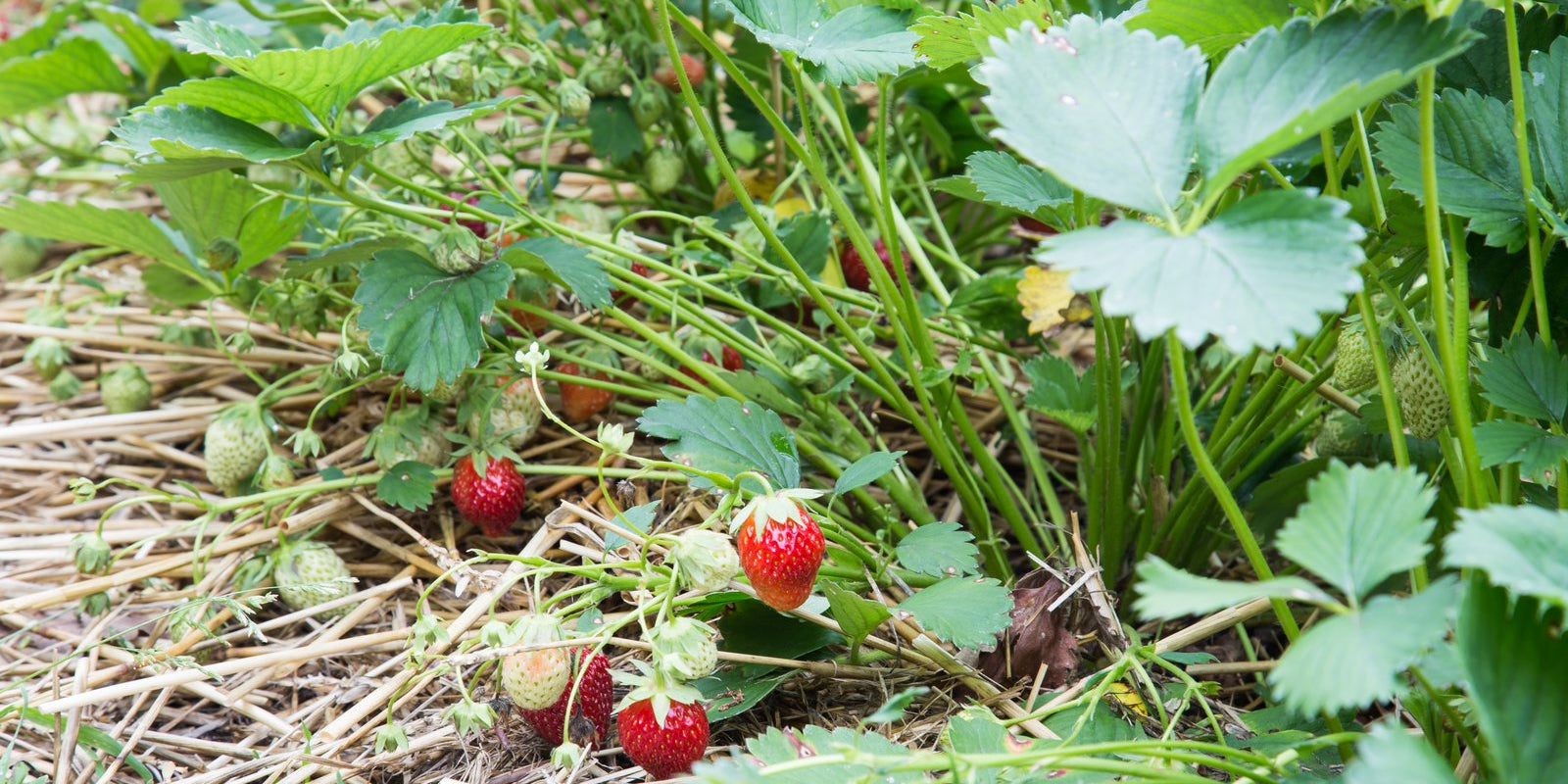
| Sun | Full sun, six hours or more |
|---|---|
| Water | Even moisture at soil level, never soggy |
| Soil | Rich, free-draining, pH 6.0 to 6.5 |
| Feed | Medium; potash from flowering, little nitrogen |
| Spacing | 30 cm apart |
| Depth | Crown level with the soil |
| Germination | Not from seed: plant dormant bare-root runners |
| Harvest | Usually spring; about 12 weeks after winter planting |
| Container | At least 10 L, 25 cm across |
| Frost | Frost hardy plant; frost damages open flowers |
| Use | Fresh, desserts, smoothies, jam and freezing |
Garden strawberry (Fragaria x ananassa) is a low, spreading perennial in the rose family, Rosaceae, grown for its sweet red fruit. Bare-root runners planted in the cool months usually fruit from spring, and each plant sends out runners that can replace it. The mistake most gardeners make is burying the crown.
Three mistakes that matter
- Burying the crown. A crown set below the soil can rot, and one set too high lets the roots dry out. Sit the crown, the short stem where roots meet leaves, level with the surface, as Planting Runners shows.
- Wet soil and wet leaves. Plants that stay wet succumb to fungal disease, and water on flowers and fruit invites grey mould. Plant in a raised bed where drainage is poor, water at soil level and mulch with dry straw.
- Keeping old plants. Strawberries crop best in their first two years, then the harvest declines and disease builds. Replace them every two to three years with rooted runners in fresh soil, as Runner Management explains.
When to plant
Plant runners in the cool months, while they are dormant and the soil sits at about 10 to 20°C. Plant them as soon as they arrive. One planting crops for two to three years, so there is nothing to sow in succession. Short-day varieties give one main crop, in spring in the south and from winter in the subtropics. Day-neutral varieties flower whatever the day length, so they keep fruiting through the warm months.
| Zone | Example cities | Plant | Harvest | Notes |
|---|---|---|---|---|
| Tropical | Darwin, Katherine NT; Cairns, Townsville QLD; Broome WA | Apr-May | Jul-Oct | Grow as a dry-season crop; wet-season heat and humidity end it. The cooler Atherton Tableland suits strawberries better. |
| Subtropical | Brisbane, Sunshine Coast, Bundaberg QLD; Coffs Harbour, Lismore NSW | Mar-Jun | Jun-Oct | Plant from March so short-day varieties fruit through winter and spring, before summer humidity brings rot. |
| Arid and semi-arid | Alice Springs NT; Mildura VIC; Broken Hill, Dubbo NSW; Kalgoorlie WA | May-Jun | Sep-Dec | Mulch deeply and water often; give afternoon shade once spring heat arrives, and net against birds. |
| Temperate | Sydney, Newcastle, Wollongong NSW; Melbourne, Geelong VIC | Apr-Aug | Oct-May | Sydney plants from April, Melbourne from May; planners allow planting until August, for fruit from spring. |
| Mediterranean | Perth, Bunbury WA; Adelaide and the SA coast | Apr-Jul | Oct-Apr | Plant from April to June; planners also allow July. Shade plants from hot, dry summer afternoons. |
| Cool and alpine | Hobart, Launceston TAS; Canberra ACT; Ballarat VIC; Stanthorpe QLD | Apr-May and Sep-Oct | Nov-Mar | Plant in autumn before hard frost, or in spring once frosts ease; cover flowers on frosty nights. |
Frost does not harm the dormant plant, but it damages open flowers and young fruit. In frosty districts, plant early in autumn so roots settle before hard frost, or wait until early spring.
Site, soil and setup
| Get the bed right | What to do |
|---|---|
| Sun | Full sun, at least six hours a day; in hot districts, morning sun with shelter from the afternoon sun |
| Air | An open site with good airflow, which cuts fungal disease, but out of drying wind: the shallow roots dry out quickly |
| Soil | Free-draining and rich in organic matter; on heavy or wet ground, build a raised bed 15 to 20 cm high |
| pH | 6.0 to 6.5, slightly acid; above that, dig in elemental sulphur at 25 to 50 g per square metre, 3 months ahead. See soil pH |
| Leave out | Lime, mushroom compost and chicken manure, which push the soil towards alkaline |
| Bed preparation | A 5 cm layer of compost and 5 to 10 cm of well-rotted cow or horse manure, dug in 4 to 6 weeks ahead |
| Base feed | Blood and bone at 100 to 150 g per square metre, raked in at planting |
| Room | 30 cm between plants, in rows 30 to 60 cm apart |
Rotate beds: do not plant where tomato, potato, eggplant, capsicum or chilli grew in the last three years, or where strawberries grew before. They share Verticillium wilt, a soil-borne fungus that no spray cures.
Container growing
Strawberries suit pots, troughs and hanging baskets, which keep fruit off wet soil and lift it away from slaters and snails. Give each plant at least 10 L of premium potting mix in a pot 25 cm or more across, with good drainage holes. Day-neutral 'Melba' and 'Lowanna' make few runners, so they stay tidy in a pot, and short-day 'Chandler' also suits pots and baskets.
- Watering: check pots daily in warm weather; once plants fruit, they may need water every day. See watering pots in summer.
- Feeding: mix a controlled release fertiliser for containers into the mix at planting, at the label rate. From new growth, water on fish and seaweed blend at half strength, about 12 mL per 9 L, weekly.
- From first flowers: add liquid potash at half the label rate, fortnightly.
- Position: full sun through winter; in summer, move pots to morning sun only.
Planting Runners
Runners go straight into the bed or a pot as dormant bare-root plants. Strawberries raised from seed have their own guide.
Crown planting
Bare-root runners arrive with few leaves and can look dead, but they are only dormant. Plant them as soon as possible, or keep them for a few days in the fridge in a perforated plastic bag. Before planting, trim off dead leaves and any dry, shrivelled or crusty old roots. Then soak the roots in water for 5 to 10 minutes.
Planting in the bed
- Dig holes 10 to 15 cm deep and 20 cm wide, 30 cm apart.
- Build a small mound of soil in the bottom of each hole.
- Sit the runner on the mound and fan its roots evenly down the sides.
- Backfill and firm so the crown sits level with the surface and the growing point stays just above it.
- Water in with seaweed solution at 30 mL per 9 L.
- Mulch with straw or pine needles, keeping it clear of the crown.

Old leaves often wither in the first weeks while the plant puts down new roots, and fresh leaves then grow from the crown. After heavy rain, check that soil and mulch have not washed over the crowns.
Short-day or day-neutral
| Variety | Type | When it fruits | What to know |
|---|---|---|---|
| 'Adina' | Short-day | Spring into summer; from winter in the subtropics | Low chilling need suits every zone; good resistance to powdery mildew |
| 'Chandler' | Short-day | Spring into early summer | Large, glossy fruit; a productive runner maker |
| 'Juliette' | Short-day | Early: from about September in Victoria and October elsewhere | Firm fruit; strong defence against powdery mildew |
| 'Red Gauntlet' | Short-day | A long season, summer to autumn | Scottish bred; suits cool and cold districts; resists fungal disease |
| 'Tioga' | Short-day | Late spring to late summer | Californian bred and vigorous; suits most of Australia |
| 'Lowanna' | Day-neutral | About October to late May | Australian bred; puts its energy into fruit rather than runners |
| 'Melba' | Day-neutral | Through the warm months, best at 20 to 30°C | Australian bred; mostly runner-free |
Care by growth stage
Even moisture at the roots, dry leaves and a light hand with nitrogen decide the crop. Weeks count from planting and stretch in cold districts.
| Stage | Water | Feed | Watch for |
|---|---|---|---|
| Settling in, weeks 1 to 4 | Keep the soil evenly moist, never soggy, and water at soil level | Seaweed solution at 30 mL per 9 L, fortnightly; nothing else yet | Crowns buried by soil or mulch; slugs and snails on new leaves |
| New leaves, week 4 to first flowers | Keep the soil evenly moist, watering more often in wind and heat | Fish and seaweed blend at 25 mL per 9 L, fortnightly, or an all-purpose soluble (NPK around 23-4-18) at half the label rate, fortnightly | Aphids on new growth, which spread viruses; two-spotted mite in dry weather |
| Flowering | Steady moisture; keep water off the flowers | Sulphate of potash at 30 to 50 g per square metre once, at first flowers, then liquid potash at the label rate, fortnightly; or a fruiting and flowering soluble (NPK around 15-4-26) at the label rate, fortnightly | Frost on open flowers; grey mould on fading petals |
| Fruiting and picking | Keep watering steady right through picking: plants that dry out give smaller, poorer fruit | Fish and seaweed blend at 25 mL per 9 L, fortnightly; day-neutral varieties also take blood and bone at 100 g per square metre midway, or a controlled release granular (NPK around 14-5-10) at the label rate | Birds, possums and rats at ripe fruit; grey mould on fruit resting on damp soil |
Once fruit starts to colour, net the bed with white, wildlife-safe netting stretched taut over a low frame. Choose mesh too small to push a finger through. The frame keeps air moving, while netting laid on the plants traps humidity and invites mould. In frosty districts, cover flowering plants with a cloche on cold nights.

Runner Management
Runners (long, thin stems that root a new plant at their tip) draw water and food from a fruiting plant. Remove most of them while plants crop, and keep the best to renew the bed.
- In the first season, pinch off runners as they appear so the plant puts its energy into fruit.
- To raise new plants, peg a runner's plantlet onto the soil or into a pot of potting mix while it is still attached.
- Once it has rooted, cut it free and plant it into a fresh bed, crown level with the soil.
- Take plantlets only from vigorous plants with healthy leaves, and start again with certified virus-free runners every few years.
- After the last picking, cut off old and spotted leaves, clear the old straw, then spread compost and fresh mulch.

Many gardeners keep two beds: plant a new one from the old bed's best runners, then clear the old bed once it has cropped twice.
Companion planting
Strawberries crop best in a bed of their own, with room for sun and air, so keep neighbours to the edges.
Grows well with
- Alyssum, whose small nectar-rich flowers draw pollinators and predatory insects to the bed.
- Lettuce, a quick, low crop that is picked before the strawberries need the room.
- Borage, sown at the bed's edge where it cannot shade the plants.
Keep apart
- Tomato, capsicum, chilli and eggplant, which host Verticillium wilt.
- Potato, which carries the same wilt in the soil.
Harvesting Fruit
Fruit usually comes about 12 weeks after a winter or spring planting, later after an autumn one; pick berries fully red, glossy and fragrant.
- Check plants every 2 to 3 days while fruit ripens.
- Pick in dry weather, and remove damaged or mouldy fruit as you go.
- Cut or pinch the stalk above the berry, keeping a short piece attached.
- Handle gently, since ripe fruit bruises easily.

Store unwashed fruit in the fridge, where it keeps for 3 to 5 days, and wash it just before eating. For longer keeping, freeze the fruit or cook it into jam.
Eat them warm from the garden, or use them in desserts and smoothies.
Common problems
Plant rotting or drying out soon after planting. The crown was set too deep or too high; see Three mistakes.
Plenty of leaves, few flowers. Too much nitrogen feeds leaves at the expense of flowers, and runners left on in the first season compete for water and food. Switch to the potash feeds in Care by growth stage.
Mottled or yellow-streaked leaves and shrinking crops. Viruses spread by aphids build up in older plants and cannot be cured, so bin affected plants and replant with certified virus-free runners. Read more
Fruit eaten before you pick it. Birds, possums, rats, blue-tongue lizards, slaters and snails all take ripe strawberries; net the bed as Care by growth stage describes. Read more
Plants wilting in summer heat. Shallow roots dry out quickly, so mulch well, water deeply and give plants shade cloth or afternoon shade in hot districts.
Pests and diseases
Many strawberry troubles in Australian gardens are fungal, and they start where leaves and fruit stay wet.
Two-spotted mite (Tetranychus urticae). These mites, under 0.5 mm long, feed under the leaves and leave yellow mottled patches, and some varieties redden. Numbers climb fast in hot, dry weather. Avoid unnecessary sprays, which kill the predatory mites and small black ladybirds that usually control them. Read more
Grey mould (Botrytis cinerea). Fading flowers and ripening fruit turn soft and water-soaked, then furry grey. Cool weather with heavy dew favours it, so pick off affected fruit, swap wet straw for dry and thin crowded leaves.
Powdery mildew (Podosphaera aphanis). White patches spread on the undersides of leaves, the edges curl upward and fruit can turn hard and powdery. Remove affected fruit, and at the first spots spray 1 part full-cream milk to 10 parts water. Read more
Verticillium wilt (Verticillium dahliae). The oldest leaves brown at the edges while young leaves stay green, then the whole plant wilts and dies. The fungus survives in soil for many years, so pull affected plants and do not replant strawberries there. Read more
Western flower thrips (Frankliniella occidentalis). Adults and larvae feed in flowers and on fruit in warm, dry weather, leaving deformed berries or a seedy, bronze russet around the seeds. Other thrips look alike, so have them identified before any spray. Read more
Queensland fruit fly (Bactrocera tryoni). A minor strawberry pest in eastern Australia, most active from October to April. Females lay eggs in ripening fruit and maggots develop inside, so pick promptly and bin fallen or stung fruit. Read more
Prevention first
- Start with certified virus-free runners.
- Water the soil, not the plants, and keep dry straw under the fruit.
- Check leaf undersides, new growth and ripening fruit every week.
- Spray aphids with pyrethrum only when numbers build up. It harms bees, so spray late in the day away from open flowers, and follow the label and its withholding period.
Tips
- Plant five or more plants for each person in the household if you want a regular bowlful.
- Grow a short-day and a day-neutral variety together to spread picking from spring into autumn.
- Pine needles make a good strawberry mulch, keeping the fruit clean and off the soil.
- For the heaviest picking from a small patch, replant with fresh runners every year, as commercial growers do, because first-year plants crop hardest.
Questions
When do you plant strawberry runners in Australia?
Plant bare-root runners in the cool months while they are dormant. Queensland gardens usually plant from March. New South Wales, Western Australia and South Australia plant from April to May, and Victoria from May to July. In Tasmania, Canberra and other cold districts, plant in April or May before hard frost, or in September or October.
How deep do you plant strawberry runners?
Set the crown, where the roots meet the leaves, level with the soil surface. Dig a hole 10 to 15 cm deep, build a small mound in it and fan the roots over the mound. A buried crown can rot, and a crown set too high lets the roots dry out.
Should I cut the runners off my strawberry plants?
Yes, in the first season: pinch off runners as they appear so the plant puts its energy into fruit. Later, peg a few healthy plantlets into soil or pots, let them root, then cut them free. They make the replacements for your next bed.
What is the difference between short-day and day-neutral strawberries?
Short-day varieties, such as 'Adina', 'Chandler' and 'Juliette', give one main crop, in spring in the south and from winter in the subtropics. Day-neutral varieties, such as 'Lowanna' and 'Melba', flower whatever the day length, so they can fruit from spring into autumn.
How long do strawberry plants last?
Strawberries crop best in their first two years, then the harvest declines and disease builds up. Replace them every two to three years with rooted runners planted into a fresh bed. Start again with certified virus-free runners every few years.
Can you grow strawberries in pots?
Yes. Give each plant at least 10 L of premium potting mix in a pot 25 cm or more across, with drainage holes. Pots and hanging baskets keep fruit off wet soil. Check them daily in warm weather, since fruiting plants may need water every day.
More edible produce guides
All edible produce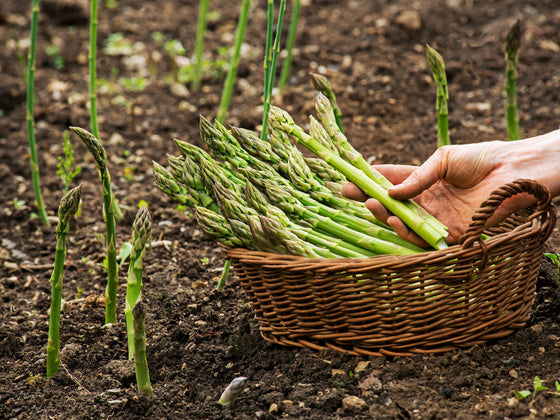
Asparagus
How to grow asparagus from seed in Australia: raising seedlings, planting crowns, a bed of its own, when to start picking spears and cutting back the fern.
| Position | Full sun |
|---|---|
| Depth | Seed 1 to 2 cm |
| Spacing | 30 to 40 cm |
| First pick | Third spring from sowing |
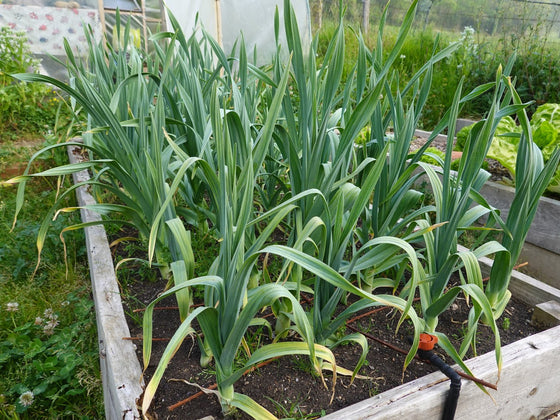
Elephant garlic
Also sold as Russian garlic. Plant the large cloves in April or May, keep the bed weeded and watered, and use the finger test to judge when the bulbs are ready.
| Position | Full sun, 6 hours or more |
|---|---|
| Depth | 5 cm of soil over tip |
| Spacing | 20 to 30 cm |
| First pick | 6 to 8 months |
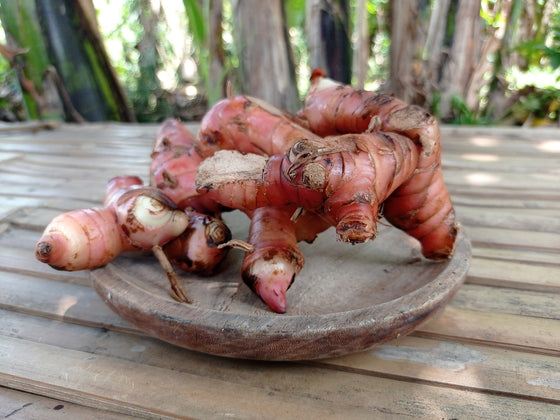
Galangal
Grow Thai red and lesser galangal from rhizomes in Australia: planting months for six zones, pre-sprouting, pots for frosty areas, feeding, pests and harvest.
| Position | Morning sun, afternoon shade |
|---|---|
| Depth | 5 to 7 cm, buds up |
| Spacing | 30 to 45 cm |
| First pick | 17 to 43 weeks |
Garlic
When to plant garlic in each Australian climate zone, how deep and how far apart, feeding through winter, and how to tell when the bulbs are ready to lift and cure.
| Position | Full sun, 6 hours or more |
|---|---|
| Depth | Tip 2 to 5 cm deep |
| Spacing | 10 to 15 cm |
| First pick | 22 to 39 weeks |