
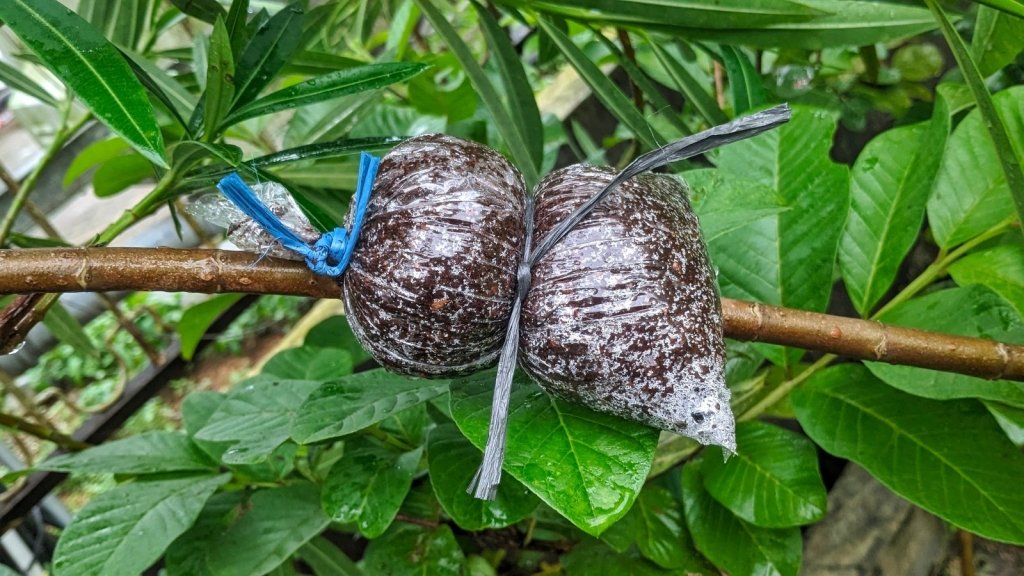
The short version: Layering roots a stem while it is still attached to the parent plant, so the new plant is fed the whole time and a failure costs nothing. Bend a low, flexible branch to the ground, wound it lightly below a node, bury that section about 10 cm deep and pin it. Keep it moist, and sever it once it has a strong root system, usually after three months to a year. Air layering does the same thing higher up the plant with a bundle of damp coir wrapped in plastic. It suits woody herbs, berries, camellias, figs and citrus, and it is one of the most forgiving propagation methods there is.
Cuttings get all the attention, and cuttings fail. A cutting is a stem cut off from everything that feeds it and asked to grow roots before it starves. Layering skips the hard part. The stem stays on the plant, drawing water and sugars as usual, while roots form at a wound you have buried. If they never form, you have lost nothing but a peg.
Nature does it constantly. Strawberry runners pin themselves down and root at the tip, blackberry canes arch over and take hold wherever they touch, and a low rosemary branch buried under mulch is often rooted by the time anyone notices.
Why layering is so forgiving
A wounded stem in contact with moist soil produces adventitious roots, the same roots a cutting makes, but here the parent keeps supplying the stem until those roots can support it on their own. That is why the plant propagation textbooks still list layering for woody plants that are difficult to root from cuttings, and why Gardening Australia has long shown it as a beginner's method. The new plant is a genetic copy of the parent, so the variety that does well in your garden comes back exactly as it was.
Plants that layer well
In the herb bed: rosemary, thyme, sage, oregano, mint and lavender, especially older plants that have started to sprawl and lose their shape. Among the fruit: blueberries and rosemary by mound layering, currants and gooseberries by simple layering, thornless blackberry cultivars by tip layering, grapes by serpentine layering, and figs and citrus by air layering. In the ornamental garden: camellias, azaleas, daphne, magnolias, rhododendrons, wisteria and clematis, and low-branching Australian natives such as westringia, correa and eremophila. Strawberries layer themselves by runner, and pinning a runner into a pot of mix is the easiest first project of all.

Simple layering, step by step
- In late winter or spring, choose a healthy, flexible low stem with a tip about 15 to 20 cm long.
- Strip the leaves and side shoots from the section that will be buried, leaving the growing tip leafy.
- Wound the stem just below a node: scrape the bark to expose the green layer beneath, or make a slanting cut no more than a third to halfway through and wedge it open with a matchstick. A partial twist works on soft stems.
- Dust the wound with rooting hormone if you like. It is optional.
- Bury the wounded section at least 10 cm deep in loosened soil or compost, pin it with a U of wire, a stone or a brick, and mark the spot so nobody hoes it.
- Keep the soil moist. Layers will not root in dry ground, and drying out is the main reason they fail.
- Expect roots in about three months for many shrubs, within weeks for herbs, and up to a year for slow woody plants. A gentle tug that meets resistance, and fresh growth at the tip, tell you it has taken.
- Sever from the parent, lift with as much root as you can, pot up or replant, and cut the top back by about half so the new roots are not overworked.
Air layering for the stems you cannot bend
Air layering brings the soil to the branch. Choose a straight stem of last season's or this season's growth, at least pencil thick, and clear the leaves from a 30 cm section about 20 cm back from the tip. Wound it either with a slanting cut through a bud, held open with a matchstick, or by removing a ring of bark 2.5 to 4 cm wide and scraping away the green layer underneath. Dust with hormone if using it. Pack a cricket-ball-sized handful of coir, soaked and then wrung out until it is damp rather than wet, around the wound and wrap it in clear plastic sealed top and bottom with tape or ties. In hot sun, cover the bundle with foil so the roots do not cook. Check the moisture every few weeks. Roots usually show in about three months and can take up to a year. When they fill the bag, cut just below the rooted section, pot it up without disturbing the root ball, keep it shaded and under a loose plastic tent for a week or so, and let it establish in the pot before planting out.
A note on the wrapping material. Sphagnum moss is the traditional choice, but the Tasmanian alpine bogs it comes from are threatened and can take centuries to recover, so use coir, which Gardening Australia and Australian nurseries accept as a substitute.

Mound and tip layering for berries and woody herbs
Mound layering, also called stooling, suits blueberries, currants and other shrubs that shoot from the base, and it works on an old woody rosemary too. Cut the plant back hard to two or three buds in late winter, then mound compost or potting mix over the base as the new shoots grow, topping it up through the season. After six to nine months, scrape the mound back and cut off the rooted shoots. Tip layering suits thornless blackberry cultivars, hybrid berries and native raspberry. Bury just the tip of a cane about 7 to 8 cm deep in mid to late spring, and it should usually have rooted by the following autumn or spring. Serpentine layering runs a long climber such as a grape or clematis along the ground, pegging and covering it at every second node so several plants form along one stem.
When to layer across Australia's climate zones
- Tropical (Darwin in the Northern Territory, Cairns and Townsville in Queensland): layer while plants are actively growing, which for most shrubs and vines means the build-up and the wet season.
- Subtropical (Brisbane and south-east Queensland, northern New South Wales): spring to early summer for most plants, and autumn for deciduous ones; mild winters let a ground layer keep rooting.
- Arid and semi-arid (Alice Springs in the Northern Territory, Broken Hill in New South Wales, Mildura in Victoria, Kalgoorlie in Western Australia): late winter to early spring before the heat, and autumn. Moisture is the limit, so water the layer and shade air layers from the sun.
- Temperate (Sydney and the New South Wales coast, Melbourne in Victoria): late winter and early spring, continuing through summer with water; tip-layer berries in October and November.
- Mediterranean (Perth and southern Western Australia, Adelaide in South Australia): August to October while the soil is still moist, and autumn after the break of season for deciduous plants. Summer layering needs reliable watering.
- Cool and alpine (Tasmania, Canberra in the ACT, Ballarat in Victoria, Orange and Armidale in New South Wales, Stanthorpe in Queensland): evergreens in spring after the frosts, and deciduous berries mounded in winter, as Tino Carnevale has shown on Gardening Australia with blueberries in Hobart.
The plants you must not layer
Self-layering is exactly how the worst weeds spread. European blackberry is a Weed of National Significance, declared in every state and territory, and it invades because its cane tips root wherever they touch the ground. Only named thornless cultivars are exempt from sale bans in New South Wales, and other states have their own lists. Lantana is also declared everywhere and layers itself into dense thickets. Never layer a plant on your state's declared weed list, and check before you propagate any vigorous climber or berry. Named cultivars under Plant Breeder's Rights can be layered for your own garden but not sold, grapevine material cannot leave phylloxera zones, and most states restrict moving pot plants across the border.
Frequently asked questions
How long until a layer roots?
About three months for many shrubs, weeks for soft herbs, six to twelve months for slow woody plants and up to a year for an air layer.
Do I need rooting hormone?
No. It can speed things up on hard subjects, but plenty of layers root without it.
Layering or cuttings, which is easier?
Layering, because the stem stays attached and fed until it has roots of its own, and difficult woody plants are still propagated this way for that reason.
Can I layer a thornless blackberry or a raspberry?
Tip layering suits them, but blackberry is a declared weed across Australia and only named thornless cultivars are permitted in some states. Check your state list first.
Is sphagnum moss a problem?
It is harvested from threatened alpine bogs. Coir peat works just as well for air layering.
Can I air layer citrus, figs or avocado?
Citrus and edible figs, yes. Avocados are grafted by nurseries, and air layering them is not a standard method.
Peg a branch down this weekend, forget about it for three months, and by spring you may find a rooted plant waiting where a bit of bent wire used to be.
Related growing guides
- How to take plant cuttings
- Lavender from seed in Australia
- Perennial vegetables: plant once, harvest for years
Grow the parent plant first: browse our strawberry runners, herb seeds and everlasting daisy seeds.