
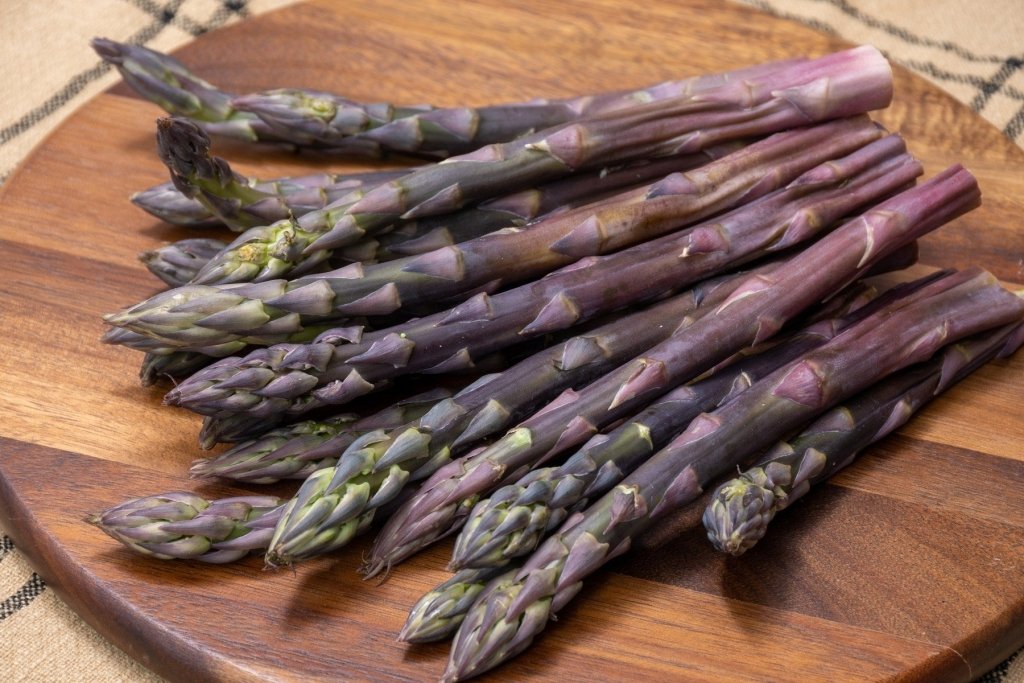
Perennial vegetables are crops you plant once and harvest from for years, because the plant lives on rather than finishing in a single season. In Australia the most reliable are asparagus, rhubarb, globe artichoke, perennial leeks and sorrel, with warrigal greens and sweet potato for warmer zones. Most want a permanent, well-drained spot, and a few spread vigorously, so give those a contained bed. Match the crop to your climate zone and you can pick from the same plant for years.
Most veggie patches run on a yearly reset: sow, grow, pull out, start again. Perennial vegetables quietly break that habit. You plant them once, and they come back on their own, year after year, long after the empty seed packet has gone soft at the bottom of a drawer.

What is a perennial vegetable, exactly?
A perennial vegetable lives for several years and crops again each season, rather than dying off once it sets seed. The roots, crown or tubers persist underground, so it regrows on its own when conditions suit. Unlike an annual such as lettuce, which races through its life and has to be sown again, a perennial is slower to settle in, but then much of the yearly work is behind you. The trade is patience for permanence.
Why bother with perennials?
The main payoff is less work for more years of food. Once established, a perennial needs no annual sowing and far less digging, and its deep, settled roots can reach moisture a young seedling often cannot, so many cope with dry spells better than a fresh annual planting. Think of them as the quiet corner of the patch that keeps giving while the rest churns through its seasons.

The reliable perennials for Australian gardens
The most dependable perennial vegetables here are asparagus, rhubarb, globe artichoke, perennial leeks and sorrel. Each crops for years from a permanent spot with modest care.
Asparagus is the classic, and the one that asks for the most patience. It can be raised from seed or planted as crowns, with crowns giving a quicker start, but either way it pays to harvest only lightly for the first couple of seasons while it builds strength underground. Resist the urge, and a single bed can send up spears each spring for years. To start one, browse our vegetable seeds range, where asparagus sits among them.
Rhubarb is the easy win. Once a crown is in, it sends up tart, ruby stalks year after year. The stalks are the edible part, cooked, while the leaves contain concentrated oxalic acid and are not for eating.
Globe artichoke is the architectural one, a large silver-leaved member of the daisy family whose immature flower buds are the prize. Perennial leeks and sorrel are the quiet workhorses: perennial leeks are the perpetual, clumping kind, dividing from offsets so one planting becomes many, while sorrel makes a deep-rooted rosette of tangy, lemony leaves. That tang is oxalic acid, so use sorrel as a sharp accent rather than a bulk green; anyone prone to kidney stones may wish to check with a doctor before eating it often.

The perennials that suit warmer zones
In subtropical and tropical gardens, the headline perennials shift to heat-lovers like warrigal greens, sweet potato and yacon. Rhubarb sulks in the heat, while asparagus can still work in a well-drained spot with cool enough winters.
Warrigal greens (Tetragonia tetragonioides) are a native sprawling leaf vegetable, perennial in warm and temperate areas and tougher in heat and salt than most greens. Knowledge of native edible plants belongs to Aboriginal and Torres Strait Islander peoples, and it is best grown from properly sourced seed rather than wild-harvested. The leaves contain oxalates, so blanch them briefly and tip that water out before cooking.
Sweet potato earns a place too. It is grown from slips, usually from a nursery or an existing tuber rather than seed, and in frost-free gardens behaves as a long-lived perennial, giving both tubers and edible young leaves. Yacon, the Andean tuber, is similar: grown from rhizomes, and best in frost-free or sheltered spots.

The catch: some perennials want to take over
The honest caveat is that a few perennials are vigorous enough to be a nuisance and need a contained spot from the start. The classic culprit is Jerusalem artichoke.
Jerusalem artichoke (Helianthus tuberosus) is a tall sunflower relative with knobbly, nutty tubers, and genuinely easy to grow. The catch is that it regrows from any tuber fragment left behind, so a bed you thought you had cleared tends to reappear next season. Give it a dedicated bed or a large tub, and harvest knowing a few will always slip through; that is not failure, just the nature of the plant.
The same caution applies, more gently, to other spreaders. Horseradish runs from any root left behind, and choko is a vigorous frost-tender vine best kept on a sturdy trellis in warmer gardens. A spreader is a gift in the right spot and a chore in the wrong one, so decide where it lives before you plant it.

Matching perennials to your climate zone
The right perennials depend heavily on your zone, since cool-winter crops and heat-lovers want very different things. Plant to the garden you actually have, not a generic list.
- Temperate (Sydney, Melbourne, Canberra): asparagus, rhubarb, globe artichoke and sorrel all do well, with a cool enough winter.
- Cool and alpine (Tasmanian highlands, Ballarat, Orange, Stanthorpe): the same crops suit the cold, rhubarb and asparagus especially.
- Subtropical (Brisbane, the Sunshine Coast, northern New South Wales): perennial leeks, sorrel, warrigal greens and sweet potato suit the mild winters; rhubarb struggles through hot, humid summers, so give it afternoon shade and free-draining soil.
- Tropical (Cairns, Darwin, Townsville): lean towards warrigal greens, sweet potato and yacon, since temperate crops rarely get their winter chill.
- Arid and semi-arid (Alice Springs, Broken Hill, Mildura, Kalgoorlie): warrigal greens and sweet potato cope best; globe artichoke and asparagus can work with reliable watering and thick mulch. These soils can turn water-repellent, so a wetting agent sometimes helps.
- Mediterranean, including Perth, southern WA and Adelaide: mild wet winters and dry summers suit asparagus, globe artichoke and rhubarb, especially in cooler southern districts. Steady summer watering matters most here.
Read your own conditions first. If your rhubarb collapses into a sad puddle by February, that is your cue to stop fighting it and grow the perennials that actually enjoy your summers.

Giving perennials the right spot
Because perennials stay put for years, the spot matters far more than for a quick annual. A lettuce does not much mind where it lands, but a perennial lives with your choice for a decade. Drainage matters most: crowns sitting in cold, wet soil through winter are the ones that quietly give up.
Pick a spot you are not planning to dig over, ideally along an edge or in its own bed, with full sun for most types and a little afternoon shade for leafy ones in hot districts. Then feed the soil, not just the plant: compost and aged manure before planting, an organic mulch each year, and a fish and seaweed blend through the season.

A patch that quietly pays you back
The real charm of perennial vegetables is how little they ask once settled. A bit of patience and a good spot at the start, and you trade the yearly scramble for a corner that simply keeps giving.
Start with one or two that suit your zone, give them a permanent home with good drainage, and let them settle in. If you are still building the bones of your patch, our guide to starting your first edible garden in Australia helps you plan where the permanent plants will live. For which plants are approved as foods in Australia, Food Standards Australia New Zealand is worth a quick check. This article is general gardening information, not medical or dietary advice.
Frequently asked questions
What are perennial vegetables?
Perennial vegetables live for several years and crop again each season, rather than dying after one harvest like annuals. You plant them once and pick from the same plant for years. Common examples include asparagus, rhubarb, globe artichoke and sorrel.
Is asparagus a perennial vegetable?
Yes, and one of the longest-lived. A well-tended bed can crop each spring for many years. It is usually grown from crowns and rewards a light touch while it establishes.
What perennial vegetables grow well in warm or subtropical Australia?
Lean towards perennial leeks, sorrel, warrigal greens, sweet potato and yacon, which handle heat and humidity better than asparagus or rhubarb. Rhubarb can manage in milder subtropical areas with afternoon shade, but it dislikes hot, wet summers.
Are any perennial vegetables invasive?
A few spread vigorously if left unchecked. Jerusalem artichoke is the main one, since it regrows from any tuber left in the soil, so give it a contained bed or a large tub. Running and self-seeding perennials are worth siting with care.
How long until perennial vegetables start cropping?
Most take one to two full growing seasons before they crop reliably. Rhubarb can give a light pick in its second year, while asparagus is best left to build strength for two to three years. The wait is the trade for years of low-effort cropping afterwards.
Ready to plant? Browse our Vegetable Seeds.