
How to Grow Strawberries from Seed in Australia
Alpine strawberries grow true from seed. Chill the seed if you like, then press it onto moist seed-raising mix without burying it, because it needs light. Keep it at 18 to 22°C for up to eight weeks. Plant out 20 to 30 cm apart in humus-rich, slightly acid soil with morning sun and afternoon shade. Fruit often follows 4 to 5 months after sowing.

| Sun | Morning sun, afternoon shade |
|---|---|
| Water | Even moisture; shallow roots dry out fast |
| Soil | Humus-rich, free-draining, pH 5.5 to 6.5 |
| Feed | Medium; potash from first flower buds |
| Spacing | 20 to 30 cm apart |
| Depth | Surface sow; needs light |
| Germination | 2 to 8 weeks at 18 to 22°C |
| Harvest | Often 16 to 22 weeks |
| Container | One plant per 20 cm, 4 L pot |
| Frost | Hardy plants; seedlings and flowers need protection |
| Use | Fresh, desserts, fruit salads and drinks |
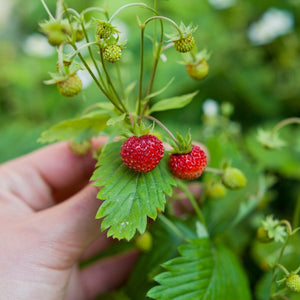
Alpine strawberry (Fragaria vesca) is a small, clump-forming perennial in the rose family, Rosaceae, grown for tiny, intensely fragrant red or creamy white fruit. Unlike garden strawberries it comes true from seed, suits pots and edges, and in a mild garden can fruit from spring well into autumn. Most failures start at sowing, when the dust-fine seed is buried out of the light it needs.
Three mistakes that matter
- Burying the seed. Seed kept in darkness fails to germinate, so a tray covered with mix often stays bare. Sow on the surface, as Sowing Seeds describes.
- Giving up too early. Seedlings appear over two to eight weeks, and not all at once. Keep the tray warm and moist for the full eight weeks, and lift the first seedlings without disturbing the rest.
- Baking the plants. Alpine strawberries have shallow roots, and hot afternoon sun or a dry spell slows their fruiting. Choose a spot as Site, soil and setup describes, mulch well and water evenly.
When to plant
Sow under cover, where the seed-raising mix stays at about 18 to 22°C. A winter sowing is then ready to plant out in spring. In cool months a seedling heat mat keeps the mix at that warmth. One sowing is enough, because the plants crop for several years.
| Zone | Example cities | Sow | Harvest | Notes |
|---|---|---|---|---|
| Tropical | Darwin, Katherine NT; Cairns, Townsville QLD; Broome WA | Apr-Jun | Aug-Nov | Grow through the dry season in part shade; wet-season heat and humidity bring leaf spot and fruit rot. |
| Subtropical | Brisbane, Bundaberg, Rockhampton QLD; Coffs Harbour, Lismore NSW | Apr-Jul | Aug-Dec and Mar-May | Winter and spring are the main crop; give afternoon shade, as plants slow in summer heat. 'Ali-Baba' copes well. |
| Arid and semi-arid | Alice Springs NT; Mildura VIC; Broken Hill, Dubbo NSW; Kalgoorlie WA | May-Jun | Sep-Dec and Mar-May | Raise seedlings under cover, plant out after the last frost, and shade and mulch plants through summer. |
| Temperate | Sydney, Newcastle, Wollongong NSW; Melbourne, Geelong VIC | Jun-Aug | Oct-May | Sow under cover in winter; seedlings planted out in spring often fruit the same summer. |
| Mediterranean | Perth, Bunbury WA; Adelaide and the SA coast | Jun-Aug | Oct-May | Sow under cover in winter; shade plants from the hot afternoon sun and water steadily through the long dry summer. |
| Cool and alpine | Canberra ACT; Hobart, Launceston TAS; Orange, Armidale NSW; Ballarat VIC | Aug-Oct | Dec-Apr | Sow indoors with bottom heat; plant out after the last frost and cover flowers when late frost threatens. |
A late sowing still works, since plants raised in spring often fruit in their first summer. Keep autumn sowings under cover until the frosts pass.
Site, soil and setup
| Get the bed right | What to do |
|---|---|
| Sun | Morning sun and shelter from hot afternoon sun; plants fruit with as little as four hours of sun a day |
| Soil | Humus-rich, free-draining soil; build a bed raised 15 to 20 cm where drainage is poor |
| pH | 5.5 to 6.5; above 6.5, elemental sulphur at 25 to 50 g per square metre, 3 months ahead; below 5.5, dolomite lime at 100 to 200 g per square metre, 4 weeks ahead |
| Bed preparation | Dig in a 5 cm layer of compost and 5 to 10 cm of well-rotted cow manure, 4 to 6 weeks ahead; skip mushroom compost and chicken manure, which lean alkaline |
| Base feed | Blood and bone at 100 to 150 g per square metre, or a controlled release granular (NPK around 14-5-10) at the label rate, raked in at planting |
| Room | 20 to 30 cm apart, or 15 cm for a dense edging |
See soil pH explained for testing. Rotate beds: do not plant where tomato, capsicum, chilli or eggplant grew in the past three years, as they can pass on disease.
Container growing
Alpine strawberries suit pots, troughs and hanging baskets, and pots help keep fruit clear of slugs. Give one plant a pot at least 20 cm across, about 4 L, or set three or four plants in a big hanging basket. Use premium potting mix. 'Ali-Baba', 'White Soul' and 'Baron Solemacher' are all compact enough for pots.
- Watering: shallow roots dry out fast, so check pots daily in warm weather. See watering pots in summer.
- Feeding: fish and seaweed blend at 25 mL per 9 L, fortnightly, switching to liquid potash at the label rate once flower buds show.
- Position: morning sun, moved into shade on hot afternoons and heatwaves.

Sowing Seeds
Raise alpine strawberries in trays under cover, then plant them out once they are well grown. Garden strawberries grown from bare-root runners have their own guide, growing strawberries from runners.
Preparing the seed
Many growers chill the seed first. Seal the dry seed in a closed jar or plastic box and keep it in the freezer for 2 to 4 weeks. Let the container warm to room temperature before opening it, so no moisture condenses on the seed. The chill is optional, and unchilled seed also comes up. It is a dry chill, not cold stratification (a moist cold spell in the fridge), which alpine seed does not need.
Sowing in trays
- Fill a tray with fine seed-raising mix and water it before sowing.
- Scatter the seed thinly on the surface and press it in; the sand trick helps spread it evenly.
- Leave it uncovered, or add only a dusting of fine sand, so light reaches the seed.
- Cover with clear plastic or glass, mist or water from below, and hold the mix at the warmth When to plant gives.
- Pot each seedling into its own small pot once it has three leaves.

Planting out
- Plant out when each plant has a good root system and after the last frost, since young seedlings are cold tender.
- Harden off (get seedlings used to sun and wind outdoors) over one to two weeks first.
- Set the crown, where leaves meet roots, level with the soil surface: buried too deep, it rots.
- Water in with seaweed solution at 30 mL per 9 L.
- Mulch with straw or pine needles, leaving a small gap around each crown.
Care by growth stage
Even moisture and a light hand with nitrogen decide the crop. Weeks count from sowing and shift with zone and weather.
| Stage | Water | Feed | Watch for |
|---|---|---|---|
| Germinating, weeks 0 to 8 | Keep the surface moist; mist or water from below | Nothing until the first true leaves | Drying out; mix held too cold |
| Seedlings in pots, weeks 6 to 14 | Just moist, never soggy | Seaweed solution at half strength, 15 mL per 9 L, fortnightly; or an all-purpose soluble (NPK around 23-4-18) at half the label rate, fortnightly | Damping off (a fungal rot of young stems); stretching in poor light |
| Establishing, weeks 12 to 18 | Water the soil, not the leaves, whenever the top 2 cm is dry | Fish and seaweed blend at 25 mL per 9 L, fortnightly; or the all-purpose soluble at the label rate, fortnightly | Slugs and snails; aphids on new growth; crown rot (several soil-borne fungi), when whole plants wilt and collapse in warm, waterlogged soil: lift and bin them, and replant elsewhere |
| Flowering and fruiting, from about week 16 | Steady moisture right through picking, under mulch; never let pots dry out | Liquid potash at the label rate, fortnightly from first flower buds; or a fruiting and flowering soluble (NPK around 15-4-26) at the label rate, fortnightly | Birds, rats and possums at ripe fruit; mites in hot, dry weather |
| Established plants, each spring from year two | Deep soaks in dry spells; ease off in winter | Blood and bone at 100 g per square metre and a 5 cm layer of compost as mulch; or a controlled release granular (NPK around 14-5-10) at the label rate | Woody, crowded clumps; old spotted leaves |
Birds take ripe fruit. Plant closely, or cover the bed with white, wildlife-safe netting, pulled taut, with mesh too small for a finger to pass through.

Division and Maintenance
Plants crop best for two to four years, then turn woody and bear less. Divide them every three years, in spring or autumn, even if you need no extra plants.
- Dig up the clump and cut off young outer pieces, each with roots attached.
- Replant the pieces at the old depth and compost the woody centre; see dividing perennials.
- Replant in a fresh bed every three years, to stay ahead of diseases that build up in old beds.
- Most alpine forms make few or no runners; snip off any that crowd the clump.
- Remove old, spotted leaves and spent fruit stalks through the season.
- Top up the mulch every spring, keeping it clear of the crowns.
Companion planting
Alpine strawberries do best with room and air around them, and with bees close by.
Grows well with
- Borage, whose flowers bring the bees that set well-shaped fruit.
- Lettuce and spinach, low, quick crops that fill gaps between young plants.
Keep apart
- Potato, tomato, capsicum, chilli and eggplant, which can pass diseases to strawberries growing beside them.
- Cabbage family crops, which compete for nutrients.
Harvesting Fruit
Plants raised from seed often start fruiting 4 to 5 months after sowing, though some take up to a year. Pick when the fruit is fully coloured, soft and so fragrant it scents the air: before that it tastes bland.
| Variety | Fruit | Plant | Ripe when |
|---|---|---|---|
| 'Baron Solemacher' | Deep red, large for an alpine, in clusters | Clump; edging or ground cover at 15 cm | Deep red all over and fragrant |
| 'Mignonette' | Small, red | Compact clump | Red all over and fragrant |
| 'Ali-Baba' | Small, red, slightly pointed | Compact, about 15 cm; copes with subtropical warmth | Red all over, including the pointed tip |
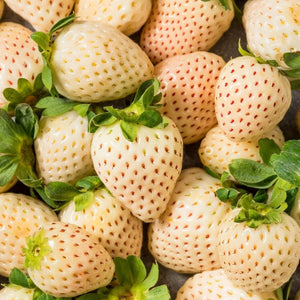
| 'White Soul' | Creamy white, pineapple-like aroma; birds tend to leave it alone | Clump 15 to 20 cm, no runners | Fully white with golden seeds and a strong scent |
- Check plants every 2 to 3 days while they fruit.
- Snip the stalk or pinch it through, rather than pulling the soft fruit.
- Pick into a shallow container, one layer deep, since ripe fruit crushes easily.
- Remove damaged or mouldy fruit as you pick, so rot does not spread.

Alpine fruit keeps only two or three days once picked. Store it unwashed in the fridge and wash it just before eating. For longer keeping, freeze it: it softens on thawing but suits smoothies, sauces and desserts.
Eat alpine strawberries fresh, scatter them over desserts and fruit salads, or use them to garnish drinks.
Common problems
Nothing comes up. Seed buried out of the light, a tray that dried out or ran cold, or a tray abandoned too early; see Three mistakes. Read more
Small, misshapen fruit. Poor pollination from wet weather or frost at flowering or few bees, or Rutherglen bugs (Nysius vinitor) feeding in flowers in warm, dry spells.
Bronzed, seedy fruit. Western flower thrips (Frankliniella occidentalis) feed in flowers and fruit in warm, dry weather, leaving fruit bronzed and rough around the seeds, or misshapen. Hang a sticky trap nearby to spot them early, and keep down flowering weeds such as clover. Read more
Firm, dark, sunken spots on fruit. Black spot (Colletotrichum acutatum), a fungus of warm, humid, wet weather, spreads by rain splash and on pickers' hands. Bin spotted fruit and old leaves, and water the soil rather than the plants.
Pale fruit with poor flavour. This follows overcast weather and too much nitrogen, so go easy on nitrogen feeds.
Fruit eaten before you pick it. Birds, slugs, snails, rats and possums all take ripe fruit. Net the bed as Care by growth stage describes, and mulch under the fruit. Read more
Pests and diseases
Mites, thrips and Rutherglen bugs build up in warm, dry weather, while grey mould, leaf spot and black spot follow wet, humid weather.
Two-spotted mite (Tetranychus urticae). Leaves speckle and mottle, then purple, with fine webbing between them in heavy attacks. Outbreaks build in warm, dry weather from spring. Control weeds nearby, which shelter mites, and encourage predatory mites. Read more
Green peach aphid (Myzus persicae). Aphids cluster under leaves and around flower buds, and their honeydew grows sooty mould on fruit. Squash small colonies or spray insecticidal soap. Read more
Queensland fruit fly (Bactrocera tryoni). A minor pest of strawberries across eastern Australia, most active from October to April. Maggots develop inside ripe fruit, so pick promptly and collect fallen fruit at once. Seal it in a bag and freeze it for two days, or boil it, before binning it. Read more
Grey mould (Botrytis cinerea). Fruit browns at the stalk end and grows a grey, cottony fuzz. It spreads in mild, humid, rainy weather, so remove affected fruit and keep fruit off wet soil.
Powdery mildew (Podosphaera aphanis). White, web-like patches form on leaves, whose edges curl up, and young fruit can harden. At the first spots, spray 1 part full-cream milk to 10 parts water. Read more
Strawberry leaf spot (Mycosphaerella fragariae). Small purple spots on the leaves turn pale in the centre. Rain splash spreads it in wet, cooler weather, so pick off spotted leaves.
Prevention first
- Water the soil in the morning, keeping leaves and fruit dry.
- Space plants for airflow, keep beds weeded and mulch under the fruit.
- Check leaf undersides and flower buds every week.
- Spare the bees that shape every fruit: if you must use pyrethrum, spray late in the day, away from open flowers. With any spray, follow the label and pick only after its withholding period.
Tips
- Alpine strawberries come true from seed, so seed from your ripest fruit can raise the next bed.
- A potted plant on a sunny windowsill can fruit early in spring; dab its flowers with a soft brush to pollinate them indoors.
- Alpine strawberries are at home in a cool climate and are grown for market on the NSW southern tablelands, so frost need not deter you.
Questions
Can you grow strawberries from seed?
Yes. Alpine strawberries grow well from seed and come true to type. Sow the tiny seed on the surface of moist seed-raising mix under cover, at about 18 to 22°C. Seedlings appear over two to eight weeks. Garden strawberries are usually planted as bare-root runners instead.
Do strawberry seeds need light to germinate?
Yes. Alpine strawberry seed kept in darkness fails to germinate. Press it onto the surface of the mix and leave it uncovered, or add no more than a dusting of fine sand. Cover the tray with clear plastic or glass to hold moisture while letting light through.
Do I need to put strawberry seeds in the freezer before sowing?
It is optional but common. Many growers seal the dry seed in a closed jar in the freezer for 2 to 4 weeks before sowing. Let the jar warm to room temperature before opening it. Unchilled seed also germinates.
How long do strawberries grown from seed take to fruit?
Alpine strawberries often start fruiting 4 to 5 months after sowing, though some take up to a year. Plants raised in spring can crop in their first summer. Once established, they fruit a few berries at a time from spring into autumn in mild gardens.
Do alpine strawberries send out runners?
Most alpine varieties make few or no runners and grow as neat clumps instead. 'White Soul' forms a compact clump without runners. To get more plants, divide the clumps every three years in spring or autumn, or sow more seed.
Can alpine strawberries grow in pots?
Yes. Give one plant a pot at least 20 cm across, about 4 L, or put three or four in a big hanging basket. Use premium potting mix, water often because the roots are shallow, and move pots into shade on hot afternoons.
Grow it


More fruit guides
All fruit
Goji Berry
Grow goji berries from seed in Australia: germinating the seed, when to sow in six climate zones, light feeding, pruning, picking the fruit and safety notes.
| Position | Full sun |
|---|---|
| Depth | About 6 mm |
| Spacing | 1.2 to 2 m; hedges 0.6 to 1.2 m |
| First pick | Second or third summer |
Passionfruit
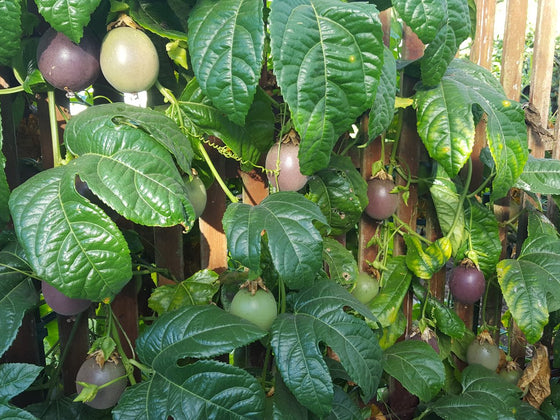
Grow passionfruit from seed in Australia: scarifying and sowing, six climate zones, trellis training, feeding, pollination, pests and knowing when it is ripe.
| Position | Full sun, sheltered from wind |
|---|---|
| Depth | 6 to 10 mm |
| Spacing | 2 to 4 m apart |
| First pick | 12 to 24 months from sowing |