
How to Grow Passionfruit in Australia
Passionfruit grows from seed in warmth. Scarify the seed, sow it 6 to 10 mm deep at 21 to 32°C and expect seedlings in 10 days to 12 weeks. Plant out after frost in full sun, on free-draining soil beside a strong trellis. Feed little and often, go easy on nitrogen and water deeply. First fruit usually comes 12 to 24 months after sowing.

| Sun | Full sun, sheltered from wind |
|---|---|
| Water | Deep soaks two or three times weekly in summer |
| Soil | Rich, free-draining, pH 5.5 to 6.5 |
| Feed | Heavy, little and often; light on nitrogen |
| Spacing | 2 to 4 m apart |
| Depth | 6 to 10 mm |
| Germination | 10 days to 12 weeks at 21 to 32°C |
| Harvest | 12 to 24 months from sowing |
| Container | Not suited to pots |
| Frost | Frost tender; Panama types most of all |
| Support | Strong trellis, single wire about 2 m high |
| Use | Fresh pulp for desserts, fruit salad and drinks |
Passionfruit (Passiflora edulis) is a vigorous evergreen climber in the passionflower family, Passifloraceae, grown for round fruit full of tangy, seedy pulp. It came from South America, yet an Australian pavlova hardly seems finished without it. The usual mistake is feeding it too much nitrogen.
Three mistakes that matter
- Giving up on the seed. Passionfruit seed is slow and patchy, taking from about 10 days to 12 weeks to come up. Scarify it, keep the pot warm and just moist, and wait the full 12 weeks.
- Feeding for leaves. High-nitrogen feeds grow a huge green vine that flowers little and sets less fruit. Feed as Care by growth stage sets out, and switch to potassium once the first flowers open.
- Planting in wet soil. Passionfruit hates wet soil, and soil-borne rots attack stems sitting in soggy ground or buried too deep. Plant on a mound or raised bed, with the base of the stem level with the soil surface.
When to plant
Sow when you can hold the seed-raising mix at 21 to 32°C, ideally near 28°C, which in most gardens means spring and early summer. Seedlings can spend up to four months in pots, longer when seed is slow, so sow early enough to plant out after the last frost. A vine usually lives five to seven years, sometimes less.
| Zone | Example cities | Sow | Harvest | Notes |
|---|---|---|---|---|
| Tropical | Darwin, Katherine NT; Cairns, Townsville QLD; Broome WA | Aug-Nov | Aug-Dec | Panama Red suits best; plant out on mounds so wet-season downpours drain away, and expect crops in flushes. |
| Subtropical | Brisbane, Gold Coast, Bundaberg QLD; Coffs Harbour, Lismore NSW | Aug-Nov | Dec-Jul | Plant out by March, the earlier in spring the better; vines crop mainly in summer, with a second autumn crop. |
| Arid and semi-arid | Alice Springs NT; Broken Hill, Dubbo NSW; Mildura VIC | Aug-Oct | Feb-May | Plant out after the last frost by a sheltered wall; above 38°C in dry air, little fruit sets. |
| Temperate | Sydney, Newcastle, Wollongong NSW; Melbourne, Geelong VIC | Aug-Oct | Jan-Jun | Common suits best; in Melbourne, plant out around Melbourne Cup weekend in early November, by a warm wall. |
| Mediterranean | Perth, Bunbury WA; Adelaide and the SA coast | Aug-Sep | Jan-Jun | Plant out in spring if you can, then mulch and water deeply through the long, dry summer. |
| Cool and alpine | Canberra ACT; Hobart, Launceston TAS; Orange, Armidale NSW; Ballarat VIC | Aug-Sep | Feb-May | Marginal: sow on a heat mat indoors, then plant Common out after the last frost against a warm north-facing wall. |
At the cool edge, start seed indoors on a seedling heat mat. Outside the tropics and subtropics, do not plant out in autumn: a vine needs a warm season to establish before winter.
Site, soil and setup
| Get the site right | What to do |
|---|---|
| Sun | Full sun, out in the open; a vine shaded by trees or buildings grows leaves but flowers poorly |
| Shelter | Out of strong wind; in frosty areas, in front of a north-facing wall that reflects warmth |
| Soil | Rich, free-draining soil high in organic matter; on heavy or wet ground, build a mound or raised bed |
| pH | 5.5 to 6.5; below 5.5, dolomite lime at 100 to 200 g per square metre, dug in at least 4 weeks ahead and earlier if you can; avoid heavy liming, which favours root rot |
| Bed preparation | Over about 2 square metres, dig in 5 to 10 cm of well-rotted cow or horse manure and a 5 cm layer of compost, 4 to 6 weeks or more before planting |
| Planting hole | No fertiliser or fresh manure in the hole; set the vine so the top of its potting mix sits very slightly above ground level |
| Trellis | A single strained wire about 2 m high on strong posts, or a sturdy fence or pergola, with 2 to 4 m of it for each vine |
| Roots | Shallow and wide-spreading, and they resent disturbance; keep digging, trees and large shrubs well away |
A vine stays put for years, so crop rotation does not apply. When replacing a vine lost to root rot, plant beside the old spot, not in it.
Sowing Seeds
Raise passionfruit in pots under cover, then plant each seedling out once it is sturdy and the weather is warm.
Preparing the seed
A hard seed coat makes passionfruit slow to germinate, so scarify it (thin the coat so water gets in). Rub the seeds lightly between two sheets of 100 to 150 grit sandpaper for three to five minutes, until the edges look scuffed. Soak them in water for up to 24 hours, then sow. See seed treatments.
Starting in pots
- Sow two or three seeds per pot, 6 to 10 mm deep in seed-raising mix, pointed end down.
- Seedlings usually appear in 10 to 14 days when nights stay above 20°C, but slow seed can take up to 12 weeks.
- At the first true leaves, move each seedling to its own 10 cm pot of seedling mix with slow-release fertiliser added, without bending the root.
- Grow them on in bright light to 25 to 40 cm tall, which can take up to 12 weeks.

The three lines in the passionfruit seed range are sown alike. The vines differ in how you site and pick them.
| Seed line | Fruit | Cold and frost | Soil disease |
|---|---|---|---|
| Common | Egg-shaped purple fruit with orange-yellow pulp | Copes with cool weather better than Panama types; a light frost strips its leaves | On its own roots it is prone to fusarium wilt, so plant where no passionfruit has died of wilt |
| Panama Red | Large, red-skinned fruit | Best in the tropics and subtropics; a light frost can kill it | Good natural resistance to fusarium wilt |
| Red Flamenco F1 | Sweet, brightly coloured fruit from a hybrid vine | Treat as frost-tender | No wilt resistance claimed; grow on a mound in well-drained soil |
Planting out
- Harden off (get seedlings used to full sun and wind outdoors) over 2 weeks first.
- Plant midway between trellis posts, with a stake or string running up to the wire.
- Water in with seaweed solution at 30 mL per 9 L, then water daily for the first week over a wide area.
- Mulch 10 to 15 cm deep with coarse straw, kept 10 cm clear of the stem.
Pollination
Purple and Panama passionfruit set fruit with their own pollen, carried mostly by honey bees, with native bees and flies helping. Each flower opens only once: Common from dawn to the next dawn, Panama types, selections of the golden passionfruit, from about midday until that night. Growing two vines improves the odds.
| Cause of poor fruit set | What happens | Fix |
|---|---|---|
| Rain or mist while flowers are open | Wet pollen swells and bursts, and bees stay away | Hand-pollinate once the rain clears |
| Few bees | Flowers close without being pollinated | Grow bee flowers nearby, and hand-pollinate |
| Heat above 38°C with low humidity | Little or no fruit sets, and flowers may drop | Water deeply and mulch through hot spells |
| Cool weather, below 20°C | Pollen germinates poorly | Choose the warmest spot in the garden |

Where bees are scarce, pollinate by hand while the flowers are open: Common in the morning, Panama Red in the afternoon.
- With a soft artist's brush, collect yellow pollen from the five anthers of one flower.
- Dab it onto the three stigmas at the centre of another open flower.
- Repeat every couple of days while the vine flowers.
Care by growth stage
Steady water and a light hand with nitrogen decide the crop. Passionfruit is a heavy feeder that wants its food little and often.
| Stage | Water | Feed | Watch for |
|---|---|---|---|
| Seedling in its pot, until planting out | Keep the mix just moist, never soggy | Nothing until the first true leaves, then seaweed solution at half strength, 15 mL per 9 L, fortnightly | Damping off (a fungal rot of young stems) |
| Climbing to the wire, the first 3 months after planting | Daily for the first week, then deep soaks two or three times a week in warm weather | Fish and seaweed blend at 25 mL per 9 L, fortnightly | Snails; red scale on the stem; side shoots to rub off weekly |
| Growing along the wire, until the first flowers | Deep soaks two or three times a week in spring and summer, over a wide area; more often on sandy soil or in a tropical dry season, less after good rain | Pelletised chicken manure at 100 g per square metre, scattered about a metre around the stem in spring and again in late summer; compost as a top-dressing twice a year | Aphids, which spread woodiness virus; passionvine hoppers and the black sooty mould that grows on their honeydew; lush leaves and no flowers |
| Flowering and fruit set | Keep the soil evenly moist; dry spells make young fruit drop | Sulphate of potash at 30 to 50 g per square metre once at first flowers, then liquid potash at the label rate, fortnightly | Few bees; flowers failing in rain or heat |
| Fruit swelling and picking, 60 to 90 days after flowering | Keep watering deeply and evenly right through the harvest | Fish and seaweed blend at 25 mL per 9 L, fortnightly | Fruit fly on young fruit; passionvine bug; fallen fruit scorching in the sun; papery patches dotted black on fruit (anthracnose), so remove affected fruit and dead wood |
| Winter | Once or twice a week, less after rain | Nothing until spring growth starts | Frost; leaf drop; woodiness symptoms, which are worst in cool weather |
If you prefer a conventional feed, spread a controlled release granular (NPK around 14-5-10) at the label rate once the vine grows. Keep it over the root zone, never in the planting hole, and repeat when it is spent after 3 to 6 months. Through leafy growth, water on an all-purpose soluble (NPK around 23-4-18) at half the label rate, fortnightly. From first flowers, use a fruiting and flowering soluble (NPK around 15-4-26) at the label rate, fortnightly.
Pruning and Training
A vine trained to one stem and two arms covers its wire fast. Flowers form only on new-season growth, so a yearly prune keeps an older vine productive.
- Train one leader up the stake or string, rubbing off side shoots but keeping leaves. Check weekly for 3 months.
- At the wire, pinch out the tip, then tie two arms along the wire in opposite directions.
- Let side shoots hang, trimming any within 30 cm of the ground to keep soil-borne disease off.
- After frost, in late winter or early spring, cut old growth back by about a third and thin tangles.
- Clean secateurs with soapy water between vines, since sap on blades spreads virus.

Companion planting
Bees are the main pollinators, so the best neighbours are flowers that keep them close to the trellis.
Grows well with
- Alyssum, a low bee-attracting flower that fits in front of the trellis.
- Borage, a bee-attracting annual herb.
- Lavender, a bee-attracting shrub, planted a few metres off so it stays clear of the vine's roots.
Keep apart
- Trees and large shrubs, whose roots and shade compete with the vine.
- Old or wild passionfruit vines, the main source of woodiness virus for young ones.
Harvesting Fruit
A vine from seed usually first fruits 12 to 24 months after sowing, sooner in the tropics. Each fruit ripens 60 to 90 days after pollination. Purple fruit is ripe when it falls; Panama types colour fully and hang on for a few days.
- Gather fallen fruit daily in hot weather, before the sun scorches it.
- Pick Panama Red from the vine once no green shows on the skin.
- Shake the vine gently to drop ripe fruit caught in the leaves.
- Handle fruit gently, since broken skin lets rots in.

At room temperature the skin shrivels within a few days and flavour fades. At about 7°C in the fridge, fruit keeps for up to two weeks. Cut off the top and scoop out the pulp for pavlova, fruit salad or yoghurt.
Common problems
A big green vine with no flowers. Youth, shade and days below 15°C hold back flowering; for nitrogen, see Three mistakes that matter.
Flowers but no fruit, or fruit with little pulp. Too little pollen reached the stigmas; see Pollination.
Young fruit dropping. Dry soil is the usual cause, so soak the roots deeply in dry spells.
Vine collapsing from the base. The water mould Phytophthora nicotianae and the fungus Fusarium solani rot stems in wet soil, on vines planted too deep and where trimmers wound them.
Pests and diseases
Stressed and ageing vines suffer most, so a vigorous vine in a warm, sheltered spot is the first defence.
Queensland fruit fly (Bactrocera tryoni). Females sting young fruit and rots follow at the sting marks; in Queensland and northern New South Wales, activity often jumps in August. In Western Australia, where it is not established and any find must be reported, manage Mediterranean fruit fly (Ceratitis capitata) instead. Spray protein bait on the lower leaves, not the fruit. Read more
Red scale (Aonidiella aurantii). Reddish-brown, circular scales about 2 mm across crust stems, leaves and fruit, and heavy infestations kill vines. Check stems often in the first 6 months, and spray horticultural oil if scale appears, but not above 30°C. Read more
Passionvine bug (Leptoglossus australis). This dull black bug, about 18 mm long with a red band behind the head, sucks flowers and green fruit, leaving sunken spots. It occurs in Queensland and on the far north coast of New South Wales. Its reddish nymphs cluster on fruit, so knock them into soapy water. Fruit-spotting bug (Amblypelta nitida), green-brown and about 15 mm, also feeds on green fruit but hides well, so look for fresh damage.
Fusarium wilt (Fusarium oxysporum f. sp. passiflorae). Young leaves yellow, then the vine wilts and dies as this soil-borne fungus blocks its water-carrying tissue. Nursery purple vines are grafted onto resistant rootstock; a seedling Common vine has no such protection. No spray cures it, so remove the vine and replant elsewhere. Read more
Passionfruit woodiness virus (a potyvirus). Leaves turn mottled and crinkled, and fruit comes small and misshapen with a thick, hard rind. Aphids pass it on within seconds of feeding, so sprays do not stop it, but seed does not carry it. Mildly affected vines usually recover as conditions improve.
Brown spot (Alternaria passiflorae). Brown, spreading spots mark leaves and fruit in warm, wet weather, and the related alternata spot can strip a vine of its leaves. Shelter the vine from wind, since wind rub opens wounds, and if spots keep spreading, spray a copper fungicide whose label names passionfruit.
Prevention first
- Use only sprays whose label names passionfruit and the pest, at the label rate, and keep to the withholding period.
- Check stems, leaves and young fruit fortnightly from spring to autumn, and monthly in winter.
- Clear fallen fruit before it piles up under the vine, since that helps keep fruit fly down.
- Spare the bees that set the fruit: if you must use pyrethrum, spray late in the day, away from open flowers.
Tips
- Sow a replacement vine about every four years, before the old one declines.
- In frosty districts, a seed-grown purple vine such as Common is often a better choice than a grafted one.
- Seed saved from Panama Red or Red Flamenco F1 does not reliably come true, so start those from fresh seed.
Questions
How long does passionfruit take to fruit from seed?
Usually 12 to 24 months from sowing. Vines fruit sooner in tropical and subtropical gardens, while in cooler climates they need at least 18 months in the ground to crop well. Seed takes 10 days to 12 weeks to come up, and each fruit then ripens 60 to 90 days after pollination.
How do I get passionfruit seeds to germinate?
Rub the seeds lightly between two sheets of fine sandpaper for three to five minutes, then soak them for up to 24 hours. Sow them 6 to 10 mm deep in seed-raising mix kept at 21 to 32°C. Seedlings usually appear in 10 to 14 days in steady warmth, but can take 12 weeks.
Why is my passionfruit vine flowering but not fruiting?
Poor pollination is the usual reason. Rain bursts wet pollen and keeps bees away, and very hot, dry days or cool days also stop fruit setting. Grow bee-attracting flowers nearby and hand-pollinate with a soft brush while the flowers are open. Too much nitrogen also reduces fruit set.
Do I need two passionfruit vines to get fruit?
No. Purple and Panama passionfruit can set fruit with their own pollen, so a single vine can crop. A second vine nearby improves pollination. It also gives you a replacement ready as the first one ages, since most vines live only five to seven years.
Will seed saved from my passionfruit grow the same vine?
Not reliably from hybrids. Seed saved from Panama Red or Red Flamenco F1 does not come true, so the new vine may differ from its parent. Start those from fresh seed. Seedling vines do start free of passionfruit viruses, because the viruses are not carried in seed.
How do I know when passionfruit is ripe?
Purple passionfruit is ripe when it falls from the vine, so gather fallen fruit daily in hot weather before the sun scorches it. Panama types hang on the vine for several days once ripe, so pick them when no green shows on the skin.
Grow it


More fruit guides
All fruit
Goji Berry
Grow goji berries from seed in Australia: germinating the seed, when to sow in six climate zones, light feeding, pruning, picking the fruit and safety notes.
| Position | Full sun |
|---|---|
| Depth | About 6 mm |
| Spacing | 1.2 to 2 m; hedges 0.6 to 1.2 m |
| First pick | Second or third summer |
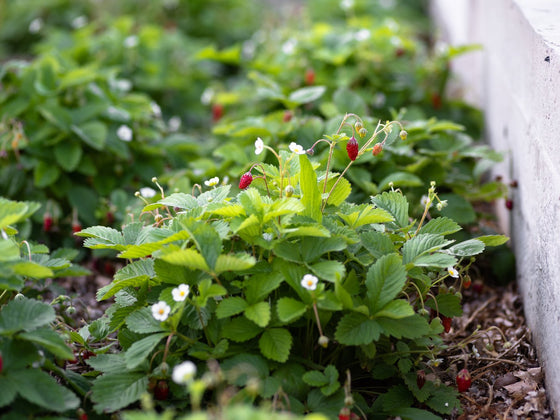
Strawberry
Grow alpine strawberries from seed in Australia: surface sowing in light, chilling seed, months for six climate zones, feeding, pests, division and picking.
| Position | Morning sun, afternoon shade |
|---|---|
| Depth | Surface sow; needs light |
| Spacing | 20 to 30 cm apart |
| First pick | Often 16 to 22 weeks |