
How to Grow Goji Berries in Australia
Sow goji berry seed about 6 mm deep in warm mix at 20 to 30°C. It needs no treatment and usually comes up in 1 to 3 weeks. Grow seedlings in pots for a year, then plant them 1.2 to 2 m apart in full sun and well-drained, neutral to alkaline soil. Feed lightly, stake the main stem and expect fruit from the second or third summer.
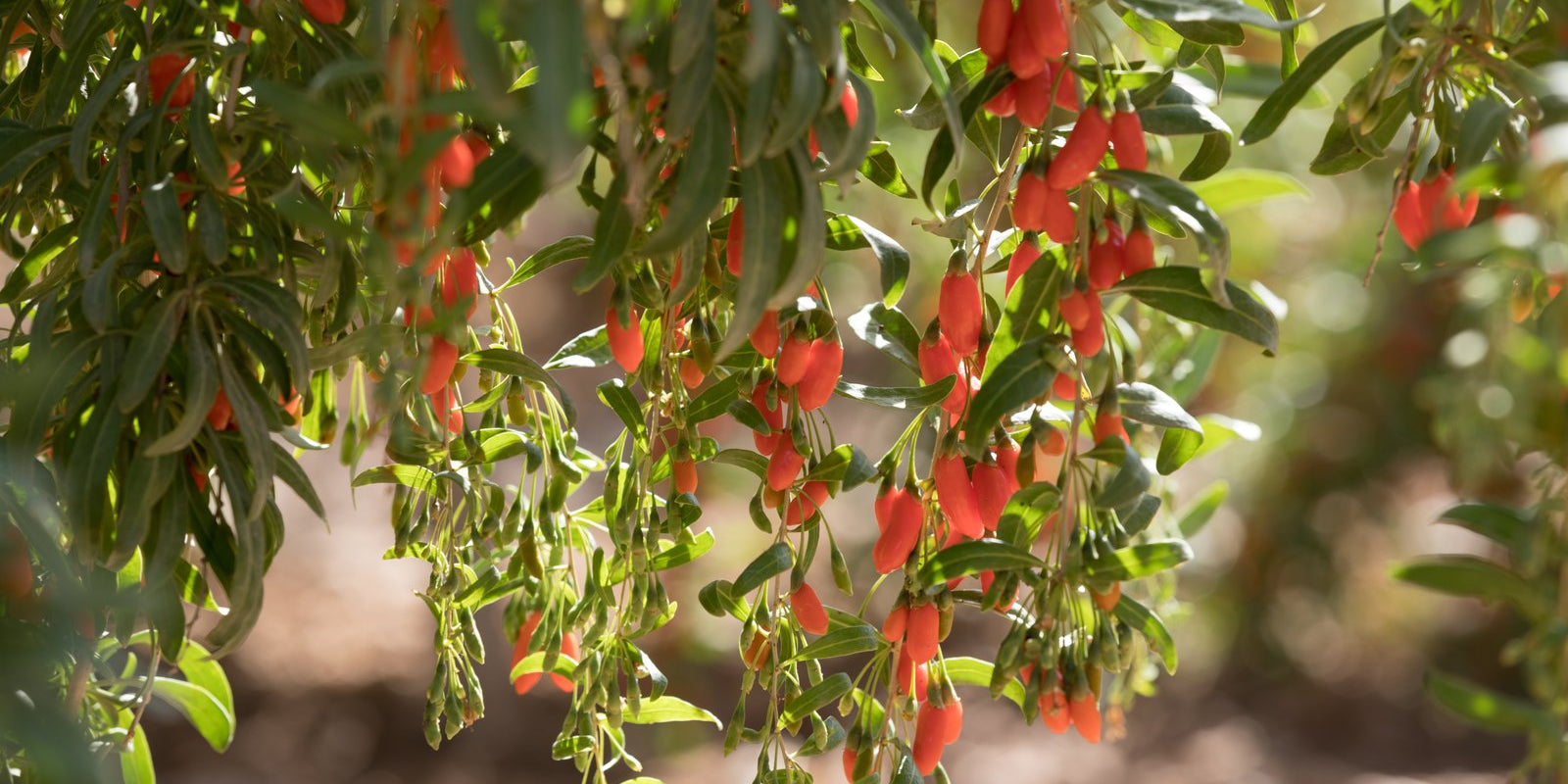
| Sun | Full sun |
|---|---|
| Water | Deep but occasional; never waterlogged |
| Soil | Well-drained, pH about 6.6 to 8 |
| Feed | Light: compost, a little potash, little nitrogen |
| Spacing | 1.2 to 2 m; hedges 0.6 to 1.2 m |
| Depth | About 6 mm |
| Germination | 1 to 3 weeks at 20 to 30°C, untreated |
| Harvest | Second or third summer |
| Container | At least 20 L, deep for the taproot |
| Frost | Hardy once established; seedlings frost tender |
| Support | Stake and soft ties for the main stem |
| Use | Berries fresh or dried; young leaves cooked |
Goji berry (Lycium barbarum) is a deciduous, thorny shrub of the nightshade family, Solanaceae, grown for its glossy orange-red berries and small violet flowers. It copes with heat, drought, hard frost and alkaline soil, so it suits many Australian gardens where softer berries struggle. The seed comes up readily; the real wait is for fruit, which usually starts in the second or third year.
Three mistakes that matter
- Feeding it like a tomato. Rich soil and plenty of nitrogen push long, leafy canes that shade themselves, and fruit quality drops. Feed lightly, as Care by growth stage sets out, and let lean, well-drained soil do the work.
- Planting in wet or acid soil. Goji does poorly where its roots stay wet and does not grow well in acid soil. Plant on a raised mound or bed in heavy clay, and lime soil that tests below pH 6.5 before planting.
- Letting it roam. Birds spread the seed and older roots throw up suckers, and goji has escaped into riverbanks and bushland in south-eastern Australia. Pick every berry, dig out suckers and keep it well away from creeks and reserves.
When to plant
Goji seed germinates in warmth, so sow once the seed-raising mix holds about 20 to 30°C. That means spring in the south and the cooler dry months in the north. Young seedlings are frost tender, so keep them under cover until the last frost, and grow them on in pots for their first year. One sowing gives a bush that lives for years, so there is nothing to sow in succession.
| Zone | Example cities | Sow | Harvest | Notes |
|---|---|---|---|---|
| Tropical | Darwin, Katherine NT; Cairns, Townsville QLD; Broome WA | Apr-Jun | Jul-Nov | Marginal. Sow in the dry season and grow in a raised bed or pot, as wet-season rain rots roots. |
| Subtropical | Brisbane, Gold Coast, Bundaberg QLD; Coffs Harbour, Lismore NSW | Aug-Oct | Dec-May | Humid summers can dull the fruit, so choose the sunniest, best-drained spot with good airflow. |
| Arid and semi-arid | Alice Springs NT; Broken Hill, Dubbo NSW; Mildura VIC; Kalgoorlie WA | Sep-Oct and Mar | Dec-Apr | Handles heat, drought and alkaline soil once settled; water seedlings through their first summer and shelter from hot winds. |
| Temperate | Sydney, Newcastle, Wollongong NSW; Melbourne, Geelong VIC | Sep-Nov | Jan-Apr | Sow under cover in September; plant out the next spring, around Melbourne Cup weekend in Melbourne. |
| Mediterranean | Perth, Bunbury WA; Adelaide and the SA coast | Sep-Nov | Dec-Apr | Dry summers suit the fruit; mulch and water young plants deeply. In WA, check the organism list first. |
| Cool and alpine | Hobart, Launceston TAS; Canberra ACT; Ballarat VIC; Orange NSW | Oct-Dec | Feb-Apr | Raise seedlings under cover for a year and plant out after the last frost; berries keep coming until autumn frosts. |
At the cool edge of a window, a seedling heat mat under the tray brings the mix up to temperature weeks earlier.
Site, soil and setup
| Get the bed right | What to do |
|---|---|
| Sun | Full sun. Some shade is tolerated, but fruit quality is best in hot, dry weather |
| Soil | A light loam is ideal. Goji copes with poor and heavy soils, but not with roots that stay wet: on clay, plant on a raised mound or bed |
| pH | About 6.6 to 8, neutral to slightly alkaline. Below 6.5, dig in garden lime or dolomite lime at 100 to 200 g per square metre, 4 weeks ahead. See soil pH |
| Bed preparation | Weed thoroughly and dig in a 5 cm layer of compost. Skip manure: a rich bed grows leaf, not fruit |
| Room | About 1.2 to 1.5 m clear on every side for a single bush. In a hedge row, 0.6 to 1.2 m between plants and about 2 m between rows |
| Placement | Away from creeks, bushland and reserves, where bird-sown seedlings and suckers can escape |
| Support | A sturdy stake about 1.5 m tall, driven in at planting, with soft ties for the main stem |
As a long-lived shrub, goji sits outside the vegie patch rotation, so give it a permanent spot of its own.
Container growing
A pot holds goji's suckering roots in check and suits a sunny courtyard or balcony. Use a pot that holds at least 20 L, filled with premium potting mix, because goji puts down a deep taproot. A larger pot dries out more slowly. The store's goji seed is not a named compact variety, so keep a potted plant small with the pruning in Pruning and Training.
- Watering: water when the mix is dry a finger's depth down, daily in hot weather, and never leave the pot standing in water.
- Feeding: mix a controlled release granular for containers into the potting mix at planting, at the label rate. From spring to late summer, add seaweed solution at 30 mL per 9 L fortnightly.
- Position: full sun, out of hot, drying winds.
- Winter: a leafless plant uses little water, so water sparingly until buds break.
Germinating the seed
Goji seed has little dormancy. Seed cleaned from a ripe berry, or packet seed stored cool and dry, usually germinates without any treatment once it is warm and moist. In a laboratory study, untreated seed on damp paper came up in 5 to 10 days in warmth. At the best temperature tested, 74 per cent germinated. A long cold, moist spell is optional. In old United States nursery tests it hastened and improved germination, and chilled seed averaged 74 per cent over 19 lots.
In seed-raising mix, expect the first seedlings in about 1 to 3 weeks at the warmth in When to plant. Stragglers follow for several weeks. Sow at least three seeds for every plant you want, because a few seedlings are usually lost along the way.
| Treatment | How | How long | Temperature | What success looks like |
|---|---|---|---|---|
| None needed (packet or fresh seed) | Sow on moist seed-raising mix, cover with about 6 mm of mix and keep evenly moist | Sow straight away | 20 to 30°C; a warm day and cooler night suits it | Seed leaves in about 1 to 3 weeks |
| Cleaning seed from fresh berries | Press ripe berries through a kitchen sieve into a bowl of water, float off the pulp, then spread the seed on paper to dry | Until fully dry | Room temperature, out of the sun | Clean, pale yellow, flattened seeds about 2 mm long |
| Cold moist stratification (older or slow seed) | Mix the seed with damp sand or vermiculite in a sealed, labelled bag and keep it in the fridge | 60 to 120 days | About 5°C | Plump seed, sometimes a white root tip in the bag; quicker, more even seedlings once sown warm |
Spare seed keeps best dried and sealed in a jar in the fridge at about 5°C until the next warm season. For more on the methods, see soaking, scarification and cold stratification.
When nothing comes up
- Too cold. In a cool mix, seed can take three weeks or more to show. Move the tray onto a heat mat or into the warmest spot indoors.
- Mix dried out or stayed soggy. Keep it evenly damp, never wet, and cover the tray to hold moisture until seedlings show.
- Sown too deep. Cover the seed with no more than about 6 mm of mix.
- Seed from shop-bought dried berries. Drying and storage can leave seed that no longer grows; start from fresh or packet seed instead.
- Seedlings collapsed at soil level. This is damping off (a fungal rot of young stems); use fresh mix and clean trays, and water from below.
- Given up too soon. Wait six weeks at the right warmth before sowing again, and chill any leftover seed for 60 days first.
Sowing Seeds
Start goji berry seeds in a tray or punnet under cover, straight from the packet or after the cold spell in Germinating the seed.
Starting under cover
- Fill a punnet with seed-raising mix and sow the seeds 2 to 3 cm apart, about 6 mm deep.
- Keep the tray warm, as When to plant sets out, and evenly moist, in bright light once seedlings appear.
- Pot seedlings on singly once they have their first true leaves, and feed them as the seedling row of Care by growth stage sets out.
- Grow them on in pots for about a year, moving each to a bigger pot as roots fill it.
Planting out
- Harden off each plant first (getting it used to outdoor sun and wind gradually), over about a week. See hardening off.
- Plant out in spring, after the last frost. Space single bushes 1.2 to 2 m apart, or 0.6 to 1.2 m apart in a hedge row.
- Dig a hole twice as wide as the root ball, so the roots spread easily.
- Set the plant at the depth it grew in its pot, drive in the stake beside it and tie the main stem loosely.
- Water in with seaweed solution at 30 mL per 9 L, then mulch, keeping the mulch clear of the stem.
Care by growth stage
An established bush repeats the last four stages every year, and the months shift with the zone.
| Stage | Water | Feed | Watch for |
|---|---|---|---|
| Seedling in pots, first year | Keep the mix evenly moist, never soggy | Seaweed solution at half strength (15 mL per 9 L), fortnightly, from the first true leaves | Damping off; leggy seedlings in poor light; in frost-prone districts, move first-year pots under cover for winter, as only established plants are frost hardy |
| Newly planted, first months in the ground | Water deeply, and more often than an established bush, until new growth shows; sandy soil needs it more often than clay | A handful of worm castings in the planting hole; seaweed solution at 30 mL per 9 L, fortnightly, for the first month | Weeds competing at the base; mulch creeping onto the stem |
| Bud break, spring | A deep soak when dry, about 25 mm a week in dry spells | Pelletised chicken manure at 100 g per square metre, once, as buds break | Aphids on soft shoot tips; suckers |
| Flowering, late spring to summer | Keep moisture even; wet and dry swings bring blossom end rot | Sulphate of potash at 30 g per square metre, once, at first flowers | Two-spotted mite in hot, dry weather; powdery mildew |
| Fruit colouring and picking, summer to autumn | Water less often once berries colour, holding back for 3 to 7 days before a main picking, but never let the soil swing from soaked to bone dry | Fish and seaweed blend at 25 mL per 9 L, fortnightly, only if leaves turn pale; no extra nitrogen | Birds at ripe fruit; berries bruising black |
| Leaf fall and dormancy, winter | Rain is usually enough; keep the soil from waterlogging | Nothing; spread a 5 cm layer of compost as mulch in late winter | Wet roots; time for the dormant prune |
If growth stalls in poor, sandy soil, a light application of all-purpose controlled release granular (NPK around 14-5-10), scratched in at bud break, can help. Once berries colour, drape white, wildlife-safe netting over the bush, pulled taut, with mesh too small to push a finger through.
Pruning and Training
Goji fruits on the current season's shoots, so pruning that renews growth each year keeps berries coming and the thorny shoots within reach. Staking the main stem early gives a single trunk that is easier to prune and pick.
- First year: tie the strongest shoot to the stake and leave the rest unpruned.
- Second winter: keep one main stem and cut off side shoots below about 40 cm.
- Summer tipping: once the plant passes about 60 cm, pinch 5 to 8 cm off the shoot tips. They branch, and side shoots carry more fruit.
- Each winter: while leafless, remove weak, damaged and crossing branches, then shorten side branches by 15 to 45 cm.
- Height: keep the bush to about 1 to 2 m, so picking stays manageable.
- Suckers: from about the third year, dig out shoots that rise from the roots, or pot them up.
Most goji plants carry spines, so wear gloves and long sleeves to prune and pick. Bin prunings that still carry berries rather than dumping them, because the seed inside can still grow.
Companion planting
Goji is happiest in its own sunny spot at the garden's edge, with low flowering neighbours that bring in predators of aphids and mites.
Grows well with
- Alyssum, a low insectary plant whose flowers feed hoverflies and tiny parasitic wasps.
- Thyme, which likes the same lean, well-drained, sunny ground.
- Lavender, another dry-soil plant whose flowers draw bees.
Keep apart
- Blueberries and other acid-soil plants, which need the opposite soil to goji.
- African boxthorn, a declared weed and fruit fly host that is best removed, not grown near fruit.
Harvesting Fruit
Pick berries once they are fully coloured a glossy orange-red, usually about five weeks after the flowers open.
- Pick by hand, because the fruit clings to its stem.
- Pull each berry slightly to the side, not straight up, so the stalk stays on the bush.
- Handle the berries gently, since bruised fruit turns black.
- Pick every few days, as new flowers keep opening and fruit ripens over a long season.
- Clear ripe and fallen berries, so birds do not carry the seed into bushland.

Fresh berries keep for about two weeks in the fridge, and frozen berries thaw with their colour and flavour intact. To dry them, spread the berries in a single layer on trays in warm sun. A food dehydrator at about 40°C takes around three days. They are dry when a cooled handful leaves no moisture on your palm and the berries spring apart. Pack them loosely in a sealed jar for a week, shaking it daily, and dry them further if beads of moisture form inside. Then store the jar somewhere cool and dry.
Eat the berries fresh, or dried like raisins, and add dried berries to soups and rice dishes in the Chinese way. Cook the tender young shoots and leaves as a green vegetable.
Traditional use and history
In northern China, the Ningxia region is the traditional home of the Lycium barbarum crop. Chinese herbal tradition names Zhongning County there as the plant's classic growing area.
Traditional Chinese medicine has long used two parts of the plant under separate names: the dried fruit and the root bark. A review of the plant's history notes that the two goji species have a long tradition as both food and medicine in East Asia. That tradition takes both parts from both species, but only L. barbarum is officially recognised.
| Tradition or language | Name | What it names |
|---|---|---|
| Chinese | gouqi (gǒuqǐ) | The plant; "goji" is an English approximation of it |
| Latin | fructus Lycii; cortex Lycii radicis | The dried fruit; the root bark |
| Japanese | kuko | The plant |
| English | wolfberry, matrimony vine, Duke of Argyll's tea tree | The plant |
The name Lycium goes back to Dioscorides, the ancient Greek writer on plants. In Britain, where records point to several early introductions, the shrub became the Duke of Argyll's tea tree. Someone in China had sent the third Duke a "tea tree" that was really this plant. There it grows mostly on the coast and in hedgerows.
"Goji" is a relatively new name in English, spread by the marketing of the berries in Western countries, which drew criticism for unsupported claims. In Australia it is a garden escape, naturalised in the south-east and invading riverbanks such as those of Yarra Bend Park in Melbourne.
Safety
These seeds are sold for growing. Nothing here is advice to eat or take any part of the plant. Anyone thinking of using a plant should first seek advice from a qualified health practitioner.
| Topic | What the sources say |
|---|---|
| Toxicity | A scientific review of goji's chemistry and safety found no signs of toxicity in the plant, while noting the warfarin cases under Medicines. LiverTox, the United States liver injury database, has no goji record. Its wild relative African boxthorn is different: NSW lists its berries, leaves, stems and roots as toxic to people. |
| Look-alike | African boxthorn (Lycium ferocissimum) is a stiff, upright shrub with spines up to 15 cm long, somewhat fleshy leaves in clusters of 5 to 12, and rounded berries 5 to 12 mm long. Goji has weak, arching branches and longer, oval berries 1 to 2 cm long. The other goji species, Lycium chinense, is a separate plant. |
| Pregnancy and breastfeeding | A clinical reference advises avoiding goji products in pregnancy and breastfeeding, because safety information is lacking. |
| Medicines | Case reports link goji products with a raised INR and bleeding in people taking warfarin. Memorial Sloan Kettering Cancer Center also notes laboratory evidence that goji extracts can change how the body handles some other medicines (those processed by the CYP3A4, 2C9 and 2C19 enzymes). |
| Allergy and skin | Goji berries have caused allergic reactions, including anaphylaxis, mostly in people already allergic to peach or other plant foods through lipid transfer protein. In one Spanish study, 24 of 31 people with plant food allergies reacted to goji on skin testing. Most plants carry spines that scratch. |
| Pets and livestock | The ASPCA's dog, cat and horse plant lists carry no entry for goji or Lycium either way, and no source checked records poisoning of pets or livestock by goji. Weeds Australia notes that all parts of African boxthorn are poisonous to people, livestock and other animals, though the risk is thought to be low, and its leaves may be toxic to poultry. |
| Legal status | The NSW, Victorian and Tasmanian declared lists name no goji, only African boxthorn, and Weeds of Australia records goji as an environmental weed in Victoria and Tasmania. In Queensland, South Australia, the Northern Territory and the ACT, confirm goji's status with the state or territory weed authority before planting. African boxthorn is a Weed of National Significance: NSW bans its sale statewide, Queensland bans giving it away, selling or releasing it, Tasmania prohibits its import and sale, South Australia prohibits its sale and its movement on public roads statewide, and Victoria declares it in every catchment region. Western Australia's organism list includes Lycium barbarum, so check its status with the Department of Primary Industries and Regional Development before bringing seed or plants into WA. |
Common problems
No fruit yet. Plants usually start fruiting in their second or third year and reach full cropping at three to five years. If an older bush is all leaf, see Three mistakes.
Dark, sunken patch at the flower end of berries. Blossom end rot is a shortage of calcium inside the fruit, caused by uneven watering. Steady moisture fixes it; a calcium spray does not. Read more
Bland or poorly coloured fruit. Fruit quality falls in cool, humid weather, so humid districts need the sunniest, most open spot available.
Yellowing, wilting bush in wet soil. Roots that sit wet through winter fail, especially in heavy clay, so raise the bed or move the plant to better-drained ground. Read more
Berries stripped overnight. Birds take ripe fruit and spread the seed; net the bush as Care by growth stage describes. Read more
Pests and diseases
Goji has few serious pests in home gardens, and most trouble shows in hot, dry weather or in crowded, damp growth.
Aphids (Aphididae). Small sap-sucking insects cluster on soft shoot tips and flower buds in spring, curling the new leaves. Hose them off, or spray insecticidal soap and let hoverflies and ladybirds finish the job. Read more
Two-spotted mite (Tetranychus urticae). Leaves turn finely speckled and dull, often with fine webbing underneath, in hot, dry weather. Mist the undersides of the leaves, and use horticultural oil on cool days if numbers climb. Read more
Powdery mildew (Arthrocladiella mougeotii). White, powdery patches spread over leaves and young stems where air is still. Prune for airflow, keep water off the leaves, and spray 1 part full-cream milk to 10 parts water at the first spots. Read more
Queensland fruit fly (Bactrocera tryoni). Fresh goji berries are a recorded host, and stung berries carry its eggs and maggots. Where fruit fly is active, drape fine insect mesh over the bush once fruit sets, secured to the ground and clear of the berries. Pick berries as they ripen and clear fallen fruit. Freeze stung fruit, or seal it in bags in the sun for at least 14 days, before binning it, never composting it. Read more
Prevention first
- Check shoot tips and leaf undersides weekly from spring.
- Before any spray, read the label. Use only a product labelled for the purpose, at its rate, and keep to its withholding period (the wait before picking).
- Avoid broad-spectrum sprays; pyrethrum harms bees, so if you must spray, do it late in the day away from open flowers.
Tips
- Raise three or four plants from one packet of about 60 seeds, and keep the sturdiest as your bush.
- Lay weed mat or a thick mulch around the bush to cut weeds and slow suckering.
- Tie the main stem to its stake with soft cloth strips rather than wire, because goji's weak, arching stems chafe easily.
Questions
How long do goji berry seeds take to germinate?
Usually about 1 to 3 weeks at 20 to 30°C, with a few seeds coming up later. Fresh or packet seed needs no soaking or chilling. If nothing appears after six weeks in the warmth, chill the leftover seed in damp sand in the fridge for 60 days and sow again.
How long does a goji plant take to fruit from seed?
Most plants start fruiting in their second or third year and reach full cropping at about three to five years. Grow seedlings on in pots for their first year, then plant them out in full sun. Feed lightly, because rich soil grows leaf instead of flowers.
Can you grow goji berries in Queensland?
In the subtropics, yes, in the sunniest, best-drained spot, although humid summers can dull the fruit. In the tropics goji is marginal. Sow in the dry season and grow it in a raised bed or large pot, so its roots never sit wet. Cooler inland districts suit it well.
Is goji berry the same as African boxthorn?
No. Both belong to the genus Lycium, but African boxthorn is a Weed of National Significance with stiff, very spiny branches and rounded berries. NSW lists its berries as toxic. Goji has weaker, arching branches and longer, oval berries. Never eat berries from a wild boxthorn.
Are goji plants safe around dogs and cats?
The ASPCA's dog and cat plant lists carry no entry for goji, and no source checked records a pet poisoned by it. The spines can still scratch. If a pet eats a large amount of any plant, or berries from a wild boxthorn, call your vet.
Is it legal to grow goji in my state?
The NSW, Victorian and Tasmanian declared lists do not name goji, although it is recorded as an environmental weed in Victoria and Tasmania. Elsewhere, confirm its status with your state or territory weed authority, and in Western Australia check before bringing seed in. Wherever you live, keep suckers and fallen fruit in check.
Grow it
More fruit guides
All fruit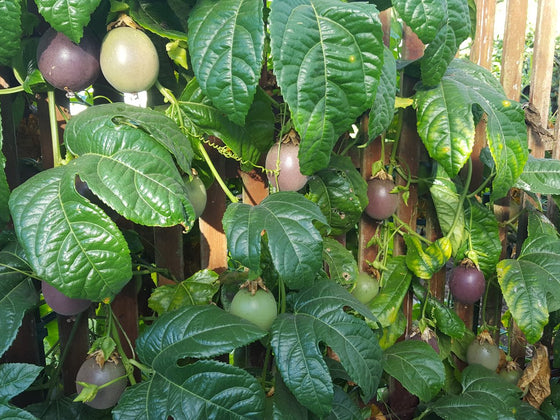
Passionfruit
Grow passionfruit from seed in Australia: scarifying and sowing, six climate zones, trellis training, feeding, pollination, pests and knowing when it is ripe.
| Position | Full sun, sheltered from wind |
|---|---|
| Depth | 6 to 10 mm |
| Spacing | 2 to 4 m apart |
| First pick | 12 to 24 months from sowing |
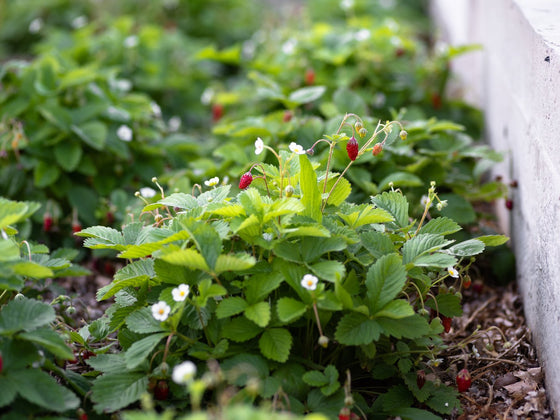
Strawberry
Grow alpine strawberries from seed in Australia: surface sowing in light, chilling seed, months for six climate zones, feeding, pests, division and picking.
| Position | Morning sun, afternoon shade |
|---|---|
| Depth | Surface sow; needs light |
| Spacing | 20 to 30 cm apart |
| First pick | Often 16 to 22 weeks |