
How to Grow Thyme in Australia
Thyme is a woody perennial herb that wants full sun, lean, sharply drained soil and very little water or feed. Press the tiny seed onto the surface of seed raising mix, keep it at 18°C to 21°C, and expect seedlings in 14 to 21 days. Plant out 20 to 30 cm apart, pick lightly from 12 to 16 weeks, and trim by a third after flowering.
| Sun | Full sun |
|---|---|
| Water | Sparingly, only once the soil dries |
| Soil | Lean, gritty, sharply drained, pH 5.5 to 8.0 |
| Feed | Minimal; weak worm casting liquid twice yearly |
| Spacing | 20 to 30 cm apart |
| Depth | Surface, or 2 to 3 mm |
| Germination | 14 to 21 days at 18 to 21°C |
| Harvest | Light picking from 12 to 16 weeks |
| Container | Yes, 25 cm pot, about 8 L |
| Frost | Most withstand moderate frost |
| Use | Fresh or dried leaves, edible flowers |
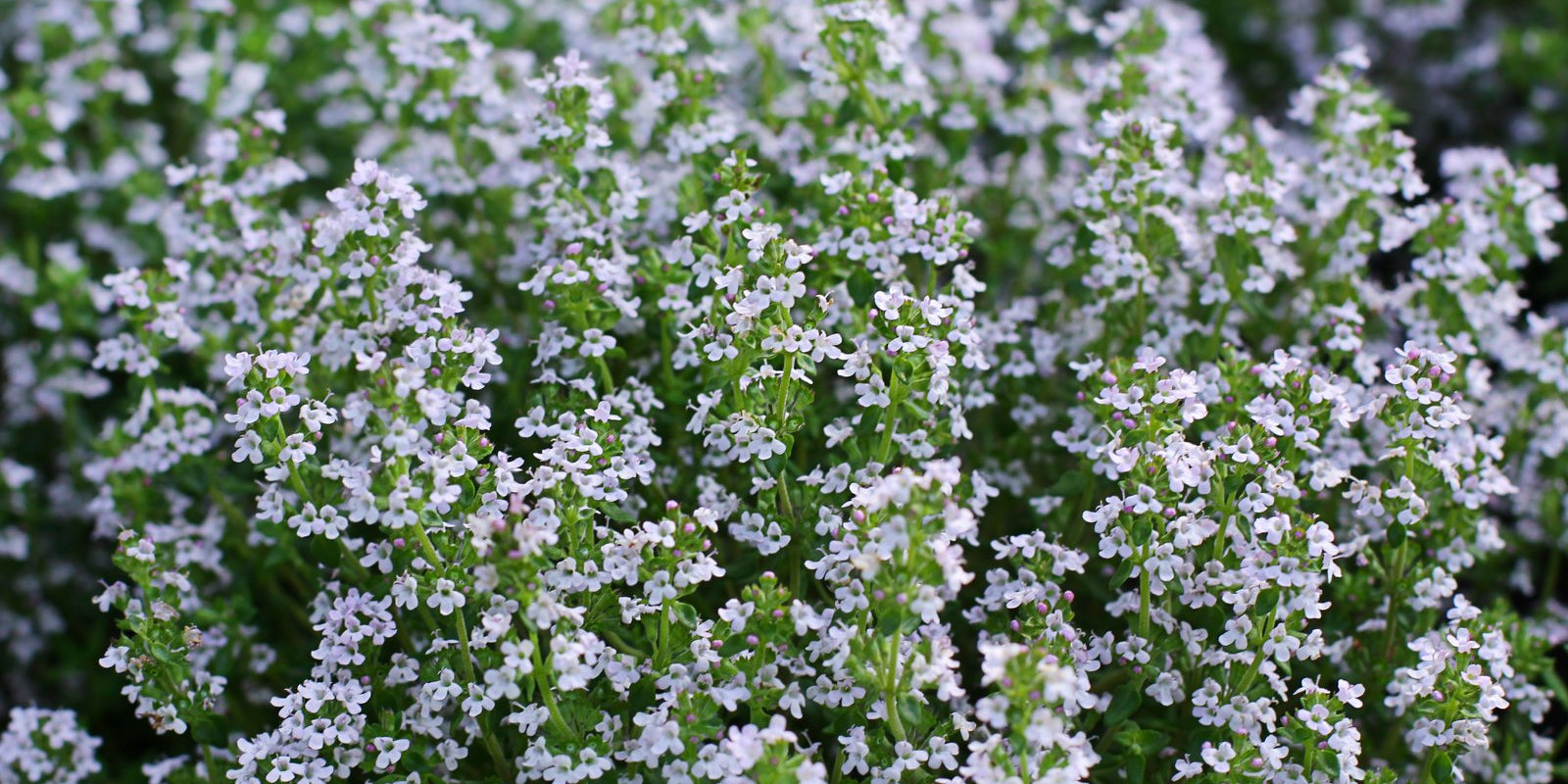
Thyme (Thymus vulgaris) is a small, woody perennial herb in the mint family, Lamiaceae, grown for its aromatic leaves and its nectar-rich summer flowers. It comes from the rocky, dry hillsides of the Mediterranean. It suits sunny, well-drained gardens from Perth to the Canberra tablelands, and one sowing can be picked for years. Most thyme that fails is killed by kindness: rich soil, frequent watering and regular feeding rot the roots and dull the flavour.
Three mistakes that matter
- Burying the seed. Thyme seed is tiny and needs light to germinate, so seed covered deeply often never appears. Press it onto the surface and cover it only lightly, as Sowing Seeds describes.
- Treating it like a vegetable. Manure, frequent watering and regular feeding give soft growth, weak flavour and rotting roots. Grow thyme in lean, sharply drained soil, water only once the soil has dried, and feed as sparingly as Care by growth stage shows.
- Never trimming it. An unpruned plant turns woody and straggly with a bare centre, and an old, leggy plant is hard to rescue. Trim by about a third after each flowering, as Trimming and Shaping describes.
When to plant
Thyme seed germinates in soil between 15°C and 25°C, fastest at about 18°C to 21°C, and takes 14 to 21 days to appear. A plant lasts several years, so sow again only to replace tired plants or to fill a new bed.
| Zone | Example cities | Sow | Harvest | Notes |
|---|---|---|---|---|
| Tropical | Darwin, Katherine NT; Cairns, Townsville QLD; Broome WA | Jun-Jul | Sep-Nov | Sow in the dry season and grow in pots. Wet-season humidity is hard on thyme, and many plants struggle. |
| Subtropical | Brisbane, Gold Coast, Bundaberg QLD; Coffs Harbour, Lismore NSW | Jul-Oct | All year once established | Sow from midwinter to mid-spring so plants root before the humid summer. Use a raised, gritty bed or a pot. |
| Arid and semi-arid | Alice Springs NT; Broken Hill, Dubbo NSW; Mildura VIC; Kalgoorlie WA | May-Jun | All year once established | Raise May and June sowings in trays under cover, away from inland frost. Thyme copes well with dry heat. |
| Temperate | Sydney, Newcastle, Wollongong NSW; Melbourne, Geelong VIC | Aug-Oct | All year once established | Start August sowings in trays under cover. Sow by October, before summer heat dries out tiny seedlings. |
| Mediterranean | Perth, Bunbury WA; Adelaide and the SA coast | Aug-Oct | All year once established | Sow in spring, before the dry heat arrives. In Perth, March and April sowings also do well. |
| Cool and alpine | Hobart, Launceston TAS; Canberra ACT; Ballarat VIC; Orange NSW | Sep-Dec | Oct-Apr once established | Sow in trays under cover in September and plant out after the last frost. Mulch roots over winter. |
At the cold end of a window, sow in trays in a warm, bright spot and plant out after the last frost. In the tropics and humid subtropics, sow early enough that plants are well rooted before the wet, humid months arrive.
Site, soil and setup
Give thyme the hottest, sunniest and driest spot in the garden. It is happiest in poor, gritty ground that would starve a vegetable, and it dies faster from wet feet than from drought.
| Get the bed right | What to do |
|---|---|
| Sun | Full sun, at least 6 hours a day; half sun at a pinch |
| Soil | Light, gritty and sharply drained; fork in grit or coarse sand wherever the bed holds water |
| Organic matter | No manure; only in pure sand, dig in a 5 cm layer of compost |
| pH | 5.5 to 8.0; below 5.5, dolomite lime at 100 to 200 g per square metre, 4 weeks before planting |
| Drainage | A raised bed, mound, rockery or pot wherever water lies after rain or the ground is heavy clay |
| Rotation | A perennial, so give it a permanent spot outside the vegie patch rotation, such as a herb bed or path edge |
Container growing
Thyme has fine, shallow roots, so it grows well in a pot at least 25 cm wide, about 8 L, with plenty of drainage holes. Terracotta suits it because the mix dries out between waterings. Fill the pot with quality potting mix, with up to a quarter grit or coarse sand by volume mixed through. Common thyme forms a compact bush to about 30 cm, and creeping thyme stays low and spreads across the mix.
- Water: only once the mix has dried out, more often in hot weather, and never leave the pot standing in a saucer of water.
- Feed: worm casting liquid diluted to weak tea colour, once in spring and once after flowering.
- Position: full sun; in a wet winter or a tropical wet season, move the pot under the eaves, out of the rain.
Sowing Seeds
Most gardeners start thyme in trays, because the seed is tiny and the seedlings grow slowly, then plant out 6 to 8 weeks after sowing.
Starting in trays
- Fill a punnet or tray with fine seed raising mix and water it before sowing.
- Mix the seed with a little dry sand and scatter it thinly, as the sand trick for tiny seeds shows.
- Press the seed onto the surface and cover it with no more than 2 to 3 mm of fine mix.
- Keep the tray warm and evenly moist by misting, as watering seeds and seedlings explains; a pour of water washes the seed away.
- Sow a little more than needed, because germination is often patchy.
- When seedlings have several leaves, move each one into its own small pot, about 7.5 cm across.
| Type | Store's selections | Botanical name | Habit | Space plants | Best use |
|---|---|---|---|---|---|
| Common thyme | French, Winter, Thyme (Organic) | Thymus vulgaris | Upright, bushy, to about 30 cm; small grey-green leaves | 20 to 30 cm | Kitchen sprigs and drying; the most practical to pick |
| Lemon thyme | Lemon (Wild) | Thymus pulegioides, a broad-leaved thyme | Mound about 30 cm; round, lemon-scented leaves; pink summer flowers | 20 to 30 cm | Kitchen, bees, mass planting among rocks |
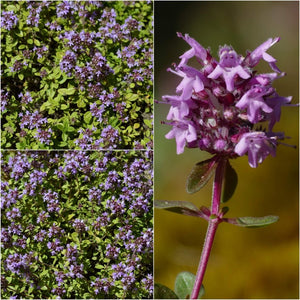
| Creeping thyme | Creeping | Thymus serpyllum | Low mat, usually under 15 cm | 20 to 30 cm | Groundcover, rockeries, gaps between pavers |

Planting out
Keep seedlings under cover until they are large enough to handle easily, about 10 cm tall for the upright types. Harden them off (gradually accustom them to sun and wind) for about a week, as hardening off seedlings describes. Set them outside by day and bring them under cover at night.
- Space plants 20 to 30 cm apart.
- Set each plant at the depth it grew in its pot and firm the soil around it.
- Water in well, then let the soil dry before watering again.
Sowing direct
In mild, dry weather, seed can also be scattered where it is to grow. Press it into finely raked soil, keep the surface moist until seedlings appear, and thin them to the spacing in the table.
Care by growth stage
Dry roots and restraint decide how well thyme grows. Over-feeding reduces the essential oils that give thyme its flavour and aroma, so feed at half strength at most, and rarely.
| Stage | Water | Feed | Watch for |
|---|---|---|---|
| Germination, weeks 1 to 3 | Water lightly to keep the surface evenly moist | None until the first true leaves | A dried-out surface; seedlings collapsing at soil level |
| Seedlings in trays, weeks 3 to 8 | Water when the surface starts to dry, never soggy | Seaweed solution at half strength, 15 mL per 9 L, fortnightly | Damping off (seedlings rotting at soil level) in wet mix; slow growth is normal |
| Planting out, weeks 6 to 12 | Whenever the soil dries, until new growth shows | Seaweed solution at half strength, 15 mL per 9 L, once at planting | Snails and slugs on soft new shoots |
| Established, from about week 12 | Deeply, only when the soil is dry; about once a week in hot weather | Worm casting liquid, weak tea colour, in spring and after flowering | Fine stippling from mites in hot, dry spells |
| Flowering and picking, late spring to summer | Keep watering steady right through picking | None while flowering | Grey mould in crowded, humid plantings; trim once flowers fade |
| Winter | Only in long dry spells | None | Water lying around the crown; frost in cold gardens |
If growth stalls in poor soil, a light dose of all-purpose controlled release granular (NPK around 14-5-10) scratched in each spring can help.

Trimming and Shaping
Regular light trimming keeps thyme compact and leafy, and the right cut depends on the type and the time of year.
- After flowering: cut the plant back by about a third, keeping to the leafy growth.
- Spring: give shrubby plants a light trim in mid to late spring to keep them bushy.
- Creeping thyme: shear off the spent flower heads and little else.
- Old wood: avoid cutting hard into bare, woody stems, which often fail to regrow.
- Renewal: after several years, replace straggly plants with young ones grown from cuttings or by layering.
- Division: split mat-forming creeping thyme in spring or autumn, as dividing perennials explains.
Companion planting
Thyme shares a hot, dry corner happily with other Mediterranean herbs, and its flowers bring in bees and other pollinators.
Grows well with
- Rosemary, sage and oregano, which want the same full sun, lean soil and dry roots.
- Cabbages and other brassicas, which thyme is traditionally said to help protect from caterpillars.
Keep apart
- Basil, parsley and lettuce, which need richer soil and far more water.
- Mint, which prefers damp, part-shaded ground and spreads into its neighbours.
Harvesting Sprigs
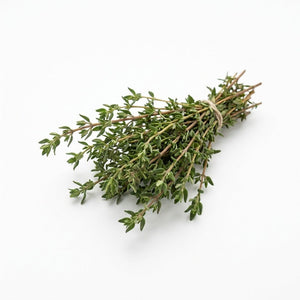
Start picking lightly once plants are bushy and about 10 to 15 cm tall, usually 12 to 16 weeks after sowing. Take only a little in the first year.
- Snip soft green tips 5 to 8 cm long, and leave the woody base alone.
- Take no more than a third of the plant at one time.
- Pick in the morning, once the dew has dried.
- For the strongest flavour, and for drying, cut just before the plants flower.
- Pick the tiny flowers too, which have a mild thyme flavour.

Fresh sprigs keep about a week in the fridge, wrapped in damp paper towel inside a perforated bag. Thyme dries well: hang small bunches in a warm, dark, airy place until the leaves are brittle, then strip them into an airtight jar. Sprigs can also be frozen whole.
The flavour is strong, so use it sparingly with roast meats, fish, mushrooms, beans and carrots.

Common problems
Seed does not come up. Seed buried too deep, left to dry out or sown into cold mix often fails, and germination is patchy even when conditions suit it. Read more
Plants collapse in wet weather. Roots rot in soil that stays wet, most often in heavy clay, in pots standing in saucers, or through a tropical wet season. Read more
Woody, bare-centred plants. Plants left untrimmed for years sprawl and thin out; see Three mistakes that matter.
Plants die down in winter. In frosty gardens thyme can die back over winter and regrow in spring from roots kept warm under mulch.
Pests and diseases
Thyme's aromatic oils deter most pests, so most trouble follows hot, dry spells or damp, crowded conditions. Use only sprays labelled for the pest and the crop, and keep to any withholding period before picking.
Two-spotted mite (Tetranychus urticae). These mites are under 0.5 mm long, multiply rapidly in hot, dry weather, and leave yellow stippled patches on the leaves. Read more
Grey mould (Botrytis cinerea). In crowded, humid plantings it causes leaf spots, grey mould and dieback, and cool weather with heavy dew favours it. Remove affected foliage promptly and avoid overhead watering.
Damping off (Pythium and Rhizoctonia species). These soil organisms rot seedlings at soil level so they fall over and die, most often in wet, overwatered trays. Read more
Prevention first
- Give plants their full spacing and trim after flowering so air moves through the foliage.
- Sow thinly into fresh seed raising mix in trays that drain well, and do not overwater seedlings.
- In hot, dry spells, check leaf undersides for mites, hose them off or spray insecticidal soap, and let ladybirds and predatory mites help.
- Protect young plants from snails and slugs, which eat soft new shoots.
Tips
- Keep a favourite plant by taking cuttings or layering it, because seed saved from a selected plant may not come true.
- Mulch around thyme with gravel or coarse grit, which lifts low stems off damp soil.
- Leave some flowers for the bees, because thyme flowers are rich in nectar; see gardening for bees.
- Pick over plants often, even when the kitchen needs little, because regular harvesting keeps thyme compact and bushy.
Questions
Is thyme hard to grow from seed?
It is slow rather than hard. Press the tiny seed onto the surface of seed raising mix, because it needs light, and keep it warm and evenly moist. Seedlings appear in 14 to 21 days, often patchily, so sow a little extra. Plant out 6 to 8 weeks after sowing, once seedlings are large enough to handle.
How often should you water thyme?
Water only once the soil has dried out, which is about once a week in hot weather for plants in the ground. Thyme suffers far more from overwatering than from drought, and its roots rot in soil that stays wet. Pots dry faster, so check them more often in summer.
Why is my thyme going woody?
Thyme naturally turns woody at the base, and it sprawls faster when it is never trimmed. Cut it back by about a third after flowering, keeping to the leafy growth, because bare old stems often do not reshoot. After several years, replace a straggly plant with a young one grown from a cutting.
Can you grow thyme in a pot?
Yes. Use a pot at least 25 cm wide, about 8 L, with good drainage holes. Mix up to a quarter grit or coarse sand into quality potting mix, and stand the pot in full sun. Water only when the mix dries out, and never leave the pot sitting in a saucer of water.
Does thyme come back every year?
Yes. Thyme is an evergreen perennial, and most types withstand moderate frosts. In cold, frosty gardens it can die down over winter and regrow from the roots in spring, helped by a layer of mulch. Plants usually become woody and less productive after a few years, so raise replacements from cuttings or seed.
When is the best time to pick thyme?
Pick lightly from about 12 to 16 weeks after sowing, once the plant is bushy. Flavour is strongest just before the plants flower, which is also the best time to cut sprigs for drying. Snip soft green tips in the morning after the dew dries, and never take more than a third.
Grow it



More herb guides
All herbs
Agrimony
How to grow agrimony in Australia from seed: chilling the burrs, sowing months for six climate zones, sun and soil, cutting back, harvest, history and safety.
| Position | Full sun, light shade tolerated |
|---|---|
| Depth | 5 mm |
| Spacing | 30 cm apart |
| First pick | Summer; 12 to 18 weeks from spring sowing |

Angelica
How to grow angelica in Australia from seed: fresh or chilled seed sown on the surface, part shade, months for six climate zones, stems, history and safety.
| Position | Part shade, morning sun |
|---|---|
| Depth | Surface; press in, uncovered |
| Spacing | 50 to 90 cm |
| First pick | Stems at about 18 months |

Ashwagandha
Grow ashwagandha from seed in Australia: warm germination, sowing, site, care and root harvest, with its history and safety, for all six climate zones.
| Position | Full sun |
|---|---|
| Depth | 5 mm |
| Spacing | 45 to 60 cm apart |
| First pick | Roots 21 to 26 weeks |

Astragalus
How to grow astragalus (huang qi) in Australia from hard-coated seed: rubbing and soaking, sowing months for six zones, care, pests and lifting the taproot.
| Position | Full sun |
|---|---|
| Depth | 5 mm |
| Spacing | 20 to 45 cm apart |
| First pick | Roots after 2 to 3 years |