
How to Grow Mint in Australia
Mint is a hardy perennial best grown in a 30 cm pot, because its runners take over a bed. Surface sow spearmint seed in spring, or in the dry season in the tropics, at 18°C to 24°C, and keep the mix evenly moist. Give it part shade in hot districts and light feeding. Pick sprigs above a leaf pair from 8 to 12 weeks, and shear the plant after flowering.
| Sun | Part shade or full sun |
|---|---|
| Water | Evenly moist; pots daily in heat |
| Soil | Rich, moist, pH 6.0 to 6.5 |
| Feed | Minimal; half-strength seaweed solution monthly |
| Spacing | 30 to 45 cm |
| Depth | Surface sown, not covered |
| Germination | 10 to 21 days in 18 to 24°C soil |
| Harvest | 8 to 12 weeks |
| Container | Yes, 30 cm pot, about 13 L |
| Frost | Hardy; dies down in cold winters |
| Use | Leaves for tea, sauces, salads and drinks |
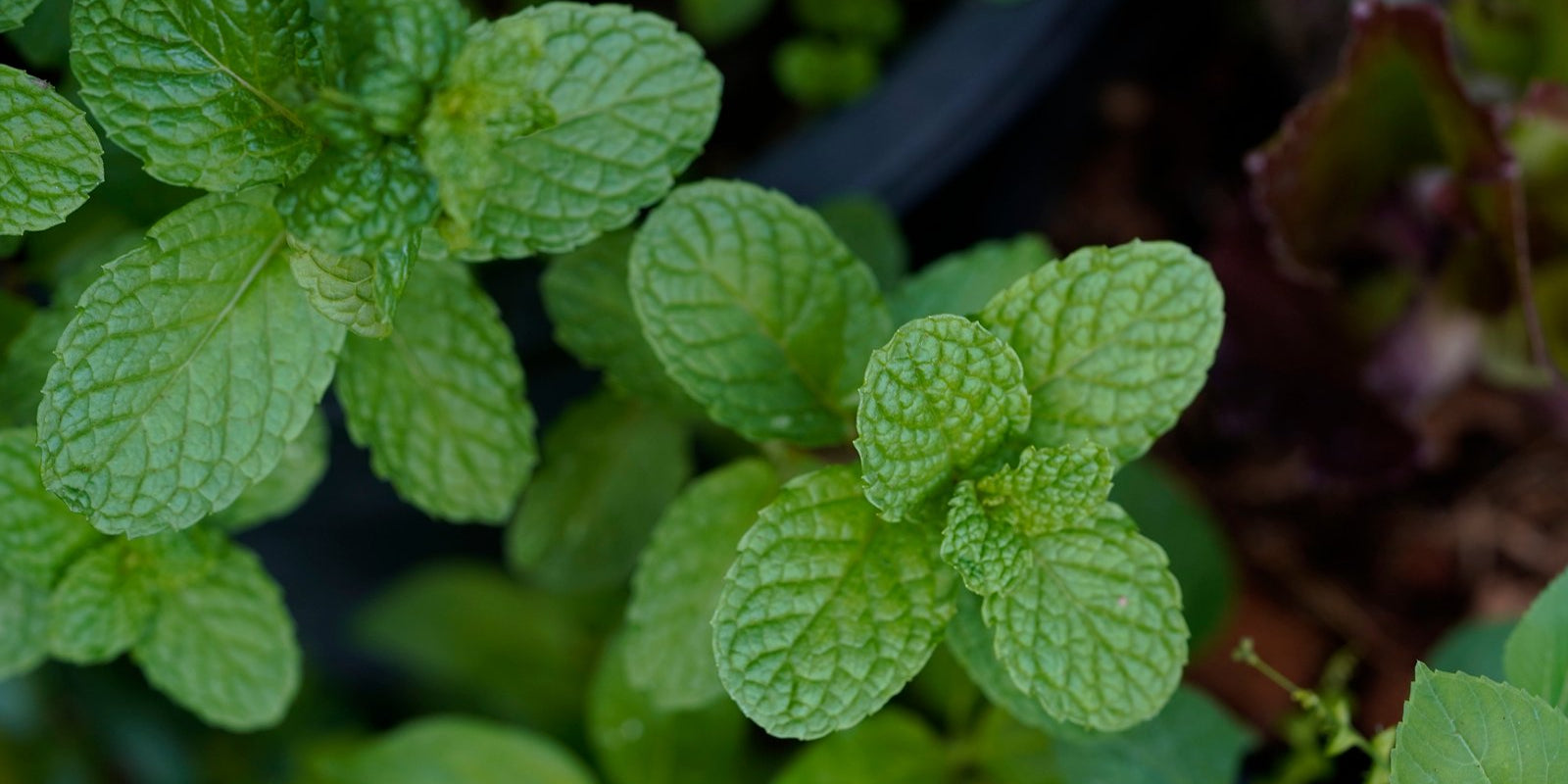
Mint (Mentha species) is a hardy perennial herb in the Lamiaceae family, grown for leaves that go into tea, sauces, salads and cold drinks. One pot picks for years anywhere from Darwin to Hobart. The mistake most gardeners make is planting it in the ground, where its runners take over the bed.
Three mistakes that matter
- Planting mint in the ground. Shallow runners cross a bed and root wherever a stem touches soil. Grow it in a pot on paving, or sink a bottomless pot with its rim above the soil (see Site, soil and setup).
- Expecting seed to give a named mint. Seed-raised mint varies, and peppermint, a sterile hybrid, rarely sets seed. Sow spearmint for the kitchen, then multiply the best-smelling seedling from cuttings (see Sowing Seeds).
- Leaving it uncut. An unpicked clump runs to flower, then turns sparse and woody. Cut it hard after flowering, and split the clump every couple of years (see Cutting Back).
When to plant
Mint seed germinates in soil of 18°C to 24°C: a spring sowing over most of Australia, a dry-season one in the tropics. One sowing is enough for a perennial; add plants from cuttings, not fresh packets (see Sowing Seeds).
| Zone | Example cities | Plant | Harvest | Notes |
|---|---|---|---|---|
| Tropical | Darwin, Cairns, Townsville | Apr-Jun | Jun-Sep | Sow in the dry season and keep pots in shade through the build-up; established clumps pick for years. |
| Subtropical | Brisbane, Gold Coast, Coffs Harbour | Jul-Nov | Sep-Feb | Start July and August seed in trays; sow direct from October. Clumps then pick for years. |
| Arid | Alice Springs, Mildura, Broken Hill | Jun-Jul | Aug-Nov | Sow in trays on a heat mat; plant out in August once frosts pass. Clumps then pick for years. |
| Temperate | Sydney, Melbourne, Adelaide, Perth | Aug-Dec | Oct-Mar | August seed goes in trays; Perth and Adelaide need afternoon shade and daily water. Clumps pick for years. |
| Cool | Canberra, Hobart, Ballarat, Armidale | Sep-Dec | Nov-Mar | Sow indoors in September and plant out once frosts ease. Clumps die down in winter and pick again in spring. |
Where soil is still cold in the window, start trays indoors on a seedling heat mat and plant out after the last frost. From the second year, pick from the spring flush until autumn dieback, or through winter where frosts are light.
Site, soil and setup
Mint wants rich, moist soil and 4 to 6 hours of sun, though it manages on 3. Full sun grows the most leaf where the soil never dries; afternoon shade suits inland gardens and the hot north.
| Get the bed right | What to do |
|---|---|
| Soil | Dig in 5 cm of compost and pelletised chicken manure at 100 g per square metre; damp ground is fine, soggy ground is not |
| pH | 6.0 to 6.5; below that, dolomite lime at 100 to 200 g per square metre, 4 weeks ahead |
| Containment | A bottomless pot or root barrier 25 to 40 cm deep, with 3 to 10 cm of rim standing above the soil |
| Rotation | Does not apply to a perennial in a pot; refresh the mix when you divide the clump |
The other honest way is to let it run where you can pull the surplus out by the armful, for the compost or the chooks.
Container growing
Give one plant a pot at least 30 cm across, about 13 L, of premium potting mix with a few handfuls of compost. Pennyroyal (Mentha pulegium), a 5 to 15 cm mat, suits a wide, shallow bowl instead.
- Water: check daily in warm weather and water when the surface feels dry.
- Feed: seaweed solution at half strength, 15 mL per 9 L, once a month in the growing season.
- Position: morning sun with afternoon shade in summer, full sun in the cool months.
Sowing Seeds
Start with spearmint seed, the mint that grows true enough from seed, or with a cutting from a plant you already like.
Peppermint (Mentha x piperita) is a cross between spearmint (Mentha spicata) and water mint (Mentha aquatica). Seed sold under its name gives plants that vary in scent, flavour and habit. Wild mint seed is the European horse mint (Mentha longifolia), which runs like the rest. Korean mint (Agastache rugosa) and mountain mint (Micromeria thymifolia) share the name, not the genus, so follow their packets.
Cutting propagation
A tip from a non-flowering shoot, cut in spring, roots readily in a jar of water, then goes into a 7.5 cm pot. A piece of runner with a node roots at any time of year. Both copy the parent exactly, which seed cannot. See how to take cuttings and rooting cuttings in water.
Starting under cover
- Press the seed onto moist seed-raising mix and leave it uncovered, because it needs light.
- Mix the dust-fine seed with dry sand to spread it thinly (see sowing tiny seeds).
- Keep the tray warm (see When to plant) and evenly moist; seedlings show in 10 to 21 days.
- Prick out into 7.5 cm pots once each seedling has several true leaves.
Sowing direct
Once the soil is warm (see When to plant), scatter seed on a raked, moist surface, press it in and keep it damp.
Transplanting
- Harden off (accustom seedlings gradually to outdoor sun and wind) for a week first.
- Plant out at 5 to 10 cm tall, 30 to 45 cm apart, or one to a 30 cm pot.
- Water in with seaweed solution at half strength, 15 mL per 9 L.
Care by growth stage
Moisture decides this crop: mint grows where the soil never dries, and a pot dries fastest. Feed lightly, because very fertile soil grows lush leaves with little flavour.
| Stage | Water | Feed | Watch for |
|---|---|---|---|
| Seedlings, weeks 1 to 4 | Gently, so the surface never dries or floods | None until several true leaves | Seedlings collapsing in soggy trays (damping off); snails on new plantings |
| Establishment, weeks 4 to 8 | When the surface feels dry; daily in pots in heat | Seaweed solution at half strength, 15 mL per 9 L, monthly | Aphids on soft tips; runners reaching the rim |
| Picking, weeks 8 to 20 | About 25 to 50 mm a week including rain, evenly moist right through picking | Fish and seaweed blend at half strength, 12 mL per 9 L, once after each hard cut | Rust pustules under leaves; mites in hot, dry spells |
| Flowering, summer | The same; do not let the pot dry | None | Falling leaf flavour; bees on the flowers |
| Dieback, autumn and winter | Just moist once growth stops | None | Old stems to cut back; slugs under the litter |
Mulch beds and pots with 5 cm of compost or pea straw, clear of the crowns. If growth stalls in poor soil, a light dose of all-purpose controlled release granular (NPK around 14-5-10) scratched into the soil can help.

Cutting Back
Leaf oil peaks just before flowering and falls once the spikes open, so cutting back follows the flowers. Nectar-rich mint flowers feed bees, a fair reason to let one pot bloom.
- Kitchen pots: nip off flower spikes as they appear, so the plant keeps making leaf.
- After flowering: shear the whole plant to about 5 cm above the base, then water and feed it (see Care by growth stage).
- Late autumn: in cool districts the clump dies down; cut the old stems to the ground before new shoots push in spring.
- Every couple of years: tip the pot out, quarter the clump and repot the best pieces in fresh mix, as dividing perennials describes.
Companion planting
Mint's companions share its bench, not its pot: the pairings below are about matching conditions.
Grows well with
- Parsley, which likes the same moist, fertile soil and light shade.
- Coriander in spring, which needs the same afternoon shade and daily water.
Keep apart
- Basil, which mint's runners crowd out of a shared bed or pot.
- Thyme, whose roots rot in the damp soil mint needs.
Harvesting Sprigs
Start picking 8 to 12 weeks after sowing, once the plant has several stems; young shoot tips carry the best flavour.
- Cut sprigs with scissors just above a leaf pair, so two shoots follow from the joint.
- Pick often: frequent cutting brings new growth, and new growth has the most flavour.
- For drying, cut whole stems as the first flowers show, when leaf oil is highest.
A bunch keeps 3 to 7 days in water on the bench, or about a week wrapped in the fridge. Freeze rather than dry, since freezing holds more flavour; dried mint keeps a year airtight.
Use the leaves in tea, in mint sauce for lamb, in tabbouleh and in a jug of something cold in summer.
Common problems
Seed that never comes up. Mint seed is dust-fine and needs light, so buried seed, or seed sown into cold mix, rots. Read more
Runners in the lawn or the next bed. Stems root where they touch soil and runners creep under a shallow barrier; cut strays off and lift them whole.
Weak flavour. Very fertile soil and heavy feeding grow lush leaves with little oil, and flavour fades again once the plant flowers (see Cutting Back).
Pests and diseases
Mint's pests are the usual sap-suckers, and its one serious disease is rust.
Mint rust (Puccinia menthae). Pale, distorted spring shoots, then dusty orange pustules under the leaves, later yellow or black, and leaves drop. The fungus winters in the runners, so remove infected shoots before the black spores form and restart from clean cuttings elsewhere.
Powdery mildew (Golovinomyces biocellatus). A white, floury coat spreads over leaves in crowded pots and still, humid air; cut out badly affected stems, and space the pots further apart.
Green peach aphid (Myzus persicae). Small green, yellow or pink insects cluster on soft tips, curling new leaves and leaving honeydew; hose them off or spray insecticidal soap. Read more
Two-spotted mite (Tetranychus urticae). Fine pale speckling, then bronzed, dry leaves, shows mites feeding underneath, breeding fastest in warm weather. Read more
Greenhouse whitefly (Trialeurodes vaporariorum). A cloud of tiny white insects lifts when the plant is brushed, with honeydew and sooty mould below. Silverleaf whitefly (Bemisia tabaci) replaces it in warm regions. Yellow sticky traps and insecticidal soap under the leaves control both. Read more
Prevention first
- Check the leaf undersides on any plant you bring home, because rust travels in cuttings and divisions.
- Space pots so air moves between them, and water the mix rather than the leaves.
- Turn a few leaves each week to catch aphids, mites and whitefly while a hosing still works.
- Skip broad-spectrum sprays, which kill the ladybirds and lacewings that eat aphids and let mites flare.
Tips
- Keep in-ground mint a little drier than a potted one, which slows its spread.
- Sow pennyroyal only between pavers or in a bowl, where the scent releases underfoot and the mat cannot run.
- Native pennyroyal (Mentha satureioides) is a low native mint for damp ground, and it spreads less. Some populations carry the same pulegone as pennyroyal, so keep it out of the kitchen.
Questions
Can you grow mint from seed?
Yes, spearmint grows well from seed sown on the surface of moist mix at 18°C to 24°C, with seedlings in 10 to 21 days. Peppermint is a sterile hybrid that rarely sets seed, so seed sold under its name gives plants that vary in scent. Keep the best-smelling seedling and grow more from its cuttings.
How do I stop mint taking over the garden?
Grow it in a pot at least 30 cm across, standing on paving so runners cannot root through the drainage holes. In a bed, sink a bottomless pot or barrier 25 to 40 cm deep, with 3 to 10 cm of rim above the soil. Cut off any runner that reaches over the edge.
When is the best time to plant mint in Australia?
Sow when soil reaches 18°C to 24°C. That is April to June in the tropics, July to November in the subtropics and June and July under cover in arid districts. Temperate gardens sow August to December, and cool gardens September to December, planting out once frosts ease.
Should I let my mint flower?
For the kitchen, no. Leaf oil peaks just before flowering and falls once the spikes open, so nip flower spikes off the pot you pick from. The nectar-rich flowers feed bees and other pollinators, so letting one spare pot bloom is a fair trade. Shear it to about 5 cm afterwards.
Why does my mint have orange spots under the leaves?
That is mint rust, a fungus that also distorts spring shoots and later turns the pustules yellow or black. It winters inside the runners, so remove infected shoots before the black spores form and restart from clean cuttings elsewhere. Runners worth saving can be washed and dipped in 44°C water for 10 minutes, then cooled and replanted.
Is pennyroyal safe to use as a mint tea?
No. Pennyroyal oil is highly toxic to the liver and has caused deaths, and the leaves contain the same compound, pulegone. It has also been used to end pregnancies, at doses that poison the mother. Grow it only as a scented groundcover in a contained spot, never for food, tea or remedies.
Grow it
More herb guides
All herbs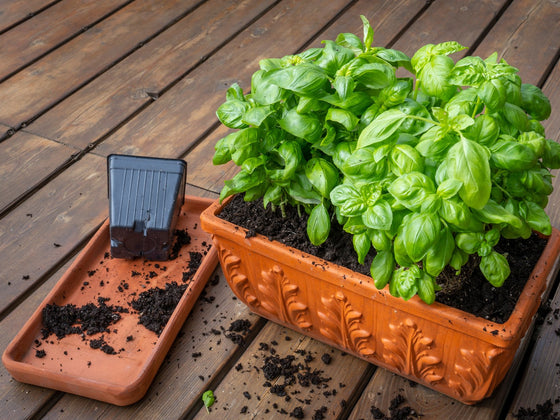
Basil
Sowing basil once the nights are mild, spacing and watering, pinching for bushy plants, and picking so the crop keeps coming until the first cold snap.
| Position | Full sun, 6 hours minimum |
|---|---|
| Depth | 2 to 6 mm |
| Spacing | 20 to 30 cm |
| First pick | 6 to 12 weeks |

Coriander
Why coriander runs to seed, when to sow it in your climate, and how to harvest the leaves, roots and seed so one packet gives three crops.
| Position | 6 hours sun; hot-afternoon shade |
|---|---|
| Depth | 6 to 10 mm |
| Spacing | 15 to 20 cm |
| First pick | 5 to 10 weeks |