
How to Grow Jiaogulan in Australia
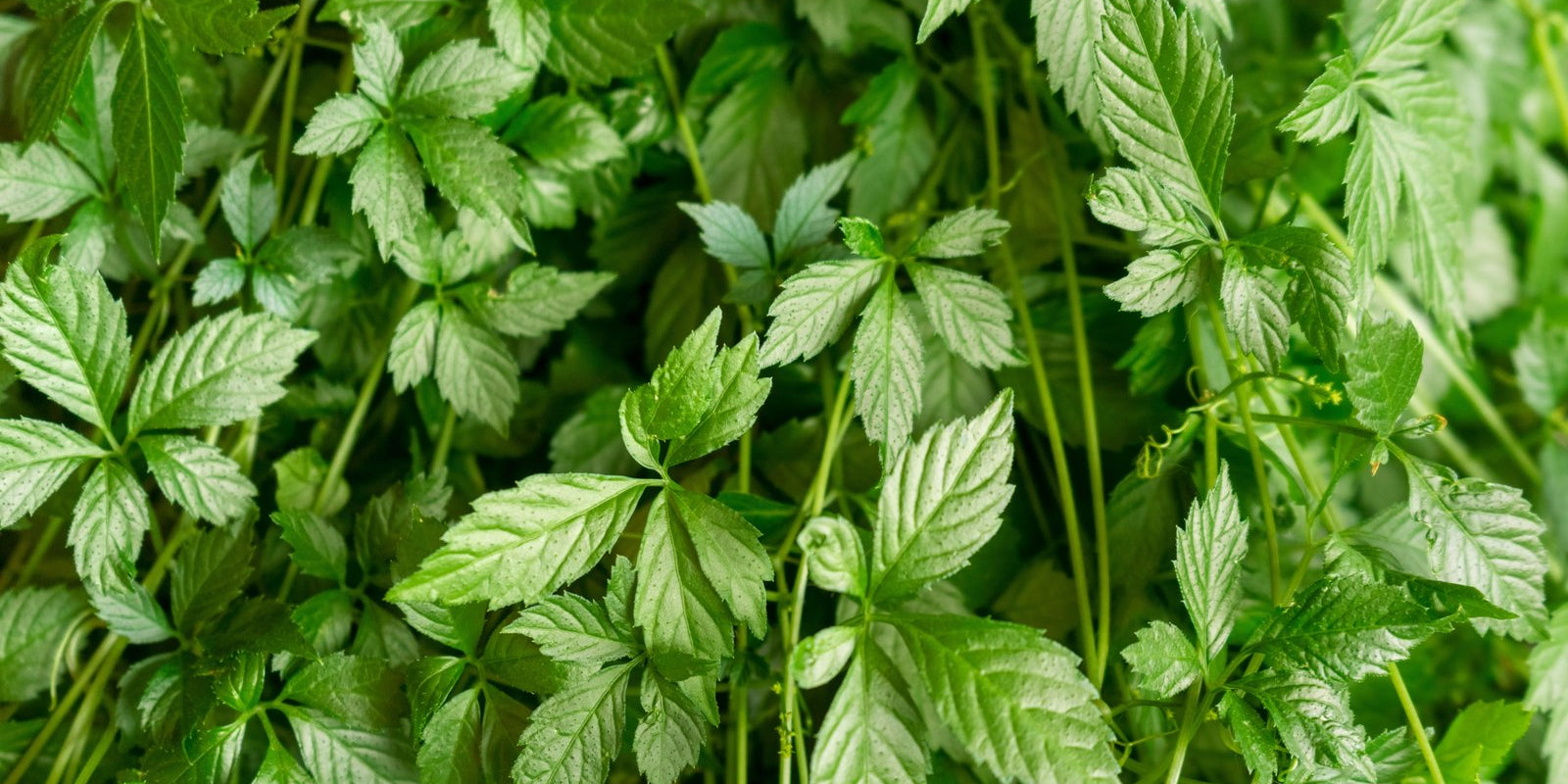
Jiaogulan is a climbing perennial vine for a trellis in part shade and rich, moist soil. Its seed is dormant and slow. Chip the coat, sow 5 mm deep and keep pots at 20 to 25°C for up to eight weeks. Plant out 30 cm apart after frost, and cut leafy stems once vines reach 2 to 3 m.
| Sun | Part shade or morning sun |
|---|---|
| Water | Evenly moist; daily in hot weather |
| Soil | Rich, moist, free-draining loam, pH 6.5 to 7.5 |
| Feed | Minimal; compost and light, half-strength liquid feeds |
| Spacing | 30 cm apart |
| Depth | 5 mm |
| Germination | 2 to 8 weeks at 20 to 25°C, chipped |
| Harvest | Vines 2 to 3 m long |
| Container | Yes; 40 cm wide pot, about 28 L |
| Frost | Tops die in frost; underground stems regrow |
| Support | Trellis, mesh or fence at least 2 m tall |
| Use | Ornamental climber and shade screen for the herb garden |
Jiaogulan (Gynostemma pentaphyllum) is a climbing perennial vine of the cucumber family (Cucurbitaceae), grown for its fine, five-fingered leaves. It is native from Japan through Asia to New Guinea, not Australia, yet it grew well outdoors in a University of Sydney trial at Randwick. The seed is the hard part: jiaogulan seed is slow and erratic, and untreated seed often never comes up.
Three mistakes that matter
- Sowing untreated seed and giving up early. The seed is dormant, and untreated seed can take two months or never sprout. Chip the coat, keep the tray warm and wait eight weeks, as Germinating the seed explains.
- Planting it in hot, dry, full sun. The leaves curl and scorch in dry heat, and growth stalls. Give it morning sun and afternoon shade, soil that stays evenly moist, and a thick mulch. In the Sydney trial, a vine in full sun did well once its leaves covered the soil and it was watered often.
- Digging out a vine that has died back. The top growth dies in winter, but the plant survives as underground stems that shoot again in spring. Mark the spot, mulch it and wait for warm nights before deciding it is dead.
When to plant
Warmth decides the sowing date: the seed wants 20 to 25°C in the tray, and young vines are cut down by frost. Sow in spring and early summer in most of Australia, earlier on a seedling heat mat, and plant out once frost has passed. An established vine usually returns each spring, so one sowing can last for years.
| Zone | Example cities | Sow | Harvest | Notes |
|---|---|---|---|---|
| Tropical | Darwin NT; Cairns, Townsville QLD; Broome WA | Mar-Aug | Jun-Apr | Sow as the wet season ends. Shade vines from harsh sun and keep drainage sharp through the wet. |
| Subtropical | Brisbane, Sunshine Coast, Bundaberg QLD; Coffs Harbour, Lismore NSW | Sep-Dec | Dec-May | Sow once nights stay warm. Coastal vines grow most of the year; inland frost kills the tops, which regrow. |
| Arid and semi-arid | Alice Springs NT; Broken Hill, Dubbo NSW; Mildura VIC; Kalgoorlie WA | Sep-Nov | Dec-Apr | Raise seed under cover. Needs shade cloth, thick mulch and daily summer water; winter frost kills the tops. |
| Temperate | Sydney, Newcastle, Wollongong NSW; Melbourne, Geelong VIC | Sep-Dec | Jan-Apr | Grew well in a Sydney trial. In Melbourne, plant out after Melbourne Cup weekend; tops die back in winter. |
| Mediterranean | Perth, Bunbury WA; Adelaide and the SA coast | Sep-Nov | Jan-Apr | Give afternoon shade and daily water through the dry summer, and free drainage through wet winters. |
| Cool and alpine | Hobart, Launceston TAS; Canberra ACT; Ballarat VIC; Orange NSW | Oct-Dec | Feb-Apr | Short season. Raise seed under cover, plant out after frost, mulch deeply or keep a potted piece indoors. |
Late sowings still germinate if trays stay warm, but a vine sown after midsummer has less time to build underground stems before winter. In frosty districts, keep late seedlings in pots under cover until spring. The harvest months suit an established vine; a vine in its first year from seed is often ready later.
Site, soil and setup
Jiaogulan grows wild in forest thickets, on stream banks and along shaded mountain roadsides, and a garden copy of that setting suits it best.
| Need | What jiaogulan wants |
|---|---|
| Light | Part shade, dappled light or morning sun; plants struggle in deep shade |
| Soil | Rich, loose loam that holds moisture and drains freely; a fertile sandy loam is ideal |
| pH | About 6.5 to 7.5 |
| Water | Evenly moist; daily in hot weather |
| Shelter | Out of strong wind, beside a fence, wall or larger shrubs |
| Support | A trellis, mesh panel or fence at least 2 m tall; tendrils grip thin wire and string |
| Size | Stems commonly reach 2 to 3 m in a season and up to about 8 m |
Dig in a 5 cm layer of compost, or 5 to 10 cm of well-rotted cow or horse manure 4 to 6 weeks before planting. Where a pH test reads below 6.5, dig in garden lime at 100 to 200 g per square metre 4 weeks ahead. Jiaogulan is a perennial, so give it a permanent spot outside the vegetable rotation.
Container growing
A pot suits jiaogulan well and lets you move it out of hot sun or under cover in winter. Its roots run just below the surface, so choose a wide pot over a deep one. A pot 40 cm across, holding about 28 L, suits one vine. Fill it with a quality potting mix and blend in a few handfuls of compost.
- Water: keep the mix evenly moist, as watering pots in an Australian summer explains.
- Feed: worm casting liquid diluted to weak tea colour, fortnightly from spring to late summer.
- Position: morning sun and afternoon shade, sheltered from wind.
- Support: a wire obelisk or a small trellis pushed into the pot.
Germinating the seed
Jiaogulan seed is dormant when it ripens: it carries natural chemicals that hold back germination, inside a tough brown coat. That is why fresh, untreated seed often sits in the mix for weeks. In trials described in a Chinese patent, untreated seed gave under 20 per cent. Chipping the coat changes the picture: at the Royal Botanic Gardens, Kew, nine of ten chipped seeds germinated within 28 days at 25°C.
The store listing puts germination at 30 to 50 per cent at best, over 2 to 8 weeks at 20 to 25°C. Sow every seed in the packet, two or three to a pot, and expect a few plants rather than nine.
| Treatment | How | How long | Temperature | What success looks like |
|---|---|---|---|---|
| Chip the seed coat (scarification, breaking the coat so water gets in) | Rub one edge of each seed on fine sandpaper, or nick it with nail clippers, just through the brown coat; go no deeper | A few strokes per seed; sow the same day | Keep the sown tray at about 25°C | Shoots within about four weeks |
| Warm-water soak | Cover chipped or whole seed with warm water in a covered cup, then sow it at once | 24 hours | Warm water, then 20 to 25°C in the tray | Seeds visibly plumper when drained |
| Short cool, damp spell (evidence mixed) | Fold seed into damp paper towel or just-damp vermiculite, seal it in a labelled bag and chill it | 2 to 4 weeks, as the store listing advises; a Chinese patent reports that 30 to 180 days of cold did almost nothing | Fridge, then sow into 20 to 25°C | Clean, plump seed with no mould; sow any seed with a white root tip at once |
| None (untreated seed) | Sow 5 mm deep in damp seed raising mix under a clear lid | 2 to 8 weeks, often longer | 20 to 25°C | A few seedlings, slowly |
A Chinese patent pairs a plant hormone soak with a short chill, but that is not a home method. More on the kitchen methods is in Soaking, Scarification and Cold Stratification.
When nothing comes up
- Too cool. Germination slows in a cool tray; keep it at the warmth given in When to plant, on a heat mat if need be.
- Coat left whole. Water may not be getting in; chip any seed you still have and sow it again.
- Mix too wet or too dry. Soggy mix rots seed and dry mix stalls it; keep it damp under a lid, with humidity around 70 to 80 per cent.
- Sown too deep. Cover the seed with about 5 mm of mix, roughly its own width, and no more.
- Old or warm-stored seed. The seed is short-lived, often good for only about a year. Sow it soon after it arrives, and keep any spare sealed and dry in the fridge.
- Given up too soon. Keep the tray warm and damp for at least eight weeks before tipping it out.
Sowing Seeds
Start jiaogulan in pots under cover from seed chipped as Germinating the seed describes, because nine seeds are too few to risk in open ground.
Starting under cover
- Fill small pots with fresh seed raising mix and water them before sowing.
- Sow two or three seeds per pot, 5 mm deep, and firm the mix over them.
- Cover the pots with a clear lid or bag and keep them at the warmth given in When to plant, out of direct sun.
- Lift the lid for a few minutes each day so air moves over the mix.
- Once shoots appear, take the lid off and give bright light, so seedlings do not stretch.
- Keep the strongest seedling in each pot and snip the others at soil level.
Transplanting
Plant out once seedlings have several true leaves and the last frost has passed. Harden them off first (get them used to outdoor sun and wind over about a week), as hardening off seedlings describes. Set plants 30 cm apart at the foot of the support. Water them in with half-strength seaweed solution and lead the first shoot onto the trellis.
Care by growth stage
Water decides this crop more than feeding does, so keep the soil steadily moist. Compost or manure in the soil is usually all the feeding it needs, so keep liquid feeds light.
| Stage | Water | Feed | Watch for |
|---|---|---|---|
| Seedlings, weeks 1 to 8 | Keep the mix evenly moist; water from below | Seaweed solution at half strength, 15 mL per 9 L, fortnightly once true leaves show | Seedlings collapsing at soil level; snails |
| Establishing, first 6 weeks after planting | Often enough that the soil never dries out | Worm casting liquid diluted to weak tea colour, fortnightly | Shoots that need leading onto the support; snails on new growth |
| Summer growth | Deeply, daily in hot weather; keep a 5 cm mulch over the roots | Fish and seaweed blend at half strength, about 12 mL per 9 L, fortnightly | Stippled leaves and webbing in hot, dry spells; white powder in humid weather |
| Autumn | Less often as growth slows | None | Powdery mildew; the first frost |
| Winter dieback, then spring regrowth | Little; keep the soil barely moist, never wet | A 5 cm layer of compost over the root zone in early spring | Waterlogged soil; new shoots in spring |
| Before each harvest | Keep watering as normal right up to the cut; do not hold back | None | Wilted or dusty leaves at picking time |
If growth stalls in poor soil, scratch in a light application of all-purpose controlled release granular (NPK around 14-5-10) in spring.

Vine Training
Jiaogulan climbs by coiled tendrils but just as happily sprawls along the ground, where its stems root and spread. Training keeps it up on the support, tidy and easy to pick.
- Lead new shoots onto the trellis and tie in any that wander, until the tendrils take hold.
- Cut back harvested stems to the lower leaves, so fresh shoots grow from the base.
- Clear frosted or dead top growth in late winter, before new shoots appear.
- Lift stems that have rooted where they touch the soil, and pot them up as new plants, as layering describes.
- Take stem cuttings with two nodes (leaf joints) and root them in water or damp mix, though some are slow; see rooting cuttings in water.
- Dig up and replant 15 cm pieces of rhizome (creeping underground stem) just below the surface to start new plants.
Companion planting
Choose neighbours for the shade they cast and the diseases they share.
Grows well with
- Tall sunflowers or corn on the western side, which cast afternoon shade over the vine.
- Lettuce in the shade at the foot of the trellis in summer, which grows well out of the hottest sun.
Keep apart
- Cucumber, pumpkin and zucchini, which host the powdery mildew species recorded on jiaogulan overseas.
- Mint, whose runners compete with jiaogulan's spreading underground stems for the same moist soil.
- Passionfruit and other strong climbers, which smother it on a shared trellis.
Harvesting Leaves
Start cutting once vines reach 2 to 3 m and the leaves are full-sized and green. In the tropics and subtropics vines are often cut four or five times a year. The Sydney trial, grown partly in a glasshouse, cut in March and September.
- Cut in the morning, once dew has dried from the leaves.
- Take whole leafy stems with secateurs, leaving the base and lower leaves to regrow.
- Discard yellow, mildewed or mite-damaged leaves at picking time.
- Keep cut stems in the shade until you finish picking.
Spread the stems in a thin layer on a rack in the sun or an airy spot out of the rain. An oven at about 50°C also works; the Sydney trial dried its harvest over about three days. Store the dried leaves in sealed, labelled jars or bags in a cool, dry cupboard, away from damp, which brings mildew and rot.
Traditional use and history
The plant's written story in China begins as a famine food, not a medicine.
| Name | Where it is used | What it means or recalls |
|---|---|---|
| Jiaogulan | Chinese | Twisting blue plant |
| Qi ye dan | Chinese | Another Chinese name recorded for the plant |
| Amachazuru | Japanese | The name used in Japan |
| Sweet tea vine | English | The sweet taste of the leaves |
| Southern ginseng | English, from Chinese usage | Its home in southern China, and a comparison drawn with ginseng |
The first written record comes from the early fifteenth century. Zhu Su compiled the Jiuhuang Bencao, a book of famine foods, under the Ming dynasty. It described jiaogulan as a wild plant to eat in hard times, with a drawing to help people find it.
Li Shizhen's Bencao Gangmu, the great Chinese herbal of the late sixteenth century, recorded it among medicinal plants. Traditional Chinese medicine describes the herb as slightly bitter in taste and neutral in nature. A study of wild food plants in the Qinling Mountains of Shaanxi also recorded its leafy stems.
| Period | What happened |
|---|---|
| Late twentieth century, Japan | Chemists found that some of its compounds resemble those of ginseng, and that some taste intensely sweet |
| Late twentieth century, China | The Ministry of Science and Technology picked it for development under its Spark Program |
| Recent decades | Wild populations shrank and fragmented through collection and habitat loss, and China listed it as a Grade II key protected wild plant |
Grow the vine from seed or cuttings rather than buying wild-gathered material.
Safety
Jiaogulan is sold as seed for growing, and nothing here is advice to eat or take any part of the plant. Anyone thinking of using a plant should first seek advice from a qualified health practitioner.
| Topic | What the sources say |
|---|---|
| Toxicity | None of the sources checked records a poisoning from the plant, and LiverTox, the United States liver injury database, has no entry for it. A drug reference records severe nausea and more frequent bowel movements in people who took it by mouth. |
| Pregnancy and breastfeeding | The same reference rates it possibly unsafe in pregnancy, because one of its compounds has been linked to possible birth defects. Too little is known about breastfeeding, and it advises avoiding use. |
| Interactions with medicines | It may slow blood clotting, so caution applies with warfarin, aspirin, heparin and other blood thinners, and before surgery. It may also work against immunosuppressant medicines such as ciclosporin, tacrolimus and prednisone. Both interactions are rated moderate. |
| Other conditions | The reference advises people with autoimmune conditions, such as lupus, multiple sclerosis or rheumatoid arthritis, to avoid it, and warns it might worsen bleeding disorders. |
| Allergy and skin | None of the sources checked records an allergy or skin reaction from handling the growing plant. The leaves are sometimes bristly on both surfaces. |
| Pets and livestock | The ASPCA toxic and non-toxic plant lists for dogs and cats have no entry for jiaogulan. No livestock source covers it, so its safety for animals is not established. |
| Legal status | No state or territory declares it a weed or prohibited plant. It is on none of the declared lists: NSW WeedWise, Victoria, Queensland, South Australia, Tasmania, the ACT or the NT. The Western Australian Organism List marks it permitted, and permitted organisms must still meet any import requirements when brought into the state. |
| Look-alikes | None of the sources checked records a toxic plant mistaken for jiaogulan. Check the botanical name on any plant bought as jiaogulan or sweet tea vine. |
Common problems
Leaves curl and scorch in summer. Dry heat is the cause, as Three mistakes that matter explains. Put up shade cloth or move a pot into shade; a wilted vine usually recovers after a good soak.
Leaves turn yellow. Too much water is a likely cause: the Sydney trial saw yellowing until it cut back its watering. Let the surface dry slightly between waterings and improve drainage.
No berries on the vine. Each plant is male or female (dioecious), and only a female near a male sets the small black berries. Male plants far outnumber females in the wild, and both sexes give leaves.
Pale, sparse growth. Deep shade weakens the vine over a season, so move it to dappled light or morning sun. Spindly seedlings need brighter light at once; see leggy seedlings.
Vine spreading across the bed. Stems root wherever they touch moist soil and form new plants, so keep the vine up on its support and lift strays each spring.
Pests and diseases
Few pests trouble jiaogulan, and most problems come from dry heat, damp seed trays or crowded, humid foliage.
Two-spotted mite (Tetranychus urticae). It leaves foliage pale and stippled with fine webbing underneath, and the Sydney trial recorded it on jiaogulan. Hose leaf undersides with a strong jet early on three mornings in a row, and avoid broad-spectrum sprays that kill predatory mites. Read more
Garden snail (Cornu aspersum). Snails, and slugs with them, chew seedlings and soft spring shoots at night; established vines in the Sydney trial resisted them. Hand-pick after dark, or trap them in shallow dishes of beer. Read more
Powdery mildew (Podosphaera xanthii). A white powdery coating spreads over leaves, and this fungus, recorded on jiaogulan in Korea, also attacks cucumber, pumpkin and zucchini in Australia. Water the soil rather than the leaves, remove the worst leaves, and spray 1 part full-cream milk to 10 parts water. Read more
Damping off (Pythium species and Rhizoctonia solani). Seedlings rot before they emerge or collapse at soil level, a real risk in warm, covered trays kept for weeks. Use fresh seed raising mix and clean pots, air the tray daily, and water only enough to keep it damp. Read more
Prevention first
- Raise seed pots off the ground, out of rain and hose splash, and scrub pots and tools between uses.
- Train the vine up its support so air moves through the leaves.
- Water in the morning, so leaves dry before night.
- By day, check under pots and in thick mulch, where snails hide from the sun.
Tips
- Once you have a good vine, multiply it from cuttings or rhizome pieces rather than sowing more seed.
- In frosty districts, keep a rooted piece in a pot under cover over winter as insurance.
- If a female plant sets berries, pick them once they turn black, clean out the seed, dry it and store it in the fridge.
- Expect flowers from about September to May and berries from about October to June. A vine with no berries by winter may be male, or still too young.
Questions
Why are my jiaogulan seeds not germinating?
The seed is naturally dormant, with a tough coat and chemicals that hold back germination. Chip each seed coat on fine sandpaper, sow 5 mm deep and keep the pots at 20 to 25°C under a lid. Wait at least eight weeks before giving up, because some seed takes two months.
How long does jiaogulan take to germinate?
Usually 2 to 8 weeks at 20 to 25°C, and sometimes longer. In a Kew test, nine of ten chipped seeds germinated within 28 days at 25°C. Untreated seed is slower and far less reliable, so chip the coat first.
Can I grow jiaogulan in a cold climate like Canberra or Hobart?
Yes, as a vine that dies back each winter. Raise seed under cover, plant out after the last frost and mulch the roots deeply in autumn. In the coldest gardens, keep a rooted piece in a pot under cover over winter.
Do I need a male and a female jiaogulan plant?
Only for seed. Each plant is male or female, and only a female near a male sets berries. Both sexes grow the same leafy vine, so one plant of either sex is enough for a trellis.
Is jiaogulan safe around dogs and cats?
Its safety for pets is not established. The ASPCA plant lists for dogs and cats have no entry for jiaogulan, and none of the sources checked records an animal poisoning. Keep dried leaves out of reach of pets and children.
Is jiaogulan native to Australia or a declared weed anywhere?
It is not native to Australia; its wild range runs from Japan through Asia to New Guinea. No Australian state or territory declares it a weed. The Western Australian Organism List marks it permitted, though seed sent there must still meet WA import requirements.
Grow it
More herb guides
All herbs
Agrimony
How to grow agrimony in Australia from seed: chilling the burrs, sowing months for six climate zones, sun and soil, cutting back, harvest, history and safety.
| Position | Full sun, light shade tolerated |
|---|---|
| Depth | 5 mm |
| Spacing | 30 cm apart |
| First pick | Summer; 12 to 18 weeks from spring sowing |

Angelica
How to grow angelica in Australia from seed: fresh or chilled seed sown on the surface, part shade, months for six climate zones, stems, history and safety.
| Position | Part shade, morning sun |
|---|---|
| Depth | Surface; press in, uncovered |
| Spacing | 50 to 90 cm |
| First pick | Stems at about 18 months |

Ashwagandha
Grow ashwagandha from seed in Australia: warm germination, sowing, site, care and root harvest, with its history and safety, for all six climate zones.
| Position | Full sun |
|---|---|
| Depth | 5 mm |
| Spacing | 45 to 60 cm apart |
| First pick | Roots 21 to 26 weeks |

Astragalus
How to grow astragalus (huang qi) in Australia from hard-coated seed: rubbing and soaking, sowing months for six zones, care, pests and lifting the taproot.
| Position | Full sun |
|---|---|
| Depth | 5 mm |
| Spacing | 20 to 45 cm apart |
| First pick | Roots after 2 to 3 years |