
How to Grow Evening Primrose in Australia
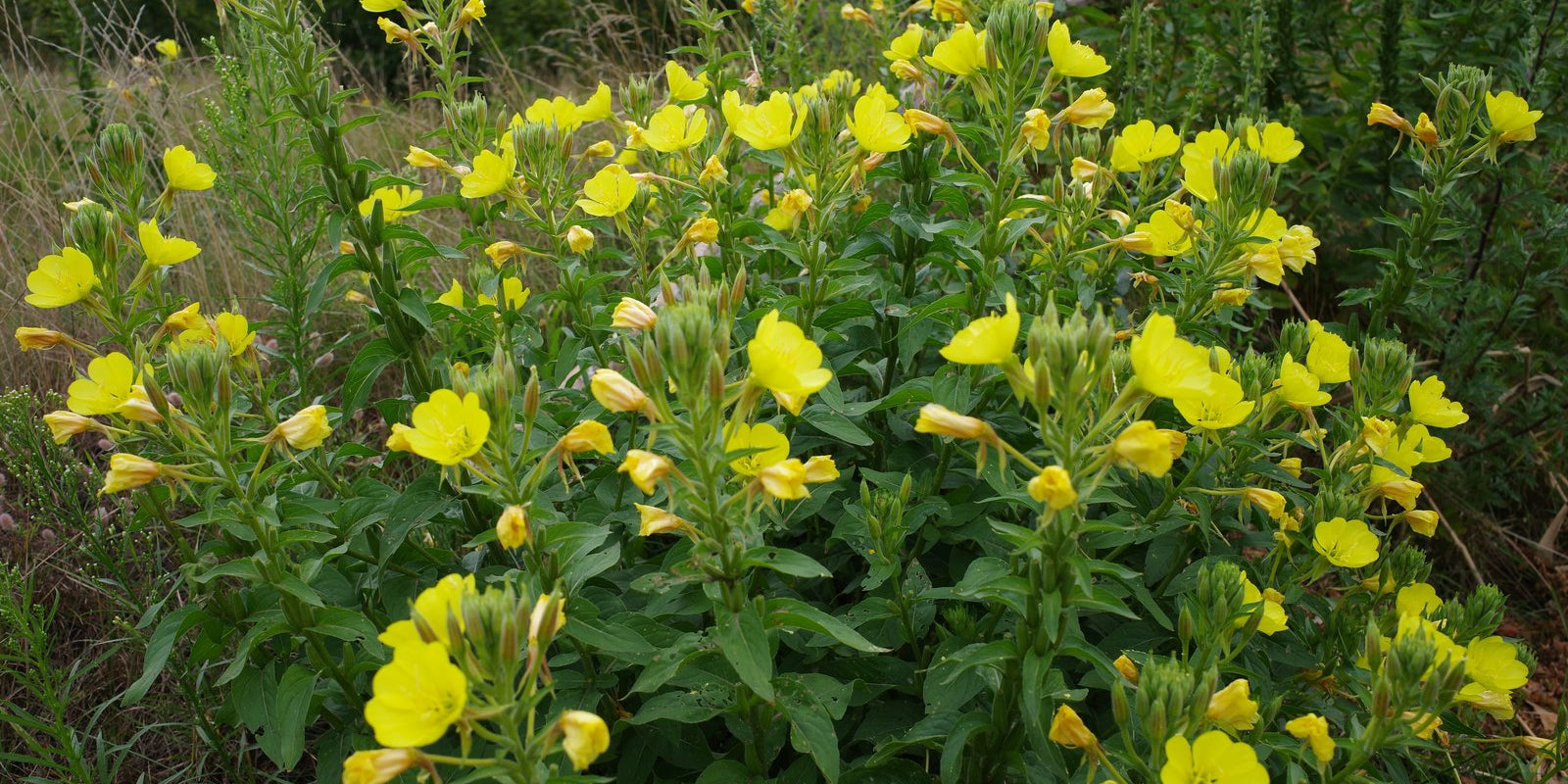
Evening primrose is a biennial grown for tall spikes of lemon yellow flowers that open at dusk. Press the tiny seed onto damp mix without covering it, and keep it warm and bright, or chill it first for cool-weather sowing. Plant 30 to 40 cm apart in full sun and lean, free-draining soil. It flowers in its second season and cannot be grown in Western Australia.
| Sun | Full sun |
|---|---|
| Water | Low once established; water seedlings regularly |
| Soil | Poor to average, sandy, free-draining |
| Feed | Minimal; half-strength liquid feed for seedlings and pots |
| Spacing | 30 to 40 cm apart |
| Depth | Surface; press in, uncovered |
| Germination | 2 to 4 weeks, surface sown in warmth |
| Harvest | Flowers in the summer after its first winter |
| Container | Yes; at least 20 L, 30 cm deep |
| Frost | Frost hardy; the rosette overwinters |
| Use | Cottage, wildlife and evening gardens; moth flowers |
Evening primrose (Oenothera biennis, family Onagraceae) is a North American biennial grown for spikes of lemon yellow, lightly scented flowers that open at dusk. The store sells it as Evening Primrose seeds and Evening Primrose seeds (Organic). In the first year it makes a flat rosette of leaves, and in the second it sends up spikes 1 to 1.5 m tall. It suits cottage and wildlife gardens with poor, free-draining soil. The mistake to avoid first is burying the tiny seed, which needs light to germinate.
Three mistakes that matter
- Covering the seed. Seed sown on the surface came up best in a North American study, and none came up from deeper than 2 cm. Press it onto damp mix and leave it uncovered, as Germinating the seed explains.
- Expecting flowers in the first year. Evening primrose is a biennial (it takes two growing seasons to flower and set seed), so a leafy rosette in the first summer is normal. Leave it in place: the flower spikes follow after a winter.
- Letting every pod ripen. Each plant sheds a great deal of long-lived seed, and it is becoming naturalised in the Blue Mountains of New South Wales. Cut most spent spikes before the pods split, as Deadheading describes.
When to plant
Warmth and light decide when fresh seed comes up. In laboratory tests, fresh seed germinated best with days of 25°C and nights of 15°C or warmer. With days of 20°C and nights of 10°C, it still gave 72 to 92 per cent. Germination was lowest, and varied widely between seed lots, at 15°C by day and 5°C by night. Sow in spring, or in autumn around Anzac Day. Autumn sowings flower the following summer if the rosettes grow large enough before winter.
| Zone | Example cities | Sow | Harvest | Notes |
|---|---|---|---|---|
| Tropical | Darwin NT; Cairns, Townsville QLD; Katherine NT | Apr-Jul | Oct-Feb | Flowering is unreliable, as warm winters may give too little cold; sow in the dry season in a raised bed. |
| Subtropical | Brisbane, Gold Coast, Sunshine Coast QLD; Coffs Harbour, Lismore NSW | Mar-May and Aug-Sep | Nov-Mar | Autumn sowings make rosettes that meet winter cool nights, then flower the following summer. |
| Arid and semi-arid | Alice Springs NT; Broken Hill, Dubbo NSW; Mildura VIC; Port Augusta SA | Mar-Apr and Aug-Oct | Nov-Mar | Sow between the summer heat and the coldest nights; water seedlings and shelter them from hot wind. |
| Temperate | Sydney, Newcastle, Wollongong NSW; Melbourne, Geelong VIC | Sep-Nov and Mar-Apr | Dec-Apr | Sow once spring days reach about 20°C, or around Anzac Day for flowers next summer. |
| Mediterranean | Adelaide and the SA coast; Perth, Bunbury WA | Mar-May and Sep-Oct | Nov-Mar | A prohibited declared pest in WA, so do not grow it there; in SA, autumn sowings establish on winter rain. |
| Cool and alpine | Hobart, Launceston TAS; Canberra ACT; Ballarat VIC; Orange, Armidale NSW | Sep-Dec | Jan-Apr | Chill seed four to eight weeks or start trays on a heat mat; rosettes shrug off frost. |
At the cool edge of a window, chill the seed first or start trays on a heat mat, as Germinating the seed describes. In the tropics, sow early in the dry season, well before the wet season build-up.
Site, soil and setup
Evening primrose grows wild in dry fields, along roadsides and on railway embankments, and it does best when the garden copies that. A lean, sunny bed suits it better than rich soil, which gives soft stems that can flop.
| Get the bed right | What to do |
|---|---|
| Light | Full sun for sturdy spikes; afternoon shade is tolerated |
| Soil | Sandy, gravelly or average loam that drains freely; poor soil is fine |
| pH | Acid to neutral soils suit, so no correction is needed in most gardens |
| Preparation | On very poor sand, dig in a 5 cm layer of compost; no manure |
| Drainage | On heavy clay, build a low mound or raised bed so winter rosettes do not sit wet |
| Room | 30 to 40 cm between plants; a flowering plant spreads 60 to 90 cm |
| Rotation | None: a biennial for a border, cottage bed or wildlife patch, kept out of the vegie rotation |
Container growing
A pot suits a courtyard where its evening scent can be enjoyed. The store sells no compact selection, and the common species grows 1 to 1.5 m tall with a long taproot. Give one plant a pot of at least 20 L, 30 cm across and 30 cm deep, filled with premium potting mix. Potting mix can carry Legionella bacteria, so wet it first, wear gloves and a mask, and wash your hands afterwards.
- Watering: water when the top few centimetres of mix are dry, and empty the saucer after rain.
- Feeding: fish and seaweed blend at half strength, about 12 mL per 9 L, fortnightly in spring and summer, only if leaves turn pale.
- Position: full sun, sheltered from strong wind so the spikes do not topple the pot.
- Seed control: a pot does not stop the seed spreading, so cut spikes as Deadheading describes.
Germinating the seed
Evening primrose seed is tiny, about 2,500 to the gram, and it needs light to germinate. Fresh seed also has a shallow dormancy: it germinates well in warmth, and a spell of cold lets it come up in cooler weather too. Neither step is hard, so the seed is easy to raise.
A study tested seed from three North American populations. Fresh seed on damp paper in the light gave 90 to 98 per cent at 25°C by day and 15°C by night. After eight weeks in the fridge, seed germinated at 90 per cent or more at every temperature tested. On real soil, emergence was lower, roughly half to three quarters of seed sown on the surface. Scatter three or four seeds for each plant you want, then thin.
| Treatment | How | How long | Temperature | What success looks like |
|---|---|---|---|---|
| None needed: surface sow in warmth and light | Mix the seed with a pinch of dry sand, scatter it on damp seed raising mix, press it in and leave it uncovered | Usually 2 to 4 weeks | Days about 25°C, nights about 15°C; a heat mat helps in cool weather | Tiny green seed leaves across the surface |
| Cold moist stratification, for cool-weather sowing | Fold the seed into damp paper towel, or mix it with damp sand, in a sealed, labelled bag in the fridge; then sow on the surface | 4 to 8 weeks | About 4°C in the fridge; then sow in trays or the garden | An even stand at cooler temperatures; a few white root tips may show in the bag, so sow those at once |
| A winter outdoors | Surface sow in autumn in a pot or bed left outside, and keep it moist | Seedlings as the soil warms in spring | Outdoor winter temperatures | Seedlings in spring, the way self-sown seed comes up |
No source names a chemical treatment for this species, and none is needed. For seed treatments in general, see soaking, scarification and cold stratification.
When nothing comes up
- Covered too deeply. Seed under more than a dusting of mix sits in the dark. Sow again on the surface and press it in.
- Too cold. Fresh seed germinates poorly at cool temperatures. Move the tray somewhere warm, or chill the seed for four to eight weeks first.
- Bag too wet or too dry. Chilled seed fails in a soggy or dried-out bag. Keep the paper or sand damp but not wet, check the bag weekly, and change the paper towel often.
- Dried out. Surface seed dries quickly. Cover the tray with clear plastic or glass until seedlings show, and water it from below.
- Kept in the dark. Germination fell in continuous darkness in the study. Stand trays in bright light, out of hot direct sun.
- Given up too soon. Keep the tray moist, warm and bright for five to six weeks before sowing again. Seed that stays dormant often comes up the next spring.
In Dr William Beal's buried seed experiment in Michigan, United States, evening primrose seed was still alive after at least 80 years in the soil.
Sowing Seeds
Start evening primrose in trays for a tidy stand, or scatter it where it is to grow. Both begin with seed on the surface, treated or not, as Germinating the seed explains.
Starting in trays
- Fill cells or small pots with fresh seed raising mix, firm it lightly and water it well.
- Scatter three or four seeds on each cell, press them in and mist the surface.
- Stand the tray in bright, indirect light at the warmth given in When to plant.
- Thin to the strongest seedling per cell once the first true leaves appear.
- Move seedlings on while small, before the taproot coils in the cell.
Sowing direct
Rake the bed fine and level, then water it. Mix the seed with a little dry sand so it spreads evenly. Scatter it thinly and press it onto the surface with the back of a rake. Mist daily until seedlings show, then thin them in stages to 30 to 40 cm apart. See how to sow tiny seeds for the sand method.
Planting out
- Plant out once seedlings have their true leaves and before the taproot fills the cell.
- Harden off first (stand the pots outdoors a little longer each day for a week, so they adjust to sun and wind).
- Lift each seedling with its whole root ball and plant it at the same depth, taking care not to break the taproot.
- Water in with seaweed solution at half strength, 15 mL per 9 L.
- Water whenever the top few centimetres of soil are dry until new leaves show, then only in dry spells.
Care by growth stage
Drainage, sun and restraint decide how well evening primrose grows. Over-feeding gives soft, leafy growth and floppy spikes, so feed at half strength at most. The rosette flowers after a spell of cool weather. Field studies found it usually must first reach about 10 cm across, though the size varies with growing conditions.
| Stage | Water | Feed | Watch for |
|---|---|---|---|
| Seedling, in the tray | Keep the mix just moist; water from below | Seaweed solution at half strength, 15 mL per 9 L, fortnightly from the first true leaves | Damping off (seedlings rotting at soil level); drying out; stretching in low light |
| Young rosette, from planting out until settled | Water deeply whenever the top few centimetres are dry | A handful of worm castings in each planting hole | Snails and slugs at night |
| First season rosette | A deep soak only in long dry spells | None | Crowding by self-sown seedlings; weeds shading the rosette |
| Winter | Little or none; rain is usually enough | None | Soggy soil around the crown on clay |
| Second season, spike and flowering | Occasional deep water in dry spells | A 5 cm compost mulch on poor sand in early spring, kept clear of the crown | Aphids on buds and shoot tips; spikes leaning in wind or shade |
| The weeks before seed harvest | Keep watering as usual in dry spells right up to harvest | None | Pods turning brown and starting to split |
If growth stalls in very poor sand, a light application of all-purpose controlled release granular (NPK around 14-5-10) scratched in each spring can help.
Deadheading
Each flower lasts one to two days, and a spike keeps opening new buds as it lengthens, through summer and into autumn. Deadheading is mainly about seed: it limits self-sown seedlings and stops pods scattering beyond the garden.
- Snap or cut off each faded flower head as it browns, before a pod swells behind it.
- Cut a spike back to the rosette once most of its buds have opened and faded.
- Leave one or two spikes to ripen if you want seed, and bag them as Harvesting Flowers and Seed describes.
- Pull the whole plant once flowering ends, or after you collect its seed, because it dies after setting seed.
- Near bushland, remove every spike before the pods split.
- Put spikes carrying pods in the general waste bin, not green waste or compost.
Companion planting
Choose neighbours that want the same sun and lean, dry soil, and give the tall spikes a place at the back.
Grows well with
- Yarrow, a flat-headed perennial for the same sunny, lean ground.
- Echinacea, which flowers by day in summer while evening primrose opens at dusk.
- Four o'clocks, whose flowers also open late in the day, for an evening bed.
Keep apart
- Vegie beds, where self-sown seedlings compete with crop seedlings.
- Bushland edges, where seed can escape and naturalise.
For more on planting for moths, bees and other insects, see gardening for bees and beneficial insects.
Harvesting Flowers and Seed
Enjoy the flowers on the plant, opening from about dusk and closing by the following midday. Collect seed once the lowest pods turn brown and begin to split.
- Watch a spike at sunset in summer, when the new buds unfold.
- For seed, cut ripening spikes when the lowest pods are brown and dry.
- Stand cut spikes head down in a paper bag in a dry, airy place.
- Shake the bag after two weeks to free the seed, then sieve out the pods.
- Cut a few spikes with their dry pods for dried arrangements.
Store the seed in a paper envelope inside a sealed, labelled jar in a cool, dry, dark place. Stored cool and dry, it keeps for several years, and a packet of 250 or 260 seeds is far more than most gardens need.
Traditional use and history
Evening primrose is native from Canada to central Mexico, and it is most common in eastern and central North America. The name Oenothera comes from the Greek oinos (wine) and thera (a hunt). Theophrastus gave it to a different plant whose roots, the herbalist Maud Grieve recorded, were eaten to raise a relish for wine.
| Tradition | Part | What the tradition recorded |
|---|---|---|
| Cherokee | Leaves and roots | Leaves were eaten as cooked greens and the roots as a vegetable |
| Iroquois | Roots | Roots were rubbed on the arms and muscles of athletes |
| Ojibwe | Whole plant | The whole plant was used on bruises |
| Lakota | Seeds | The seeds were valued for their scent |
| Gosiute of Utah | Seeds | The seeds were gathered for food |
| European gardens | Roots and flowers | Roots were eaten in spring in some countries, and French cooks garnished salads with the plant |
The plant was taken to Europe in the 1600s. Grieve records that it went first to Italy, then spread along river banks and sandy ground across western Europe. In England it escaped from gardens and naturalised in Lancashire. She called it one of the showiest hardy garden plants when grown in large masses.
Grieve notes that the flowers usually opened between six and seven in the evening, which gave the plant its common name. She also calls it tree primrose, and German rampion is another old name. North American botanists record that night-flying moths visit the flowers, drawn by their mild lemon scent. The seed is also grown as a field crop in more than 15 countries for its oil.
Safety
Happy Valley Seeds sells evening primrose as seed for growing, as an ornamental. Nothing here is advice to eat or take any part of the plant. Anyone considering using a plant should first seek advice from a qualified health practitioner.
| Topic | What the sources say |
|---|---|
| Toxicity | The safety sources are silent on poisoning by the garden plant. LiverTox, the United States liver injury database, has no entry for evening primrose, so it gives no likelihood score. The safety records that exist concern the seed oil sold as a supplement, whose most common side effects are stomach pain, nausea and diarrhoea. |
| Pregnancy and breastfeeding | The sources disagree. A United States cancer centre advises that pregnant women should not take the oil because of a risk of pregnancy complications. The United States National Institutes of Health says the evidence on pregnancy and breastfeeding is not conclusive. |
| Interactions with medicines | For the oil, the same cancer centre warns of added bleeding risk with blood thinners such as warfarin, a possible rise in blood pressure, and an effect on the HIV medicine lopinavir. Anyone taking medicines should ask a doctor or pharmacist before using any plant. |
| Skin and allergy | The safety sources are silent on skin reactions or allergy from handling the plant. The leaves and stems are usually hairy, so gloves suit anyone with sensitive skin. |
| Pets and livestock | The ASPCA's lists of plants toxic and non-toxic to dogs, cats and horses do not include evening primrose. Primrose (Primula vulgaris), a different plant, is on all three toxic lists. Keep pets and stock from chewing any plant, and call your vet if one does. |
| Legal status | A prohibited declared pest across the whole of Western Australia, on the Department of Primary Industries and Regional Development's Western Australian Organism List; it may be brought in and kept only under permit. Not on the declared or prohibited weed lists of New South Wales, Victoria, Queensland, South Australia, Tasmania, the Northern Territory or the ACT. |
Two other plants share the name. Pink evening primrose (Oenothera speciosa) is a different species with pink or white flowers, and primrose (Primula) belongs to another family. Check the botanical name on any seed or plant you buy. For any suspected poisoning, call the Poisons Information Centre on 13 11 26. Call triple zero (000) if someone collapses, stops breathing or has a seizure.
Common problems
No seedlings. Usually seed covered too deeply, kept too cold or allowed to dry out; see Germinating the seed and its list, When nothing comes up.
Tall, pale, floppy seedlings. Too little light on a windowsill stretches them, so move trays to brighter light and turn them daily. Read more
A rosette but no flowers. Normal in the first season; see Three mistakes that matter. In warm districts a rosette may flower late or not at all, because a spell of cool weather triggers flowering.
Spikes leaning or falling over. Shade and rich soil both make stems soft, so grow the next plants in full sun and stop feeding.
Plants dying after flowering. This is the end of the plant's life, not a disease; keep a self-sown seedling or a tray of seed coming on.
Seedlings everywhere. Pull unwanted seedlings while small, and stop the next seed crop as Deadheading describes.
Pests and diseases
North American gardening references report no serious pest or disease problems, so most trouble comes at the seedling stage or from aphids.
Evening primrose aphid (Aphis oenotherae). This small aphid, pale yellowish green to dark green, feeds on evening primroses and is recorded in Australia. Check buds and shoot tips in spring, and hose colonies off with a strong jet or squash them by hand. Read more
Damping off (Pythium species and Rhizoctonia solani). Seedlings rot at soil level and collapse, most often in wet, crowded trays. Use fresh seed raising mix and clean trays, avoid overwatering and thin seedlings for air flow. Read more
Common garden snail (Cornu aspersum) and grey field slug (Deroceras reticulatum). Both graze seedlings and young rosettes at night. Hand-pick them after dark, or scatter an iron-based snail bait thinly as the label directs. Read more
Prevention first
- Keep seed trays clear of rain and hose splash, which spread damping off.
- Water the soil, not the leaves, and let established plants dry out between waterings.
- Check buds and shoot tips weekly once the spikes start to rise.
- Clear boards, leaf litter and loose pots from around seedlings, where snails shelter.
Tips
- Plant evening primrose near a back step, seat or window, where the flowers can be seen opening on summer evenings.
- Sow a small batch each year for two years running, so spikes can flower every summer.
- Label the rosettes in the first year, because they are easily weeded out as a dock or dandelion.
Due to quarantine restrictions and our shipping policy, we cannot send evening primrose seed to Western Australia.
Questions
Why did my evening primrose seeds not come up?
Usually they were covered, kept cold or allowed to dry out. The seed needs light, so press it onto damp mix without covering it. Keep it warm, bright and moist, and seedlings usually show within two to four weeks. For cool-weather sowing, chill the seed in the fridge for four to eight weeks first.
Why has my evening primrose not flowered in its first year?
It is a biennial. The first season it grows a flat rosette of leaves, and it flowers after a spell of cool weather, usually the following summer. The rosette must also grow large enough, a size that varies with growing conditions. Leave it in place and keep weeds from shading it.
Can I grow evening primrose in Western Australia?
No. Western Australia lists Oenothera biennis as a prohibited declared pest across the whole state, so it cannot be grown or brought in without a permit. No other state or territory declares it.
Is evening primrose safe to grow around dogs and cats?
The ASPCA's toxic and non-toxic plant lists do not include it, and the safety sources are silent on poisoning of pets or stock. Primrose (Primula vulgaris), a different plant, is on the ASPCA's toxic lists. Keep pets from chewing any garden plant, and call your vet if one does.
Will evening primrose take over my garden?
It can spread by self-sown seed, and the seed lives for decades in the soil. It is becoming naturalised in the Blue Mountains. Cut spent spikes before the pods split, pull unwanted seedlings while small, and keep it away from bushland.
Is evening primrose the same as the pink evening primrose?
No. Common evening primrose, Oenothera biennis, has lemon yellow flowers that open at dusk. Pink evening primrose, Oenothera speciosa, is a different species with pink or white flowers. Check the botanical name on the seed you buy.
Grow it
Choose a size to add it to your cart. You stay on this page.
- Evening Primrose seeds (Organic)From $1.00
- Evening Primrose seedsFrom $2.99


More herbs to sow in September
All herbs
Agrimony
How to grow agrimony in Australia from seed: chilling the burrs, sowing months for six climate zones, sun and soil, cutting back, harvest, history and safety.
| Position | Full sun, light shade tolerated |
|---|---|
| Depth | 5 mm |
| Spacing | 30 cm apart |
| First pick | Summer; 12 to 18 weeks from spring sowing |

Angelica
How to grow angelica in Australia from seed: fresh or chilled seed sown on the surface, part shade, months for six climate zones, stems, history and safety.
| Position | Part shade, morning sun |
|---|---|
| Depth | Surface; press in, uncovered |
| Spacing | 50 to 90 cm |
| First pick | Stems at about 18 months |
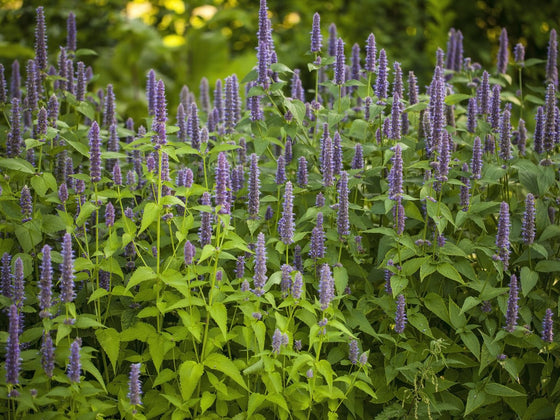
Anise Hyssop
How to grow anise hyssop in Australia from seed: surface sowing, free-draining soil, sowing months for six zones, cutting back, and picking leaves and flowers.
| Position | Full sun or light shade |
|---|---|
| Depth | Surface, or 1 mm |
| Spacing | 30 to 40 cm apart |
| First pick | Leaves from about 10 weeks |
Anise
How to grow anise in Australia: when to sow in all six climate zones, sowing where it grows, spacing and watering, then harvesting and drying seed and leaves.
| Position | Full sun, sheltered from wind |
|---|---|
| Depth | 6 to 10 mm |
| Spacing | 25 to 30 cm apart |
| First pick | Seed 17 to 20 weeks from sowing |