
How to Grow Tansy in Australia
Tansy is a hardy, ferny perennial grown for its yellow button flowers. Sow the tiny seed under no more than 2 mm of mix at 18 to 24°C, and expect seedlings in 2 to 4 weeks. Grow it in full sun in a large pot or behind a sunken barrier. Cut the flowers before seed ripens, wear gloves, and do not eat it.
| Sun | Full sun to part shade |
|---|---|
| Water | Moderate; deep soak weekly in dry spells |
| Soil | Any well-drained soil; any pH |
| Feed | Minimal; compost and half-strength feeds only |
| Spacing | 60 cm, in pot or barrier |
| Depth | 2 mm; barely cover |
| Germination | 2 to 4 weeks at 18 to 24°C, untreated |
| Harvest | From 13 to 15 weeks |
| Container | Yes; at least 30 L, 40 cm wide |
| Frost | Very frost hardy |
| Use | Cut and dried flowers, insect plantings, borders |
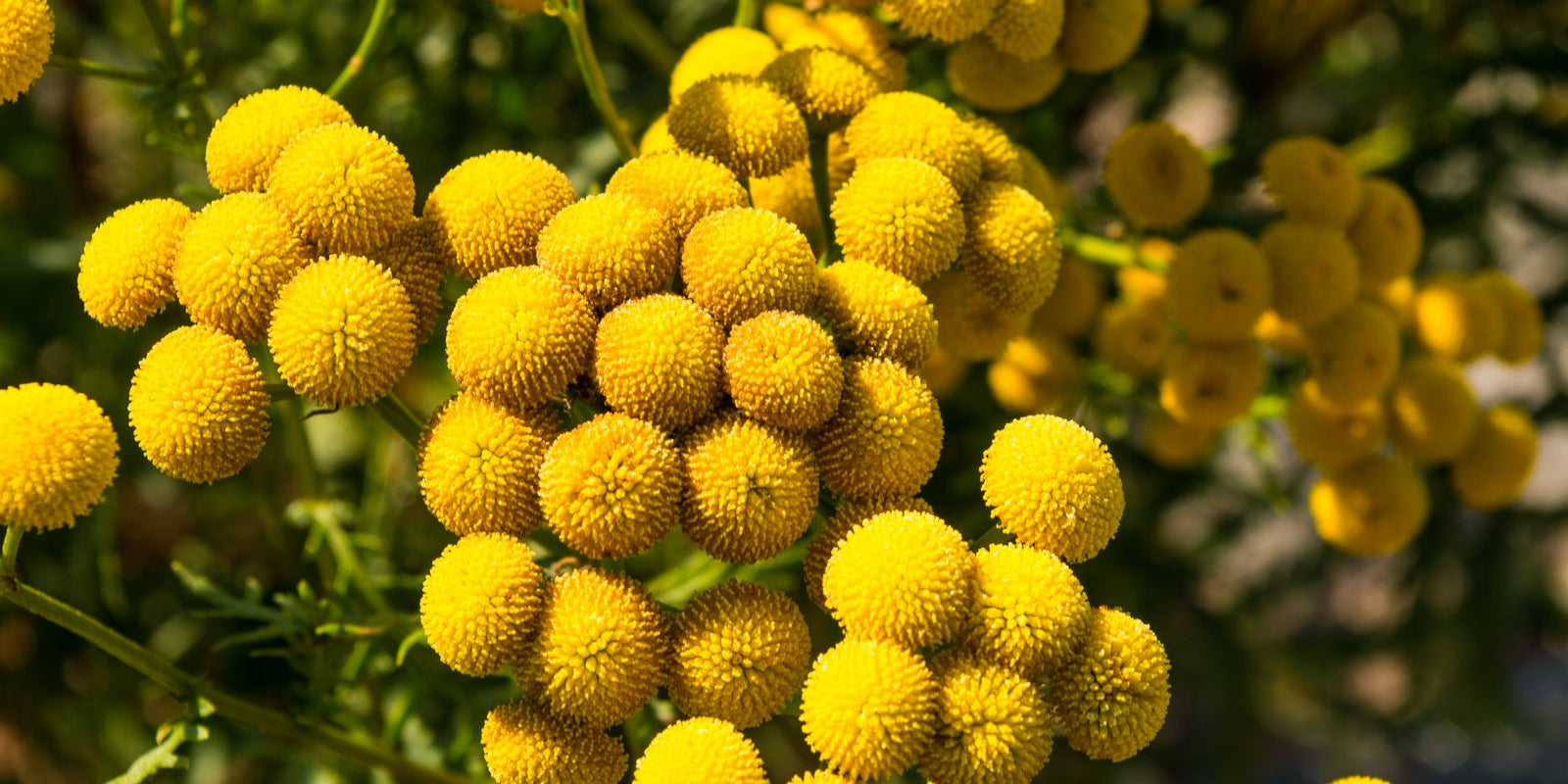
Tansy (Tanacetum vulgare, family Asteraceae) is a hardy daisy-family perennial grown for its ferny, strongly scented leaves and flat clusters of yellow button flowers. The store sells tansy seeds of the common species, which grows to about 1.2 m tall. It suits cottage gardens, herb borders and insect plantings from Hobart to the NSW Central Tablelands. The thing most gardeners get wrong is room: it spreads by creeping underground stems and self-seeds, so plan how to hold it before you sow.
Three mistakes that matter
- Burying the seed. Tansy seed is tiny and comes up best from the top of the soil, so seed pushed deep into a tray often sits there. Cover it with no more than 2 mm of fine mix, as Germinating the seed explains.
- Planting it loose in a bed. Creeping underground stems and dropped seed let one plant claim a border within a few seasons. Grow it in a large pot or behind a sunken barrier, and cut the flowers before seed ripens.
- Treating it as a kitchen herb. The leaves and flowers are poisonous if eaten. Plant it away from herbs you pick for the kitchen, and read Safety before handling it.
When to plant
Sow when the seed raising mix sits between about 18 and 24°C; seedlings usually show in 2 to 4 weeks. Seed bank tests at Kew germinated tansy at every temperature from 11 to 26°C, so cooler trays still work. In most zones that points to late winter and spring, with a second window in autumn.
| Zone | Example cities | Sow | Harvest | Notes |
|---|---|---|---|---|
| Tropical | Darwin NT; Cairns, Townsville QLD; Broome WA | Apr-Jun | Jul-Oct | A temperate plant: grow it in a pot through the dry season, with afternoon shade; wet-season heat can weaken it. |
| Subtropical | Brisbane, Gold Coast, Sunshine Coast QLD; Coffs Harbour, Lismore NSW | Mar-May and Aug-Sep | Oct-Mar | Sow as trays cool in autumn or before spring heat; give afternoon shade through humid summers. |
| Arid and semi-arid | Alice Springs NT; Broken Hill, Dubbo NSW; Mildura VIC; Kalgoorlie WA | Mar-Apr and Aug-Oct | Nov-Mar | Avoid the summer extremes; water deeply weekly and shelter plants from hot wind and afternoon sun. |
| Temperate | Sydney, Newcastle, Wollongong NSW; Melbourne, Geelong VIC | Aug-Nov and Mar-Apr | Dec-Apr | Start late-winter trays indoors; spring sowings establish over summer, and autumn seedlings settle before winter. |
| Mediterranean | Perth, Bunbury WA; Adelaide and the SA coast | Mar-May and Aug-Oct | Nov-Apr | Autumn sowings establish on winter rain; water weekly through the long dry summer. |
| Cool and alpine | Hobart, Launceston TAS; Canberra ACT; Ballarat VIC; Orange, Armidale NSW | Sep-Dec | Jan-Apr | Its best climate: start trays indoors in spring; plants take hard frost and die back in winter. |
At the cold edge of a window, start trays on a heat mat or a warm windowsill. At the hot edge, give seedlings afternoon shade until they settle.
Site, soil and setup
Tansy grows wild on roadsides, fence lines and creek banks, and it takes almost any garden soil. Rich, moist soil makes it tall and quick to spread, while poorer, drier ground keeps it more compact.
| Get the bed right | What to do |
|---|---|
| Light | Full sun; part shade is fine, with afternoon shade in hot inland districts |
| Soil | Any well-drained soil, from sand to loam; heavy clay needs a mound |
| pH | Acid, neutral or alkaline; no correction needed |
| Preparation | Dig in a 5 cm layer of compost on poor sand; skip manure |
| Containment | A large pot, or a bottomless container at least 30 cm deep sunk to its rim |
| Room | 60 cm between plants; stems 1 to 1.5 m tall |
| Rotation | None: a long-lived perennial for a border or herb bed, kept out of the vegie rotation |
Container growing
A pot is the easiest way to keep tansy in its place. Give one plant a pot of at least 30 L and 40 cm across, filled with a premium potting mix. Choose a heavy pot, since 1.2 m stems in flower catch the wind.
- Watering: water when the top 3 cm of mix is dry, and let the pot drain freely.
- Feeding: a fish and seaweed blend at half strength, about 12 mL per 9 L, fortnightly in spring and summer, only if leaves turn pale.
- Position: full sun, with afternoon shade where summers are hot, and never on bare soil where stems can root through the drainage holes.
- Renewal: lift and divide the clump every two or three years, when roots fill the pot.
Germinating the seed
Tansy seed has no deep dormancy, and well-stored seed usually comes up readily. In seed bank tests at the Royal Botanic Gardens, Kew, untreated seed gave 60 to 100 per cent in daily light, from 11 to 26°C. One lot reached 100 per cent within 14 days at 16°C. The seed is tiny, 1.2 to 1.8 mm long and roughly 6,000 to the gram, and it germinates best at or just under the surface.
Cold can matter for some lots. In Canadian trials, seed taken straight off the plant gave only 10 to 20 per cent without a chill. Seed that had spent a winter outdoors gave 70 per cent, rising to 90 per cent after more cold. A Montana lot gave about 75 per cent after a month of cold, damp storage. Sow three or four seeds for each plant you want, and chill any lot that is slow to start.
| Treatment | How | How long | Temperature | What success looks like |
|---|---|---|---|---|
| None needed: shallow sowing | Scatter seed on damp seed raising mix and cover with no more than 2 mm of fine mix or vermiculite; mist or water from below | Usually 2 to 4 weeks | 18 to 24°C is ideal; it also comes up at 11 to 16°C | Green specks, then pairs of small rounded seed leaves |
| Cold moist chill, for slow or freshly saved seed | Mix the seed into a teaspoon of damp sand in a sealed, labelled bag in the fridge, then scatter sand and seed onto the tray | 4 weeks in the fridge | About 1 to 5°C in the fridge; then 18 to 24°C | A fuller, more even stand; the odd white root tip in the bag |
For handling seed this small, see how to sow tiny seeds without losing them, and for chilling in general, soaking, scarification and cold stratification.
When nothing comes up
- Sown too deep. Seed under a thick layer of mix often stays put. Sow again with only a dusting of cover.
- Dried out. Shallow seed dries fast. Cover the tray with clear plastic or glass until the first leaves show.
- Freshly saved seed. Seed straight off the plant is often dormant. Give it the fridge chill in the treatment table.
- Old or warm-stored seed. Kept at room temperature, seed loses about half its viability in 2 years. Store it cool, dry and sealed.
- Given up too soon. Keep the tray moist for six weeks before resowing, and chill the second batch first.
Sowing Seeds
Start tansy in trays for an even stand, or scatter it thinly where it will grow inside its pot or barrier. Both routes begin with shallow sowing, as Germinating the seed explains.
Starting in trays
- Fill a punnet or cell tray with fresh seed raising mix, firm it lightly and water it well.
- Scatter three or four seeds per cell and barely cover them.
- Stand the tray in bright, indirect light and keep the surface just moist with a mister.
- Thin each cell to the strongest seedling once the first ferny true leaves appear.
- Start trays 6 to 8 weeks before you plan to plant out.
Sowing direct
Rake the soil inside the pot or barrier fine and level, and water it. Mix the seed with a little dry sand, scatter it thinly and rake it in lightly. Mist daily until seedlings show, then thin to one plant per pot or 60 cm apart.
Planting out
- Plant out when seedlings stand 5 to 8 cm tall with several true leaves.
- Harden off first (stand the pots outdoors a little longer each day for a week, so they adjust to sun and wind).
- Plant at the same depth as in the pot, and water in with seaweed solution at half strength.
- Water twice a week until new growth shows, then weekly in dry spells.
More on the move from tray to garden is in hardening off seedlings before planting out.
Care by growth stage
Containment decides more than feeding does. Over-feeding reduces the essential oils that give tansy its scent and pushes soft, floppy growth, so feed at half strength at most.
| Stage | Water | Feed | Watch for |
|---|---|---|---|
| Seedling, weeks 0 to 8 in the tray | Keep the mix just moist; mist or water from below | Seaweed solution at half strength, 15 mL per 9 L, fortnightly from the first true leaves | Damping off (seedlings rotting at soil level); drying out; stretching in low light |
| Young plant, first 4 to 6 weeks after planting out | Water deeply twice a week, then when the top few centimetres are dry | A handful of worm castings in each planting hole | Snails and slugs at night; wilting in hot wind |
| Leafy growth, spring and early summer | A deep soak weekly in dry spells | None in the ground; pots as in Container growing | Shoots appearing outside the pot or barrier |
| Flowering, summer into autumn | Deep soak weekly in dry spells | None | Two-spotted mite in hot, dry weather; flowers browning, the cue to cut |
| Winter and early spring | Little or none; rain is usually enough | A 5 cm compost mulch in early spring, kept clear of the crown | Tired centres in old clumps, the cue to divide |
| The weeks before cutting | Keep watering as usual right up to cutting | None | Dusty or mite-damaged leaves; cut clean growth |
If growth stalls in very poor sand, a light application of all-purpose controlled release granular (NPK around 14-5-10) scratched in each spring can help.
Cutting Back and Containing
Two habits spread tansy: seed dropped from ripe flower heads and pieces of creeping underground stem (rhizome). Wear gloves, as Safety explains.
- Cut flower stems as the yellow buttons fade and brown, before seed ripens.
- Never slash or mow plants in seed, which scatters it, and brush seed off clothing and pets after working near them.
- Dig out shoots that appear beyond the pot or barrier, lifting every piece of rhizome.
- Bin seed heads and rhizomes rather than composting or dumping them, and keep plantings away from creeks, dams and drains, since the seed floats.
- Cut all stems to 10 cm in late autumn or winter, once they brown off.
- Lift and divide clumps in spring or autumn every few years, replanting young outer pieces.
Division renews a tired clump: see dividing perennials.
Companion planting
Choose neighbours that share its sun and can hold their own, and keep low plants out of reach of its roots.
Grows well with
- Yarrow, another tough daisy-family plant whose flat flower heads draw the same lady beetles.
- Echinacea, a tall perennial that stands up to a vigorous neighbour.
- Cosmos, an annual that fills gaps around a potted clump and feeds the same insects.
Keep apart
- Thyme and other low herbs, which its creeping stems overrun.
- Kitchen herbs and salad crops you pick to eat, so no tansy leaf ends up in a harvest.
Penn State Extension lists tansy among the daisy-family flowers that draw larger predators such as lady beetles. A pot at the edge of the vegie patch puts those insects close to the crops while keeping the roots contained.
Harvesting Leaves and Flowers
Cut leafy stems once plants are bushy, usually from about 13 to 15 weeks after sowing. For drying, cut flower stems in summer when most buttons in a cluster are fully yellow.
- Wear gloves and long sleeves, and cut on a dry day once dew has gone.
- Take no more than a third of a plant at one cutting.
- Cut stems low with secateurs, and discard damaged or discoloured leaves.
- Tie loose bunches of five or six stems and hang them in an airy, shaded place.
- Dry until the leaves are crisp and the flower heads feel papery.
Store dried bunches in a closed, labelled box in a cool, dry, dark place, apart from kitchen herbs. Fresh stems suit vases and informal bouquets, and dried flower heads hold their colour and shape in arrangements and wreaths. The leaves and flowers contain thujone, so read Safety before any other use.
Traditional use and history
Tansy is native to temperate Europe and Asia. Its name is usually traced to the Greek athanatos or athanasia, immortal, which botanists link to its long-lasting flowers. Grieve's A Modern Herbal gives a second reason: its old use in preserving the dead. Its English folk names include bitter buttons, golden buttons and parsley fern. In German it is Rainfarn, and in French tanaisie.
| Tradition | Name | Part | What the tradition recorded |
|---|---|---|---|
| Early medieval Europe | Tanacetum | Whole plant | Named in records kept under Charlemagne and by Swiss Benedictine monks in the eighth century |
| English households | Tansy, buttons | Leafy stems | A strewing herb on floors, listed by Tusser in the sixteenth century, and said to keep flies away |
| English Easter custom | A tansy | Not recorded | A cake called a tansy was the prize in Easter handball games |
| European herbals | Hierba lombriguera, worm herb, in Spanish | Leaves and flowering tops | Recorded against intestinal worms, a use modern references reject as unsafe |
| Colonial New England | Tansy | Leaves and flowers | Brought by settlers; corpses were wrapped in it from the seventeenth century into the nineteenth |
| Finnish dyers | Pietaryrtti | Not recorded | Used to dye cloth green |
In the old burying ground beside Harvard, nineteenth-century antiquarians found a coffin stuffed with tansy and judged it to hold the college's first president. The man who recorded the dig doubted it. In some parts of New England, it is still the custom to take a tansy bouquet to the cemetery.
The Northern Cheyenne of Montana gave it the name yellow medicine. Grieve also records that it was one of the native plants dedicated to the Virgin Mary.
Safety
Happy Valley Seeds sells tansy as seed for growing, as an ornamental and insect plant. Nothing here is advice to eat or take any part of the plant. Anyone thinking of using a plant should first seek advice from a qualified health practitioner.
| Topic | What the sources say |
|---|---|
| Toxicity | Poisonous to people and animals if eaten. Thujone, in its essential oil, is thought to cause most of the harm, and North Carolina Extension names the leaves as the poisonous part. Eating it can cause convulsions, muscle spasms, stomach inflammation, a rapid or weak pulse, and liver and brain damage. Deaths have followed swallowing the oil and tansy tea. LiverTox, the United States liver injury database, has no entry for tansy or thujone, so it gives no likelihood score. |
| Pregnancy and breastfeeding | Avoid it altogether. The store's listing says not to grow or handle it when pregnant. Clinical references record it bringing on menstruation and miscarriage, and advise against any use in pregnancy or while breastfeeding. European regulators say thujone-containing herbal products should be kept to a minimum in pregnant women. |
| Interactions with medicines | Clinical references list none that are well documented, which does not show it is safe. Anyone taking medicines should ask a doctor or pharmacist before using any plant. |
| Allergy and skin | A daisy family plant: people allergic to chrysanthemums and their relatives often react to tansy too, and it is part of the standard skin test for that allergy. Touching it can irritate skin or cause contact dermatitis. Wear gloves and long sleeves when cutting or pulling it. |
| Pets and livestock | NSW DPIRD rates it poisonous to livestock, more so to cattle than sheep, though stock rarely eat it. It taints the milk of dairy cows that do. North American sources list it as a problem for horses and cattle, while sheep and goats graze it. Sources are silent on dogs and cats: keep pets from chewing it, and call your vet if one does. |
| Legal status | No state or territory declares tansy. New South Wales covers it only by the general biosecurity duty that applies to every pest plant. Western Australia's organism list gives it as permitted. It has naturalised in South Australia, Queensland, New South Wales, the ACT and Tasmania, so contain it. The store has no shipping restriction on this seed. |
| Look-alikes | Ragwort (Jacobaea vulgaris), sometimes called tansy ragwort, is a different, toxic plant declared in New South Wales, South Australia, Tasmania, Victoria and Western Australia. Its heads are daisy-like, about 2.5 cm across, with 12 to 15 yellow petals. Tansy buttons are 5 to 9 mm with no petals. Native billy buttons also look similar, but their leaves are not divided. If you are unsure which plant you have, ask your local council weeds officer. |
If someone collapses, stops breathing, has a seizure or has a severe allergic reaction, call triple zero (000). For any suspected poisoning, call the Poisons Information Centre on 13 11 26 without waiting for symptoms. Do not make the person vomit, and wash sap off the skin with soap and water.
Tansy is a separate plant from its relative feverfew (Tanacetum parthenium), which has white daisy flowers.
Common problems
No seedlings. See Germinating the seed and its list, When nothing comes up.
Tall, pale, floppy seedlings. Too little light on a windowsill stretches them. Move trays to brighter light and turn them daily. Read more
Tansy coming up everywhere. It has escaped its pot or barrier; see Three mistakes that matter and Cutting Back and Containing.
Stems flopping over. Shade and rich, moist soil both push stems up to 1.5 m and weaken them. Move it into full sun, stop feeding, and cut it back after flowering.
A dead patch in the middle of the clump. Older stems in the centre of a clump weaken after three or four years while the edges keep growing. Lift the clump and replant young outer pieces.
Sparse flowers in the tropics. Tansy comes from temperate Europe and Asia and grows best in cool climates. Expect it to be leafy and slow to flower in humid heat; see the Tropical row in When to plant.
Pests and diseases
Tansy has no serious pest or disease problems, though a few garden regulars feed on it.
Two-spotted mite (Tetranychus urticae). Spider mites can trouble tansy in some areas, and this one has a wide host range. It builds up fast in hot, dry weather and leaves yellow mottled or stippled patches, worst on the undersides of leaves. Hose the undersides of leaves, and avoid broad-spectrum sprays that kill the predatory mites and lady beetles that keep them down. Read more
Common garden snail (Cornu aspersum) and grey field slug (Deroceras reticulatum). Both graze seedlings at night in damp weather, and in a German field trial, slug damage cut tansy cover sharply after four years. Hand-pick them after dark, or scatter an iron-based snail bait thinly as the label directs. Read more
Damping off (Pythium species and Rhizoctonia solani). Seedlings rot at soil level and collapse, most often in wet mix. Use fresh seed raising mix and clean trays, and avoid overwatering. Read more
Prevention first
- Keep seed trays clear of rain and hose splash, which spread damping off.
- Water the soil deeply in dry spells, since stressed plants suffer most from mites.
- Check the undersides of leaves weekly through hot, dry weather.
- Clear leaf litter, boards and loose pots from around seedlings, where snails shelter.
Tips
- Cut a few flower stems for the vase as the first buttons colour: they last well and dry on the stem.
- Keep a mown or paved edge around any planting in the ground, so creeping shoots show early.
- Label the pot and any seed you save, so tansy is never mixed up with feverfew or yarrow.
Questions
Why did my tansy seeds not come up?
Usually they were sown too deep or dried out. Tansy seed is tiny and comes up best at the surface. Cover it with no more than 2 mm of fine mix and keep it moist at 18 to 24°C. If nothing shows after six weeks, chill the next batch in damp sand in the fridge for four weeks.
How long does tansy take to grow from seed?
Seedlings usually appear in 2 to 4 weeks and are ready to plant out 6 to 8 weeks after sowing. Leafy stems can be cut from about 13 to 15 weeks. Flowering comes in summer once plants are established.
Is tansy the same as tansy ragwort?
No. Ragwort, sometimes called tansy ragwort, is a different, toxic plant declared a weed in five states. Its yellow flowers are daisies about 2.5 cm across with 12 to 15 petals. Tansy has small, flat, petal-less buttons 5 to 9 mm across and ferny leaves.
Is tansy a declared weed in my state?
No state or territory declares tansy, and Western Australia's organism list gives it as permitted. It has escaped gardens in several states, though, so grow it in a pot or behind a barrier and cut the flowers before seed ripens.
Is tansy safe around dogs, cats and livestock?
No. Tansy is poisonous if eaten. Livestock rarely eat it, but it is more toxic to cattle than sheep and taints dairy milk. Sources are silent on dogs and cats, so keep pets from chewing it and call your vet if one does.
Can I grow tansy in a pot?
Yes, and a pot is the easiest way to hold it. Use one of at least 30 L and 40 cm across, filled with premium potting mix, in full sun. Stand it on paving rather than soil, and divide the clump every two or three years.
Grow it
Choose a size to add it to your cart. You stay on this page.
- Tansy seedsFrom $2.99

More herbs to sow in September
All herbs
Agrimony
How to grow agrimony in Australia from seed: chilling the burrs, sowing months for six climate zones, sun and soil, cutting back, harvest, history and safety.
| Position | Full sun, light shade tolerated |
|---|---|
| Depth | 5 mm |
| Spacing | 30 cm apart |
| First pick | Summer; 12 to 18 weeks from spring sowing |

Angelica
How to grow angelica in Australia from seed: fresh or chilled seed sown on the surface, part shade, months for six climate zones, stems, history and safety.
| Position | Part shade, morning sun |
|---|---|
| Depth | Surface; press in, uncovered |
| Spacing | 50 to 90 cm |
| First pick | Stems at about 18 months |
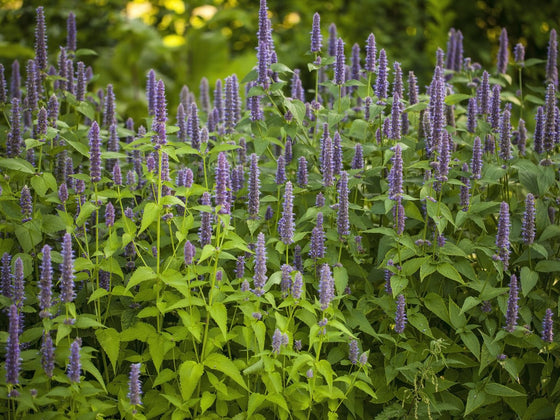
Anise Hyssop
How to grow anise hyssop in Australia from seed: surface sowing, free-draining soil, sowing months for six zones, cutting back, and picking leaves and flowers.
| Position | Full sun or light shade |
|---|---|
| Depth | Surface, or 1 mm |
| Spacing | 30 to 40 cm apart |
| First pick | Leaves from about 10 weeks |
Anise
How to grow anise in Australia: when to sow in all six climate zones, sowing where it grows, spacing and watering, then harvesting and drying seed and leaves.
| Position | Full sun, sheltered from wind |
|---|---|
| Depth | 6 to 10 mm |
| Spacing | 25 to 30 cm apart |
| First pick | Seed 17 to 20 weeks from sowing |