
How to Grow Hyssop in Australia
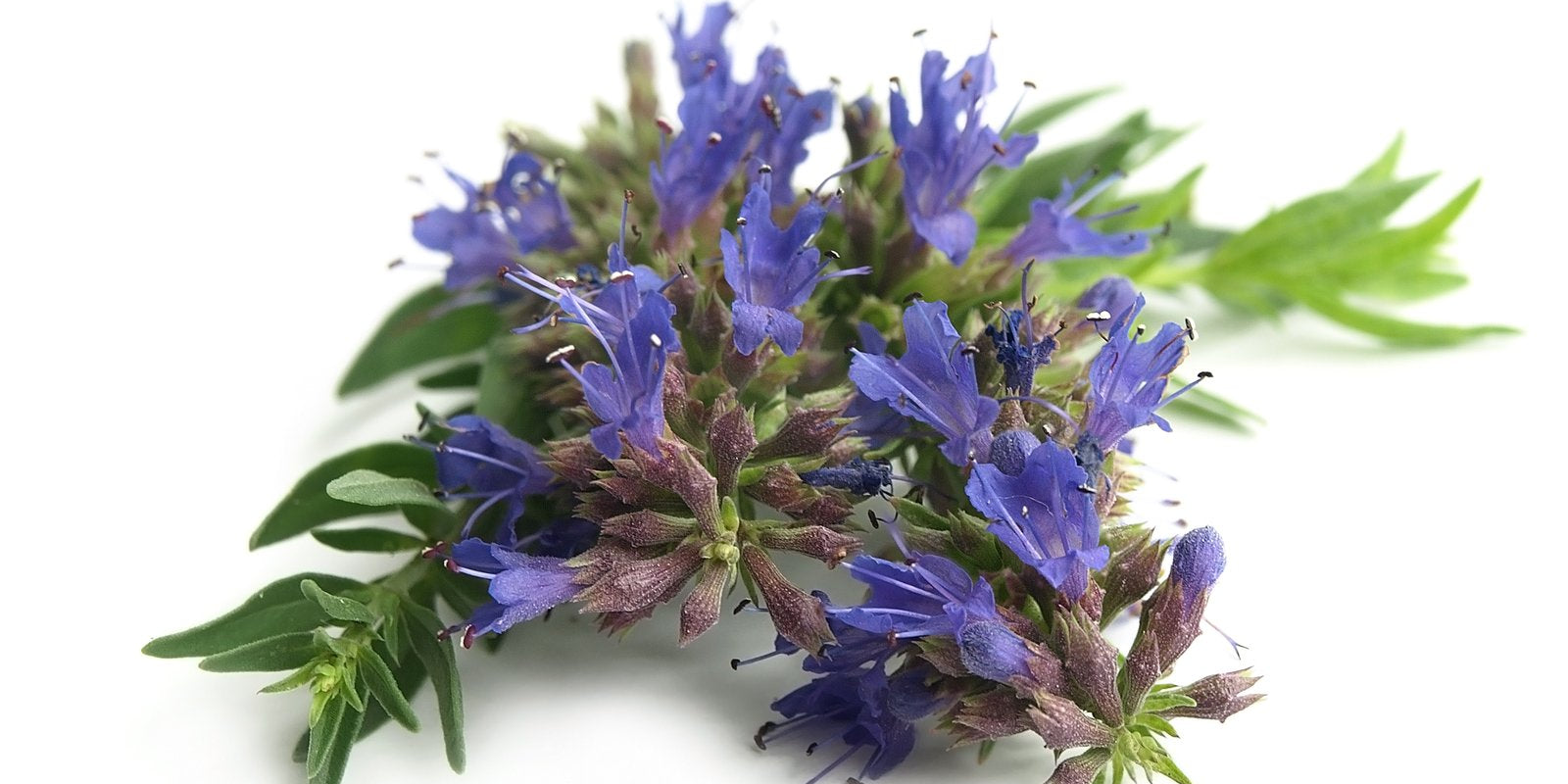
Hyssop is a compact, woody mint family herb grown for its aromatic leaves and spikes of blue flowers. Sow the seed no deeper than 3 mm at 18 to 22°C in bright light. It needs no treatment and shows in two to three weeks. Plant out 30 to 40 cm apart in full sun and free-draining soil, feed lightly, and trim after flowering and in spring.
| Sun | Full sun |
|---|---|
| Water | Low once established; drought tolerant |
| Soil | Light, free-draining; pH 6.0 to 8.0 |
| Feed | Minimal; compost and half-strength feeds |
| Spacing | 30 to 40 cm apart |
| Depth | 3 mm at most |
| Germination | 14 to 21 days at 18 to 22°C |
| Harvest | Flowering tops from about 13 weeks |
| Container | Yes; at least 15 L, 30 cm wide |
| Frost | Hardy to hard frost once established |
| Use | Herb garden, low hedges, borders, bees, butterflies |
Hyssop (Hyssopus officinalis, family Lamiaceae) is a compact, semi-woody perennial grown for its aromatic leaves and blue to violet summer flowers, which bees visit. The store sells plain hyssop seeds, a plant of 40 to 60 cm, and pink and white forms of the same species also exist. It is not anise hyssop, a different plant with its own guide, how to grow anise hyssop. Hyssop shrugs off drought and frost, but every source asks for free-draining soil, because it rots in wet ground.
Three mistakes that matter
- Wet, heavy or rich soil. Hyssop is a Mediterranean herb that likes light, rather dry soil, and roots left in cold, wet clay rot. Plant it in light, free-draining soil or a raised bed, and water only once the top few centimetres dry out.
- Burying the seed. Seed covered deeply often fails to show. Sow it no deeper than 3 mm, keep the tray in bright light, and see Germinating the seed.
- Never cutting it back. Left alone, the woody base splays open and the plant goes bare in the middle. Shear it after flowering and trim it again in early spring, as Trimming and Cutting Back explains.
When to plant
Seed germinates best with the mix between 18 and 22°C, and it slows once the mix falls below about 15°C. That suits spring in most zones and autumn where winters are mild. An Australian herb grower sows it in spring or autumn, so one sowing each year is plenty for a perennial.
| Zone | Example cities | Sow | Harvest | Notes |
|---|---|---|---|---|
| Tropical | Darwin NT; Cairns, Townsville QLD; Broome WA | Apr-Jun | Jul-Oct | Grow it as a dry-season plant; wet-season humidity usually rots it. |
| Subtropical | Brisbane, Gold Coast, Sunshine Coast QLD; Coffs Harbour, Lismore NSW | Mar-May and Aug-Sep | Sep-Dec | Sow as the mix cools in autumn; flowers come before humid summer, when sharp drainage matters most. |
| Arid and semi-arid | Alice Springs NT; Broken Hill, Dubbo NSW; Mildura VIC; Kalgoorlie WA | Mar-Apr and Aug-Oct | Nov-Apr | Well suited to dry heat and frost; mulch lightly and water deeply but rarely. |
| Temperate | Sydney, Newcastle, Wollongong NSW; Melbourne, Geelong VIC | Sep-Dec and Mar-Apr | Dec-Apr | Sow once trays hold 18°C in spring; autumn sowings flower the following summer. |
| Mediterranean | Perth, Bunbury WA; Adelaide and the SA coast | Mar-May and Sep-Nov | Nov-Apr | A natural fit: autumn sowings establish on winter rain and handle the long, dry summer. |
| Cool and alpine | Hobart, Launceston TAS; Canberra ACT; Ballarat VIC; Orange, Armidale NSW; Stanthorpe QLD | Sep-Dec | Jan-Apr | Start seed indoors in the warmth; established plants take hard frost but may drop leaves. |
At the cold edge of a window, start seed indoors on a heat mat or a warm, bright sill. In the humid north, sow as the dry season arrives, because summer humidity is what finishes hyssop.
Site, soil and setup
Hyssop grows best where lavender, thyme and rosemary thrive: an open, sunny spot and soil that drains fast after rain.
| Get the bed right | What to do |
|---|---|
| Light | Full sun; light afternoon shade suits hot inland gardens, but deeper shade makes plants leggy |
| Soil | Light, free-draining loam, sand or stony soil of low to moderate fertility |
| pH | Neutral to alkaline, about 6.0 to 8.0; below 6.0, dolomite lime at 100 to 200 g per square metre 4 weeks ahead |
| Preparation | Dig in a 5 cm layer of compost; add no manure |
| Drainage | Build a raised bed or mound on clay that stays wet after rain |
| Room | 30 to 40 cm between plants, or 30 cm for an edging or low hedge so the bushes knit; each grows 40 to 60 cm tall and 30 to 45 cm wide |
| Rotation | None: grow it in a herb bed, border or low hedge, not the vegie rotation |
Container growing
Hyssop suits pots, window boxes and a sunny courtyard, and a pot gives it the sharp drainage it wants. Give one plant a pot of at least 15 L and 30 cm across, filled with a premium potting mix. Stand the pot on feet so water runs straight out.
- Watering: water when the top few centimetres of mix are dry, then let it drain. Never leave the pot in a saucer of water.
- Feeding: a fish and seaweed blend at half strength, about 12 mL per 9 L, fortnightly from spring to late summer.
- Position: full sun, with some afternoon shade in hot districts, where pots dry out fast.
- Renewal: pot on or replace the plant every few years, as older plants go woody and thin.
- Mix safety: potting mix can carry Legionella bacteria, so wet it down, wear gloves and a P2 mask, and wash your hands afterwards.
Germinating the seed
Hyssop seed has no dormancy to break, and it needs no soaking, chilling or scratching. Warmth, steady moisture and a light covering are enough. In seed bank tests at the Royal Botanic Gardens, Kew, untreated seed gave 62 to 100 per cent at 15 to 20°C in daily light.
One Kew batch reached 100 per cent within 14 days at 20°C, while another took 56 days at 15°C to reach 86 per cent. In a tray at 18 to 22°C, seedlings usually show in 14 to 21 days. No germination rate is recorded for home trays, so sow two or three seeds for each plant you want.
| Treatment | How | How long | Temperature | What success looks like |
|---|---|---|---|---|
| None needed: shallow sowing in warmth and light | Sow on damp seed raising mix, cover with no more than 3 mm of fine mix, and keep the tray in bright light | Usually 14 to 21 days; up to 8 weeks in cool mix | 18 to 22°C | Pairs of small rounded seed leaves, then narrow true leaves in opposite pairs |
For more on which seeds need help and which do not, see soaking, scarification and cold stratification.
When nothing comes up
- Too cold. Below about 15°C, seed sits for weeks. Move the tray to a heat mat or a warmer room.
- Too hot. Mix at 30°C slows germination too. Shade the tray from hot afternoon sun.
- Buried too deep. Sow again with no more than 3 mm of cover.
- Dried out, or soggy. Keep the mix evenly moist but never waterlogged; cover the tray with clear plastic until seedlings show.
- Old seed. Kept in a warm room, viability halves in about three years. Store seed cool and dry in a sealed jar.
- Given up too soon. In cool mix, wait eight weeks before sowing again.
Sowing Seeds
Start hyssop in punnets or cell trays for the most even plants, or sow it where it is to grow once the soil is warm. Both begin from untreated seed, sown shallow, as Germinating the seed explains.
Starting in trays
- Fill a cell tray with fresh seed raising mix, firm it lightly and water it well.
- Sow into each cell at the seed count and depth Germinating the seed gives.
- Keep the tray warm and bright, and water from below.
- Thin each cell to the strongest seedling once the first true leaves appear.
- Pot on into small pots when seedlings are big enough to handle.
Sowing direct
Rake the bed fine, water it, then sow a pinch of seed every 30 to 40 cm and cover it lightly. Keep the surface moist until seedlings show, and thin each spot to one strong plant.
Planting out
- Plant out when seedlings are several centimetres tall and well rooted.
- Harden off first (stand the pots outdoors a little longer each day for a week, so they adjust to sun and wind).
- Plant at the same depth as in the pot, 30 to 40 cm apart, and water in with seaweed solution at half strength.
- Water regularly until the plants settle, then ease off.
More on the move from pot to garden is in hardening off seedlings before planting out.
Care by growth stage
Drainage and restraint decide how well hyssop grows. Over-feeding reduces the essential oils that give hyssop its aroma, so feed lightly, at half strength at most.
| Stage | Water | Feed | Watch for |
|---|---|---|---|
| Seedling, weeks 0 to 6 | Keep the mix just moist; water from below | Seaweed solution at half strength, 15 mL per 9 L, fortnightly from the first true leaves | Damping off; stretching in low light |
| Young plant, weeks 6 to 12 | Water deeply whenever the top few centimetres are dry, until settled | A handful of worm castings in each planting hole | Snails and slugs at night |
| First flowers, from about week 13 | A deep soak only when the soil is dry below the surface | Worm casting liquid, diluted to weak tea colour, fortnightly only if leaves look pale | Leafhoppers; pale stippled leaves |
| Established plant, summer | Occasional deep water; it tolerates long dry spells once settled | None; a thin compost mulch in spring, kept clear of the stems | Rot at the base in humid weather |
| Autumn and winter | Water little; let the soil dry between waterings | None | Leaf drop and dieback in hard winters |
| The weeks before picking | Keep watering as usual right up to harvest | None | Dusty or insect-damaged tops; pick clean growth |
If growth stalls in poor soil, a light application of all-purpose controlled release granular (NPK around 14-5-10) scratched in each spring can help.
Trimming and Cutting Back
Two light cuts a year keep hyssop dense: one after flowering and one in early spring.
- Shear off spent flower spikes as they fade, taking a little of the leafy growth with them.
- Trim the whole bush by about a third in early to mid-spring, just as new shoots start.
- Cut into leafy growth, not bare old wood, which is slow to sprout again.
- Shape a low hedge at the same two times, with shears held level.
- Leave frost-damaged tips until spring, then cut back to healthy buds.
For raising new plants from the trimmings, see how to take cuttings.
Companion planting
Choose neighbours that want the same sun, dry soil and lean feeding.
Grows well with
- Catmint, the partner an old English herbal names for a hyssop border.
- Lavender, which likes the same sun and fast drainage.
- Rosemary, another dry-soil shrub that makes a taller backdrop.
- Thyme, a low edging that shares its needs.
Keep apart
- Mint, whose spreading roots and liking for moist soil do not suit a dry bed.
- Thirsty leafy vegies, whose frequent watering keeps hyssop's roots too wet.
Harvesting Leaves and Flowers
Cut flowering tops just as the first flowers open, usually in midsummer. Pick leafy shoots any time the plant is growing strongly.
- Cut in the morning once dew has dried.
- Take no more than a third of a plant at one picking.
- Cut stems with secateurs just above a pair of leaves.
- Tie small bunches and hang them upside down in a dry, airy, shaded room.
- Dry until leaves crumble and stems snap cleanly.
Store dried leaves and flowers in a sealed jar in a cool, dry, dark cupboard, labelled with the botanical name and the picking date. Cut spikes also last in a vase. The leaves and flowering tops carry an essential oil rich in pinocamphone and isopinocamphone, so read Safety before any other use.
Traditional use and history
The name comes from the Greek hyssopos, which Mrs Grieve's A Modern Herbal traces to a holy herb used for cleaning sacred places. The species name officinalis means "of the offices", marking a plant once sold by apothecaries.
| Tradition | Name | Part | What the tradition recorded |
|---|---|---|---|
| The ancient world | Hyssopos | Herb | Named by Dioscorides; used in religious rituals and against lice and other insects |
| European herbals and folk use | Hyssop | Flowering tops and leaves | Recorded for coughs, colds, sore throats and hoarseness |
| Beekeeping | Hyssop | Flowers | Grieve records bees feeding freely on it and its honey as remarkably fragrant |
| Kitchens, distillers and perfumers | Hyssop | Leaves, flowers and oil | A strewing herb and a strong kitchen flavouring; its oil went into perfumes and the liqueur Chartreuse |
The hyssop of the Bible is probably another plant. Grieve notes that tradition links it with a marjoram. The Missouri Botanical Garden names Syrian oregano (Origanum syriacum) as the plant believed to be the Old Testament hyssop. Grieve adds that the garden hyssop does grow in Palestine, but is not conspicuous there.
Hyssop is native to southern and eastern Europe, North Africa and western Asia. Grieve records it naturalised on the ruins of Beaulieu Abbey in England, a sign of old monastery gardens. Kew's Plants of the World Online now files the species as Dracocephalum officinale, while the seed trade still sells it as Hyssopus officinalis.
Safety
Happy Valley Seeds sells hyssop as seed for growing. Nothing here is advice to eat or take any part of the plant. Anyone considering using a plant should first seek advice from a qualified health practitioner.
| Topic | What the sources say |
|---|---|
| Toxicity | The essential oil in the leaves and flowering tops holds pinocamphone and isopinocamphone, which cause convulsions. Poisonings with commercial hyssop oil have been reported, with seizures as the main sign, in adults and in children. LiverTox advises that the oil should not be taken by mouth and notes it may worsen seizure disorders. LiverTox scores hyssop E, an unlikely cause of liver injury, with no cases on record. |
| Pregnancy and breastfeeding | Not recommended in pregnancy. Clinical references advise avoiding it in pregnancy and while breastfeeding, and describe it as able to bring on menstruation and miscarriage. |
| Interactions with medicines | None well documented, and one clinical reference found no reported interactions. That is an absence of evidence, not proof of safety, so anyone taking medicines should ask their doctor or pharmacist. |
| Allergy and skin | Allergic reactions are listed as possible. Hyssop oil did not irritate the skin in animal and human tests. The sources are silent on a wider mint family allergy. |
| Pets and livestock | The sources are silent: hyssop is not on the ASPCA plant lists for dogs, cats or horses, which the ASPCA says are not complete. Keep pets away from the essential oil, and call your vet if an animal eats the plant. |
| Legal status | Not on the declared or prohibited weed lists of New South Wales, Victoria, Queensland, South Australia, Tasmania, the Northern Territory or the ACT. The Western Australian Organism List gives it as permitted. The store has no shipping restriction on this seed. |
If someone collapses, stops breathing, has a seizure or has a severe allergic reaction, call triple zero (000). For any suspected poisoning, call the Poisons Information Centre on 13 11 26 without waiting for symptoms.
Common problems
No seedlings. Usually cold mix or seed buried too deep; see Germinating the seed and its list, When nothing comes up.
Tall, pale, floppy seedlings. Too little light on a windowsill stretches them. Move trays to brighter light and turn them daily. Read more
Plants that rot in summer. High summer humidity is the usual cause; in the north, time sowings as When to plant explains, and give the sharpest drainage you can.
Plants that die over a wet winter. Heavy soil that stays wet rots the roots; see Three mistakes that matter.
A bare, woody middle. An unpruned plant splays open with age; see Trimming and Cutting Back.
Leaves dropping in a cold winter. Older plants often lose many leaves in hard cold. They usually reshoot in spring after a trim.
Pests and diseases
Hyssop has few serious pests and is generally free of disease.
Leafhoppers (family Cicadellidae). Overseas records list hyssop as prone to these small, wedge-shaped sap-suckers, which Australian gardens also host. They jump or scuttle sideways when disturbed, leaving pale specks on the leaves. Most gardens need no control; spiders, lacewings and ladybirds eat them.
Root-knot nematode (Meloidogyne species). Nematodes can trouble hyssop, and root-knot nematodes, very common in Queensland soils, attack a wide range of plants. Plants stunt, yellow and wilt in patches, and lifted roots carry small lumps. Lift affected plants, replant in a fresh spot, and dig in compost, which can lower nematode numbers. Read more
Common garden snail (Cornu aspersum) and grey field slug (Deroceras reticulatum). Both graze seedlings at night in damp weather. Hand-pick them after dark, or scatter an iron-based snail bait thinly as the label directs. Read more
Damping off (Pythium species and Rhizoctonia solani). Seedlings rot at soil level and collapse, most often in wet mix. Use fresh seed raising mix and clean trays. Read more
Prevention first
- Keep seed trays clear of rain and hose splash, which spread damping off.
- Water the soil, not the leaves, and avoid overwatering in cool, wet weather.
- Check leaf undersides for leafhoppers weekly through spring and summer.
- Clear leaf litter and loose pots from around seedlings, where snails shelter.
Tips
- Grow a low hedge of hyssop along a path or the edge of the vegie patch, where bees and butterflies work the flowers.
- Take tip cuttings in spring or autumn to keep young plants coming on, since hyssop is short-lived.
- Save seed from a few spikes once they turn brown and dry, and store it in a paper envelope in a cool, dry place.
Questions
Why did my hyssop seeds not come up?
Cold mix and deep sowing are the usual causes. Hyssop seed needs no treatment, but it germinates best at 18 to 22°C and slows below about 15°C. Cover it with no more than 3 mm of fine mix, and keep it evenly moist and in bright light. Seedlings usually show in 14 to 21 days.
How long does hyssop take to flower from seed?
A seed grower gives 85 to 90 days from sowing to harvest, so spring sowings often flower in their first summer. Plants then flower each summer into early autumn. Hyssop is short-lived, so keep a cutting or two coming on to replace older plants.
Is hyssop the same as anise hyssop?
No. Hyssop (Hyssopus officinalis) is a woody mint family herb with narrow leaves and blue, pink or white flower spikes. Anise hyssop (Agastache foeniculum) and the giant hyssops belong to another genus, Agastache, and have their own growing needs. Label your plants so they are never confused.
Will hyssop grow in the tropics or subtropics?
Yes, but grow it through the cooler, drier months. High summer humidity usually rots it. In the tropics sow at the start of the dry season, and in the subtropics sow in autumn. Give it the sharpest drainage you can, such as a raised bed or a pot.
Is hyssop safe around dogs, cats and horses?
The sources are silent on the plant itself. It is not on the ASPCA plant lists for dogs, cats or horses, which the ASPCA says are not complete. The essential oil is the concern, so keep any bought oil away from pets, and call your vet if an animal eats the plant.
Is hyssop a declared weed anywhere in Australia?
No state or territory declares it, and the Western Australian Organism List gives it as permitted. Happy Valley Seeds has no shipping restriction on this seed.
Grow it
Choose a size to add it to your cart. You stay on this page.
- Hyssop seedsFrom $2.99

More herbs to sow in September
All herbs
Agrimony
How to grow agrimony in Australia from seed: chilling the burrs, sowing months for six climate zones, sun and soil, cutting back, harvest, history and safety.
| Position | Full sun, light shade tolerated |
|---|---|
| Depth | 5 mm |
| Spacing | 30 cm apart |
| First pick | Summer; 12 to 18 weeks from spring sowing |

Angelica
How to grow angelica in Australia from seed: fresh or chilled seed sown on the surface, part shade, months for six climate zones, stems, history and safety.
| Position | Part shade, morning sun |
|---|---|
| Depth | Surface; press in, uncovered |
| Spacing | 50 to 90 cm |
| First pick | Stems at about 18 months |
Anise Hyssop
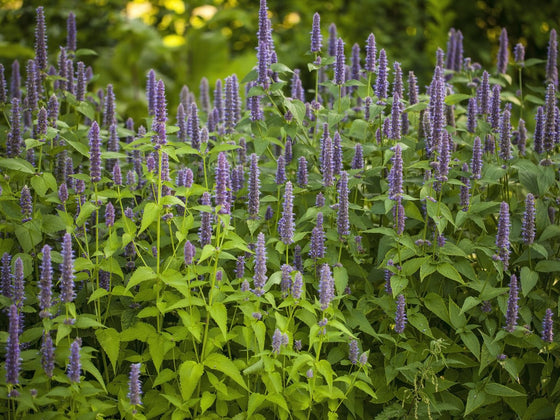
How to grow anise hyssop in Australia from seed: surface sowing, free-draining soil, sowing months for six zones, cutting back, and picking leaves and flowers.
| Position | Full sun or light shade |
|---|---|
| Depth | Surface, or 1 mm |
| Spacing | 30 to 40 cm apart |
| First pick | Leaves from about 10 weeks |
Anise
How to grow anise in Australia: when to sow in all six climate zones, sowing where it grows, spacing and watering, then harvesting and drying seed and leaves.
| Position | Full sun, sheltered from wind |
|---|---|
| Depth | 6 to 10 mm |
| Spacing | 25 to 30 cm apart |
| First pick | Seed 17 to 20 weeks from sowing |