
How to Grow Giloy in Australia
Giloy is a deciduous climbing vine grown from fresh, unrooted cuttings. Bury about half of each cutting on a slight angle in sandy, free-draining mix. Keep it barely damp and warm, and expect shoots in one to four months. Plant it out in warm weather against a sturdy trellis, fence or tree, in full sun to part shade. In cool districts, grow it in a pot.
| Sun | Full sun to part shade |
|---|---|
| Water | Barely damp while striking; steady once growing |
| Soil | Free-draining sandy loam; never waterlogged |
| Feed | Light; compost and half-strength liquid feeds |
| Spacing | About 3 m between vines |
| Depth | Half the cutting buried |
| Germination | Cuttings shoot in 1 to 4 months |
| Harvest | Cuttings in late winter |
| Container | Yes; at least 40 L, 45 cm across |
| Frost | Tender when young; light frost once established |
| Support | Sturdy trellis, fence or tree to twine around |
| Use | Ornamental climber with hanging aerial roots |
Giloy (Tinospora cordifolia, family Menispermaceae) is a deciduous climbing vine grown for its heart-shaped leaves and the thin aerial roots that hang from older stems. It is also called guduchi or heart-leaved moonseed. The store sells it as fresh, unrooted Giloy (Guduchi) Vine Cuttings for an ornamental climber, and never for eating or any medicinal use. It thrives in tropical and subtropical gardens, and it asks for patience: a cutting can look dead for months before it shoots.
Three mistakes that matter
- Keeping the cutting cold and wet. An unrooted cutting sitting in cold, sodden mix rots before it roots. Use a sandy, free-draining mix, water it once, then keep it barely damp in the warmest spot you have.
- Tipping out the pot too soon. A cutting often dies back above the mix, then shoots again from a buried node, so wait the full four months before giving up.
- Leaving it in open ground through a cold winter. Young vines are frost tender, and a cold, wet winter in the ground kills them. In cool districts, grow giloy in a large pot and move it under cover before the first frost.
When to plant
Plant cuttings from spring into summer, and in the tropics as the wet season builds. Cuttings root best once days reach about 18 to 24°C and nights stay mild. In India, where the vine grows wild, growers plant cuttings in June and July and grow the vine on rainfall. One planting is enough, because the vine is perennial and supplies its own cuttings in later years.
| Zone | Example cities | Plant | Harvest | Notes |
|---|---|---|---|---|
| Tropical | Darwin NT; Cairns, Townsville QLD; Broome WA | Oct-Jan | Aug-Sep | Plant as the wet season builds; take cuttings late in the dry. It may stay leafy all year. |
| Subtropical | Brisbane, Gold Coast, Bundaberg QLD; Coffs Harbour, Lismore NSW | Sep-Mar | Aug-Sep | The best zone: plant into the ground against a fence or tree; shelter young vines in frosty inland valleys. |
| Arid and semi-arid | Alice Springs NT; Broken Hill NSW; Mildura VIC; Longreach QLD | Sep-Nov and Mar | Aug-Sep | Avoid planting in peak summer; give afternoon shade, deep mulch and steady water, and cover young vines against frost. |
| Temperate | Sydney, Newcastle NSW; Melbourne, Geelong VIC | Oct-Feb | Aug-Sep | Use the warmest sheltered corner or a large pot, especially in Melbourne; the vine rests leafless over winter. |
| Mediterranean | Perth, Bunbury WA; Adelaide and the SA coast | Oct-Nov | Aug-Sep | Plant in spring once nights stay mild, and water through the dry summer. |
| Cool and alpine | Hobart TAS; Canberra ACT; Ballarat VIC; Armidale NSW; Stanthorpe QLD | Nov-Jan | Aug-Sep | A pot plant only: keep it under glass or indoors from April to October; strike cuttings on a heat mat. |
The store sends cuttings in the warmer months, when they strike best, and may hold a cold-season order until conditions suit. Late in the window, strike cuttings in a pot on a heat mat indoors, so roots form before the cold.
Site, soil and setup
Picture a paling fence in a Brisbane backyard, or an old tree in Cairns: warm, bright and sheltered, with something solid to wrap around. Giloy twines rather than clings, so a flat wall gives it nothing to hold. Growers in India allow about 3 m each way for one vine, and it can cover its support within a year or two.
| Get the site right | What to do |
|---|---|
| Light | Full sun to part shade; afternoon shade in hot, dry inland gardens |
| Warmth | The warmest, most sheltered spot you have, out of frost and cold wind |
| Support | A sturdy trellis, wire, fence or old tree it can twine around, strong enough for a vine several metres long |
| Soil | Light, sandy loam rich in organic matter is best |
| pH | Not critical: it grows in almost any soil that drains |
| Drainage | It does not tolerate waterlogging; on heavy clay, plant into a raised bed or mound |
| Preparation | Dig in a 5 cm layer of compost a few weeks before planting |
| Rotation | None: a permanent climber, kept out of the vegie patch rotation |
Container growing
A large pot lets gardeners in cool districts grow giloy and move it under cover for winter. The store sells the one species, as cuttings, with no compact form. Use the biggest pot you can move, at least 40 L and 45 cm across, with drainage holes. Fill it with premium potting mix cut with a little coarse sand, and set a trellis or obelisk in the pot at planting. Potting mix can carry Legionella bacteria, so wet it first, wear gloves and a mask, and wash your hands afterwards.
- Watering: water when the top 2 cm of mix is dry in the growing season, and far less once the leaves drop.
- Feeding: fish and seaweed blend at half strength, about 12 mL per 9 L, fortnightly from spring to late summer.
- Position: full sun to part shade, sheltered, and under cover before the first frost.
- Winter: keep the mix barely moist in a glasshouse, sunroom or bright, warm room until spring.
Striking the cuttings
A giloy cutting has no dormancy to break. It is a length of mature stem, and each raised, corky node can push out a root or a shoot. Warmth decides how fast the buried nodes strike. In real warmth, shoots can appear within a few weeks; in a cool spot, they can take up to four months.
No source gives a home strike rate for giloy. In an Indian field trial, cuttings with three or four nodes survived and grew better than cuttings with fewer. Plant two or three cuttings for every vine you want, which the store's packs of 2, 4 or 10 allow.
| Treatment | How | How long | Temperature | What success looks like |
|---|---|---|---|---|
| Plant at once (best) | Plant bought cuttings on arrival, or hold them a few days somewhere cool and airy. Push each cutting into sandy, free-draining mix on a slight angle, about half its length buried and at least two nodes below the surface; firm the mix, water once, let the pot drain, then keep barely damp | 1 to 4 months to shoot | Air at about 18 to 24°C; cooler air slows the shoots | A green shoot from a node, and resistance when you tug gently |
| Bottom heat | Stand the pot on a seedling heat mat, in 4 to 6 hours a day of bright, indirect light | Until the new shoot is growing away | Mix at about 24 to 27°C; air at 18 to 24°C | Shoots in weeks rather than months |
| Rinse mouldy ends | Rinse any surface mould off the cut ends under the tap, let them dry for an hour, then plant | About an hour | Room temperature | Clean, firm cut ends with no soft patches |
| Stand fresh-cut stems in water | Stand stems cut from your own vine upright, half their length in water, until you plant them | No more than 24 hours | Room temperature | Plump stems with the bark intact |
| Rooting hormone | None needed: Indian growers plant cuttings without any treatment | Not needed | Not needed | Not needed |
A heat mat shortens the wait; see the benefits of using a seedling heat mat.
When nothing comes up
- Soft, black base. The mix was too cold and wet, and the cutting rotted. Start again with a fresh cutting in sandier mix, somewhere warmer.
- Top shrivelled. Die-back above the mix is common, and a buried node can still shoot. Leave the pot warm and barely damp.
- No change in cold weather. The cutting is too cold to strike. Move the pot onto a heat mat or into the warmest room, or wait for spring.
- Bark stripped or bruised. Peeled stem decays quickly. Handle cuttings gently and plant only undamaged lengths.
- Given up too soon. Wait the full four months before tipping out a pot; see Three mistakes that matter.
Planting Cuttings
Start giloy by striking the cuttings in pots, then plant the rooted vine out in warm weather.
Potting the cuttings
- Fill a deep pot with sandy propagating mix, or potting mix cut with coarse sand or perlite.
- Plant, water and place each cutting as Striking the cuttings describes, on a heat mat if you have one.
- Pot on into a larger pot once the shoot is growing and a gentle tug meets resistance.
Planting out
- Plant out in warm weather, once the young vine has several leaves and roots filling its pot.
- Harden it off first (stand the pot outdoors a little longer each day for a week, so it adjusts to sun and wind). See a week of half days first.
- Set it at the foot of its support, about 3 m from the next vine, at the depth it grew in the pot.
- Water in with seaweed solution at half strength, 15 mL per 9 L.
- Mulch the root zone with compost, kept clear of the stem.
Care by growth stage
Warmth, steady but modest water and a firm support decide how quickly giloy grows. Feed lightly: compost and mulch do most of the work.
| Stage | Water | Feed | Watch for |
|---|---|---|---|
| Striking, weeks 1 to 16 | Barely damp; never soggy | None until a shoot is growing | Rot at the base; the top dying back |
| Rooted cutting in its pot, first summer | Water when the top 2 cm of mix is dry | Seaweed solution at half strength, 15 mL per 9 L, fortnightly | Drying out on hot days; caterpillars on the leaves |
| Planted out, first year | Deep soak once or twice a week in dry weather | A handful of worm castings in the planting hole | Frost on young growth; shoots wandering off the support |
| Established vine, spring and summer | Water deeply in dry spells; mulch keeps the roots cool and moist | A 5 cm layer of compost over the root zone each spring, clear of the stem | Shoots climbing into gutters or nearby trees |
| Winter dormancy | Little or none; rain is usually enough | None | Frost on young vines; waterlogged soil |
| Taking cuttings, late winter | Keep up the winter watering, so the soil never dries out and the stems stay plump | None | Bark tearing as you cut |
If growth stalls in poor, sandy soil, a light application of all-purpose controlled release granular (NPK around 14-5-10) scratched in each spring can help.
Vine Training
Giloy twines around whatever it touches and can run several metres in a season. Train it early; its late winter pruning also supplies your cuttings, as Taking Cuttings explains.
- Tie the first shoot loosely to the support until it starts to twine.
- Wind wandering shoots back around the support every week or two in summer.
- Cut the vine back hard in late winter to a framework of main stems.
- Leave the hanging aerial roots, the feature most gardeners grow it for.
- Handle stems gently, because the papery bark peels easily and bare stem decays.
- Keep shoots out of gutters, roof spaces and nearby trees.
A length of stem thrown over a tree can grow there and send roots down to the ground. Bag unwanted prunings or compost them hot, and keep the vine well away from bushland.
Companion planting
Pair giloy with plants that share its liking for warmth and do not compete for its support.
Grows well with
- Lemongrass, a clump for the sunny foot of the support that does not climb.
- Turmeric and ginger, which suit the dappled shade the vine casts in warm gardens.
Keep apart
- Passionfruit, another vigorous climber that competes for the same support.
- Citrus, mango and lychee trees from the Northern Rivers northwards: giloy may host fruit piercing moth caterpillars, as its native relatives do.
Taking Cuttings
Take cuttings from an established vine in late winter, while it is bare, choosing stems about as thick as a pencil with several raised nodes. Where nights are still cold, strike them on a heat mat indoors.
- Use clean, sharp secateurs.
- Cut lengths of about 10 to 20 cm, each with at least three nodes.
- Keep track of which end grew nearest the roots, and plant that end down.
- Reject any length with torn or peeled bark.
- Leave the base of the vine and its main stems to regrow.
- Plant within 24 hours, standing the cuttings half in water meanwhile.
If planting must wait longer, wrap the cuttings loosely and keep them a few days somewhere cool and airy. The harvest has one use: more vines. No part of giloy is eaten or taken. Giloy products are a recorded cause of liver injury, from a compound thought to be a diterpenoid, as Safety explains.
Traditional use and history
Giloy grows wild from the Indian subcontinent to Indo-China. It scrambles along hedges and through moist deciduous forest up to about 1,400 m above sea level. In the forest it climbs over the tallest trees, and its thread-thin aerial roots can hang as far as 10 m below.
| Language | Names | Where the name comes from |
|---|---|---|
| Sanskrit | Guduchi, amrita, amritavalli, madhuparni | Amrita is the heavenly elixir of Hindu mythology, said to have kept the gods from growing old |
| Hindi | Giloy or giloe, gurcha | Giloe is recorded as coming from the same mythological term |
| Marathi, Bengali | Gulvel; gulancha | Regional names |
| Tamil, Telugu, Kannada | Seendil kodi; thippateega; amrutavalli | Regional names |
| English and botanical Latin | Heart-leaved moonseed; cordifolia | Both describe the heart-shaped leaf |
In Ayurveda, guduchi appears in the classical texts of Charaka and Sushruta and in later works. Practitioners used it for diabetes, rheumatism, jaundice and malaria, among many conditions. The tradition classed it as a rasayana, a herb linked with long life. The Ayurvedic Pharmacopoeia of India records the stem as the part the tradition uses. In Unani practice the plant is known as giloe.
Much of the stem sold in Indian markets has been gathered from wild vines, yet Kew's extinction risk prediction rates the species as not threatened. During the COVID-19 pandemic, giloy products were taken widely in India. Doctors there then recorded a run of liver injury cases, which Safety sets out.
Safety
Happy Valley Seeds sells giloy as live cuttings for growing, as an ornamental climber. Nothing here is advice to eat or take any part of the plant. Anyone thinking of using a plant should first seek advice from a qualified health practitioner.
| Topic | What the sources say |
|---|---|
| Toxicity | LiverTox gives Tinospora cordifolia its likelihood score A: a well established cause of clinically apparent liver injury. More than 50 cases have been reported, mostly from India and Thailand. Injury ranged from mild to acute liver failure, and several people died, most often those with existing liver disease. The compound responsible is unknown but is thought to be a diterpenoid. |
| Pregnancy and breastfeeding | The Review of Natural Products, a professional reference, says information on safety in pregnancy and breastfeeding is lacking. LiverTox is silent. No source offers any assurance of safety. |
| Interactions with medicines | The same reference lists no well documented interactions. Another professional reference, on RxList, rates moderate interactions with diabetes medicines and with immunosuppressants, and advises caution in autoimmune disease. LiverTox notes that liver injury was more frequent and more severe in people with existing liver disease. Anyone taking medicines, or with a liver condition, should ask a doctor or pharmacist before using any plant. |
| Skin and allergy | LiverTox lists rash among uncommon side effects in people who took it. The sources are silent on handling the vine; gloves suit sensitive skin. |
| Pets and livestock | The ASPCA plant lists for dogs, cats and horses do not mention giloy or any Tinospora, and no veterinary source read covers it. Keep pets and stock from chewing the vine, and call your vet if one does. |
| Legal status | Western Australia: permitted for the whole state on the Western Australian Organism List (DPIRD), subject to WA's import requirements. Not on the declared or prohibited weed lists of NSW WeedWise (NSW DPI), Agriculture Victoria, Biosecurity Queensland, PIRSA (South Australia), NRE Tasmania, the Northern Territory Government or the ACT Government. |
Two relatives are easily confused with giloy. Tinospora crispa resembles it and is also a recorded cause of liver injury, and early giloy cases were first blamed on it. Tinospora sinensis has hairy leaves and larger crimson fruit. Call triple zero (000) if someone collapses, stops breathing or has a seizure.
Common problems
Cutting rotted. A soft, blackened base means the mix was cold and wet; see Three mistakes that matter.
Mould on the cut ends. A little surface mould after a few days in transit is common on fresh cuttings; rinse and plant, as Striking the cuttings describes.
Leaves dropping in autumn. Giloy is deciduous, so in cooler gardens it sheds its leaves and sits dormant through winter, alive and waiting for warmth.
Flowers but no fruit. Each vine is male or female, and cuttings from one vine share its sex, so a lone vine sets none of its red, pea-sized fruit.
Pests and diseases
Indian growers report no serious pest or disease on giloy.
Fruit piercing moth (Eudocima species). Its velvety black caterpillars carry two large white eyespots on each side. They feed on native vines of giloy's family, Menispermaceae, chiefly snakevine (Tinospora smilacina), and in India on giloy itself. The adult moths pierce ripening citrus, mango, lychee and stone fruit at night. They occur from the Northern Rivers of New South Wales northwards, so check the leaves in summer and pick off any caterpillars.
Prevention first
- Strike cuttings in fresh mix and clean pots that drain freely.
- Check the leaves for caterpillars through summer in Queensland and northern New South Wales.
- In fruit piercing moth country, bag ripening fruit on nearby trees, or net it with white netting of 5 mm mesh or finer, tied taut.
Tips
- Write the planting date on the pot label, so you know when four months are up.
- Site the vine where the aerial roots hang against the light, beside a verandah or a path.
- Stand a potted vine on pot feet over winter, so the drainage holes never sit in water.
Due to quarantine restrictions and our shipping policy, we cannot send Giloy cuttings to Western Australia, Tasmania or the Northern Territory.
Questions
Why has my giloy cutting not shot yet?
Giloy cuttings take anywhere from one to four months to shoot, and warmth decides the speed. A cutting often dies back above the mix, then shoots from a buried node. Keep the mix barely damp and warm, ideally on a heat mat, and wait the full four months before giving up.
Can I grow giloy in a cold climate like Canberra or Hobart?
Only in a pot. Young vines are frost tender, and a cold, wet winter in open ground kills them. Grow it in a large pot and move it into a glasshouse, sunroom or warm room before the first frost. Bring it out once nights warm up.
Is giloy safe around dogs and cats?
The ASPCA plant lists for dogs, cats and horses do not mention giloy or any Tinospora, so its effect on animals is not recorded there. Giloy products are a recorded cause of liver injury in people. Keep pets and stock from chewing the vine, and call your vet if one does.
Is giloy a declared weed anywhere in Australia?
No state or territory lists it as a declared or prohibited weed, and Western Australia's organism list shows it as permitted. Happy Valley Seeds still cannot send the cuttings to Western Australia, Tasmania or the Northern Territory, under quarantine rules and its shipping policy.
Why does my giloy vine flower but never fruit?
Each giloy vine is either male or female, and cuttings share the sex of the vine they came from. A lone vine flowers but sets no fruit. The red, pea-sized fruit forms only when a vine of the other sex grows nearby.
Is giloy the same plant as Tinospora crispa?
No. Tinospora crispa is a close relative that looks similar and is also a recorded cause of liver injury. Giloy is Tinospora cordifolia. Check the botanical name on any cutting or plant you buy.
Grow it
Choose a size to add it to your cart. You stay on this page.
- Giloy (Guduchi) Vine CuttingsFrom $14.99

More herbs to sow in September
All herbs
Agrimony
How to grow agrimony in Australia from seed: chilling the burrs, sowing months for six climate zones, sun and soil, cutting back, harvest, history and safety.
| Position | Full sun, light shade tolerated |
|---|---|
| Depth | 5 mm |
| Spacing | 30 cm apart |
| First pick | Summer; 12 to 18 weeks from spring sowing |

Angelica
How to grow angelica in Australia from seed: fresh or chilled seed sown on the surface, part shade, months for six climate zones, stems, history and safety.
| Position | Part shade, morning sun |
|---|---|
| Depth | Surface; press in, uncovered |
| Spacing | 50 to 90 cm |
| First pick | Stems at about 18 months |
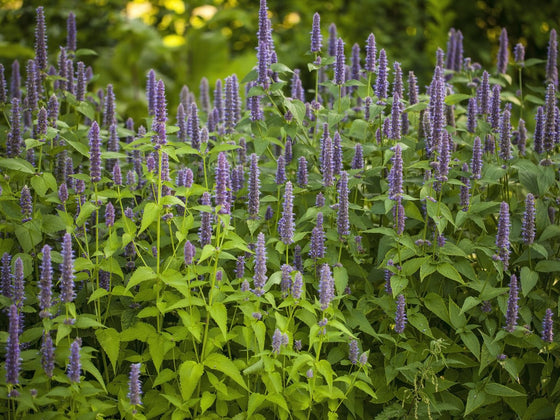
Anise Hyssop
How to grow anise hyssop in Australia from seed: surface sowing, free-draining soil, sowing months for six zones, cutting back, and picking leaves and flowers.
| Position | Full sun or light shade |
|---|---|
| Depth | Surface, or 1 mm |
| Spacing | 30 to 40 cm apart |
| First pick | Leaves from about 10 weeks |
Anise
How to grow anise in Australia: when to sow in all six climate zones, sowing where it grows, spacing and watering, then harvesting and drying seed and leaves.
| Position | Full sun, sheltered from wind |
|---|---|
| Depth | 6 to 10 mm |
| Spacing | 25 to 30 cm apart |
| First pick | Seed 17 to 20 weeks from sowing |