
How to Grow Cat Grass in Australia
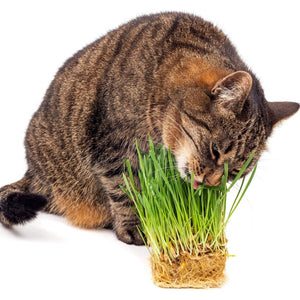
Cat grass here is cocksfoot, a perennial pasture grass grown in pots for pets to graze. Scatter seed thickly over moist potting mix, cover with 1 to 5 mm of mix and keep it damp at 16°C to 30°C. Shoots appear in 2 to 10 days. Offer the pot at about 12 cm tall, trim no lower than 5 cm, and cut any flower stems.
| Sun | Bright light; part shade outdoors |
|---|---|
| Water | Evenly moist, never soggy |
| Soil | Free-draining potting mix, pH 5.5 to 7.5 |
| Feed | None for new pots; half strength later |
| Spacing | Scatter thickly; no thinning |
| Depth | Cover lightly, 1 to 5 mm |
| Germination | 2 to 10 days in 16 to 30°C mix |
| Harvest | 2 to 4 weeks |
| Container | Yes, 15 cm pot, 1 to 2 L |
| Frost | Hardy once established; slow to sprout cold |
| Use | Young leaves for cats, rabbits, guinea pigs |
Cat grass (Dactylis glomerata) is a perennial pasture grass of the family Poaceae, grown as a thick pot of young leaves for pets to graze. Farmers know it as cocksfoot or orchard grass, and at home it is offered to cats, rabbits and guinea pigs. Much of the cat grass sold elsewhere is a cereal, and those have their own guides to oat grass, wheatgrass and barley grass. Cocksfoot sprouts readily in a pot and regrows after trimming. The mistake that matters most is letting it flower.
Three mistakes that matter
- Letting it flower. Cocksfoot is an environmental weed in Victoria, Tasmania, the ACT and New South Wales, and its pollen can bring on hay fever. Keep it in a pot and cut every flower stem before it opens.
- Keeping the mix wet. Soggy mix turns sour and grows mould, and the roots rot, especially in a pot with no drainage. Use a pot with holes, water when the surface begins to dry and empty the saucer.
- Expecting one pot to last. A pot grazed every day tires within weeks, and grass offered too young is pulled out by the roots. Sow the next pot on the rhythm When to plant gives, and let each one grow tall enough first.
When to plant
Seed comes up best in mix of about 16°C to 30°C, usually within 2 to 10 days. In a room that stays in that range, sow in any month; the calendar gives the months for pots kept outdoors. For a steady supply, sow a fresh pot every 2 to 3 weeks.
| Zone | Example cities | Sow | Harvest | Notes |
|---|---|---|---|---|
| Tropical | Darwin, Katherine NT; Cairns, Townsville QLD; Broome WA | Apr-Sep | May-Oct | A cool-season grass: sow outdoors in the dry season. In wet-season heat and humidity, grow pots in a cool room. |
| Subtropical | Brisbane, Gold Coast, Bundaberg QLD; Coffs Harbour, Lismore NSW | Mar-Nov | Apr-Dec | Winter pots grow steadily. In the humid December to February heat, keep pots airy and out of hot windows. |
| Arid and semi-arid | Alice Springs NT; Broken Hill, Dubbo NSW; Mildura VIC; Kalgoorlie WA | Mar-May and Sep-Nov | Apr-Jun and Oct-Dec | Midsummer heat and dry wind parch shallow pots; cold winter nights slow sprouting outdoors. Grow indoors at the extremes. |
| Temperate | Sydney, Newcastle, Wollongong NSW; Melbourne, Geelong VIC | Jan-Dec | Jan-Dec | Pots grow year round; winter sowings outdoors are slower, especially in Melbourne, so start those indoors. |
| Mediterranean | Perth, Bunbury WA; Adelaide and the SA coast | Mar-Nov | Apr-Dec | Autumn to spring suits pots outdoors. The dry summer heat parches shallow pots, so grow summer pots indoors. |
| Cool and alpine | Hobart, Launceston TAS; Canberra ACT; Ballarat VIC; Orange NSW | Sep-May | Oct-Jun | Established grass shrugs off frost, but seed sprouts slowly in cold mix. Sow winter pots in a heated room. |
In winter, start the pot in the warmest room and move it out once shoots appear. In summer, keep pots away from hot windows and afternoon sun, which dry shallow mix fast.
Site, soil and setup
Cocksfoot tolerates shade, frost and dry spells once established, so a pot of it asks for little beyond light and drainage.
| Factor | Setup |
|---|---|
| Light | Indoors, a bright windowsill with gentle direct or strong indirect light; outdoors, sun or part shade. Poor light gives pale, weak, floppy grass |
| Growing mix | Seed-raising mix or a fine, quality potting mix; not garden soil, which can carry pests and weed seeds |
| pH | 5.5 to 7.5 suits it; if a garden bed tests below 5.5, apply garden lime at 100 to 200 g per square metre, 4 weeks before sowing |
| Drainage | Holes in the base of every pot, and no water left standing in the saucer; it does poorly in waterlogged soil |
| Pots kept for months | Stir a handful of worm castings into the mix before sowing |
| Garden beds | Not advised: escaped plants spread into bushland, woodland and creek lines, where they form dense swards |
| Rotation | Fresh mix and a clean pot for every sowing; compost the old grass before any seed heads form |
Container growing
Use a wide, heavy pot or tray with drainage holes. Choose one at least 15 cm across and 10 cm deep, holding about 1 to 2 L of mix. Sow cat grass seed as Sowing Seeds describes; no compact variety is needed, because grazing and trimming keep the grass short.
- Water: whenever the surface of the mix begins to dry. A pot in a bright, warm spot may need water daily; see watering pots in summer.
- Feed: none for a pot replaced within a month; for a pot kept longer, feed as Care by growth stage sets out.
- Position: bright light on a stable surface, away from plants treated with sprays or slug pellets. Keep chives and other onion-family plants, which are toxic to pets, well apart.
- Handling mix: potting mix can carry Legionella bacteria, so dampen it first, wear gloves and a P2 mask, and wash your hands afterwards.
Sowing Seeds
Start cat grass from seed scattered thickly over moist mix, where it grows as a dense mat rather than as spaced plants.
Sowing in a pot
- Fill the pot with moist mix and firm it level.
- Scatter the seed thickly and evenly over the whole surface, with no thinning. Use only untreated seed, never treated pasture or lawn seed.
- Cover with 1 to 5 mm of fine mix and press it down gently. Never bury the seed deeper than 10 mm.
- Water with a fine mist, so the seed does not wash into clumps.
- Cover the pot loosely with plastic wrap, one corner open, or an upturned tray. This holds moisture and stops cats digging.
- Remove the cover as soon as shoots appear and move the pot into bright light.
Growing it outdoors
Outdoors, keep it in a pot on a verandah, balcony or patio rather than in a bed. A pot raised indoors needs hardening off (getting it used to sun and wind a little more each day) before it sits in full sun. Hardening off seedlings covers the method.
Care by growth stage
Even moisture decides this crop: damp, never soggy. Feeding matters only for a pot kept going past its first month.
| Stage | Water | Feed | Watch for |
|---|---|---|---|
| Sowing to shoots, days 1 to 10 | Mist so the surface never dries; a covered pot needs less | No feed | White fuzzy mould on seed or mix; a cat digging in the pot |
| Young grass, weeks 2 to 3 | Water gently when the surface begins to dry | No feed; the seed carries the grass through this stage | Pale, leaning blades in poor light; small flies around the pot |
| Grazing, from about week 3 | Water whenever the surface dries, and empty the saucer | No feed for a pot replaced within its first month | Grass chewed to the base; yellowing blades |
| Pots kept going, past the first month | When the mix dries right through, soak the pot in a bucket, then drain. Keep watering steady while grazing continues | Fortnightly at most while growing: seaweed solution at half strength, 15 mL per 9 L, after a hard trim, or fish and seaweed blend at half strength, about 12 mL per 9 L | Flower stems rising; rust in humid late summer; curl grubs in pots left outdoors |
If a pot kept for months stays pale in good light, a light pinch of all-purpose controlled release granular (NPK around 14-5-10) can help. Choose one with no added weed or insect killer, follow the label's advice on pets and mix it into the top of the mix. Fertiliser can poison animals that eat it.
Companion planting
Cat grass is best grown alone in its own pot, which keeps it clean and quick to replace.
Grows well with
- Oat grass, wheatgrass and barley grass, shallow-tray grasses resown on a similar rhythm.
- Parsley, a windowsill herb that wants the same bright light and even moisture.
- Catnip (Nepeta cataria), a mint-family plant for its own pot, which cats tend to rub and roll on rather than chew.
Keep apart
- Mint, which spreads strongly by runners and would take over a shared pot.
- Native grasses in bush gardens and nearby reserves, which escaped cocksfoot can crowd out with dense swards.
Trimming and Resowing
Offer the pot once the grass stands about 12 cm tall and holds firm against a gentle tug, usually 2 to 4 weeks after sowing.
- Set the pot on a stable surface and let cats graze straight from it.
- For rabbits and guinea pigs, cut a handful with clean scissors and offer it loose.
- Trim no lower than about 5 cm, so the grass recovers faster.
- After a hard cut, soak and drain the pot, then feed as Care by growth stage sets out.
- Cut off any flower stem as it rises, before the head opens, so no pollen or seed forms.
- Replace a pot that turns yellow, mouldy, sour or chewed to the base.
Grass keeps best growing in the pot, so cut it just before offering. Store unused seed sealed in a cool, dark, dry place.
Offer new grass in short, supervised sessions at first, and never let pets chew mouldy or spoiled grass.
Common problems
No shoots after two weeks. Cold mix, a dried-out surface, deep burial or old seed is the usual cause. Resow in fresh mix at the warmth When to plant gives.
White fuzzy mould on the seed or mix. Too much water, still air and very thick sowing let mould take hold, so water less, uncover the pot and give it airflow.
Pale, floppy grass. Low light, heat or very dense growth makes weak blades. Move the pot to brighter light, turn it every few days and sow a little thinner.
Grass pulled out by the roots. Grass offered too young in loose mix comes away whole, so firm the mix after sowing and wait for the height Trimming and Resowing gives.
Pests and diseases
Few pests reach a pot kept indoors, while pots outdoors share the pests of pasture grasses.
Fungus gnats (Bradysia species). Small black flies, 3 to 4 mm long, hover over damp pots while their larvae feed on roots in the mix. Let the surface dry between waterings and catch the adults on sticky traps. Read more
Curl grubs (Acrossidius and Adoryphorus species). These beetle larvae feed on the roots and leaves of pasture grasses and weaken them. Tip out an outdoor pot that wilts despite watering, remove any grubs and resow in fresh mix. Read more
Redlegged earth mite (Halotydeus destructor). These tiny black mites with red-orange legs silver the leaves of young grass in the cool, wet months across southern Australia. Pull out nearby broadleaf weeds such as capeweed, where they breed.
Blue oat mite (Penthaleus species). Often mistaken for redlegged earth mite, it has a blue-black body with a red mark on its back. It silvers young leaves from April to late October, so check new outdoor sowings.
Rust (Puccinia and related rust fungi). Yellow to orange dusty pustules form on the leaves, most often in humid late summer on long, dense growth. Cut affected grass hard and keep the pot in moving air.
Prevention first
- Start every sowing clean, as the Rotation row in Site, soil and setup sets out.
- Water as Care by growth stage sets out, since mix kept wet breeds fungus gnats and mould.
- Keep the grass short by grazing and trimming, since long, dense growth favours rust.
- Stand outdoor pots off bare soil, away from weedy ground.
Tips
- Keep two or three pots in rotation, so one recovers after a hard trim while another is offered.
- Stand a light tray inside a heavier outer pot, so a cat pulling at the grass cannot tip it over.
- If a cat ignores the pot, move it to where the cat already rests or eats, and offer the grass fresh and tender.
Questions
What kind of grass is cat grass?
The cat grass sold here is cocksfoot, also called orchard grass, Dactylis glomerata. It is a long-lived pasture grass that regrows after trimming. Much of the cat grass sold elsewhere is young oats, wheat or barley, which are cereals sown thickly and used within a couple of weeks.
Is cat grass the same as catnip?
No. Catnip is Nepeta cataria, a leafy plant of the mint family, and cats tend to rub and roll on it rather than chew it. Cat grass is a true grass, grown in a pot as a patch of young blades for pets to graze.
How long does cat grass take to grow from seed?
Shoots usually appear in 2 to 10 days in warm mix. The grass is ready to offer at about 12 cm tall, usually 2 to 4 weeks after sowing. Seed sown in a cold room comes up more slowly.
Can I plant cat grass in the garden?
It is better kept in pots. Cocksfoot is an environmental weed in Victoria, Tasmania, the ACT and New South Wales, spreading into bushland, woodland and creek lines. A pot, trimmed before any flower stem opens, keeps it from setting seed.
Why is my cat grass going mouldy?
Mould usually comes from mix that stays too wet, still air under a cover, or seed sown very thickly. Water only when the surface begins to dry, use a pot with drainage holes and remove any cover once shoots appear. Throw out mouldy grass rather than offering it.
Does cat grass grow back after my cat eats it?
Yes. Cocksfoot is a perennial, so grass grazed or trimmed to about 5 cm usually regrows. A pot grazed every day still tires within weeks, so keep a second pot growing to swap in.
Grow it
More herbs to sow in September
All herbs
Agrimony
How to grow agrimony in Australia from seed: chilling the burrs, sowing months for six climate zones, sun and soil, cutting back, harvest, history and safety.
| Position | Full sun, light shade tolerated |
|---|---|
| Depth | 5 mm |
| Spacing | 30 cm apart |
| First pick | Summer; 12 to 18 weeks from spring sowing |

Angelica
How to grow angelica in Australia from seed: fresh or chilled seed sown on the surface, part shade, months for six climate zones, stems, history and safety.
| Position | Part shade, morning sun |
|---|---|
| Depth | Surface; press in, uncovered |
| Spacing | 50 to 90 cm |
| First pick | Stems at about 18 months |
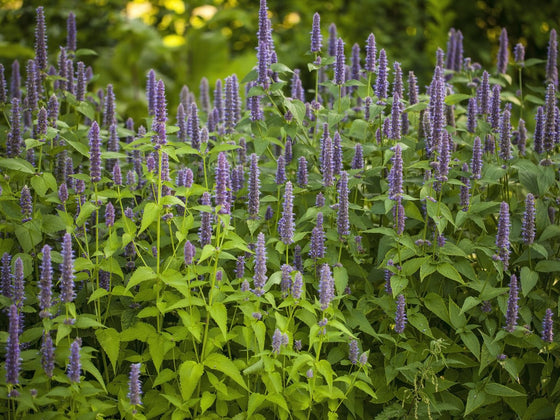
Anise Hyssop
How to grow anise hyssop in Australia from seed: surface sowing, free-draining soil, sowing months for six zones, cutting back, and picking leaves and flowers.
| Position | Full sun or light shade |
|---|---|
| Depth | Surface, or 1 mm |
| Spacing | 30 to 40 cm apart |
| First pick | Leaves from about 10 weeks |
Anise
How to grow anise in Australia: when to sow in all six climate zones, sowing where it grows, spacing and watering, then harvesting and drying seed and leaves.
| Position | Full sun, sheltered from wind |
|---|---|
| Depth | 6 to 10 mm |
| Spacing | 25 to 30 cm apart |
| First pick | Seed 17 to 20 weeks from sowing |