
How to Grow Ice Plant in Australia
Ice plant is a sprawling succulent grown for crisp, salty, glistening leaves. Sow on the surface of the mix when the soil holds 18°C to 24°C; seedlings appear in 10 to 21 days. Plant 25 to 30 cm apart in full sun and free-draining soil, water lightly but regularly, and pick shoot tips from about 7 weeks. Pull plants before seed ripens, because it is a weed in southern Australia.
| Sun | Full sun |
|---|---|
| Water | Light and regular; never soggy |
| Soil | Free-draining and lean; tolerates salty soil |
| Feed | Little; half strength in pots |
| Spacing | 25 to 30 cm apart |
| Depth | Surface; 1 mm at most |
| Germination | 10 to 21 days at 18 to 24°C |
| Harvest | Leaves from 7 to 13 weeks |
| Container | Yes, 30 cm pot, 10 to 15 L |
| Frost | Tender; frost spoils the leaves |
| Use | Raw leaves and stems, garnishes, quick stir-fries |
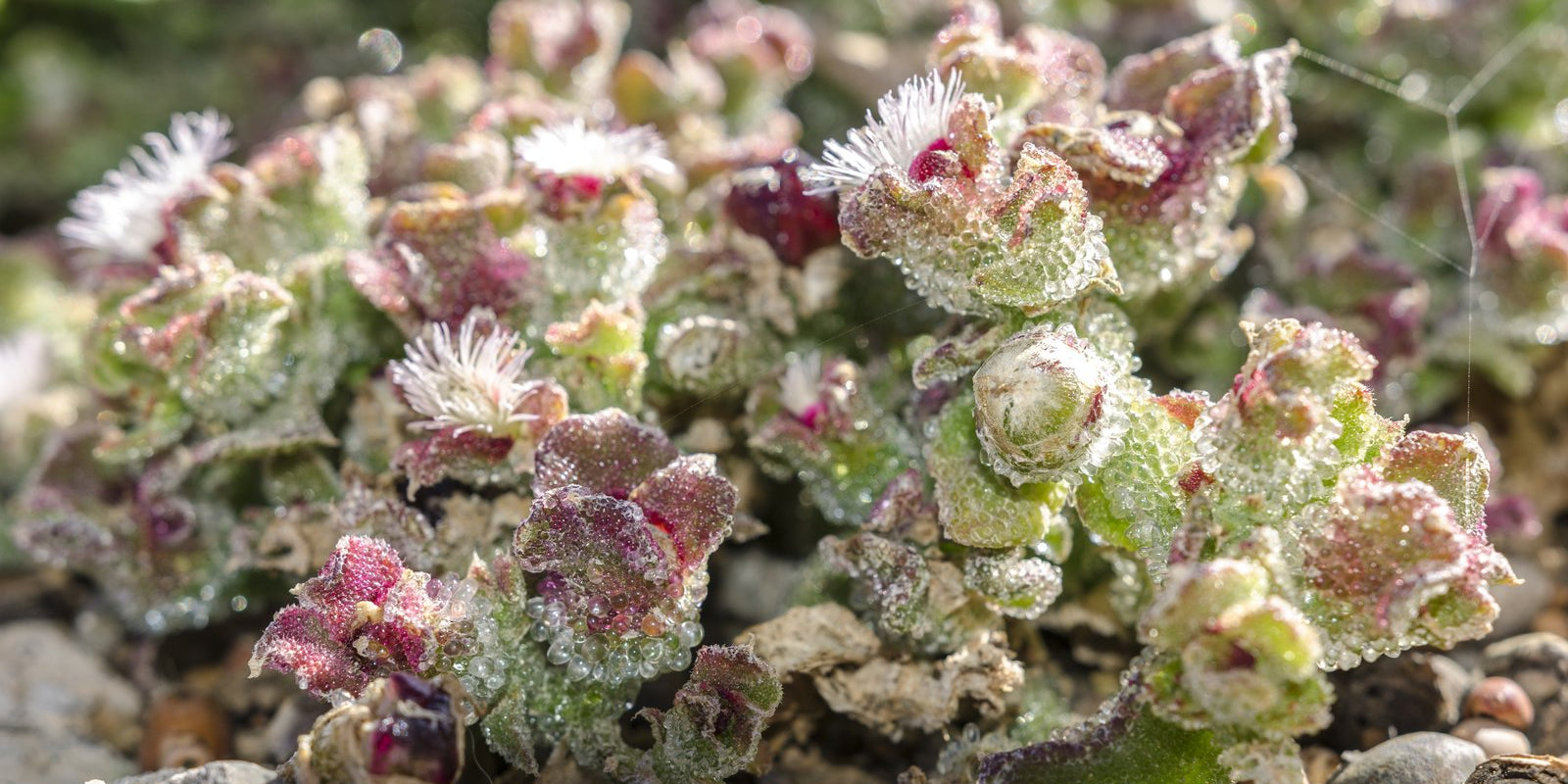
Ice plant (Mesembryanthemum crystallinum), also sold as common or salty ice plant, is a sprawling succulent of the ice plant family, Aizoaceae. It is grown for its crisp, salty leaves and stems, which glitter with water-filled bladder cells and are eaten fresh. It is not pigface or the ornamental ice plants (Carpobrotus, Delosperma and Lampranthus). Its toughness in dry, salty ground has made it a weed across southern Australia. The one thing to get right is never letting it ripen seed.
Three mistakes that matter
- Letting it set seed. Its seed can lie in the soil for more than 20 years, and it is an environmental weed in five states. Grow it in a pot or a contained bed, and pull each plant before its seed ripens, as Harvesting Leaves and Stems explains.
- Burying or drowning the seed. The dust-fine seed needs light, and cold, wet mix rots the seedlings. Press it onto the surface, cover it with no more than 1 mm of mix, and mist rather than water, as Sowing Seeds describes.
- Treating it like a cactus. Dry soil and salt stress bring on flowering, and once it flowers the leaves shrivel and the plant soon dies. Water lightly but regularly while you are picking, as Care by growth stage sets out.
When to plant
Sow when the soil holds 18°C to 24°C. In warm zones that means the cooler months; in frosty zones it means spring, once frosts are over. Seedlings usually emerge in 10 to 21 days, though some seed waits four to six weeks. Plants usually live only a few months, so sow a small second batch later in the same sowing window.
| Zone | Example cities | Sow | Harvest | Notes |
|---|---|---|---|---|
| Tropical | Darwin, Katherine NT; Cairns, Townsville QLD; Broome WA | May-Jul | Jul-Oct | It struggles in the tropics. Try it in pots in the cooler dry season and expect short-lived plants. |
| Subtropical | Brisbane, Gold Coast, Bundaberg QLD; Coffs Harbour, Lismore NSW | Mar-May | May-Sep | Sow in autumn where frost is rare, then pick through the mild winter before humid summer weather. |
| Arid and semi-arid | Alice Springs NT; Broken Hill, Dubbo NSW; Mildura VIC; Kalgoorlie WA | Mar-Apr and Sep-Oct | May-Jul and Nov-Dec | A weed of Mallee and saline country, so use pots. Mulch, and cover plants on frosty inland nights. |
| Temperate | Sydney, Newcastle, Wollongong NSW; Melbourne, Geelong VIC | Sep-Nov and Mar | Nov-Feb and May-Jun | In Melbourne, wait until frosts end in October. A significant environmental weed in Victoria, so grow it in pots. |
| Mediterranean | Perth, Bunbury WA; Adelaide and the SA coast | Mar-May and Sep-Oct | May-Sep and Nov-Dec | Its home climate: autumn sowings grow through the wet winter. A significant environmental weed here, so grow it in pots. |
| Cool and alpine | Hobart, Launceston TAS; Canberra ACT; Ballarat VIC; Orange NSW | Sep-Dec | Dec-Mar | Start seed under cover in September; plant out or sow direct after the last frost, often around Melbourne Cup weekend. |
At the cold edge of a window, start seed under cover and plant out after the last frost. At the hot edge, expect a shorter picking season, because growth slows and stops as hot, dry weather sets in.
Site, soil and setup
In the wild it colonises coastal sand dunes, saline flats and roadsides, so a lean, sunny, free-draining spot suits it.
| Factor | Setup |
|---|---|
| Light | Full sun; it does poorly in shade |
| Soil | Free-draining sand or sandy loam; it tolerates poor and salty soil, but heavy, wet clay rots young roots |
| pH | 5.5 to 7.5; if a test shows soil more acid than 5.5, apply garden lime at 100 to 200 g per square metre, 4 weeks before sowing |
| Bed preparation | Dig in a 5 cm layer of compost on very poor sand; manure and extra fertiliser are not needed |
| Drainage | On clay, grow it in a raised bed, a mound or a pot |
| Rotation | It belongs to none of the main vegetable families, so it fits any rotation; never dig spent plants back in, because they return stored salt to the soil |
Where it is a weed
Common ice plant is naturalised from Exmouth in Western Australia around the south of the continent to western New South Wales and Tasmania. Rabbits and mice spread its seed, and water and wind may carry it too. Before planting near bushland or the coast, check your council's weed list.
| State or territory | Status | What to do |
|---|---|---|
| Western Australia | Significant environmental weed in the south and west, north to Exmouth | Pots only, away from bushland and the coast |
| South Australia | Significant environmental weed across the south of the state | Pots only |
| Victoria | Significant environmental weed, mainly on the saline sands of the north-west and around Port Phillip Bay | Pots only |
| New South Wales | Environmental weed, naturalised in the west and on the central coast | Pots or a contained bed |
| Tasmania | Environmental weed | Pots or a contained bed |
| Queensland, Northern Territory and ACT | Not named as a weed in the national weed fact sheet | Pots or beds, still pulling plants before seed ripens |
Container growing
A pot is the safest way to grow ice plant wherever it is a weed, and it shows off the glistening, trailing stems. Use a pot at least 30 cm across that holds 10 to 15 L, with drainage holes. Fill it with free-draining potting mix, or potting mix blended half and half with coarse sand. One or two plants fill a pot this size, and a hanging basket also works. Ice plant is sold as the species, with no compact varieties to choose between.
- Water: when the top 2 cm of mix feels dry, checking daily in hot weather. See watering pots in summer.
- Feed: fish and seaweed blend at half strength, about 12 mL per 9 L, fortnightly while you are picking.
- Position: full sun, with the pot raised on feet so it drains freely.
- Handling mix: potting mix can carry Legionella bacteria, so dampen it first, wear gloves and a P2 mask, and wash your hands afterwards.
Sowing Seeds
Raise ice plant seed in a tray or punnet and plant it out small. It can also be sown in place once frosts are over.
Starting under cover
- Fill a tray with seed-raising mix, or equal parts seed-raising mix and coarse sand, and firm it level.
- The seed is dust fine, about 5,000 to 6,000 to the gram, so mix it with dry sand and scatter it thinly. Sowing tiny seeds shows how.
- Press the seed in and leave it uncovered, or dust it with no more than 1 mm of mix, because it needs light.
- Mist to keep the surface damp but never wet. Keep the tray bright but out of direct sun, at the warmth When to plant gives.
- Once seedlings appear, give them fresh air and space, because wet, crowded trays invite damping off (seedlings rotting at soil level).
Planting out
Plant seedlings out once they are 2 to 3 cm tall and can be handled. Harden them off first (get them used to outdoor sun and wind a little more each day) for about a week. See hardening off seedlings. Set them 25 to 30 cm apart in full sun and water them in.
Sowing direct
Once frosts are over, rake the bed fine, scatter the seed thinly and press it into the surface. Mist daily until seedlings appear, then thin them in stages to 25 to 30 cm apart.
Care by growth stage
Steady, light watering decides this crop, because the leaves stay plump only while the soil holds a little moisture.
| Stage | Water | Feed | Watch for |
|---|---|---|---|
| Germination, weeks 1 to 3 | Mist so the surface stays damp, never wet | No feed before true leaves appear | Seedlings collapsing at soil level; slow seed, which can take up to 6 weeks |
| Seedlings, weeks 3 to 6 | Water when the surface dries | Seaweed solution at half strength, 15 mL per 9 L, fortnightly until planting out | Damping off; snails on new transplants |
| Establishing, weeks 6 to 8 | Water deeply when the top 2 to 3 cm of soil is dry | None in beds; pots as Container growing gives | Soggy soil and soft stems at the base |
| Picking, from about week 7 | Light and regular; never let it dry right out | None in beds | Flower buds forming; snails after rain; frost on cold nights |
| Flowering and decline | Keep watering steady while you still pick | No feed | Seed capsules forming; pull the plant before they ripen |
If growth stalls in very poor sand, a light scatter of all-purpose controlled release granular (NPK around 14-5-10) scratched into the surface can help.
Companion planting
Ice plant grows low and sprawls, so its best neighbours share its liking for sun and dry soil.
Grows well with
- Thyme, which also wants full sun and light, gritty soil.
- Oregano, which suits any well-drained, sunny spot and trails well from a pot or basket alongside it.
Keep apart
- Parsley, which wants cool, moist soil and light shade, where ice plant wants full sun and free drainage.
- Tall crops such as sunflowers and sweet corn, which shade a plant that does poorly out of full sun.
Harvesting Leaves and Stems
Start picking once plants are growing strongly, usually 7 to 13 weeks from sowing, although baby leaves can come from about 4 weeks.
- Snip shoot tips about 10 cm long every 2 to 3 weeks; the rest of the plant keeps growing and flowering is delayed.
- Handle the leaves gently, because they bruise easily.
- Pinch off flower stems as they appear, which encourages new leaves.
- When the leaves begin to shrivel and flowers open, pull the whole plant before its seed capsules ripen.
- Seal spent plants in a black plastic bag in the sun, then put them in the general waste bin, not the compost.
Pick ice plant as you need it and eat it the same day, because the leaves do not store well.
Eat the leaves and stems raw in salads, as a salty garnish for fish, or quickly steamed or stir-fried; the flower buds are edible too. The leaves contain oxalate, at levels that can poison grazing stock. As with spinach, enjoy them as a salad leaf rather than in large amounts.
Common problems
Seed comes up patchily. Seed from the top of each capsule germinates at once, while the rest can wait for weeks. Keep the tray damp for up to six weeks.
Plants die in midsummer. Ice plant usually grows through the cooler months and dies in summer heat and drought, so sow again when your next window opens.
Leaves spoil after a cold night. Frost ruins the leaves for eating even where the plant survives, so sow after the last frost or move pots under cover.
Seedlings appear in paths and beds. Dropped seed has germinated, so pull the seedlings before they flower, as Three mistakes that matter explains.
Pests and diseases
Few pests bother this salty plant; snails at planting time and rot in wet soil do the most damage.
Garden snail (Cornu aspersum) and grey field slug (Deroceras reticulatum). They chew seedlings and fleshy leaves, most often on damp nights after rain. Hunt with a torch about two hours after dark, or set shallow beer traps. Read more
Damping off (Pythium species and Rhizoctonia solani). Seedlings rot at soil level and topple, most often in wet, crowded trays. Use fresh seed-raising mix, water less often and thin the seedlings. Read more
Root rot (Pythium species). Young plants in wet or heavy soil wilt as their roots decay and turn soft. Remove affected plants and improve drainage as Site, soil and setup describes.
Prevention first
- Sow into fresh seed-raising mix in clean trays.
- Water the soil in the morning, and let the surface dry between waterings once plants are established.
- Keep mulch and spare pots away from young plants, because snails shelter in both.
- Keep plants at the spacing Planting out gives, so air moves between them.
Tips
- Tip cuttings root readily, so strike a few shoots in a pot of sandy mix to carry plants on without letting any set seed.
- Stand the pot on paving or a balcony, and sweep any dropped seed into the bin rather than hosing it into beds or drains.
- Pick into a shallow container rather than a bag, so the leaves are not crushed on the way to the kitchen.
Questions
Is ice plant a weed in Australia?
Yes, in the south and west. Common ice plant is naturalised from Exmouth in Western Australia to Tasmania. It is a significant environmental weed in Western Australia, South Australia and Victoria, and an environmental weed in New South Wales and Tasmania. Grow it in a pot and remove plants before their seed ripens.
Is ice plant the same as pigface?
No. Pigface and the ice plants sold as flowering groundcovers belong to other genera, such as Carpobrotus, Delosperma and Lampranthus. Livingstone daisy, also listed as Mesembryanthemum, is another plant again. Common ice plant is Mesembryanthemum crystallinum, so check for that full name before eating any plant sold as ice plant.
What does ice plant taste like?
The leaves and stems are crisp and juicy, with a salty, slightly sour tang. The saltiness comes from the water-filled bladder cells that make the plant sparkle. Eat them raw in salads, as a garnish for fish, or quickly stir-fried.
Does ice plant come back every year?
Usually not. It is grown as an annual, and most plants die in summer once they have flowered and set seed. A few live on in mild, moist spots. Sow fresh seed each season rather than letting plants seed themselves.
How do I stop ice plant flowering so quickly?
Keep it growing without stress. Water lightly and regularly, pick shoot tips every 2 to 3 weeks, and pinch off flower stems as they form. Dry soil and salty ground both hurry it into flower.
Grow it
More herbs to sow in September
All herbs
Agrimony
How to grow agrimony in Australia from seed: chilling the burrs, sowing months for six climate zones, sun and soil, cutting back, harvest, history and safety.
| Position | Full sun, light shade tolerated |
|---|---|
| Depth | 5 mm |
| Spacing | 30 cm apart |
| First pick | Summer; 12 to 18 weeks from spring sowing |

Angelica
How to grow angelica in Australia from seed: fresh or chilled seed sown on the surface, part shade, months for six climate zones, stems, history and safety.
| Position | Part shade, morning sun |
|---|---|
| Depth | Surface; press in, uncovered |
| Spacing | 50 to 90 cm |
| First pick | Stems at about 18 months |
Anise Hyssop
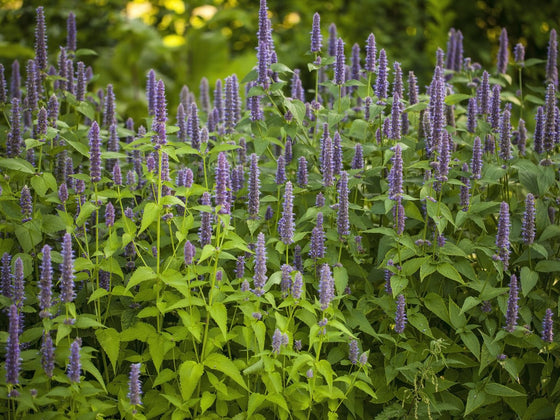
How to grow anise hyssop in Australia from seed: surface sowing, free-draining soil, sowing months for six zones, cutting back, and picking leaves and flowers.
| Position | Full sun or light shade |
|---|---|
| Depth | Surface, or 1 mm |
| Spacing | 30 to 40 cm apart |
| First pick | Leaves from about 10 weeks |
Anise
How to grow anise in Australia: when to sow in all six climate zones, sowing where it grows, spacing and watering, then harvesting and drying seed and leaves.
| Position | Full sun, sheltered from wind |
|---|---|
| Depth | 6 to 10 mm |
| Spacing | 25 to 30 cm apart |
| First pick | Seed 17 to 20 weeks from sowing |