
How to Grow Feverfew in Australia
Feverfew is a short-lived, bushy daisy grown for its white flowers and pungent leaves. Press the fine seed onto damp mix without covering it, because light helps it germinate, and keep it at 15 to 24°C. Plant out 30 cm apart in full sun and free-draining soil. Feed lightly, deadhead to stop it spreading, and wear gloves, since it can irritate skin.
| Sun | Full sun |
|---|---|
| Water | Moderate; drought tolerant once established |
| Soil | Light, well-drained; pH 6.0 to 7.2 ideal |
| Feed | Minimal; compost and half-strength feeds |
| Spacing | 30 cm apart |
| Depth | Surface; press in, do not cover |
| Germination | 1 to 2 weeks at 21 to 24°C |
| Harvest | Flowers from about 18 weeks |
| Container | Yes; at least 10 L, 25 cm wide |
| Frost | Hardy to hard frost once established |
| Use | Cottage borders, cut and dried flowers, bees |
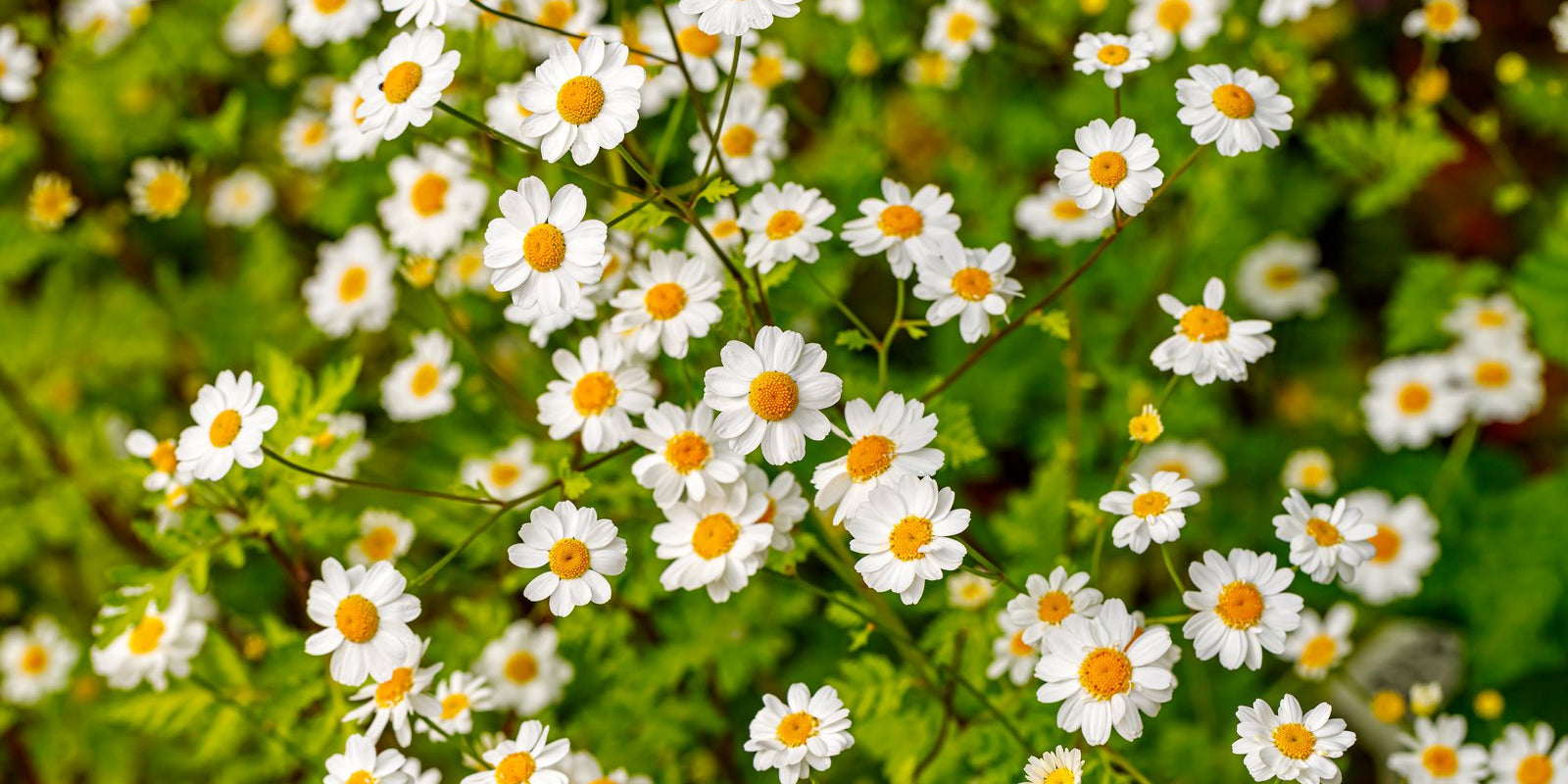
Feverfew (Tanacetum parthenium, family Asteraceae) is a short-lived, bushy perennial grown for its sprays of small white daisies and its pungent, lobed, yellow-green leaves. The store sells plain feverfew seeds, to about 60 cm, and 'Golden Ball', a compact double yellow pompom form to about 30 cm. It grows from Hobart to Darwin, as a dry-season annual in the tropics, and self-sows freely. The step most growers get wrong is burying the seed, which needs light to germinate.
Three mistakes that matter
- Covering the seed. The seed is dust-fine and light helps it germinate, so a layer of mix on top can leave a tray bare. Press it onto the surface instead, as Germinating the seed describes.
- Planting it in heavy, wet soil. Feverfew will not tolerate soil that stays wet, and roots rot there through a cold, rainy winter. Grow it in free-draining soil or a raised bed, and water only when the top few centimetres dry out.
- Letting every flower set seed. A plant left to seed sows itself across the garden and into paths and vegie beds. Shear off spent flowers promptly, and keep only the few seedlings you want to replace old plants.
When to plant
Warmth and light decide sowing, not frost. Seed germinates best with the mix between 15 and 24°C, which suits spring and early autumn in most zones. Autumn sowings, around Anzac Day in warm districts, often flower earlier and on longer stems than spring sowings. Plants are short-lived, but one sowing usually carries on through self-sown seedlings.
| Zone | Example cities | Sow | Harvest | Notes |
|---|---|---|---|---|
| Tropical | Darwin NT; Cairns, Townsville QLD; Broome WA | Apr-Jun | Jul-Oct | Grow it as a dry-season annual; wet-season heat and humidity usually finish it. |
| Subtropical | Brisbane, Gold Coast, Sunshine Coast QLD; Coffs Harbour, Lismore NSW | Mar-May and Aug-Sep | Aug-Dec | Autumn sowings flower best before humid summer heat; give afternoon shade and sharp drainage. |
| Arid and semi-arid | Alice Springs NT; Broken Hill, Dubbo NSW; Mildura VIC; Kalgoorlie WA | Mar-Apr and Aug-Sep | Oct-Dec and Mar-May | Established plants take frost; mulch and afternoon shade help them through hot, dry summers. |
| Temperate | Sydney, Newcastle, Wollongong NSW; Melbourne, Geelong VIC | Sep-Nov and Mar-Apr | Dec-Apr | Sow once trays hold 15°C in spring, or in early autumn for earlier flowers. |
| Mediterranean | Perth, Bunbury WA; Adelaide and the SA coast | Mar-May and Sep-Oct | Nov-Apr | Autumn sowings establish on winter rain; water deeply through the long, dry summer. |
| Cool and alpine | Hobart, Launceston TAS; Canberra ACT; Ballarat VIC; Orange, Armidale NSW; Stanthorpe QLD | Sep-Nov and Feb-Mar | Dec-Apr | Start spring seed indoors in the warmth; established plants shrug off frost. |
At the cold edge of a window, start seed indoors on a bright windowsill or a heat mat. At the hot edge, sow into shaded trays and plant out once the heat breaks.
Site, soil and setup
Feverfew grows in any light, well-drained soil in full sun, and it sulks in heavy ground that holds water.
| Get the bed right | What to do |
|---|---|
| Light | Full sun; part shade in the afternoon in hot inland and northern gardens |
| Soil | Any light, well-drained soil; loam or sandy soil suits it best |
| pH | Tolerates acid to alkaline soil; 6.0 to 7.2 is ideal; on strongly acid soil, garden lime at 100 to 200 g per square metre 4 weeks ahead |
| Preparation | Dig in a 5 cm layer of compost; no manure is needed |
| Drainage | Build a raised bed or mound on clay that stays wet after rain |
| Room | 30 cm between plants; plain feverfew grows 30 to 60 cm tall, 'Golden Ball' about 30 cm |
| Rotation | None: grow it in a herb or flower bed, not the vegie rotation, so self-sown seedlings stay where you want them |
Container growing
Both forms grow well in pots, and 'Golden Ball', at about 30 cm, suits pots, window boxes and hanging baskets. Give one plant a pot of at least 10 L and 25 cm across, filled with a premium potting mix. Plain feverfew reaches 60 cm, so it needs a larger, heavier pot in a windy spot.
- Watering: water when the top 2 to 3 cm of mix is dry. Let the pot drain freely, never standing in a saucer.
- Feeding: a fish and seaweed blend at half strength, about 12 mL per 9 L, fortnightly from spring to early autumn.
- Position: full sun, or morning sun and afternoon shade in hot districts, where pots dry out fast.
- Refresh: replace the plant with a young seedling every few years, since it is short-lived.
Germinating the seed
Feverfew seed has no dormancy to break. It needs only moisture, mild warmth and light, and fresh seed germinates quickly and well. In seed bank tests at the Royal Botanic Gardens, Kew, untreated seed gave 95 to 100 per cent at 15 to 21°C in daily light.
The seed is tiny, about a tenth of a gram per thousand, with too little food to push a shoot through much soil. The store's 'Golden Ball' listing gives emergence in 1 to 2 weeks at 21 to 24°C. No germination rate is recorded for home trays. Sow a pinch of three or four seeds for each plant you want, and thin to the strongest.
| Treatment | How | How long | Temperature | What success looks like |
|---|---|---|---|---|
| None needed: surface sow in light | Press the seed onto damp seed raising mix without covering it; mist or water from below | Usually 7 to 14 days at 21 to 24°C | 15 to 24°C | Green specks, then pairs of small rounded seed leaves |
For more on handling seed this small, see how to sow tiny seeds without losing them.
When nothing comes up
- Buried too deep. Seed under a layer of mix often stays put. Sow again on the surface and press it in.
- Washed away. A watering can floods fine seed into clumps or down the sides. Water from below, or mist the surface.
- Dried out. Surface seed dries quickly in sun or wind. Cover the tray with clear plastic or glass until the first leaves show.
- Too cold or too hot. A cold sill in winter or a hot glasshouse in summer slows it; aim for 15 to 24°C.
- Old seed. Seed stored warm and damp loses vigour. Kept cool and dry, it stays good for several years: in laboratory storage, viability halves after about five.
- Given up too soon. Keep the tray moist and in the light for five weeks before sowing again.
Sowing Seeds
Start feverfew in trays or punnets for the most even stand, or sow it straight where it is to grow. Both routes begin with seed pressed onto the surface, as Germinating the seed explains.
Starting in trays
- Fill a punnet or cell tray with fresh seed raising mix, firm it lightly and water it well.
- Scatter a pinch of seed per cell, press it on with a flat board, and do not cover it.
- Stand the tray in bright light out of hot afternoon sun, and keep the surface just moist.
- Thin each cell to the strongest seedling once the first true leaves appear.
- Move seedlings into their own small pots 2 to 4 weeks after sowing.
Sowing direct
Rake the bed fine and level, water it, then scatter the seed thinly and tamp it onto the surface with the back of a rake. Mist daily until seedlings show, and thin them to 30 cm apart when they reach 8 to 12 cm.
Planting out
- Plant out 5 to 7 weeks after sowing, when seedlings stand about 8 cm tall.
- Harden off first (stand the pots outdoors a little longer each day for a week, so they adjust to sun and wind).
- Plant at the same depth as in the pot, 30 cm apart, and water in with seaweed solution at half strength.
- Shade young plants for a few days if hot, dry wind is forecast.
More on the move from pot to garden is in hardening off seedlings before planting out.
Care by growth stage
Drainage and restraint decide how well feverfew grows. Over-feeding reduces the essential oils that give feverfew its aroma, so feed lightly and at half strength at most.
| Stage | Water | Feed | Watch for |
|---|---|---|---|
| Seedling, weeks 0 to 6 | Keep the mix just moist; water from below or mist | Seaweed solution at half strength, 15 mL per 9 L, fortnightly from the first true leaves | Damping off; drying out; stretching in low light |
| Young plant, weeks 6 to 12 | Water deeply twice a week until settled, then when the top few centimetres are dry | A handful of worm castings in each planting hole | Snails and slugs at night; wilting in hot wind |
| First flowers, from about week 18 | A deep soak when the soil is dry below the surface | Worm casting liquid, diluted to weak tea colour, fortnightly only if leaves look pale | Aphids on shoot tips; spent flowers setting seed |
| Established plant, summer | Deep, occasional water; it tolerates dry spells once settled | None; a 5 cm compost mulch each spring, clear of the stems | Two-spotted mite in hot, dry weather |
| Autumn and winter | Water less; let the soil dry between waterings | None | Soggy soil and crown rot in wet, cold spells |
| The weeks before picking | Keep watering as usual right up to harvest | None | Dusty or insect-damaged leaves; pick clean growth |
If growth stalls in poor soil, a light application of all-purpose controlled release granular (NPK around 14-5-10) scratched in each spring can help.
Deadheading
Deadheading keeps feverfew tidy and stops it seeding across the garden. Wear gloves, as Safety explains.
- Shear off spent flower clusters as soon as they fade, before the centres turn brown.
- Cut the whole plant back after the main flush of flowers to encourage a fresh mound of leaves.
- Leave two or three heads to ripen if you want seed or a few replacement seedlings.
- In frosty districts, cut plants back to low leafy growth once frost blackens the tops.
- Divide an old clump in spring, or root basal cuttings, to renew it.
For renewing a tired clump, see dividing perennials.
Companion planting
Choose neighbours that like the same sun and dry, free-draining soil, and that draw the insects that eat aphids.
Grows well with
- Yarrow, which shares its liking for sun and lean soil and draws predatory insects.
- Alyssum, a low edging whose flowers attract hoverflies and other aphid predators.
- Dill, whose flat flower heads also feed aphid predators.
Keep apart
- German chamomile, a look-alike daisy; grown side by side, the two are easily picked by mistake.
- Mint, whose spreading roots and liking for moist soil do not suit feverfew's dry bed.
Harvesting Leaves and Flowers
Pick young leaves before the flower stems form, and cut flowers for the vase when each cluster is about three-quarters open. For drying, cut when the cluster is almost fully open.
- Wear gloves, and cut in the morning once dew has dried.
- Take no more than a third of a plant at one picking.
- Cut whole stems with secateurs just above a leaf joint.
- Hang small bunches upside down in a dry, airy, shaded room to dry.
- Dry until leaves crumble and stems snap cleanly.
Store dried leaves and flowers in a well-closed jar in a cool, dry, dark cupboard. Label the jar with the botanical name and the picking day. Fresh stems last well in a vase. The leaves and flowers carry sesquiterpene lactones, chiefly parthenolide, which can irritate skin and mouth, so read Safety before any other use.
Traditional use and history
Feverfew is a worn-down form of febrifuge, from the Latin febrifugia, and records its old reputation against fevers. Country names include featherfew, featherfoil, flirtwort and bachelor's buttons. In Germany it is Mutterkraut, the mother herb, a name that echoes its place in women's traditions.
The species name is less certain. Plutarch told of a workman who fell from the Parthenon while it was being built, and one reading links the plant to him. Another derives it from the Greek parthenos, a maiden.
| Tradition | Name | Part | What the tradition recorded |
|---|---|---|---|
| Greek and European herbals | Feverfew; Tanaceti parthenii herba in the pharmacopoeias | Leaves and flowering tops | Traced by European reviewers to the Materia Medica of Dioscorides, in the first century. Described by Dodoens, Gerard and Culpeper; herbals recorded it for fevers and headaches, women's complaints, toothache and insect bites |
| English cottage gardens | Featherfew, bachelor's buttons | Whole plant | Planted round the house for its spicy scent and a belief that it purified the air |
| Later interest | Feverfew | Leaves | Revived in Britain from the late 1970s, after newspaper reports about its use by migraine sufferers in Wales |
Mrs Grieve's A Modern Herbal found it growing in every hedgerow in England. She told readers to watch it for snails, slugs and black fly.
Feverfew is native to south-eastern Europe as far east as the Caucasus. It has naturalised across Europe, the Americas and parts of Australia, including New South Wales, Queensland, Victoria, South Australia, Tasmania and Western Australia.
Safety
Happy Valley Seeds sells feverfew as seed for growing. Nothing here is advice to eat or take any part of the plant. Anyone considering using a plant should first seek advice from a qualified health practitioner.
| Topic | What the sources say |
|---|---|
| Toxicity | The leaves, flowers and seeds carry sesquiterpene lactones, mainly parthenolide, in tiny glands. Chewing fresh leaves can cause mouth sores, swollen lips and a sore tongue; in one survey of 300 users, about one in nine reported mouth ulcers. Nausea, digestive upset and bloating are also recorded. Genotoxicity and cancer studies have not been done. LiverTox, the United States liver injury database, has no entry for feverfew, so it gives no likelihood score. |
| Pregnancy and breastfeeding | Not suitable during pregnancy or breastfeeding, as the store's own listing says. United States health authorities advise against it in pregnancy because it may affect uterine contractions, and little is known about breastfeeding. European regulators do not recommend it for either, and one animal study showed reproductive harm at very high intakes. |
| Interactions with medicines | It may slow blood clotting and may interact with some medicines, including migraine medicines. Anyone using it should tell their surgical team before an operation. Australian hospital guidance lists it among products that may raise the risk of bleeding during or after surgery. European reviewers list a possible bleeding risk with blood thinners such as warfarin and with aspirin, and a risk with NSAID painkillers. They found two serious reports, with warfarin and with propranolol, but no interaction studies in people. |
| Allergy and skin | A daisy family plant: people sensitive to ragweed and its relatives may react to it. The same lactones cause allergic contact dermatitis, and they occur in the pollen as well as the leaves, so airborne dermatitis has been reported. Wear gloves and long sleeves when cutting or deadheading. |
| Pets and livestock | A university extension plant database lists feverfew as a problem for dogs, cats and horses, without describing the signs. Keep pets from chewing it, and call your vet if one does. |
| Legal status | Not on the declared or prohibited weed lists of New South Wales, Victoria, Queensland, South Australia, Tasmania, the Northern Territory or the ACT. The Western Australian Organism List gives it as permitted. The store has no shipping restriction on this seed. |
If someone collapses, stops breathing, has a seizure or has a severe allergic reaction, call triple zero (000). For any suspected poisoning, call the Poisons Information Centre on 13 11 26 without waiting for symptoms.
Common problems
No seedlings. Usually seed buried too deep or allowed to dry out; see Germinating the seed and its list, When nothing comes up.
Tall, pale, floppy seedlings. Too little light on a windowsill stretches them. Move trays to brighter light and turn them daily. Read more
Plants that rot or die over winter. Heavy, wet soil is the usual cause; see Three mistakes that matter.
Plants that collapse in humid summer heat. Feverfew dislikes long, hot, humid spells. In the tropics and subtropics, grow it through the cooler, drier months and treat it as an annual.
Old plants that thin out and die. Feverfew is short-lived, and a plant often declines after a few years. Keep a self-sown seedling or a division coming on to replace it.
Seedlings everywhere. Plants left to seed spread freely; see Deadheading.
Pests and diseases
Feverfew has few serious pests, and most trouble comes from sap-suckers in dry heat or from wet soil.
Aphids (family Aphididae). Small, soft green or yellow insects cluster on soft shoot tips and leave sticky honeydew and sooty mould. Squash small colonies, hose them off with a strong jet, or spray insecticidal soap under the leaves as the label directs. Read more
Two-spotted mite (Tetranychus urticae). Leaves turn yellow-mottled and stippled, mostly on the undersides, and numbers build fast in hot, dry weather. Mist the undersides, keep plants watered, and avoid broad sprays that kill the predators which control mites. Pale winding trails, not stippling, are the work of a tiny insect feeding inside the leaf; trimming off the worst leaves is usually enough. Read more
Common garden snail (Cornu aspersum) and grey field slug (Deroceras reticulatum). Both graze seedlings at night in damp weather. Hand-pick them after dark, or scatter an iron-based snail bait thinly as the label directs. Read more
Damping off (Pythium species and Rhizoctonia solani). Seedlings rot at soil level and collapse, most often in wet mix. Use fresh seed raising mix and clean trays. Read more
Prevention first
- Keep seed trays clear of rain and hose splash, which spread damping off.
- Water the soil, not the leaves, and avoid overwatering in cool, wet weather.
- Check shoot tips and leaf undersides weekly through spring and summer.
- Clear leaf litter, boards and loose pots from around seedlings, where snails shelter.
Tips
- Save seed from one or two ripe heads, when the centres have turned to dry brown seed. Store it in a paper envelope in a cool, dry place.
- Grow feverfew where bees can reach it: bees and butterflies visit the flowers through summer and autumn.
- Lift unwanted self-sown seedlings while they are small, and pot a few on to give away or to fill gaps.
Questions
Why did my feverfew seeds not come up?
The usual cause is burying them. Feverfew seed is dust-fine and light helps it germinate, so press it onto damp seed raising mix without covering it. Keep the surface moist by misting or watering from below, and hold the tray at 15 to 24°C. At 21 to 24°C, seedlings usually show in one to two weeks.
How long does feverfew take to flower from seed?
The store's 'Golden Ball' listing gives about 18 weeks from sowing to maturity. Autumn sowings often flower earlier, and on longer stems, than spring sowings. Plants are short-lived perennials, so let a self-sown seedling or two grow on to replace them.
Is feverfew the same as chamomile?
No. Feverfew (Tanacetum parthenium) and German chamomile are different plants with similar white daisies. Cut a flower head in half: chamomile's centre is a hollow cone, while feverfew's sits almost flat. Feverfew also has broader, lobed, yellow-green leaves. Label plants so the two are never confused.
Is feverfew safe around dogs, cats and horses?
A university extension plant database lists feverfew as a problem for dogs, cats and horses, without describing the signs. Keep pets from chewing it, and call your vet if one does.
Can feverfew irritate the skin?
Yes, in sensitive people. The leaves, flowers and pollen carry sesquiterpene lactones that can cause allergic contact dermatitis. People sensitive to ragweed and other daisy family plants may react too. Wear gloves and long sleeves when cutting, deadheading or weeding around it.
Is feverfew a declared weed anywhere in Australia?
No state or territory declares it, and the Western Australian Organism List gives it as permitted. It self-sows freely and has naturalised in several states, so deadhead it to keep it in the garden. Parthenium weed, a declared weed, is a different plant.
Grow it

More herbs to sow in September
All herbs
Agrimony
How to grow agrimony in Australia from seed: chilling the burrs, sowing months for six climate zones, sun and soil, cutting back, harvest, history and safety.
| Position | Full sun, light shade tolerated |
|---|---|
| Depth | 5 mm |
| Spacing | 30 cm apart |
| First pick | Summer; 12 to 18 weeks from spring sowing |

Angelica
How to grow angelica in Australia from seed: fresh or chilled seed sown on the surface, part shade, months for six climate zones, stems, history and safety.
| Position | Part shade, morning sun |
|---|---|
| Depth | Surface; press in, uncovered |
| Spacing | 50 to 90 cm |
| First pick | Stems at about 18 months |
Anise Hyssop
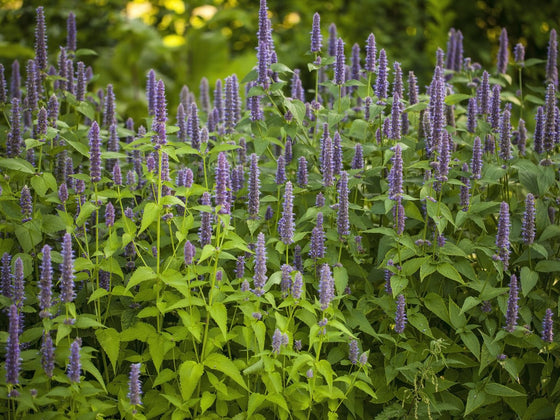
How to grow anise hyssop in Australia from seed: surface sowing, free-draining soil, sowing months for six zones, cutting back, and picking leaves and flowers.
| Position | Full sun or light shade |
|---|---|
| Depth | Surface, or 1 mm |
| Spacing | 30 to 40 cm apart |
| First pick | Leaves from about 10 weeks |
Anise
How to grow anise in Australia: when to sow in all six climate zones, sowing where it grows, spacing and watering, then harvesting and drying seed and leaves.
| Position | Full sun, sheltered from wind |
|---|---|
| Depth | 6 to 10 mm |
| Spacing | 25 to 30 cm apart |
| First pick | Seed 17 to 20 weeks from sowing |