
How to Grow Borage in Australia
Borage is a hardy annual grown for its blue star flowers and the bees they draw. Sow seed 5 to 10 mm deep where it is to grow, because its taproot resents moving. Seedlings appear in 5 to 14 days. Thin to 30 to 60 cm, keep the soil lean, and pick flowers from 8 to 12 weeks, as an occasional garnish only.
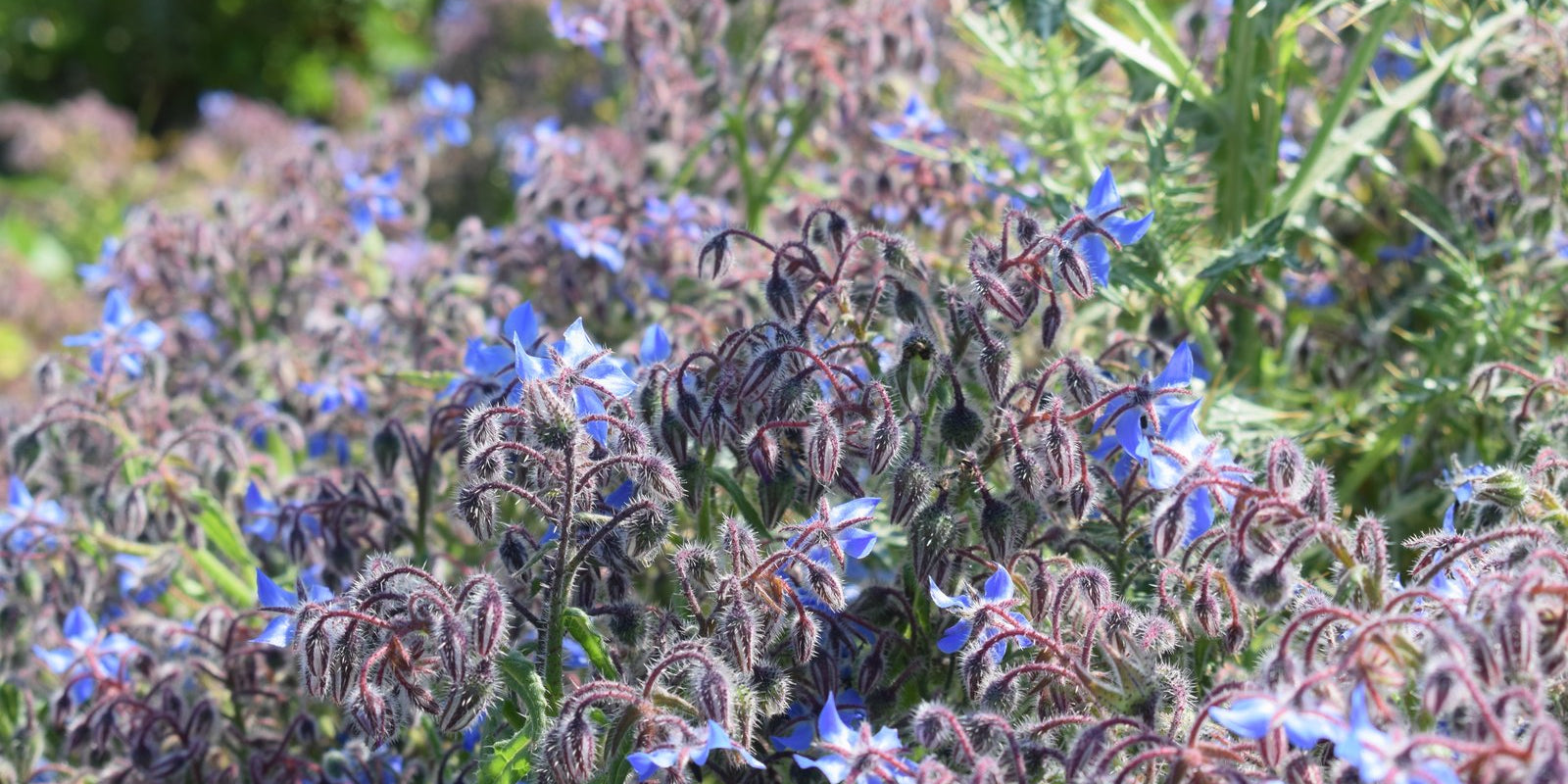
| Sun | Full sun or light shade |
|---|---|
| Water | Moist until established, then drought tolerant |
| Soil | Free-draining, not rich, pH 5.5 to 8.0 |
| Feed | None in beds; light half-strength feeds in pots |
| Spacing | 30 to 60 cm |
| Depth | 5 to 10 mm |
| Germination | 5 to 14 days in 10 to 25°C soil |
| Harvest | 8 to 12 weeks from sowing |
| Container | Yes, at least 10 L and 30 cm deep |
| Frost | Seedlings survive light frost; older plants damaged |
| Use | Bee plant; flowers as an occasional garnish |
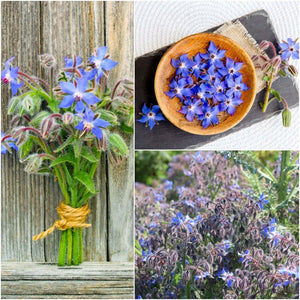
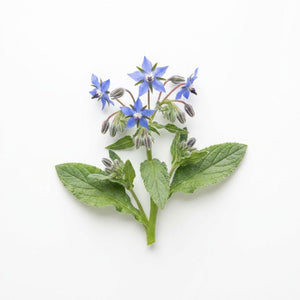
Borage (Borago officinalis) is a hardy annual of the borage family, Boraginaceae. It is grown for its nodding, star-shaped blue flowers and the bees and hoverflies they bring. It grows in every Australian climate zone and self-sows so freely that one sowing can keep a vegie patch in borage for years. The usual mistake is raising it in punnets, because its taproot resents being moved.
Three mistakes that matter
- Transplanting it. Borage sends down a long taproot early, and seedlings moved from a punnet often stall. Sow the seed straight into the bed or pot where the plant will flower, as Sowing Seeds explains.
- Growing it rich. A manured bed and regular feeding give soft, leafy plants that flop over and carry fewer flowers. Choose ordinary, free-draining soil, give garden plants no fertiliser, and keep liquid feeds for pots.
- Letting every flower set seed. Self-sown borage can smother small neighbours and is hard to clear once established. Deadhead part of each plant, pull unwanted seedlings while small, or grow it in a pot, as Pinching and Harvesting sets out.
When to plant
Borage germinates in soil between 10°C and 25°C. Sow in spring once hard frosts have passed, and again in autumn where winters are mild. One sowing often flowers for months, and a batch sown in late summer can carry flowers into autumn.
| Zone | Example cities | Sow | Harvest | Notes |
|---|---|---|---|---|
| Tropical | Darwin, Katherine NT; Cairns, Townsville QLD; Broome WA | Apr-Jul | Jun-Oct | Sow in the cooler dry season so plants flower before the heat and humidity of the wet season build-up. |
| Subtropical | Brisbane, Gold Coast, Sunshine Coast QLD; Coffs Harbour, Lismore NSW | Mar-Sep | May-Dec | Autumn and winter sowings flower through the mild, drier months. Late winter sowings carry flowers into spring. |
| Arid and semi-arid | Alice Springs NT; Broken Hill, Dubbo NSW; Mildura VIC; Kalgoorlie WA | Mar-May and Aug-Oct | May-Aug and Oct-Jan | Autumn sowings root down before the inland frosts. Sow spring crops after the last frost and mulch against heat. |
| Temperate | Sydney, Newcastle, Wollongong NSW; Melbourne, Geelong VIC | Mar-Apr and Sep-Dec | May-Jul and Nov-Mar | Spring and autumn suit borage best. Melbourne, the cooler end, usually does best with spring sowings after frost. |
| Mediterranean | Perth, Bunbury WA; Adelaide and the SA coast | Mar-May and Aug-Oct | May-Jan | Autumn sowings grow on winter rain. Spring plants need deep, steady watering once the dry summer heat arrives. |
| Cool and alpine | Hobart, Launceston TAS; Canberra ACT; Ballarat VIC; Orange NSW | Sep-Jan | Nov-Apr | Sow once the hardest frosts pass, starting September seed under cover. Autumn frosts end the plants. |
Seedlings survive light frost but older plants are easily damaged. In Canberra, Hobart and frosty inland towns, hold spring sowings until the hardest frosts pass. In Darwin and Cairns, sow in the dry season so plants flower before the wet season build-up.
Site, soil and setup
Borage comes from the Mediterranean and copes with poor ground better than a rich bed. It does want sun, drainage and room, because one plant grows 60 to 90 cm tall and spreads wide.
| Factor | Setup |
|---|---|
| Sun | Full sun for the most flowers; light shade is tolerated |
| Position | A lasting spot where self-sown seedlings are welcome, near crops that need bees, and sheltered from strong wind or backed by a fence |
| Soil | Any average, free-draining soil; on heavy clay, grow it in a raised bed |
| pH | 5.5 to 8.0; where a soil test reads below 5.5, lift it with garden lime at 100 to 200 g per square metre, 4 weeks before sowing |
| Bed preparation | Dig in a 5 cm layer of compost; no manure or fertiliser (see Three mistakes that matter) |
| Rotation | Borage belongs to none of the main vegetable families, so it fits any gap in a rotation |
Container growing
A pot helps keep borage from seeding through the beds. Use one at least 30 cm deep and 30 cm across, holding 10 L or more of quality potting mix. Both borage lines the store sells grow to full size, so sow three seeds in the centre and keep the strongest seedling.
- Water: soak the pot when the top 5 cm of mix is dry, and check daily in hot, windy weather.
- Feed: potted plants need the light liquid feeds set out in Care by growth stage.
- Position: full sun, out of strong wind so the tall stems do not snap.
Sowing Seeds
Borage is started from seed sown straight into the bed or pot where it will flower. The store sells borage seeds and organic borage seeds, both the same species, sown and grown the same way.
Sowing direct
- Rake the soil to a fine surface and water it the day before sowing.
- Sow seeds in pairs, 5 to 10 mm deep and 30 cm apart, and firm the soil over them. Direct sowing covers the method.
- Keep the surface just moist; seedlings usually appear in 5 to 14 days.
- Once true leaves show, thin each pair to the stronger seedling. Where plants have room to spread, thin to 45 to 60 cm.
Starting under cover
- Use trays only where snails or late frost make direct sowing hard.
- Sow one seed per cell or biodegradable pot, 10 mm deep, in seed raising mix.
- Harden off the seedlings (get them used to sun and wind a little more each day) before planting out, following hardening off seedlings.
- Plant out 4 to 6 weeks after sowing, at 5 to 10 cm tall, without breaking the root ball.
Care by growth stage
Borage needs steady moisture only until it roots down. After that it is drought tolerant, and most care is holding back water and feed.
| Stage | Water | Feed | Watch for |
|---|---|---|---|
| Germination, weeks 1 to 2 | Keep the surface just moist | No feed before true leaves appear | Snails and slugs on emerging seedlings |
| Seedlings, weeks 2 to 5 | Keep moist but never wet | Beds: none. Pots: seaweed solution at half strength, 15 mL per 9 L, fortnightly | Aphids on soft tips; crowding if thinning is late |
| Leafy growth, weeks 5 to 8 | Soak deeply at soil level, early in the day, once the top 5 cm is dry | Beds: none. Pots: fish and seaweed blend at half strength, about 12 mL per 9 L, fortnightly | Wind snapping the brittle stems; powdery mildew in crowded plants |
| Flowering, from weeks 8 to 12 | Keep the same deep watering through dry spells while you pick | No feed, since it adds leaf at the expense of flowers | Whitefly under the leaves |
| Setting seed, end of life | As for flowering | No feed | Seed dropping, if you want fewer self-sown seedlings |
If growth stalls in poor, sandy soil, scratch in a light dose of all-purpose controlled release granular (NPK around 14-5-10).
Pinching and Harvesting
Borage needs no shaping, but a few cuts control its height, its spread and its seed.
- Midsummer: cut tired, sprawling plants back by half with secateurs, which often brings fresh flowers for autumn.
- Deadheading: snip spent flower clusters from part of each plant to limit self-sowing.
- Seedlings: pull unwanted self-sown seedlings while they are small and the taproot is short.
- End of life: cut spent plants at ground level and add them to the compost.
Companion planting
Borage earns its place beside crops that rely on insects, because its flowers draw bees and hoverflies into the patch.
Grows well with
- Zucchini, squash and cucumbers, whose flowers need bee visits to set fruit.
- Strawberries, whose flowers share the bees borage draws in.
- Cabbages and broccoli, where hoverflies fed by borage help keep aphids down.
Keep apart
- Seed beds of small, slow crops such as carrots, which self-sown borage seedlings can swamp.
- Low, sun-loving herbs such as thyme, which a spreading borage plant shades out.
Harvesting Leaves and Flowers
The first flowers open about 8 to 12 weeks after sowing; pick each one when it is fully open and clear blue.
- Pinch or snip open flowers from the cluster, leaving the buds to open over the following days.
- Pick every few days, since new flowers keep opening over a long season.
- Cut older leaves for the compost heap, where they help it break down, or chop them as a mulch around other crops.
Cut flowers are short-lived, so gather them just before use. To keep them longer, set single flowers in water in an ice cube tray and freeze them. The flowers taste mildly of cucumber; use a few to decorate a cake, a salad or a cold drink.
Common problems
No seedlings. Seed sown too deep, into cold soil or into a bed that dried out often fails. Check When to plant, and allow two weeks before resowing. Read more
Plants flop or snap. Soft growth on hollow, brittle stems gives way in wind, most often in rich soil; see Three mistakes that matter.
Plants collapse at the base. Soil that stays wet rots the roots, so let the surface dry between waterings and raise the bed on clay.
Plants die after flowering. Borage is an annual, so it dies back once seed has set or as the weather cools, usually leaving seedlings behind.
Pests and diseases
Borage has few serious pests, and a healthy plant usually grows through light damage.
Aphids (Aphididae). Colonies of small, soft, green or yellow insects crowd soft tips and flower stems, leaving sticky honeydew. Squash small colonies by hand or knock them off with a strong jet of water. Read more
Whitefly, mainly greenhouse whitefly (Trialeurodes vaporariorum) and silverleaf whitefly (Bemisia tabaci). Clouds of tiny white insects rise when leaves are disturbed, and leaves yellow as they feed. Hose the undersides several days running. Otherwise, spray an insecticidal soap under the leaves, choosing one whose label lists vegetables, and follow that label. Read more
Powdery mildew (fungi of the family Erysiphaceae). White powdery spots spread over the leaves of crowded plants, mostly in summer and autumn. Remove the worst leaves and spray 1 part full-cream milk to 10 parts water in the early morning. Read more
Common garden snail (Cornu aspersum) and slugs. Seedlings are chewed to the ground overnight, often after rain, with silvery trails nearby. Hunt by torchlight about two hours after dark and set citrus rind halves as traps. Read more
Prevention first
- Space plants as Sowing Seeds sets out and water as Care by growth stage sets out, so air moves and leaves stay dry.
- Bin mildewed leaves rather than composting them, since home heaps rarely get hot enough to kill the spores.
- Skip nitrogen-rich feeds, which make the soft, crowded growth that mildew favours.
- Spray insecticidal soap only once bees have left for the day, and never onto open flowers.
Tips
- Save seed from your best plant. Let a few flower heads dry and turn brown on the plant, then collect the seed for the next sowing.
- Keep borage out of bushland. It has naturalised across southern Australia, from Western Australia to Tasmania, so deadhead plants near bush edges and compost spent plants at home.
- Look before you cut. Bees crowd the flowers and can linger on them, sluggish, so check each stem before reaching in with secateurs.
Questions
Is borage safe to eat?
Treat borage as a bee plant first. Its leaves and flowers contain pyrrolizidine alkaloids, natural plant toxins that can harm the liver. Keep the flowers to an occasional garnish, and do not eat the leaves or make tea from them. Leave it out of the kitchen altogether during pregnancy or breastfeeding.
When should I plant borage in Australia?
Sow in spring once hard frosts have passed, and in autumn where winters are mild. Tropical gardens sow from April to July, subtropical gardens from March to September. Sydney, Perth, Adelaide and inland arid gardens sow in autumn and spring, and Melbourne mainly in spring. Canberra and Hobart sow from September to January.
Can I transplant borage seedlings?
It is better not to. Borage grows a taproot early and often stalls when moved. Sow seed where the plant is to grow. Otherwise, start it in single cells or biodegradable pots and plant out at 5 to 10 cm tall, keeping the root ball whole.
Does borage come back every year?
Not from the same plant. Borage is an annual that dies after flowering, but it drops plenty of seed, and self-sown seedlings often come up the following season. Deadhead some flowers if you want fewer.
Why is my borage falling over?
Soft growth from rich soil or fertiliser, together with wind, is the usual cause, because the stems are hollow and brittle. Grow it lean, in a sheltered spot, and cut tired plants back by half in midsummer.
Can you grow borage in a pot?
Yes. Choose a pot at least 30 cm deep that holds 10 L or more of quality potting mix. Grow one plant per pot, in full sun. A pot also helps keep borage from self-seeding through the garden beds.
Grow it
More herbs to sow in September
All herbs
Agrimony
How to grow agrimony in Australia from seed: chilling the burrs, sowing months for six climate zones, sun and soil, cutting back, harvest, history and safety.
| Position | Full sun, light shade tolerated |
|---|---|
| Depth | 5 mm |
| Spacing | 30 cm apart |
| First pick | Summer; 12 to 18 weeks from spring sowing |

Angelica
How to grow angelica in Australia from seed: fresh or chilled seed sown on the surface, part shade, months for six climate zones, stems, history and safety.
| Position | Part shade, morning sun |
|---|---|
| Depth | Surface; press in, uncovered |
| Spacing | 50 to 90 cm |
| First pick | Stems at about 18 months |
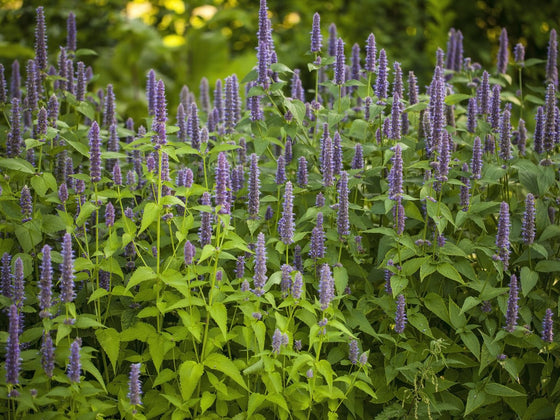
Anise Hyssop
How to grow anise hyssop in Australia from seed: surface sowing, free-draining soil, sowing months for six zones, cutting back, and picking leaves and flowers.
| Position | Full sun or light shade |
|---|---|
| Depth | Surface, or 1 mm |
| Spacing | 30 to 40 cm apart |
| First pick | Leaves from about 10 weeks |
Anise
How to grow anise in Australia: when to sow in all six climate zones, sowing where it grows, spacing and watering, then harvesting and drying seed and leaves.
| Position | Full sun, sheltered from wind |
|---|---|
| Depth | 6 to 10 mm |
| Spacing | 25 to 30 cm apart |
| First pick | Seed 17 to 20 weeks from sowing |