
How to Grow Catmint in Australia
Sow catmint seed in trays in spring or autumn, with the soil at about 15 to 22°C. Press it into the surface and cover it no more than 5 mm. Seedlings appear in 7 to 20 days. Plant out 30 to 60 cm apart in full sun and free-draining soil. Water only when dry, and shear plants after the first flush to encourage a second.
| Sun | Full sun, 6 hours plus |
|---|---|
| Water | Deeply when dry 5 cm down |
| Soil | Free-draining, poor to average, pH 5.0 to 7.5 |
| Feed | Minimal; compost mulch each spring |
| Spacing | 30 to 60 cm apart |
| Depth | Surface to 5 mm |
| Germination | 7 to 20 days at 15 to 22°C |
| Harvest | Flowers from 10 to 13 weeks |
| Container | Yes; 300 mm pot, about 13.5 L |
| Frost | Very hardy; dies back in cold winters |
| Use | Edging, bees, cat toys and potpourri |
Catmint (Nepeta racemosa, also listed as Nepeta mussinii) is a low, spreading perennial of the mint family, Lamiaceae, from the Caucasus, Turkey and northern Iran. It is grown for spikes of lavender-blue flowers over grey-green, scented leaves, from late spring into autumn, and bees work it all season. The usual mistake is leaving it to sprawl after the first flush of flowers, when a cut back can bring a second.
Three mistakes that matter
- Burying the seed. Light helps catmint seed germinate, so seed sown at a normal depth can sit in the tray and never appear. Press it into the surface and cover it no deeper than Starting in trays gives.
- Wet feet. Root rot thrives in wet soil and is often fatal to catmint. Heavy clay, soggy pots and daily watering kill more plants than dry spells. Plant into free-draining soil and water only when the soil is dry 5 cm down.
- Skipping the haircut. After the first flush the stems flop open and flowering slows. Shear the plant back as Cutting Back describes, and new growth from the base usually gives a second round of flowers.
When to plant
Catmint seed germinates best with the soil at about 15 to 22°C, so most zones sow in spring and autumn and skip the frosty months. The plants live for several years, so one good sowing is usually enough.
| Zone | Example cities | Sow | Harvest | Notes |
|---|---|---|---|---|
| Tropical | Darwin NT; Cairns, Townsville QLD; Broome WA | Apr-Jun | Jul-Oct | Sow early in the dry season and treat it as short-lived; wet season rain and humidity can rot the crown. |
| Subtropical | Brisbane, Gold Coast, Bundaberg QLD; Coffs Harbour, Lismore NSW | Apr-May and Aug-Sep | Sep-May | Autumn sowings settle in over the mild winter. Free drainage matters most through the wet, humid summer. |
| Arid and semi-arid | Alice Springs NT; Broken Hill, Dubbo NSW; Mildura VIC; Kalgoorlie WA | Apr and Aug-Sep | Oct-Apr | Sow either side of the inland frosts. Water young plants deeply through the first summer, then sparingly. |
| Temperate | Sydney, Newcastle, Wollongong NSW; Melbourne, Geelong VIC | Mar-Apr and Sep-Nov | Oct-Apr | Sow as autumn soil cools or spring soil warms. Melbourne gardens do best sowing from October. |
| Mediterranean | Perth, Bunbury WA; Adelaide and the SA coast | Mar-Apr and Sep-Nov | Oct-Apr | Autumn sowings establish on winter rain. Once settled, plants ride out the long dry summer on little water. |
| Cool and alpine | Hobart, Launceston TAS; Canberra ACT; Ballarat VIC; Orange NSW | Oct-Dec | Dec-Apr | Sow after the last frost, or under cover six weeks earlier. Established plants survive hard frost. |
Where frost is regular, start seed under cover about 6 weeks before the last frost and plant out once it has passed. In temperate and Mediterranean gardens, a sowing before Anzac Day gives plants time to settle in before winter.
Site, soil and setup
Catmint comes from dry, sunny, rocky country, so it wants sun and free drainage more than rich soil.
| Get the bed right | What to do |
|---|---|
| Light | Full sun, at least 6 hours a day; in heavy shade plants turn leggy and flower less |
| Soil | Any well-drained soil; it copes with poor, dry and rocky ground but not with waterlogging |
| pH | About 5.0 to 7.5; below that, dig in garden lime at 100 to 200 g per square metre 4 weeks ahead |
| Preparation | Weed thoroughly and dig in a 5 cm layer of compost before planting |
| Heavy clay | Plant on a mound or in a raised bed so the crown never sits wet |
| Position | A permanent spot away from regular digging, such as the front of a border or a path edge |
Because it stays put for years, catmint sits outside the vegetable rotation. Grown from this seed it forms a mound about 30 to 45 cm tall and up to about 60 cm wide.
Container growing
The store sells one catmint, and its low habit suits a pot on a sunny patio or courtyard. Use a pot of at least 10 L with drainage holes: a standard 300 mm pot, about 280 mm across inside, holds about 13.5 L. Fill it with a good quality potting mix. Potting and seed-raising mixes can carry Legionella bacteria, so wet them down, wear gloves and a P2 mask, and wash your hands afterwards.
- Water: deeply, by the 5 cm test in Three mistakes that matter.
- Feed: fish and seaweed blend at half strength, about 12.5 mL per 9 L, fortnightly in spring and summer.
- Position: as for a bed, as Site, soil and setup describes.
Sowing Seeds
Catmint does best raised in trays or punnets and planted out once established. The store's Catmint seeds are Nepeta racemosa, the seed-raised species.
Starting in trays
- Fill trays or punnets with moist seed-raising mix.
- Press the seed into the surface and leave it bare or cover it with up to 5 mm of mix (see how deep to sow).
- Keep the mix moist but never wet, in a warm, bright spot.
- Seedlings appear in 7 to 20 days at the soil temperature When to plant gives.
- Once true leaves show, thin crowded seedlings or prick them out into single cells.
- Pinch out the growing tips once seedlings reach 5 to 7 cm, for bushier plants.
Planting out
- Plant out once seedlings have their first true leaves and stand 5 to 10 cm tall.
- Harden them off first (set them outdoors a little longer each day so they adjust to sun and wind) for about a week. See hardening off.
- Space plants 30 to 45 cm apart for a continuous edge, or up to 60 cm for separate mounds.
- Set each plant at the depth it grew in the punnet. Water it in with seaweed solution at half strength, 15 mL per 9 L.
- In spring you can also scatter seed straight into a fine, weed-free bed, press it in and keep it damp. Thin the seedlings to the spacing above.
Care by growth stage
Drainage and restraint decide catmint. It grows in nutrient-poor soil and needs no extra feed in a bed, and over-feeding reduces the essential oils that give it its scent.
| Stage | Water | Feed | Watch for |
|---|---|---|---|
| Seedlings, first 6 weeks | Fine spray; keep the mix moist but never soggy | None until the first true leaves, then seaweed solution at half strength, 15 mL per 9 L, fortnightly | Stretched, pale seedlings short of light; mix staying wet |
| Young plants, weeks 6 to 10 | A deep soak when the soil is dry 5 cm down, at the base, early morning or late afternoon | None in a compost-dug bed; in pots, the half-strength blend Container growing gives | Aphids on soft tips; cats rolling on young plants |
| First flowering, from about 10 to 13 weeks | Keep the same routine right through picking | None in a bed | Stems flopping open once the first flush fades |
| Established plants, second season on | Only in long dry spells, when it has not rained for several weeks | Compost as a 5 cm mulch each spring, kept clear of the stems | Two-spotted mite in hot, dry weather |
| End of flowering, autumn into winter | Little or none; let rain do the work | None | Water lying around the crown after rain |
Established catmint is drought tolerant and very frost hardy, and it dies back to a low crown in cold winters. If growth stalls in very poor soil, a light scatter of all-purpose controlled release granular (NPK around 14-5-10) can help.
Cutting Back
Cut catmint back to keep the mound compact and to encourage more flowers, lightly through the season and harder as each flush ends.
- Through the season, cut fading spikes just above a set of leaves.
- When the first flush fades, shear the whole plant back by about a third, above the new growth at the base.
- At the end of flowering in autumn, give it a hard cut to keep it bushy.
- In frosty districts, cut the old stems to about 5 to 7 cm and mulch around the crown.
- Divide a crowded clump in spring or autumn (see dividing perennials).
Companion planting
Catmint belongs with other sun-lovers that like the same lean, well-drained soil, and its long flowering draws bees into nearby beds.
Grows well with
- Lavender, which wants the same full sun and lean, free-draining soil.
- Thyme, another low perennial kept compact by lean soil and a trim after flowering.
- Roses, whose bare lower stems catmint carpets with flowers.
- Fruiting vegetables and fruit trees, where the bees it draws help with pollination.
Keep apart
- Mint, whose runners crowd a low plant and which wants rich, moist soil.
- Thirsty leafy crops watered every day, where the wet soil invites root rot.
Harvesting Flowers and Foliage
Cut stems for drying once the spikes are in flower, from the first flowering and again after each cut back.
- Pick in the morning, once dew has dried.
- Cut the top third of flowering stems, taking up to a third of the plant at once.
- Tie small bunches and hang them in a shady, airy spot out of direct sun.
- They are dry, usually in about 10 days, when the leaves are brittle and the petals papery.
Strip the dry leaves and flowers into clear glass jars with tight lids, and keep them in a dark cupboard. If moisture beads inside a jar, dry the herbs a little longer. Home-dried herbs usually keep their quality for about 12 months.
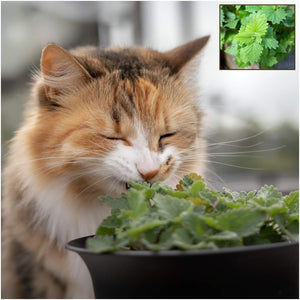
Stuff dried flowers and leaves into cat toys, or add them to potpourri. Not every cat responds, and some become aggressive, so supervise cats around the plant and its toys.
Common problems
Seed does not come up. Seed buried too deep or sown into soil outside the range When to plant gives may never appear; see Three mistakes that matter. Read more
Leggy plants with few flowers. Too much shade stretches the stems and cuts flowering, so move plants into the full sun Site, soil and setup gives.
Plants flattened by cats. Cats chew catmint, lick it and roll in it, which can crush young plants; protect them with a low wire fence until they fill out. Read more
Pests and diseases
Sap-suckers and wet roots cause most trouble on catmint; before using any spray, read its label and use it only as directed.
Aphids (family Aphididae). Small sap-suckers cluster on new shoots and under leaves, leaving wilted, discoloured growth and sticky honeydew. Hose them off, use a soap spray, and encourage the predatory insects that eat them. Read more
Two-spotted mite (Tetranychus urticae). Leaves turn dry, mottled and pale, with a sandpapery feel underneath, and numbers build fastest in hot, dry weather. Prune for airflow and spray leaf undersides with a soap spray. Read more
Whitefly (family Aleyrodidae). Tiny white insects cluster under the leaves and rise in a cloud when disturbed, and leaves yellow. Hose them off, or spray insecticidal soap under the leaves. Read more
Root rot (soil-borne fungi). Plants yellow and wilt, and the stem base and roots turn soft and brown in wet soil. It is often fatal, so remove affected plants and fix the drainage before replanting. Read more
Prevention first
- Plant into free-draining soil, and keep mulch from touching the stems.
- Water at the base in the early morning or late afternoon, keeping the leaves dry.
- Make compost, mulch the soil and avoid broad insecticide sprays, so predatory mites and insects stay.
- Hang yellow sticky traps early in the season to catch the first winged aphids and whitefly.
Tips
- Plant catmint beside a path or step, where brushing past releases its soft minty scent.
- For a sea of blue on a sunny bank, plant several seedlings at the closer spacing Planting out gives.
- To copy a favourite plant exactly, take softwood cuttings in early summer (see how to take cuttings).
Questions
Is catmint the same as catnip?
No. Both are Nepeta species in the mint family. Catnip, Nepeta cataria, has white flowers, greener leaves and a looser habit, and it can become invasive by self-seeding. Catmint is more compact, with lavender-blue flowers over grey-green leaves, and is grown mainly as a flowering edging plant.
Do cats like catmint as much as catnip?
Usually not. Many cats chew catmint, lick it and roll in it, but catnip carries more nepetalactone, the compound cats respond to. Not every cat reacts, and some become aggressive, so supervise cats around the plant.
Does catmint come back every year?
Yes. It is a hardy perennial that lives for several years and survives hard frost. In cold districts it dies back to a low crown over winter and regrows in spring. Cut it back hard at the end of flowering to keep it bushy.
Why does my seed-grown catmint look different from nursery catmint?
Many nursery catmints are Nepeta x faassenii, a sterile cross between Nepeta racemosa and Nepeta nepetella. It sets no seed, so it is grown from cuttings or division. Seed gives Nepeta racemosa itself, a low, spreading plant with the same lavender-blue flowers and grey-green leaves.
Can you grow catmint in a pot?
Yes. Use a pot of at least 10 L with drainage holes, such as a standard 300 mm pot, and a good quality potting mix. Water when the top 5 cm of mix is dry, and keep the pot in full sun.
Is catmint drought tolerant?
Once established, yes. Catmint copes with poor, dry and rocky soil and needs water only in long dry spells. Young plants need a deep soak whenever the soil is dry 5 cm down until they settle in.
Grow it
More herbs to sow in September
All herbs
Agrimony
How to grow agrimony in Australia from seed: chilling the burrs, sowing months for six climate zones, sun and soil, cutting back, harvest, history and safety.
| Position | Full sun, light shade tolerated |
|---|---|
| Depth | 5 mm |
| Spacing | 30 cm apart |
| First pick | Summer; 12 to 18 weeks from spring sowing |

Angelica
How to grow angelica in Australia from seed: fresh or chilled seed sown on the surface, part shade, months for six climate zones, stems, history and safety.
| Position | Part shade, morning sun |
|---|---|
| Depth | Surface; press in, uncovered |
| Spacing | 50 to 90 cm |
| First pick | Stems at about 18 months |
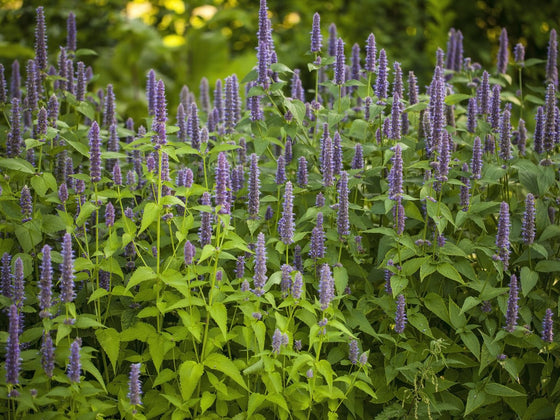
Anise Hyssop
How to grow anise hyssop in Australia from seed: surface sowing, free-draining soil, sowing months for six zones, cutting back, and picking leaves and flowers.
| Position | Full sun or light shade |
|---|---|
| Depth | Surface, or 1 mm |
| Spacing | 30 to 40 cm apart |
| First pick | Leaves from about 10 weeks |
Anise
How to grow anise in Australia: when to sow in all six climate zones, sowing where it grows, spacing and watering, then harvesting and drying seed and leaves.
| Position | Full sun, sheltered from wind |
|---|---|
| Depth | 6 to 10 mm |
| Spacing | 25 to 30 cm apart |
| First pick | Seed 17 to 20 weeks from sowing |