
How to Grow Catnip in Australia
Sow catnip seed on the surface of seed-raising mix, barely covered, when the soil is 20 to 25°C, usually in spring or early autumn. Seedlings appear in 7 to 20 days. Plant out 40 to 60 cm apart in full sun and dry, free-draining soil, and cage young plants against cats. Pick leaves from about 11 to 12 weeks, before the flowers form.
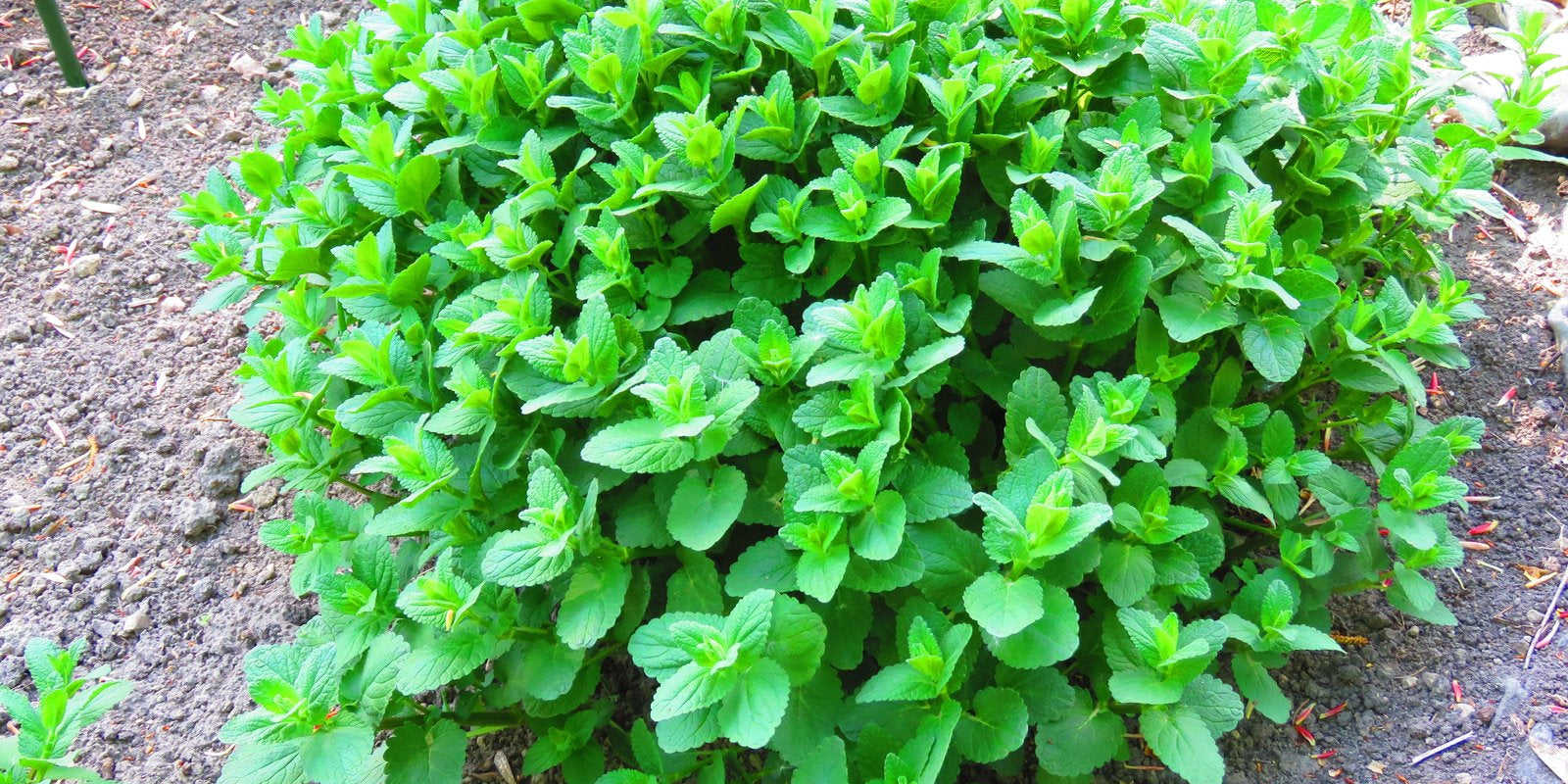
| Sun | Full sun, 6 hours plus |
|---|---|
| Water | Once established, when dry 5 cm down |
| Soil | Free-draining, not too rich; pH 6.5 to 7.5 |
| Feed | Minimal; none needed in garden beds |
| Spacing | 40 to 60 cm apart |
| Depth | Barely covered, 5 mm at most |
| Germination | 7 to 20 days at 20 to 25°C |
| Harvest | Leaves from 11 to 12 weeks |
| Container | Yes; at least 10 L, a 300 mm pot |
| Frost | Hardy once established; may die back in winter |
| Use | Dried leaves for cat toys; flowers for bees |
Catnip (Nepeta cataria) is a short-lived perennial of the mint family, Lamiaceae. It is grown for its downy, grey-green leaves, which many cats respond to, and for white flower spikes that bees visit. It asks for little more than sun and free-draining soil, though humid tropical summers rarely suit it. The usual mistake is leaving seedlings where cats can reach them.
Three mistakes that matter
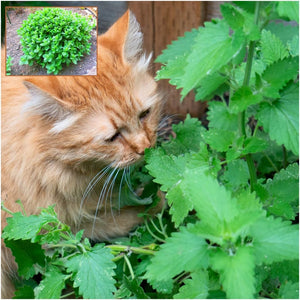
- Leaving young plants open to cats. Cats roll on catnip, rub against it and chew it, and can snap the stems of a small plant or destroy it. Cover seedlings with a chicken wire cage or a mesh cloche until they are well established, or grow them in a hanging basket.
- Keeping the soil wet. Catnip prefers dryish, fast-draining soil, and roots that stay wet can rot and kill the plant. Once plants are established, water only when the soil is dry about 5 cm down, and on clay, plant on a raised mound or bed.
- Letting every flower spike set seed. Catnip self-seeds freely, can become invasive and may be an environmental weed in your area, so check with your council before planting near bushland. Cut the spikes as they fade, as Cutting Back describes.
When to plant
Catnip seed germinates best in soil at 20 to 25°C, though seedlings can appear from about 16°C. Most zones sow in spring and again in early autumn. One sowing gives plants for a few years, and self-sown seedlings often replace them.
| Zone | Example cities | Sow | Harvest | Notes |
|---|---|---|---|---|
| Tropical | Darwin, Katherine NT; Cairns, Townsville QLD; Broome WA | Apr-Jun | Jul-Nov | Sow early in the dry season. Humid, wet weather rarely suits catnip, so treat plants as short-lived. |
| Subtropical | Brisbane, Gold Coast, Bundaberg QLD; Coffs Harbour, Lismore NSW | Mar-May and Aug-Oct | Year round | Sow as the soil cools in autumn or warms in spring. Give afternoon shade and airflow through humid summers. |
| Arid and semi-arid | Alice Springs NT; Broken Hill, Dubbo NSW; Mildura VIC; Kalgoorlie WA | Apr and Aug-Sep | Sep-May | Sow either side of the winter frosts. Afternoon shade and mulch carry seedlings through hot, dry summers. |
| Temperate | Sydney, Newcastle, Wollongong NSW; Melbourne, Geelong VIC | Sep-Dec and Feb-Mar | Oct-May | Sow once spring frosts have passed; Melbourne gardens usually wait until October. Plants may die back in winter. |
| Mediterranean | Perth, Bunbury WA; Adelaide and the SA coast | Mar-Apr and Sep-Nov | Oct-Jun | Sow at the autumn break or in spring. Seedlings need steady water and some shade through the dry summer. |
| Cool and alpine | Hobart, Launceston TAS; Canberra ACT; Ballarat VIC; Orange NSW | Oct-Jan | Dec-Apr | Sow after the last frost, or indoors six weeks earlier. Plants die back in winter and reshoot in spring. |
In the tropics, the dry season is the only reliable window.
Site, soil and setup
In the wild, catnip grows on dry banks, roadsides and field edges, so it wants sun, free drainage and soil that is not too rich.
| Get the bed right | What to do |
|---|---|
| Light | Full sun, at least 6 hours a day, with good airflow; shade from afternoon sun in the hottest districts |
| Soil | Free-draining sandy or loamy soil; it copes with poor soil but not with waterlogging |
| pH | About 6.5 to 7.5; on acid soil, dig in garden lime at 100 to 200 g per square metre 4 weeks ahead |
| Preparation | Weed the bed well and dig in a 5 cm layer of compost before planting |
| Heavy clay | Plant on a raised mound or in a raised bed so the roots never sit wet |
| Position | A permanent spot that is not dug each season, at a bed edge or in a herb bed |
Because it stays put for years, catnip sits outside the vegetable rotation. See soil pH explained before liming.
Container growing
Catnip grows well in a pot, and a hanging basket keeps it out of reach of cats. Use a pot that holds at least 10 L: a standard 300 mm pot, 28 cm across inside, holds about 13.5 L. Fill it with a premium potting mix and do not stand the pot in a saucer. The store sells one catnip with no named compact form, so trim plants to keep them in scale.
- Water: often in hot weather, letting the mix dry a little between waterings but never dry out completely.
- Feed: fish and seaweed blend at half strength, about 12.5 mL per 9 L, fortnightly in spring and summer.
- Position: as for a bed, as Site, soil and setup describes.
Sowing Seeds
Raise catnip in trays and plant it out, or scatter the seed on a prepared bed. The store's Catnip seeds are true catnip, Nepeta cataria.
Starting in trays
- Press the seed onto seed-raising mix and barely cover it, 5 mm at most, as it needs light (see how deep to sow).
- Keep the mix moist but never wet; seedlings appear in 7 to 20 days at the soil temperature When to plant gives.
- Prick seedlings out into single cells once they can be handled.
- Harden off the young plants (set them outdoors a little longer each day so they adjust to sun and wind) for about a week.
- Plant them out at 5 to 10 cm tall, 40 to 60 cm apart.
- Water them in with seaweed solution at half strength, 15 mL per 9 L.
Sowing direct
- Rake the bed fine after the last frost, scatter the seed thinly and tamp it onto the surface.
- Keep the surface damp until seedlings appear.
- Thin the seedlings in stages to 40 to 60 cm apart.
- Lay chicken wire over the bed until the plants establish, as Three mistakes that matter explains.
Care by growth stage
Drainage decides how well catnip grows. Once established it is drought tolerant and needs water mainly in long dry spells. It grows in nutrient-poor soil and needs no regular feed in a garden bed, so keep any feeding at half strength.
| Stage | Water | Feed | Watch for |
|---|---|---|---|
| Seedlings, first 4 weeks | Keep the mix moist but never wet | None until the first true leaves, then seaweed solution at half strength, 15 mL per 9 L, fortnightly | Seedlings collapsing in wet mix |
| Young plants, weeks 4 to 10 | Water regularly until the roots establish | None in a bed dug with compost | Cats rolling on the plants; aphids on new shoots |
| First picking, weeks 11 to 16 | Water deeply at the base when the soil is dry 5 cm down, early or late in the day | None in a bed; in pots, the half-strength blend Container growing gives | Two-spotted mite in hot, dry weather |
| Flowering, from about month 4 | Water only in long dry spells | None | Spikes setting seed; whitefly under the leaves |
| Established plants, second year on | Keep the same routine right through picking; less in winter | Compost as a 5 cm mulch each spring, kept clear of the stems | Wet soil around the crown; a tired, woody clump |
Established catnip is frost hardy and may die back in a cold winter, then reshoot in spring. If growth stalls in very poor soil, a light scatter of all-purpose controlled release granular (NPK around 14-5-10) can help.
Cutting Back
Regular cutting keeps catnip bushy and leafy and, as Three mistakes that matter explains, stops it seeding through the garden.
- Pinch out the stem tips as young plants grow, so they branch.
- Cut flower spikes as they fade, just above a pair of leaves, before the seed ripens.
- Cut the whole plant back after its first flowering to bring on a second flush of leaves and flowers.
- Cut stems to just above the ground in late autumn, or clear dead growth when new leaves appear in spring.
- Divide a crowded clump in spring (see dividing perennials).
- Pull stray seedlings while they are small.
Companion planting
Catnip draws bees and butterflies and is said to repel some pests.
Grows well with
- Lavender, which wants the same full sun and free-draining soil.
- Thyme, another perennial for lean, sharply drained soil and little water.
- Cabbage and other brassicas, since catnip is said to repel aphids and to attract lacewings, which eat them.
Keep apart
- Mint, which wants rich, moist soil and spreads by runners.
- Freshly sown beds, where cats drawn to the catnip may dig in the soft soil.
Harvesting Leaves and Flowers
Start picking leaves once plants are established, usually 11 to 12 weeks after sowing, and take them before the flowers form.
- Pick in the morning, once the dew has dried.
- Snip single leaves or whole stem tips just above a pair of leaves.
- For drying, cut whole stems with their flowers close to the ground.
- Hang them upside down in small bunches somewhere dry, airy and out of the sun.
- Once crisp, strip the leaves and flowers into an airtight jar and keep it in the dark.
Dried leaves keep their fragrance, so they suit cat toys and pot-pourri. The store sells catnip as seed for garden growing, not as a food, a tea or a medicine.
Common problems
Seed slow or patchy to come up. Catnip seed can be slow and uneven to come up, so keep the mix moist for at least 20 days before resowing. Read more
Cats show no interest. Not every cat responds, and kittens under about six months usually do not. An unbruised plant gives off little scent, so crush a leaf to test.
Large, sprawling plants. Rich, moist soil grows a big, loose plant, so keep feeding light and pinch the tips as Cutting Back describes.
White powder on the leaves. Powdery mildew can appear in long spells of very humid weather, so give plants room and water at the base. Read more
Plants fading after a few years. Catnip is short-lived, so keep a few self-sown seedlings or divide the clump to replace old plants.
Pests and diseases
Sap-sucking pests cause most trouble on catnip in warm weather; before using any spray, read its label and use it only as directed.
Aphids (family Aphididae). Small green or yellow sap suckers cluster on new shoots and under the leaves, leaving sticky honeydew. Knock them off with a jet of water or spray insecticidal soap under the leaves. Read more
Two-spotted mite (Tetranychus urticae). Tiny mites under the leaves leave yellow, stippled patches and multiply fast in hot, dry weather. Hose the leaf undersides and avoid broad-spectrum sprays, which kill the mites' predators. Read more
Whitefly, greenhouse whitefly (Trialeurodes vaporariorum) or silverleaf whitefly (Bemisia tabaci). Tiny white insects rise in a cloud from the leaf undersides and can yellow and weaken the plant. Hose them off, hang yellow sticky traps and spray insecticidal soap under the leaves. Read more
Damping off (Pythium species and Rhizoctonia solani). Seedlings rot at soil level and fall over, most often in wet mix. Sow thinly in clean seed-raising mix and avoid overwatering. Read more
Prevention first
- Sow in fresh seed-raising mix, with clean trays and tools.
- Check shoot tips and leaf undersides weekly in warm weather.
- Encourage ladybirds and lacewings, which feed on aphids and mites.
- Water at the base, early in the day, so the leaves stay dry.
Tips
- Sew a handful of dried leaves into a small cloth bag for a cat toy.
- Take softwood cuttings early in the growing season; they strike well in propagating mix (see how to take cuttings).
- Wear gloves when working soil that cats visit, because cat droppings can carry Toxoplasma.
- To save seed, let a single spike ripen, rub out the seed and sow it in your zone's window in When to plant.
Questions
What is the difference between catnip and catmint?
Both belong to the genus Nepeta in the mint family. Catnip, Nepeta cataria, has white flowers, a looser form and the scent most cats respond to. Catmints such as Nepeta racemosa are lower and more compact, with more flowers, and are grown mainly as ornamentals.
Why is my cat not interested in catnip?
Not every cat responds to catnip, and kittens younger than about six months usually show no interest. The scent is released when the leaves are bruised, so an untouched plant may be ignored. Crush a leaf or two to test your cat.
Does catnip come back every year?
Yes, for a few years. It is a short-lived perennial that may die back in a cold winter and reshoot in spring. It self-seeds readily, so young plants often appear nearby to replace an old clump.
Is catnip invasive in Australia?
It can be. Catnip self-seeds freely and has naturalised in parts of south-eastern Australia, and it may be an environmental weed in your area. Check with your council before planting near bushland, and cut the flower spikes before the seed ripens.
Does catnip keep pests away from vegetables?
It is said to repel aphids and some other insects and to attract lacewings, which eat aphids. Treat that as a possible bonus rather than a control. Its flowers do draw bees and butterflies, which helps a vegie patch.
Grow it
More herbs to sow in September
All herbs
Agrimony
How to grow agrimony in Australia from seed: chilling the burrs, sowing months for six climate zones, sun and soil, cutting back, harvest, history and safety.
| Position | Full sun, light shade tolerated |
|---|---|
| Depth | 5 mm |
| Spacing | 30 cm apart |
| First pick | Summer; 12 to 18 weeks from spring sowing |

Angelica
How to grow angelica in Australia from seed: fresh or chilled seed sown on the surface, part shade, months for six climate zones, stems, history and safety.
| Position | Part shade, morning sun |
|---|---|
| Depth | Surface; press in, uncovered |
| Spacing | 50 to 90 cm |
| First pick | Stems at about 18 months |
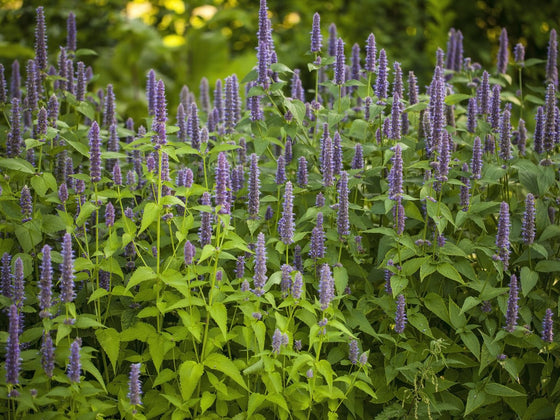
Anise Hyssop
How to grow anise hyssop in Australia from seed: surface sowing, free-draining soil, sowing months for six zones, cutting back, and picking leaves and flowers.
| Position | Full sun or light shade |
|---|---|
| Depth | Surface, or 1 mm |
| Spacing | 30 to 40 cm apart |
| First pick | Leaves from about 10 weeks |
Anise
How to grow anise in Australia: when to sow in all six climate zones, sowing where it grows, spacing and watering, then harvesting and drying seed and leaves.
| Position | Full sun, sheltered from wind |
|---|---|
| Depth | 6 to 10 mm |
| Spacing | 25 to 30 cm apart |
| First pick | Seed 17 to 20 weeks from sowing |