
How to Grow Moldavian Dragonhead in Australia
Moldavian dragonhead is a lemon-scented annual of the mint family, grown for its leaves and violet-blue flowers. Sow in spring from about two weeks before the last frost, pressing the seed onto moist soil without covering it, because it needs light. Seedlings appear in 10 to 15 days. Thin to 15 to 30 cm and cut the tops in early flower, about 11 to 13 weeks after sowing.
| Sun | Full sun to part shade |
|---|---|
| Water | Evenly moist in free-draining soil |
| Soil | Fertile, free-draining; mildly acid to mildly alkaline |
| Feed | Minimal; compost at sowing, little else |
| Spacing | 15 to 30 cm |
| Depth | Surface; press in, do not cover |
| Germination | 10 to 15 days; no treatment needed |
| Harvest | 11 to 13 weeks |
| Container | Yes, 30 cm pot, 10 to 15 L |
| Frost | Annual; sow from two weeks before last frost |
| Use | Culinary herb, bee plant and herb garden |
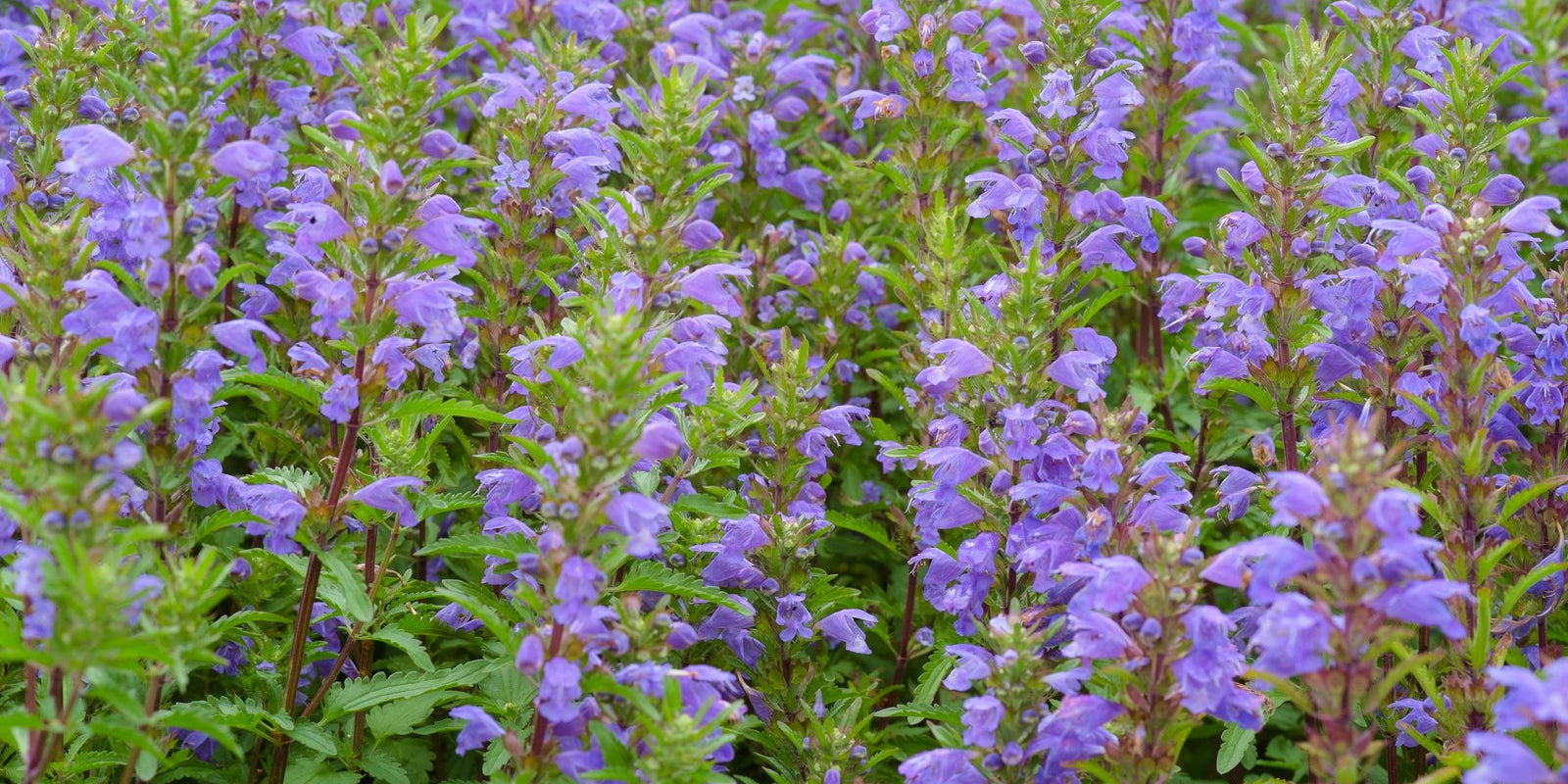
Moldavian dragonhead (Dracocephalum moldavica) is grown for its lemon-scented leaves and whorls of violet-blue flowers, an annual herb of the mint family, Lamiaceae. Unlike most traditional herbs it is an easy seed. The one step to get right comes first: the seed needs light, so seed buried like a bean often fails.
Three mistakes that matter
- Burying the seed. Dragonhead seed needs light to germinate, so seed raked in or covered with mix can sit in the dark and fail. Press it onto moist soil and leave it uncovered, as Germinating the seed explains.
- Sowing late into the heat. Plants sown early reach flowering before hot weather, while late sowings run up and finish early once the heat arrives. Sow at the cooler end of your zone's window, as When to plant sets out.
- Cutting too late. Stems left long after the first flowers open turn coarse, with fewer good leaves. Cut the tops in early flower and again as new spikes form, as Harvesting Sprigs describes.
When to plant
Mild weather suits this seed: in the Kew seed bank's test it germinated well with 12-hour days at 21°C and nights at 11°C. Sow direct from about two weeks before the last frost, or start seed under cover and plant out once frosts are over. One sowing can give two or three cuts over the season, because cutting brings on fresh flowering stems.
| Zone | Example cities | Sow | Harvest | Notes |
|---|---|---|---|---|
| Tropical | Darwin, Katherine NT; Cairns, Townsville QLD; Broome WA | May-Aug | Jul-Nov | Sow in the dry season, when nights are cooler. Cut before the wet season build-up brings heat and humidity. |
| Subtropical | Brisbane, Gold Coast, Sunshine Coast QLD; Coffs Harbour, Lismore NSW | Aug-Oct | Oct-Jan | Sow from August so plants flower before midsummer. Give afternoon shade in hot spells and water steadily. |
| Arid and semi-arid | Alice Springs NT; Broken Hill, Dubbo NSW; Mildura VIC; Kalgoorlie WA | Aug-Oct | Oct-Jan | Sow as inland frosts ease. Mulch well, shade from hot afternoon sun and water deeply. |
| Temperate | Sydney, Newcastle, Wollongong NSW; Melbourne, Geelong VIC | Sep-Nov | Nov-Mar | Sydney sows from September. Melbourne sows from late September, or starts seed indoors for an early crop. |
| Mediterranean | Perth, Bunbury WA; Adelaide and the SA coast | Aug-Oct | Oct-Jan | Sow early, because summer heat arrives dry. Mulch and water steadily from November. |
| Cool and alpine | Hobart, Launceston TAS; Canberra ACT; Ballarat VIC; Orange NSW | Oct-Dec | Dec-Mar | Sow direct from two weeks before the last frost, or plant out seedlings around Melbourne Cup weekend. |
Site, soil and setup
Dragonhead grows best in full sun and takes part shade. It has a mild appetite for compost and water, so a moderately fertile bed that drains freely suits it better than a heavily manured one. Plants usually reach 20 to 60 cm tall, so they suit the front of a bed or a pot.
| Get the bed right | What to do |
|---|---|
| Sun | Full sun in most gardens; afternoon shade in hot inland and western summers |
| Soil | Sandy, loam or clay soil that drains freely, with a 5 cm layer of compost dug in before sowing |
| pH | Mildly acid to mildly alkaline; on strongly acid soil, dolomite lime at 100 to 200 g per square metre, 4 weeks before sowing |
| Drainage | Raise the bed where water lies after rain, because damping off (seedlings rotting and collapsing at soil level) and root rots thrive in wet soil |
| At planting | A handful of worm castings in each planting hole for seedlings raised in trays, and no fresh manure |
| Rotation | Move it each year, and avoid a bed where seedlings collapsed from damping off the season before |
Container growing
Choose a pot about 30 cm across, which holds 10 to 15 L of mix, with good drainage holes. Fill it with quality potting mix and sow three or four seeds on the surface, then thin to the strongest one or two plants. The store sells a single, unnamed seed line, and its plants stay small enough for a pot on a sunny balcony.
- Water: check the mix daily in warm weather and keep it evenly moist, never soggy.
- Feed: seaweed solution at half strength, 15 mL per 9 L, once a fortnight while you are cutting.
- Position: full sun, or morning sun and afternoon shade where summers are hot.
Germinating the seed
Moldavian dragonhead seed has no dormancy to break. It needs only moisture, mild temperatures and light. Seed farms in North America advise surface sowing, and the Kew seed bank tested it under 12 hours of light a day. The seed is small, around 450 to 650 to the gram, so a pinch sows a row.
Kew recorded 90 per cent germination with no treatment, and a seed farm that grows it describes germination as easy. In a warm, bright room, seed can sprout within three days. Sow two or three seeds for each plant you want, then thin to the strongest.
| Treatment | How | How long | Temperature | What success looks like |
|---|---|---|---|---|
| None needed (best) | Sow untreated seed straight from the packet onto moist soil or seed raising mix; press it in and leave it uncovered in a bright spot, out of hot direct sun; a clear cover over a tray holds moisture | Seedlings in 10 to 15 days | Mild days and cool nights, as When to plant sets out | Pairs of small seed leaves across the surface |
| Warm start indoors | Sow in cells on a bright windowsill or under lights, and keep the mix damp | First shoots in as little as 3 days | Warm room temperature | Seedlings with their first true leaves, ready to thin |
No soaking, chilling or scarifying is needed; the guide to seed treatments explains which seeds do need them. Stored seed keeps well: one storage trial recorded better than 98 per cent germination after three years at 5°C to 10°C. A collection in the Kew seed bank still gave 83 per cent after 15 years.
When nothing comes up
- Covered too deep: seed buried in the dark often fails, so resow on the surface and press it in.
- Surface dried out: uncovered seed dries fast, so mist it daily or cover the tray until seedlings show.
- Washed away: a hard jet scatters fine seed, so water with a fine rose, as watering seeds and seedlings shows.
- Too cold: seed sown into cold, wet soil sits still, so wait for milder days or start it indoors.
- Old or warm-stored seed: seed keeps for years cool and dry, but loses life stored warm or damp.
- Given up too soon: allow three weeks before resowing, then check the causes in why seeds fail to germinate.
Sowing Seeds
Sow Moldavian Dragonhead seeds untreated, direct where they will flower, or in trays for an earlier start where frost lingers.
Sowing direct
- Rake the bed to a fine, level surface and water it the day before sowing.
- Scatter seed thinly and press it onto the moist soil without covering it, as sowing tiny seeds shows.
- Keep the surface damp with a fine spray until seedlings appear, usually in 10 to 15 days.
- Thin to 15 to 30 cm apart once seedlings carry their first true leaves.
Starting under cover
- Sow two or three seeds onto each cell of moist seed raising mix, pressed in and uncovered.
- Keep the tray bright and damp; seedlings that stretch are short of light, as leggy seedlings explains.
- Thin to one seedling per cell, snipping the extras at soil level.
- Harden off (gradually accustom seedlings to sun and wind over a week), as hardening off seedlings describes.
- Plant out 15 to 30 cm apart once frosts are over.
Care by growth stage
Steady moisture in free-draining soil, and cutting on time, decide this crop.
| Stage | Water | Feed | Watch for |
|---|---|---|---|
| Germination, weeks 1 to 2 | Fine spray to keep the surface damp | None until the first true leaves open | Damping off in cold, wet mix; snails at night |
| Seedlings, weeks 2 to 6 | Keep evenly moist, never soggy | Seaweed solution at half strength, 15 mL per 9 L, once a fortnight | Leggy growth in low light; thin or plant out on time; aphids clustering on soft tips |
| Leafy growth, weeks 6 to 11 | Water deeply in dry spells and less after rain, keeping the soil evenly moist | None in compost-rich soil | Pinch the tips for bushier plants; fine pale speckling under leaves in hot, dry weather |
| First flowers and cutting, weeks 11 to 13 | Keep watering steadily right through cutting | None | Cut the tops in early flower, before stems turn coarse |
| Regrowth and seed, after the first cut | Keep watering while you still cut | None | New flowering stems to cut; plants winding down as seed ripens |
If growth stalls in poor soil, a light application of all-purpose controlled release granular (NPK around 14-5-10) scratched in around the plants can help. Mulch lightly once seedlings are established, to hold moisture and keep weeds down.
Pinching and Harvesting
Pinch young plants early so they branch, and keep cutting through the season.
- Growing tips: pinch them out on young plants once they carry several pairs of leaves, so each stem branches.
- Flowering tops: cut them in early flower, just above a pair of leaves, leaving leafy stems below to regrow.
- Spent spikes: cut them off as the flowers fade, which encourages more blooms.
- Single leaves: pick a few at any time once plants are bushy, spreading the picking across the plant.
- Seed plants: leave a few plants uncut late in the season to ripen seed for next year.
Companion planting
Dragonhead earns a place near crops that need bees, and it suits a sunny spot with other herbs of the same size.
Grows well with
- Pumpkins and zucchini, whose flowers need bees to set fruit, and dragonhead flowers draw bees in numbers.
- Basil, which is of similar size and wants the same sun, soil and water.
Keep apart
- Mint, whose vigorous runners spread through a bed and crowd out a small annual.
- Tall corn and sunflowers, which shade a sun-loving herb planted to their south; grow dragonhead on their northern side.
Harvesting Sprigs
Cut sprigs when the first flowers open on the spikes, usually 11 to 13 weeks after sowing.
- Cut the leafy flowering tops with secateurs, as Pinching and Harvesting describes.
- Tie the stems in small, loose bunches for drying.
- Strip the leaves and flowers from the stalks once they are dry and crisp.
Hang the bunches in shade at room temperature, where they dry in about a week. Heat changes the scented oils, and one drying trial rated leaves dried at 20°C the best, so avoid an oven or hot shed. Store the dried leaves and flowers in a sealed jar out of the light, where they keep their aroma well.
Use fresh leaves and flowers as a lemon-scented flavouring in cold drinks, fruit desserts and syrups.
Traditional use and history
The genus name joins the Greek words for dragon and head, after the shape of the flower. Linnaeus named the species in the mid eighteenth century and recorded its home as Moldavia, the region behind the common name. It is native to temperate Asia, from Siberia and Central Asia to northern China, and has become naturalised across much of Eurasia.
| Tradition or place | Name | Part recorded | What the tradition used it for |
|---|---|---|---|
| Uyghur medicine, Xinjiang | Baeiranjiboya | The whole plant | Heart complaints, dizziness and coughs, over centuries |
| Chinese and Mongolian folk medicine | Xiang qing lan | Not recorded | A folk herb of Mongolian and Uyghur communities, described in that tradition's terms as clearing heat from the liver and stomach |
| Mexican folk medicine | One of the three toronjiles | Not recorded | Nervous complaints, and stomach cramps in a mix with two forms of Agastache mexicana |
| Food and perfume industries | Moldavian balm, dragonhead | Leaves, flowers and scented oil | Flavouring jams, sweets, syrups, canned fish and spirits; perfumes and soaps |
Beekeepers value it as a honey plant, because its flowers make large amounts of sugary nectar, and Swedish gardeners know it as Turkish dragon flower.
It is also grown as an ornamental and for its scented oil. The national plant census lists it as doubtfully naturalised in New South Wales, from a record near Barraba on the North West Slopes.
Safety
Moldavian dragonhead is sold as seed for growing, and nothing here is advice to take any part of the plant for a health purpose. Anyone thinking of using a plant should first seek advice from a qualified health practitioner.
| Topic | What the sources say |
|---|---|
| Toxicity | No poisoning of people from the growing plant is recorded, and LiverTox, the NIH herb fact sheets and MedlinePlus have no entry for it. Most of the evidence comes from animal studies. A water extract of the above-ground parts killed half the mice given about 470 mg per kg of body weight. A sponsor-funded 90-day rat study of a commercial extract found no adverse effects at the levels tested. The one trial in people, a company-funded 12-week study of a commercial extract in healthy women, reported no adverse effects. |
| Pregnancy and breastfeeding | No study in pregnant or breastfeeding women is recorded, so there is no basis for judging it either way. |
| Interactions with medicines | No interaction in people is recorded. In mice, a water extract lengthened the sleep brought on by a barbiturate sedative, so an effect alongside sedative medicines has not been ruled out. |
| Allergy and skin | No allergy or skin reaction from handling the plant is recorded. |
| Pets and livestock | The ASPCA's plant lists for dogs, cats and horses have no entry for it, as toxic or as non-toxic. No poisoning of pets or livestock is recorded. |
| Legal status | No state or territory declares it a weed. It is not on the declared lists of New South Wales, Victoria, Queensland, South Australia, Tasmania, the ACT or the Northern Territory. The Western Australian Organism List marks it as permitted. |
Keep the name straight when buying seed. False dragonhead, or obedient plant (Physostegia virginiana), is a different plant of another genus that shares the common name. Moldavian dragonhead is also sold as Moldavian balm, so check the botanical name on the packet.
Common problems
Bare patches in the row. Seed covered too deeply or allowed to dry out on the surface are the usual causes; Germinating the seed sets out each fix.
Plants yellow and collapse. Waterlogged soil rots the roots, so plants on heavy, wet ground fail first; follow the advice on waterlogged soil.
Plants finish early in summer. Heat after a late sowing is the likely cause, as Three mistakes that matter explains.
Pests and diseases
No pest or disease specific to dragonhead is recorded in Australia, so the risks below are general garden ones.
Two-spotted mite (Tetranychus urticae). Found throughout Australia on a very wide range of plants, it feeds under the leaves and leaves pale stippling and fine webbing. It is worst in hot, dry weather. Hose the undersides of the leaves, and avoid broad-spectrum sprays, which kill the predators that eat mites. Read more
Common garden snail (Cornu aspersum). Snails feed at night, early in the morning and in rainy, overcast weather, and they can damage seedlings. Hand-pick them after dark in cool, wet spells. Read more
Damping off (Pythium species and Rhizoctonia solani). These soil fungi and water moulds rot seedlings of almost every crop, which collapse at soil level. Use fresh seed raising mix and clean trays, and keep the mix moist rather than wet. Read more
Prevention first
- Sow thinly and thin on time, so air moves between seedlings.
- Water at the base in the morning so leaves and soil surface dry by night.
- Check the undersides of leaves weekly in hot, dry spells.
- Clear boards, pots and weeds where snails shelter near seedlings.
Tips
- Save seed from the few plants left uncut. Once their spikes turn brown and dry, cut them, rub the seed out and shake it over a sieve, which holds back the chaff.
- Store the clean seed in a paper bag labelled with its name and date, somewhere cool and dry, ready for the next spring sowing.
- Use spare seedlings to fill gaps in a summer flower border, where the violet-blue spikes last for weeks.
Questions
Why are my Moldavian dragonhead seeds not coming up?
Usually the seed was covered too deeply or the surface dried out. The seed needs light, so press it onto moist soil and leave it uncovered. Keep the surface damp with a fine spray, and allow three weeks before sowing again.
How long does Moldavian dragonhead take to grow from seed?
Seedlings usually appear in 10 to 15 days. Plants start flowering about 11 to 13 weeks after sowing, which is the time to cut the first sprigs. Cutting brings on new flowering stems, so one sowing can give two or three cuts.
When should I plant Moldavian dragonhead in Australia?
Sow in spring, from about two weeks before the last frost. That means August to October around Brisbane, Perth and Adelaide, September to November around Sydney and Melbourne, and October to December in cool areas. In the tropics, sow from May to August.
Is Moldavian dragonhead safe around dogs and cats?
No poisoning of pets or livestock is recorded, but the ASPCA plant lists do not cover it either way. Evidence on its safety is limited, so keep pets from chewing the plant and talk to your vet if one eats any.
Is Moldavian dragonhead legal to grow in every state?
Yes. No state or territory declares it a weed, and the Western Australian Organism List marks it as permitted. It is not the same plant as false dragonhead, a different plant that shares the common name.
Does Moldavian dragonhead come back every year?
No. It is an annual that flowers, sets seed and dies within the season. It can self-seed, but not reliably, so save seed from a few uncut plants and sow again next spring.
Grow it
More herb guides
All herbs
Agrimony
How to grow agrimony in Australia from seed: chilling the burrs, sowing months for six climate zones, sun and soil, cutting back, harvest, history and safety.
| Position | Full sun, light shade tolerated |
|---|---|
| Depth | 5 mm |
| Spacing | 30 cm apart |
| First pick | Summer; 12 to 18 weeks from spring sowing |

Angelica
How to grow angelica in Australia from seed: fresh or chilled seed sown on the surface, part shade, months for six climate zones, stems, history and safety.
| Position | Part shade, morning sun |
|---|---|
| Depth | Surface; press in, uncovered |
| Spacing | 50 to 90 cm |
| First pick | Stems at about 18 months |

Ashwagandha
Grow ashwagandha from seed in Australia: warm germination, sowing, site, care and root harvest, with its history and safety, for all six climate zones.
| Position | Full sun |
|---|---|
| Depth | 5 mm |
| Spacing | 45 to 60 cm apart |
| First pick | Roots 21 to 26 weeks |

Astragalus
How to grow astragalus (huang qi) in Australia from hard-coated seed: rubbing and soaking, sowing months for six zones, care, pests and lifting the taproot.
| Position | Full sun |
|---|---|
| Depth | 5 mm |
| Spacing | 20 to 45 cm apart |
| First pick | Roots after 2 to 3 years |