
How to Grow Lovage in Australia
Sow lovage 6 mm deep in warm soil, ideally 20 to 25°C, and expect seedlings in 10 to 21 days. Plant it 60 cm to 1 m apart in deep, rich soil that stays moist, with afternoon shade in warm zones. Pick young leaves lightly from about 15 weeks and freely from the second spring, and cut off flower stems to keep the leaves mild.
| Sun | Sun, or afternoon shade |
|---|---|
| Water | Keep evenly moist, never waterlogged |
| Soil | Deep, rich, moist; pH 6.0 to 7.0 |
| Feed | Light; compost mulch, half-strength feeds |
| Spacing | 60 cm to 1 m |
| Depth | 6 mm |
| Germination | 10 to 21 days at 20 to 25°C |
| Harvest | Lightly from about 15 to 17 weeks |
| Container | Heavy pot, at least 50 cm and 40 L |
| Frost | Hardy; dies back in winter |
| Use | Leaves, stems and seeds; strong celery flavour |
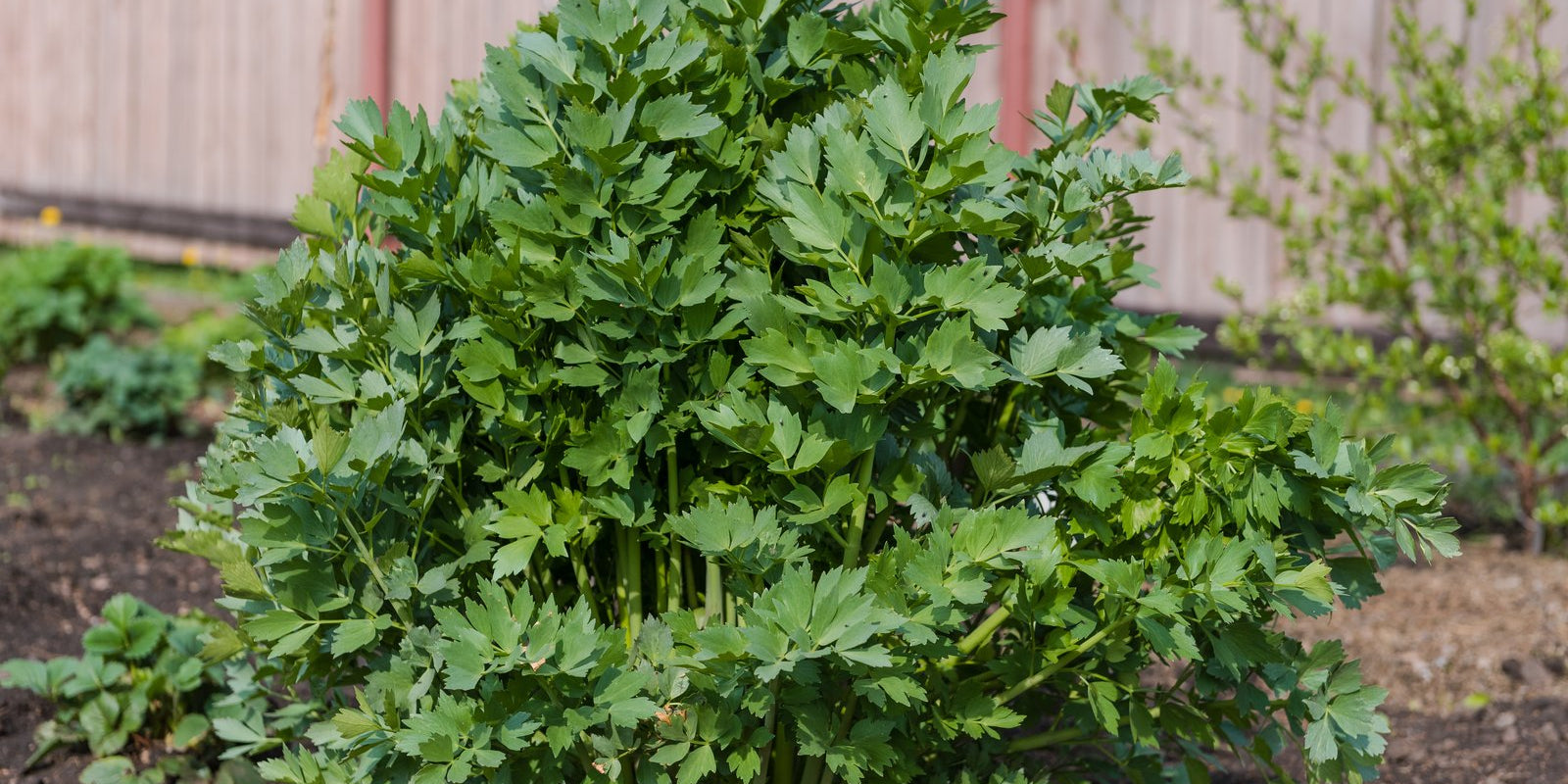
Lovage (Levisticum officinale) is a tall herbaceous perennial of the carrot family, Apiaceae, grown for its leaves, hollow stems and seeds. It tastes like a stronger celery with hints of parsley and anise, so a little goes a long way in soup, stew and stock. One plant is usually enough for a household, and in a cool garden it returns every spring for many years. Most trouble comes from treating it like parsley: it needs a big permanent spot, moist soil and fresh seed.
Three mistakes that matter
- Giving it a small corner. Lovage reaches about 2 m in flower and can spread 1 m wide, so a crowded plant shades and swamps its neighbours. Plant it 60 cm to 1 m from anything else, at the back or edge of a bed.
- Sowing old seed. Fresh lovage seed germinates best, and stale seed comes up erratically, leaving a tray with only a few seedlings. Sow each packet in its first season, two or three seeds to a pot.
- Letting the soil dry out in hot sun. Dry soil makes the leaves bitter, and full afternoon sun in a warm zone causes heat stress. Plant into deep, moist soil, water well in dry spells, and give it afternoon shade where summers are hot.
When to plant
Lovage germinates best with the soil at 20 to 25°C and unreliably below about 15°C, so most zones sow from spring into early summer. One sowing is enough, because a single plant keeps producing for years.
| Zone | Example cities | Sow | Harvest | Notes |
|---|---|---|---|---|
| Tropical | Darwin NT; Cairns, Townsville QLD; Broome WA | Apr-Jun | Jul-Oct | Unlikely to thrive in humid lowland heat. Worth a trial only as a dry season annual in part shade. |
| Subtropical | Brisbane, Gold Coast, Bundaberg QLD; Coffs Harbour, Lismore NSW | Mar and Aug-Oct | May-Dec once established | Give it afternoon shade and steady water. Mild winters bring little dormancy, so plants may fade within a few years. |
| Arid and semi-arid | Alice Springs NT; Broken Hill, Dubbo NSW; Mildura VIC; Kalgoorlie WA | Sep-Nov | Oct-Apr once established | Sow once frosts ease. Afternoon shade, thick mulch and deep watering carry it through the hot, dry summer. |
| Temperate | Sydney, Newcastle, Wollongong NSW; Melbourne, Geelong VIC | Sep-Dec | Oct-Apr once established | Sow in warm soil from spring. Around Melbourne, start pots under cover in September; Sydney plants like afternoon shade. |
| Mediterranean | Perth, Bunbury WA; Adelaide and the SA coast | Sep-Nov | Oct-Apr once established | Sow in spring so plants settle before the dry heat. Mulch well, water deeply and shade the afternoon sun. |
| Cool and alpine | Hobart, Launceston TAS; Canberra ACT; Ballarat VIC; Orange NSW | Oct-Dec | Oct-Apr once established | Its best zone. Start pots under cover from August, or sow outside after the last frost. Shoots return about September. |
In frosty districts, sow in pots under cover six to eight weeks before the last frost and plant out once frosts have passed. In the tropics and humid subtropics, treat lovage as a short-lived plant and sow again when it fades.
Site, soil and setup
Like its relative celery, lovage wants plenty of moisture in the soil without waterlogging.
| Get the bed right | What to do |
|---|---|
| Light | Full sun in cool zones; morning sun and afternoon shade in warm zones; at least 3 hours of direct sun a day |
| Soil | Deep, fertile, free-draining loam rich in organic matter that stays moist |
| pH | 6.0 to 7.0; on acid soil, garden lime at 100 to 200 g per square metre, 4 weeks before planting |
| Preparation | Dig in a 5 cm layer of compost, or 5 to 10 cm of well-rotted manure, 4 to 6 weeks before planting |
| Position | The back or edge of a bed; on the south side of a vegie patch its tall stems shade little |
| Mulch | A layer of compost around the crown each winter while it is dormant |
As a perennial, lovage sits outside crop rotation: give it a permanent place away from the beds that are dug over each season.
Container growing
Lovage grows best in the ground, but a large pot works where space is short. Choose a heavy pot with drainage holes, at least 50 cm across and 40 L. Tall flower stems can make a light pot unstable. One maker's standard 50 cm pot holds about 52 L, its 40 cm pot only 28 L.
Fill it with premium potting mix and grow one plant on its own, because it soon swamps other herbs. Potting and seed-raising mixes can carry Legionella bacteria, so wet them down, wear gloves and a P2 mask, and wash your hands afterwards. There is only one kind of lovage, so there is no compact variety to choose.
- Water: keep the mix evenly moist through the growing season, checking it often in hot weather.
- Feed: fish and seaweed blend at half strength, 12.5 mL per 9 L, fortnightly from spring to late summer.
- Position: as for a bed; afternoon shade also slows drying of the mix.
- Repot: when roots push through the drainage holes, divide the clump or move it to a bigger pot.
Sowing Seeds
Start lovage in small pots and plant it out young, or sow it where it will grow, because its taproot resents a late move.
Starting under cover
- Sow two or three seeds per small pot of seed-raising mix, 6 mm deep.
- Keep the mix moist, never wet or dry, at the temperature When to plant gives.
- Expect seedlings in 10 to 21 days; uneven emergence is normal.
- Once they can be handled, thin each pot to the strongest seedling.
A seedling heat mat holds the mix at that temperature in a cool spring. To sow direct, sow and thin the same way in the bed, spacing plants as for planting out.
Planting out
- Harden off the seedlings (move them outdoors a little longer each day so they adjust to sun and wind) over about a week.
- Plant out at 5 to 10 cm tall, or at four true leaves, before the taproot establishes.
- Space plants 60 cm to 1 m apart.
- Water in with seaweed solution at half strength, 15 mL per 9 L.
Care by growth stage
Steady moisture decides how good lovage tastes. Feed lightly: over-feeding reduces the essential oils that give lovage its flavour and aroma.
| Stage | Water | Feed | Watch for |
|---|---|---|---|
| Seedlings, sowing to 6 to 8 weeks | Keep the mix moist, never soggy | None until the first true leaves, then seaweed solution at half strength, 15 mL per 9 L, fortnightly | Damping off; snails |
| Planting out, first 4 weeks | Water regularly until the plants are settled and growing | Seaweed solution at half strength at planting | Heat stress in afternoon sun; slugs |
| First summer | Soak deeply once the soil is dry 5 cm down, early morning or late afternoon | None in well-prepared soil | Aphids on soft growth; leaf mines |
| Spring regrowth, from the second year | Keep the soil evenly moist as shoots appear | Pelletised chicken manure, 50 g per square metre, once, only if growth is slow | Snails on new shoots |
| Flowering stems, summer | Deep soaks in hot spells; more often in full sun or sandy soil | None | Flower stems forming, the cue in Cutting Back |
| Leaf harvest, spring to autumn | Keep watering steady right through picking; never let the soil dry before a harvest | None beyond the winter compost mulch | Bitter leaves after dry spells |
If growth stalls in poor soil, a light dose of all-purpose controlled release granular (NPK around 14-5-10) scratched into the soil in spring can help.
Cutting Back
Cutting keeps lovage leafy, by stopping it flowering and by forcing a fresh flush of tender leaves in summer.
- Remove flower stems as they start to form if you want leaves rather than seed.
- If leaf growth stops in summer, cut the old foliage back to push out new leaves.
- Let one or two flower heads stand if you want seed or food for hoverflies, accepting more bitter leaves.
- In late autumn, cut dead stems to just above the ground, or leave them until new shoots appear in spring.
- Divide a large clump in spring, or in winter while it is dormant, replanting healthy pieces with roots.
Wear gloves and long sleeves when cutting back or picking heavily on a sunny day. Heavy handling in strong sun has caused skin rashes, because lovage contains furanocoumarins (compounds that make skin sensitive to sunlight).
Companion planting
Lovage is a big, long-lived plant, so choose neighbours that share a permanent bed or gain from its flowers.
Grows well with
- Asparagus and rhubarb, fellow perennials, so the whole bed stays undug for years.
- Lettuce and other soft leafy crops, since hoverflies visit lovage flowers and their larvae eat aphids.
Keep apart
- Thyme and oregano, small herbs that its vigorous growth soon overwhelms.
- Mint, whose creeping runners invade the clump and compete for the same moist soil.
Harvesting Leaves
Pick lightly from about 15 to 17 weeks after sowing and more freely from the second spring, choosing young leaves, which are the most tender.
- Pick young leaves and stems regularly from spring to autumn, outer stems first.
- Leave plenty of foliage on the plant so it keeps growing.
- For blanched stems, wrap a few 30 cm stems in newspaper tied with string, leaving at least a third of the stems uncovered.
- Cut seed heads as they start to turn brown, and dry them in a paper bag.
Fresh leaves and stems keep in a plastic bag in the crisper, although they are best used soon after picking. For longer storage, freeze chopped leaves in ice cube trays of water, or dry them. Rub the dry seeds from the heads and keep them in a sealed jar.
Use the leaves sparingly in soups, stews, stock, potato and egg dishes, and the seeds like fennel seed in baking.
Common problems
Few or no seedlings. Stale seed germinates erratically and cold soil slows it further, so see Three mistakes that matter and sow again into warm mix. Read more
Bitter leaves. Leaves turn bitter once flower stems form, when the soil dries out and past midsummer as the plant dries off. Cut the stems as Cutting Back describes, water deeply and use late leaves sparingly.
The plant vanishes in winter. Lovage dies back to its roots in late autumn and reshoots in spring, so mark the spot and leave it undug. Read more
Seedlings everywhere. Lovage self-seeds readily, so cut the seed heads before they ripen, or weed out the seedlings in spring.
Pests and diseases
Once established, lovage has few serious pests; most damage lands on seedlings and soft spring growth.
Aphids (family Aphididae). Colonies on soft shoots distort new growth and leave sticky honeydew. Squash small colonies by hand, or spray insecticidal soap onto the leaf undersides, following its label. Read more
Leaf miners (larvae of small flies). The larvae tunnel inside the leaves, leaving pale winding trails. Pick off and bin mined leaves, and avoid broad-spectrum sprays, which kill the tiny wasps that parasitise them.
Common garden snail (Cornu aspersum) and slugs. They chew seedlings and new spring shoots, mostly at night. Pick them off by torchlight after rain, or sink shallow beer traps into the soil. Read more
Damping off (Pythium and Rhizoctonia species). Seedlings collapse at soil level, most often in wet, thickly sown trays. Sow thinly into fresh, clean mix, avoid overwatering and keep trays well drained. Read more
Prevention first
- Run copper tape around pots and wooden or plastic bed edges to deter snails.
- Water at the base early in the day, keeping the leaves dry.
- Check young leaves each week in spring for aphids and leaf mines.
- Grow dill or alyssum nearby to draw hoverflies and lacewings, which eat aphids.
Tips
- Cut a hollow stem into short lengths and use it as a straw for tomato juice or other savoury drinks.
- Rub a cut stem around the inside of a salad bowl for a gentle celery note.
- Use the dried seeds wherever a recipe calls for celery seed.
- Lift a self-sown seedling in spring to replace an ageing clump every few years.
- Before keeping a self-sown seedling, crush a leaf. Lovage smells of strong celery; hemlock, a highly toxic weed with purple-spotted hollow stems, smells sharp and unpleasant.
Questions
Is lovage the same as celery?
No. Lovage is a separate perennial plant, closely related to celery and parsley. It grows far larger, to about 2 m in flower, and comes back each spring. The leaves taste like a stronger celery with hints of parsley and anise, so use less of it.
Does lovage come back every year?
Yes. It dies back to its roots in late autumn and reshoots in spring, producing for many years in cool gardens. In warm climates it needs a winter rest to grow its best, so it may not thrive for long. There, treat it as a short-lived plant and sow again.
Why are my lovage leaves bitter?
Usually because the plant is flowering or the soil has dried out, and leaves grow stronger past midsummer. Cut flower stems as they appear if you want leaves, and water deeply in dry spells. Give it afternoon shade in warm zones, and use late leaves sparingly.
Can I grow lovage in a pot?
Yes, in a heavy pot with drainage holes, at least 50 cm across and 40 L, since tall flower stems make a light pot unstable. Grow one plant in premium potting mix and keep it evenly moist. Feed fortnightly with fish and seaweed blend at half strength, 12.5 mL per 9 L.
How long does lovage seed take to germinate?
Usually 10 to 21 days with the soil at 20 to 25°C, and seedlings often come up unevenly. Fresh seed germinates best, so sow the packet in its first season, two or three seeds per pot, 6 mm deep.
Which parts of lovage can you eat?
The leaves, stems and seeds are all used in cooking. Add young leaves sparingly to soups, stews, stock and potato dishes. Cook or blanch the stems like celery, and use the dried seeds like celery or fennel seed.
Grow it
More herbs to sow in September
All herbs
Agrimony
How to grow agrimony in Australia from seed: chilling the burrs, sowing months for six climate zones, sun and soil, cutting back, harvest, history and safety.
| Position | Full sun, light shade tolerated |
|---|---|
| Depth | 5 mm |
| Spacing | 30 cm apart |
| First pick | Summer; 12 to 18 weeks from spring sowing |

Angelica
How to grow angelica in Australia from seed: fresh or chilled seed sown on the surface, part shade, months for six climate zones, stems, history and safety.
| Position | Part shade, morning sun |
|---|---|
| Depth | Surface; press in, uncovered |
| Spacing | 50 to 90 cm |
| First pick | Stems at about 18 months |
Anise Hyssop
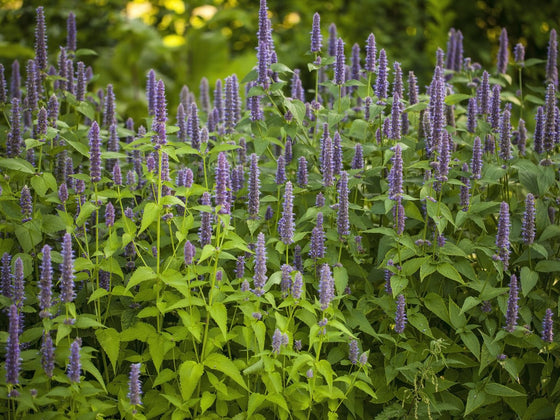
How to grow anise hyssop in Australia from seed: surface sowing, free-draining soil, sowing months for six zones, cutting back, and picking leaves and flowers.
| Position | Full sun or light shade |
|---|---|
| Depth | Surface, or 1 mm |
| Spacing | 30 to 40 cm apart |
| First pick | Leaves from about 10 weeks |
Anise
How to grow anise in Australia: when to sow in all six climate zones, sowing where it grows, spacing and watering, then harvesting and drying seed and leaves.
| Position | Full sun, sheltered from wind |
|---|---|
| Depth | 6 to 10 mm |
| Spacing | 25 to 30 cm apart |
| First pick | Seed 17 to 20 weeks from sowing |