
How to Grow Mugwort in Australia
Mugwort is a tall, aromatic perennial grown for its lobed leaves, silvery beneath. Press the dust-fine seed onto damp mix without covering it, because light helps it germinate, and keep it at 20 to 26°C. Plant out 60 cm apart in sun and free-draining soil, inside a pot or sunken barrier. Feed lightly, cut flower stems before seed ripens, and wear gloves.
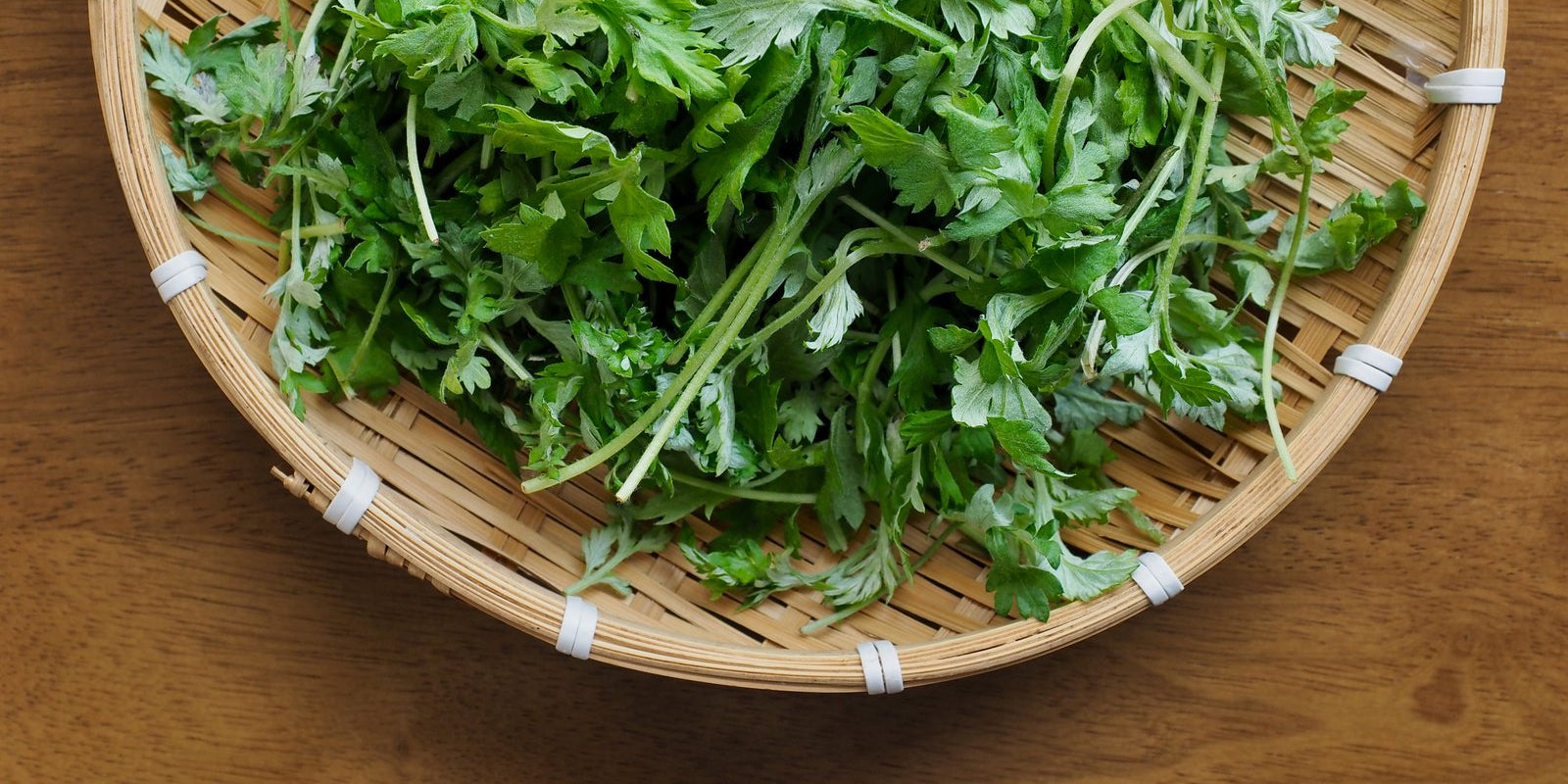
| Sun | Full sun to part shade |
|---|---|
| Water | Moderate; drought tolerant once established |
| Soil | Well-drained, even poor; pH 6.0 to 8.0 |
| Feed | Minimal; compost and half-strength feeds |
| Spacing | 60 cm apart |
| Depth | Surface; do not cover |
| Germination | 1 to 3 weeks at 20 to 26°C |
| Harvest | Leaves from about 12 weeks |
| Container | Yes; at least 30 L, 40 cm wide |
| Frost | Very frost hardy; tops die back in winter |
| Use | Herb garden foliage, dried arrangements, garden history |
Mugwort (Artemisia vulgaris, family Asteraceae) is a tall, aromatic perennial grown for its deeply cut leaves, green above and silvery white beneath. The store sells common mugwort seeds and Japanese mugwort, or yomogi (Artemisia princeps), an East Asian species with downy, finely cut leaves. Both spread by rhizomes (creeping underground stems that send up new shoots) and self-sow, so they need a contained spot. The step most growers get wrong is burying the dust-fine seed, which needs light to germinate.
Three mistakes that matter
- Burying the seed. Mugwort seed is as fine as dust and germinates in light, so a sprinkle of mix over the top can leave the tray empty. Sow it on the surface and firm it in, following Germinating the seed.
- Planting it loose in a garden bed. Both species spread by rhizomes, and a piece of root left in the soil can grow into a new plant. Grow mugwort in a large pot or behind a sunken barrier, well away from the vegie patch.
- Letting it set seed. Plants left to flower drop fine seed across the garden, and the wind-borne pollen can set off hay fever. Cut the flowering stems before the seed ripens, as Cutting Back and Containing explains.
When to plant
Mugwort seed germinates best with the mix at about 20 to 26°C and daylight reaching the surface. Sow in spring once nights stay mild, or in early autumn in warm districts. Warm days and cool nights help too, so a sheltered tray outdoors suits it. One sowing usually lasts for years, because the plants are perennial and spread on their own.
| Zone | Example cities | Sow | Harvest | Notes |
|---|---|---|---|---|
| Tropical | Darwin NT; Cairns, Townsville QLD; Broome WA | Apr-Jul | Jul-Nov | Sow as the dry season starts; grow in pots with sharp drainage through the humid wet season. |
| Subtropical | Brisbane, Gold Coast, Sunshine Coast QLD; Coffs Harbour, Lismore NSW | Mar-May and Aug-Oct | Jul-Apr | Sow in the mild months; yomogi, from warm East Asia, often copes better with humid summers. |
| Arid and semi-arid | Alice Springs NT; Broken Hill, Dubbo NSW; Mildura VIC; Kalgoorlie WA | Mar-Apr and Aug-Oct | Oct-Apr | Established plants take frost; mulch and part shade help them through hot, dry summers. |
| Temperate | Sydney, Newcastle, Wollongong NSW; Melbourne, Geelong VIC | Sep-Nov and Mar | Nov-Apr | Sow once trays hold about 20°C; Melbourne gardens start seed indoors in September. |
| Mediterranean | Perth, Bunbury WA; Adelaide and the SA coast | Sep-Nov and Mar-Apr | Oct-Apr | Autumn sowings settle in on winter rain; water deeply through the long, dry summer. |
| Cool and alpine | Hobart, Launceston TAS; Canberra ACT; Ballarat VIC; Orange, Armidale NSW; Stanthorpe QLD | Oct-Dec | Jan-Apr | Start seed indoors in warmth after the frosts ease; established clumps die back and reshoot each spring. |
Early in a window, give trays extra warmth on a sunny sill indoors or a seedling heat mat. Late in a window, set trays in bright shade and wait for cooler weather before planting out.
Site, soil and setup
Mugwort tolerates poor, dry and rocky ground. Its real enemy is soil that stays wet, and its real risk is spreading where it is not wanted.
| Need | How to meet it |
|---|---|
| Light | Full sun; part shade suits it too, and helps in hot inland and northern gardens |
| Soil | Any well-drained loam, sand or shallow rocky soil |
| pH | 6.0 to 8.0; where soil is strongly acid, spread garden lime at 100 to 200 g per square metre 4 weeks before planting |
| Preparation | Fork in 5 cm of compost; manure is not needed |
| Drainage | On clay that lies wet after rain, plant on a mound or in a raised bed |
| Room | 60 cm between plants; common mugwort grows 1 to 1.5 m tall, yomogi 60 cm to 1.5 m, and a clump spreads 90 cm or more |
| Containment | A sunken barrier at least 30 cm deep around the bed, or a large pot; the rhizomes run about 7 to 18 cm down |
| Rotation | None: keep it out of the vegie rotation, where stray rhizome pieces become weeds |
Container growing
A pot is the surest way to stop mugwort spreading, and both species grow well in one. One plant needs a pot of at least 30 L and 40 cm across, filled with a premium potting mix. Potting mix can carry Legionella bacteria, so wet it first, wear gloves and a mask, and wash your hands afterwards. Tall common mugwort needs a heavy pot in a windy spot, and a pot on paving keeps roots from escaping through the drainage holes.
- Watering: soak the pot once the top 3 to 5 cm of mix feels dry, then empty any saucer beneath it.
- Feeding: a fish and seaweed blend at half strength, about 12 mL per 9 L, fortnightly from spring to late summer.
- Position: a sunny spot, or one with shade after midday where summers are hot and pots dry quickly.
- Renewal: divide and repot the clump every year or two, once roots fill the pot.
Germinating the seed
Mugwort seed has no tough coat for water to get past. What it needs is light, moisture and warmth. Freshly harvested seed can hold a light dormancy that fades with dry storage or a spell of cold. In laboratory work at the University of Manchester, fresh common mugwort seed germinated best with light and alternating temperatures together, and it responded to chilling.
In germination tests recorded by the Seed Information Database, common mugwort gave 81 to 100 per cent at 20 to 26°C in daily light. No home-tray rate is recorded for common mugwort; the store's yomogi listing gives about 50 per cent. The seed is tiny, about 0.16 g per thousand for common mugwort and 0.07 g for yomogi. Sow a pinch of five or six seeds for each plant you want, and thin to the strongest.
| Treatment | How | How long | Temperature | What success looks like |
|---|---|---|---|---|
| None needed: sow on the surface in light | Scatter the seed over damp seed raising mix, firm it with a flat board and leave it uncovered; keep it moist with a mister or by standing the tray in water | Usually 1 to 3 weeks to emerge | 20 to 26°C | A green haze, then tiny paired seed leaves |
| Warm days, cool nights | Stand the sown tray outdoors in a bright, sheltered spot in spring, where days warm and nights cool | Usually 1 to 3 weeks to emerge | About 25°C by day and 10°C at night | An even flush of seedlings across the tray |
Seed this fine is easier to spread evenly mixed with dry sand; sowing tiny seeds shows the method.
When nothing comes up
- Covered over. A layer of mix keeps the light out. Resow on top of the mix and firm it down.
- Flooded or parched. A can of water scatters fine seed, and sun dries the surface. Mist, or water from below, and lay clear plastic over the tray until leaves appear.
- Too cold. The recorded tests ran at 20°C and warmer. Move a tray off a cold winter sill onto a warm, bright one or a heat mat.
- Fresh, dormant seed. Seed straight off the plant may sit tight. Store it cool and dry for a few months before sowing, since dry-stored seed germinates faster.
- Tired seed. Kept cool and dry, seed stays good for several years; in open storage it lost about a quarter of its viability in four.
- Impatience. Allow six weeks of moist, bright conditions before starting again, since the recorded tests ran six to nine weeks.
Sowing Seeds
Trays give the most even stand, and a large pot or a contained bed can be sown directly. Whichever you choose, start with treated or untreated seed on the surface, as Germinating the seed sets out.
Starting in trays
- Moisten a punnet or cell tray of new seed raising mix and level it gently.
- Drop a small pinch into each cell, firm it down and leave it uncovered.
- Keep the tray bright but out of harsh afternoon sun, with the surface damp.
- When true leaves appear, snip out all but the best seedling in each cell.
- Pot each one on into its own small pot 3 to 4 weeks after sowing.
Sowing direct
Sow direct only into a large pot or a bed with a sunken barrier. Level the surface with a rake, dampen it, sprinkle the seed sparingly and press it on with the flat of the rake. Mist it each day until seedlings appear, then thin them to 60 cm apart at about 10 cm tall.
Planting out
- Move seedlings to the garden 6 to 8 weeks after sowing, at about 10 cm tall.
- Harden them off first (a week of gradually longer spells outdoors, so they toughen to sun and wind).
- Set them 60 cm apart at their pot depth, and settle them in with half-strength seaweed solution.
- Rig temporary shade for the first few days if a hot, drying wind is due.
The step from pot to bed is covered in hardening off seedlings before planting out.
Care by growth stage
Mugwort does best on little: sharp drainage, occasional water and hardly any feed. Over-feeding reduces the essential oils that give mugwort its aroma, so any feed goes on at half strength or less.
| Stage | Water | Feed | Watch for |
|---|---|---|---|
| Seedling, weeks 0 to 6 | Mist or water from below so the surface never dries | Seaweed solution at half strength, 15 mL per 9 L, every fortnight once true leaves show | Damping off; a dry surface; seedlings stretching toward the light |
| Young plant, weeks 6 to 12 | Two deep drinks a week while roots take hold, then only when the top few centimetres dry | A handful of worm castings in each planting hole | Snail and slug damage overnight; flagging in hot wind |
| Established plant, spring and summer | Deep but infrequent; settled plants cope with dry spells | No feed in the ground; spread 5 cm of compost each spring, kept off the stems | Aphids on shoot tips; two-spotted mite in hot, dry weather; runners escaping |
| Flowering, late summer and autumn | Soak deeply once the soil is dry a few centimetres down | None | Flower stems about to set seed; pollen near hay fever sufferers |
| Winter | Very little; the soil should dry out between drinks | None | Soggy soil and root rot in wet, cold spells; tops dying back |
| The weeks before picking | Carry on watering normally until the day you pick | None | Leaves marked by dust or insects; take only clean shoots |
Where soil is very poor and plants stay small, one light feed is enough. Use all-purpose controlled release granular (NPK around 14-5-10), worked into the surface in spring.
Cutting Back and Containing
Gardening Australia's advice for Artemisia is one hard cut a year, when a plant opens up to show its inner branching. Gloves and long sleeves are worth wearing for all of it; Safety gives the reason.
- Remove flowering stems before their seed ripens, so the plant cannot sow itself about.
- Cut the whole clump to a few centimetres above the ground in late autumn or winter, once the tops brown.
- Pinch or shear the shoot tips in spring for a bushier clump with more leaves.
- Slice off runners that cross the barrier or the pot rim, and lift any shoots outside it.
- Put rhizome pieces in the rubbish bin, not the compost, since any piece can root.
- Split an ageing clump in late winter or early spring and replant the young outer pieces.
The method for splitting a clump is in dividing perennials.
Companion planting
Good neighbours for mugwort want the same sun and dry soil, and are sturdy enough not to be swamped by it.
Grows well with
- Yarrow, content in the same lean, sunny ground, with flowers that bring in aphid-eating insects.
- Lavender, a tough, sun-loving shrub that needs the same sharp drainage.
- Rosemary, which is woody enough to stand its ground in a dry, sunny bed.
Keep apart
- Vegetable seed beds, which the rhizomes invade; in laboratory tests, mugwort extracts also slowed the germination of other seeds.
- Mint, another spreader, whose liking for moist soil does not suit mugwort's dry bed.
- Tarragon, a smaller Artemisia relative that a mugwort clump soon crowds out.
Harvesting Leaves
Pick young shoots and leaves from spring, while the growth is soft and before the flower stems form. For drying, cut leafy stems as the first flower buds show.
- Pick mid-morning, after the dew has gone, wearing gloves.
- Leave at least two-thirds of each plant standing at every picking.
- Take whole stems, cutting with secateurs just above a pair of leaves.
- Tie stems in small bunches and hang them head down in a shaded, airy room.
- They are ready when the leaves crumble between the fingers and the stems break with a snap.
Keep the dried leaves in an airtight jar, away from light and heat, with the botanical name and the date of picking on the label. Dried stems keep their scent in wreaths and dried arrangements. The leaves and flowering tops contain thujone, so read Safety before any other use.
Traditional use and history
The genus is named for Artemis, the Greek goddess, and mugwort comes from the Old English mugcwyrt. One reading gives it as midge wort, from an old word for a small fly. Mrs Grieve's A Modern Herbal offered two more: the drinking mug, and an old word for a moth. In medieval Europe the plant was called mater herbarum, the mother of herbs.
| Tradition | Name | Part | What the tradition recorded |
|---|---|---|---|
| Medieval European folklore | St John's plant; Cingulum Sancti Johannis | Leafy sprays | Said to be the girdle John the Baptist wore in the wilderness. Crowns of it were worn on St John's Eve against evil, and travellers carried it against fatigue and wild beasts |
| English brewing | Mugwort | Flowering stems, dried | Used, like ground ivy, to flavour beer before hops came into use, and in some cottage brewing long after |
| Japan | Yomogi | Young spring shoots | Mixed into kusa-mochi, rice cakes offered and eaten around the Girls' Festival, when the new shoots appear |
| Korea | Ssuk | Leaves | In the founding story of Dangun, a bear and a tiger were given garlic and ssuk and told to shun sunlight for 100 days; the bear persevered and became a woman. Ssuk remains a popular ingredient in Korean food |
| Chinese tradition | Bei ai (common mugwort); kui hao (yomogi) | Dried leaf | Burned as moxa in the practice of moxibustion |
Common mugwort is native to temperate Europe, Asia and North Africa, and yomogi to China, Korea and Japan. In Victoria, plants long recorded as common mugwort proved to be Chinese wormwood (Artemisia verlotiorum). That relative is naturalised in Victoria, New South Wales, Queensland and the ACT. Mugwort is also not wormwood (Artemisia absinthium), a separate plant with its own guide.
Safety
Happy Valley Seeds sells mugwort seed for growing. Nothing here is advice to eat or take any part of the plant. Before using any plant, talk first to a qualified health practitioner.
| Topic | What the sources say |
|---|---|
| Toxicity | The essential oil of the leaves and flowering tops carries thujone, camphor and 1,8-cineole, which European food safety regulators list as substances of concern. The amount varies widely from one plant population to the next. In animal studies, large amounts of thujone caused convulsions. For people, a university extension database lists Artemisia as toxic only if large quantities are eaten. LiverTox has no record for mugwort, so there is no likelihood score. |
| Pregnancy and breastfeeding | Not suitable: the United States National Center for Complementary and Integrative Health says mugwort should not be used during pregnancy, and that little is known about its safety while breastfeeding. European regulators found no studies in pregnant women or children and advise keeping thujone products to a minimum in those groups. Leaf extracts showed anti-implantation activity in rats. |
| Interactions with medicines | No tested interaction with any medicine is recorded. Thujone acts on the brain's GABA-gated chloride channel. Anyone taking medicines should ask a doctor or pharmacist before using any plant. |
| Allergy and skin | A daisy family plant with wind-borne pollen that can trigger hay fever, conjunctivitis and asthma. The pollen cross-reacts with ragweed, and people allergic to it may react to celery and some spices. Contact dermatitis is also recorded, so wear gloves and long sleeves when cutting. |
| Pets and livestock | A university extension database lists the genus Artemisia as a problem for dogs, cats and horses; the record is for the genus and gives no safe amount for either mugwort. Keep pets and stock from browsing it, and call your vet if one does. |
| Legal status | Neither species is on the declared or prohibited weed lists of New South Wales, Victoria, Queensland, South Australia, Tasmania, the Northern Territory or the ACT. The Western Australian Organism List gives both as permitted. The store has no shipping restriction on this seed. Chinese wormwood, the naturalised relative, is on none of these lists either; it is not on the Western Australian Organism List, so as an unlisted organism it may not be brought into that state. |
| Look-alikes | Wormwood, tarragon and Chinese wormwood are Artemisia relatives with different uses and chemistry. Chinese wormwood also has leaves woolly beneath, so the undersides alone do not tell it from common mugwort. Label every plant with its botanical name. |
Ring 000 at once for collapse, a seizure, trouble breathing or a severe allergic reaction. For any other suspected poisoning, ring the Poisons Information Centre on 13 11 26, even before symptoms show.
Common problems
Empty trays. The seed was most likely covered or let dry; Germinating the seed and When nothing comes up give the fixes.
Thin, leaning seedlings. Weak light makes them stretch. Give the tray the brightest spot you have and turn it each day. Read more
Plants that rot over winter. Root rot sets in when soil stays too moist. Raise the bed or move pots out of the rain, and water less in cold weather.
Mugwort coming up everywhere. Rhizomes and self-sown seedlings spread it; see Three mistakes that matter and Cutting Back and Containing.
Plants that sulk in humid summer heat. Common mugwort comes from cool temperate regions and can struggle through long, hot, wet summers. In the tropics, grow it through the dry season in a pot with sharp drainage.
Pests and diseases
Mugwort's fragrant leaves deter many insects, and most trouble comes from sap-suckers in dry heat or from wet soil around seedlings.
Aphids (family Aphididae). Colonies of small, soft-bodied insects gather on new shoots, leaving sticky honeydew that turns black with sooty mould. Rub small colonies off with your fingers, blast them with the hose, or use insecticidal soap by the label. Read more
Two-spotted mite (Tetranychus urticae). Fine yellow flecks and mottling spread across the leaves, worst on the undersides, and the mites multiply in hot, dry spells. Hose or mist beneath the leaves, keep plants from drying out, and skip broad-spectrum sprays, which kill the mites' natural predators. Read more
Common garden snail (Cornu aspersum) and grey field slug (Deroceras reticulatum). On damp nights they chew young seedlings down. Collect them by torchlight, or scatter an iron-based snail bait thinly as the label directs. A dog that eats a large amount of any snail bait can be poisoned, so keep pets away from the bait and its packet. Read more
Damping off (Pythium species and Rhizoctonia solani). Young stems rot through at the mix surface and the seedlings topple, usually where the mix is kept too wet. Start with new seed raising mix in washed trays, and water lightly. Read more
Prevention first
- Raise trays under cover, out of rain and hose splash.
- Water at the base of plants, and hold back in cool, damp weather.
- Turn a few leaves and look at the shoot tips once a week from spring to autumn.
- Take away the boards, pots and leaf litter where snails hide by day.
Tips
- To save seed, tie a paper bag over one or two ripening flower stems so the fine seed cannot scatter. Store it cool and dry. Some plants set little viable seed, so test a pinch on damp paper before relying on it.
- Pot up a rooted runner in spring to give away, rather than sowing a second tray.
- Keep yomogi and common mugwort in separate, labelled pots, so the two species stay distinct.
Questions
Why did my mugwort seeds not come up?
The usual cause is burying them. Mugwort seed is dust-fine and germinates in light, so press it onto damp seed raising mix without covering it. Keep the surface moist by misting or watering from below, at about 20 to 26°C. Seedlings usually show in one to three weeks; wait six weeks before sowing again.
Will mugwort take over my garden?
It can. Both species spread by creeping rhizomes, a root piece left in the soil can grow into a new plant, and flowering stems drop fine seed. Grow it in a pot of at least 30 L or behind a sunken barrier, and cut the flowering stems before the seed ripens.
What is the difference between mugwort and yomogi?
Common mugwort is Artemisia vulgaris, native to Europe, Asia and North Africa, with lobed leaves green above and silvery white beneath. Yomogi is Artemisia princeps, from China, Korea and Japan, with downy, finely cut leaves. Common mugwort grows 1 to 1.5 m tall and yomogi 60 cm to 1.5 m, and both are sown and grown the same way.
Is mugwort safe around dogs, cats and horses?
A university extension plant database lists Artemisia as a problem for dogs, cats and horses, without a safe amount for either mugwort. The leaves contain thujone. Keep pets and stock from chewing it, and call your vet if one does.
Is mugwort a declared weed anywhere in Australia?
No. Neither common mugwort nor yomogi is on any state or territory declared weed list, and the Western Australian Organism List gives both as permitted. Both spread readily, so contain them and cut flowering stems before seed ripens.
Can mugwort pollen cause hay fever?
Yes, in sensitive people. The pollen is carried on the wind and can trigger hay fever, itchy eyes and asthma, and it cross-reacts with ragweed. Some people allergic to it also react to celery and certain spices. Cut the flowering stems early if anyone nearby is affected.
Grow it
Choose a size to add it to your cart. You stay on this page.
- Mugwort seedsFrom $2.99
- Mugwort - Japanese Yomogi seedsFrom $1.00


More herbs to sow in September
All herbs
Agrimony
How to grow agrimony in Australia from seed: chilling the burrs, sowing months for six climate zones, sun and soil, cutting back, harvest, history and safety.
| Position | Full sun, light shade tolerated |
|---|---|
| Depth | 5 mm |
| Spacing | 30 cm apart |
| First pick | Summer; 12 to 18 weeks from spring sowing |

Angelica
How to grow angelica in Australia from seed: fresh or chilled seed sown on the surface, part shade, months for six climate zones, stems, history and safety.
| Position | Part shade, morning sun |
|---|---|
| Depth | Surface; press in, uncovered |
| Spacing | 50 to 90 cm |
| First pick | Stems at about 18 months |
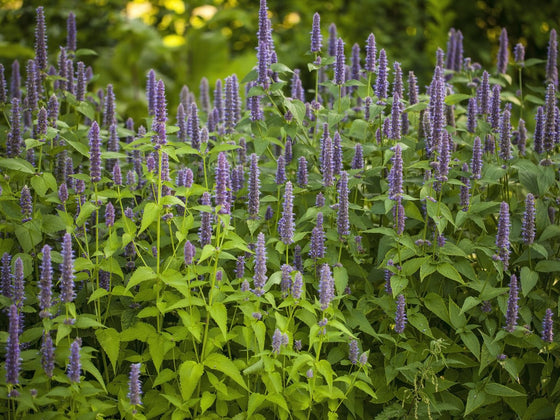
Anise Hyssop
How to grow anise hyssop in Australia from seed: surface sowing, free-draining soil, sowing months for six zones, cutting back, and picking leaves and flowers.
| Position | Full sun or light shade |
|---|---|
| Depth | Surface, or 1 mm |
| Spacing | 30 to 40 cm apart |
| First pick | Leaves from about 10 weeks |
Anise
How to grow anise in Australia: when to sow in all six climate zones, sowing where it grows, spacing and watering, then harvesting and drying seed and leaves.
| Position | Full sun, sheltered from wind |
|---|---|
| Depth | 6 to 10 mm |
| Spacing | 25 to 30 cm apart |
| First pick | Seed 17 to 20 weeks from sowing |