
How to Grow Herb Robert in Australia
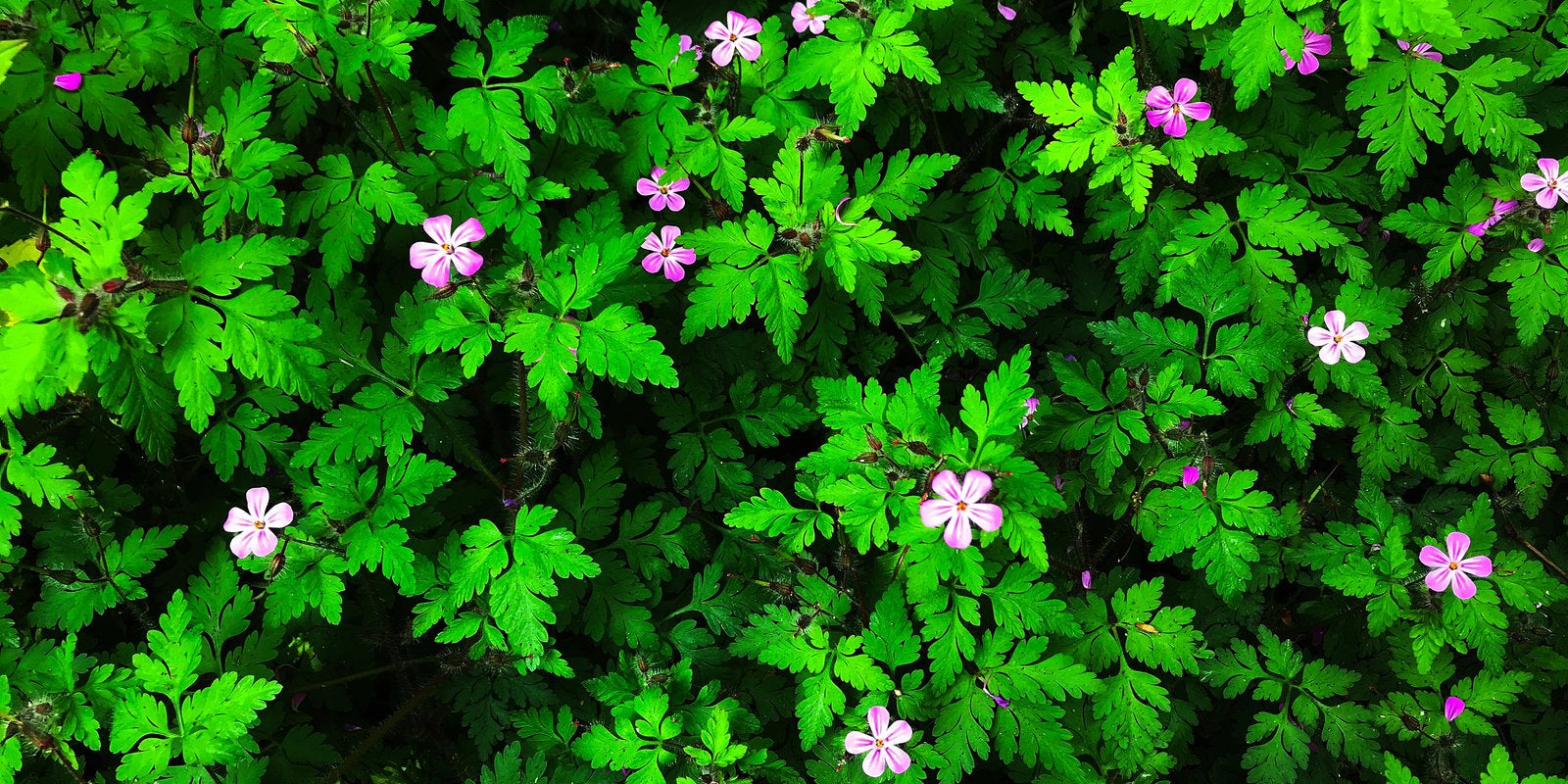
Herb Robert is a small, shade-loving cranesbill grown for its lacy, red-tinged leaves and pink flowers. Sow in autumn, or in early spring under cover at about 20°C, and only just cover the seed. Seedlings appear from about 2 weeks but come up unevenly. Plant 30 cm apart in moist, humus-rich soil in light shade, and cut flowering stems before the seed flies.
| Sun | Light shade or morning sun |
|---|---|
| Water | Evenly moist; shallow roots dry fast |
| Soil | Moist, humus-rich, neutral to slightly alkaline |
| Feed | Minimal; compost, half-strength seaweed for seedlings |
| Spacing | 30 cm apart |
| Depth | Just covered, lightly |
| Germination | From 2 weeks, uneven; no treatment needed |
| Harvest | Once the rosette is leafy |
| Container | Yes, 30 cm pot, 10 to 15 L |
| Frost | Hardy once established |
| Use | Shade groundcover, herb garden, small pink flowers |
Herb Robert (Geranium robertianum, cranesbill family, Geraniaceae) is a small annual or biennial grown for its lacy, red-tinged leaves and small pink flowers. It comes from Europe, Asia and North Africa, and it grows happily in the damp shade under shrubs where many herbs sulk. Where gardeners go wrong is in letting it seed: its fruits throw seed several metres, and Victoria rates it an environmental weed.
Three mistakes that matter
- Letting plants drop their seed. Ripe fruits snap open and fling seed up to about 6 m, and seed in the soil can stay alive for five years or more. Cut flowering stems before the beaks brown, as Thinning and Containing explains.
- Giving up on the seed too soon. The seed carries a hard coat and an inner dormancy, so seedlings often arrive in flushes over weeks or months rather than all at once. Keep the pot moist and read Germinating the seed before sowing again.
- Planting it in hot, dry sun. Herb Robert is a woodland plant that wants moist, humus-rich soil and light shade. In a hot, dry bed it struggles, so give it the shaded spot Site, soil and setup describes.
When to plant
Sow in autumn, or in early spring in the cooler zones. Seed sown in autumn sits through the winter cold, which wears down its dormancy, and usually comes up from late winter into spring. Under cover, seed comes up at about 20°C, so a spring sowing in trays is the other reliable route. One sowing is usually enough, because a plant left to flower sows the next generation itself.
| Zone | Example cities | Sow | Harvest | Notes |
|---|---|---|---|---|
| Tropical | Darwin, Katherine NT; Cairns, Townsville QLD; Broome WA | Not recommended | Not recommended | A cool woodland plant that tropical heat and humidity usually defeat. Try a shaded pot in the dry season. |
| Subtropical | Brisbane, Gold Coast, Bundaberg QLD; Coffs Harbour, Lismore NSW | Mar-May | Jul-Nov | Sow in autumn into shade; plants grow through the mild winter and usually flower in spring. |
| Arid and semi-arid | Alice Springs NT; Broken Hill, Dubbo NSW; Mildura VIC; Kalgoorlie WA | Mar-Apr | Jul-Oct | Sow in autumn in a shaded, watered spot. Summer heat usually ends plants, so cut them before seed. |
| Temperate | Sydney, Newcastle, Wollongong NSW; Melbourne, Geelong VIC | Mar-May and Aug-Sep | Jul-Dec | Autumn sowings come up by spring. Late winter sowings under cover suit Melbourne, the cold end of the zone. |
| Mediterranean | Perth, Bunbury WA; Adelaide and the SA coast | Mar-May | Jul-Nov | Sow as the autumn rains return, around Anzac Day; plants finish before the long, dry summer. |
| Cool and alpine | Hobart, Launceston TAS; Canberra ACT; Ballarat VIC; Orange NSW | Mar-Apr and Sep-Oct | Oct-Feb | Autumn sowing suits sheltered gardens. Elsewhere sow in spring under cover, because autumn seedlings often die over a hard winter. |
At the cold edge of a window, sow in spring rather than autumn. In a study in Poland, few autumn seedlings survived the winter, while spring seedlings did far better. At the hot edge, sow only into shade and keep the mix moist, because heat and dry soil stress this woodland plant.
Site, soil and setup
Left to itself, herb Robert grows about 30 cm tall and as wide, sometimes to 50 cm, with stems that stand up or sprawl.
| Factor | Setup |
|---|---|
| Light | Light or dappled shade, or morning sun with afternoon shade; plants in bright sun often turn red all over |
| Soil | Moist, humus-rich soil of moderate fertility; it tolerates sand, loam and clay |
| pH | Neutral to slightly alkaline suits it best, and it is commonest on limestone; on acid soil, apply garden lime or dolomite lime at 100 to 200 g per square metre, 4 weeks before sowing |
| Bed preparation | Dig in a 5 cm layer of compost; no manure or fertiliser is needed |
| Drainage | Moist but not waterlogged; on heavy clay that stays wet, grow it in a pot |
| Rotation | Not a vegie bed crop, so it sits outside the rotation |
Plant it where you can see and pull its seedlings, and well away from bushland, creek lines and the fence you share with a neighbour. Safety sets out where it stands on each state's weed lists.
Container growing
A pot is the neatest way to keep herb Robert in bounds, because stray seedlings on paving are quick to spot and pull. Use a pot at least 30 cm across that holds 10 to 15 L, with drainage holes, and fill it with potting mix. It is sold as the species, with no compact varieties to choose between. The pot does not stop the seed flying, so trim flowering stems as Thinning and Containing describes.
- Water: whenever the top of the mix feels dry, until water runs from the holes. Pots dry fast in summer, so move them into shade. See watering pots in summer.
- Feed: seaweed solution at half strength, 15 mL per 9 L, fortnightly for the first month after planting, then nothing more.
- Position: bright shade, or morning sun with afternoon shade.
- Handling mix: potting mix can carry Legionella bacteria, so dampen it first, wear gloves and a P2 mask, and wash your hands afterwards.
Germinating the seed
Herb Robert seed has two locks. The coat is hard and keeps water out when the seed is fresh. The embryo carries a physiological dormancy (an internal brake that has to wear off before it will grow). Most seed needs two months or more after ripening before it will germinate at all. Dry storage opens both locks over time, and a spell of winter cold eases what is left.
Seed that has spent a few months in dry storage, as packet seed usually has, is ready to go, so no kitchen treatment is needed. Expect a slow and uneven start rather than one tidy flush. Some seedlings can appear in about 2 weeks, and others follow for weeks or months. In one British study, seed sown in trays in the autumn after collection gave 57 to 70 per cent. Sow two seeds to every cell or pot and keep the strongest.
| Treatment | How | How long | Temperature | What success looks like |
|---|---|---|---|---|
| None needed (dry-stored seed) | Sow onto damp seed-raising mix and cover with a thin sprinkle of mix; light or dark makes little difference | First seedlings from about 2 weeks, stragglers for weeks after | About 20°C | Seed leaves, then the first lobed true leaf |
| A winter outdoors | Sow in autumn into a pot or the bed and leave it outside through winter, kept moist | One winter | Winter cold, then spring warmth | Seedlings from late winter into spring |
| Warm days, cool nights | Stand the tray outdoors in a sheltered, shaded spot rather than on a heat mat, so it warms by day and cools at night | Until seedlings appear | A daily rise and fall | Seedlings in the tray; in one study, daily swings helped seed that had spent the winter in soil, and no study has tested them on packet seed |
| Nicking or sanding the coat | Not needed: one older account says the hard coat needs scarifying, but untreated seed germinated readily after a few months of dry storage | Not applicable | Not applicable | Not applicable |
When nothing comes up
- Sown too deep: the seed is small, so cover it only lightly and sow again on the surface.
- Mix dried out: a dry spell stalls germination, so keep the mix evenly moist under a clear lid. Lift the lid off once the first seedlings appear.
- Seed too fresh: seed you collected yourself needs two months or more of dry storage before sowing.
- No cold spell: some seed waits for winter, so leave the pot outdoors in shade through the cold months.
- Given up too soon: keep the pot for a full year before you tip it out. In one trial of autumn sowings, most seedlings came up the following year, and a few kept appearing for five years.
For the principles behind these treatments, see soaking, scarification and cold stratification.
Sowing Seeds
Start herb Robert seed in cells or small pots, where every seedling is easy to watch, or scatter it where it is to grow.
Starting under cover
- Fill cells or small pots with fresh seed-raising mix and water it well.
- Sow two seeds to each cell and cover them lightly with mix.
- Keep the tray in bright shade, at the temperature When to plant gives, and the mix moist, never soggy.
- Once true leaves appear, snip out the weaker seedling in each cell at soil level.
- Plant out when roots fill the cell, 30 cm apart, into moist soil in shade.
Sowing direct
- In autumn, rake a shaded patch of damp soil to a fine surface.
- Scatter seed thinly, press it in and cover it with a light sprinkle of fine compost.
- Mark the spot and keep it moist, because seedlings may come up over several months.
- Thin seedlings in stages to 30 cm apart.
Harden off tray-raised seedlings (get them used to outdoor wind, light and dryness a little more each day) for about a week before planting out. See hardening off seedlings.
Care by growth stage
Steady moisture and shade decide this crop. Feeding matters far less: herb Robert grows wild in soils of moderate fertility, and rich feeding gives soft, sappy growth that flops.
| Stage | Water | Feed | Watch for |
|---|---|---|---|
| Germination, from sowing until seedlings appear | Keep the mix damp, never soggy | No feed before true leaves appear | Seedlings collapsing at soil level in wet trays |
| Seedlings, until planted out | Water when the surface dries | Seaweed solution at half strength, 15 mL per 9 L, fortnightly | Snails and slugs on damp nights |
| Leafy rosette, the months before flowering | Keep the soil evenly moist; mulch with compost | None in compost-rich soil; worm casting liquid diluted to weak tea colour, fortnightly, only if leaves turn pale | Aphids on leaf stalks and undersides |
| Flowering and seed set | Keep watering steady; shallow roots dry out fast | No feed | Beak-shaped fruits turning brown: cut them before they split |
If growth stalls in very poor sand, one light application of all-purpose controlled release granular (NPK around 14-5-10) at the label rate can help.
Thinning and Containing
A wild plant carries from about 10 to a few hundred fruits, each of up to five seeds. A garden plant can carry five to ten times as many, so one plant left alone can restock a bed.
- Thin self-sown seedlings to 30 cm apart while they are small; the roots are shallow and pull up easily.
- Grasp each plant firmly at the base when pulling, so the roots come out with it.
- Cut flowering stems as the flowers fade, before the beaks brown and split.
- Bag pulled plants that carry fruits for the general waste bin. Pulled plants can still ripen seed, and a home compost heap rarely kills it.
- Pull the whole plant as flowering ends, before the beaks brown, because it flowers once and then dies.
- Check paths, pots and nearby beds through the growing season, and for several years, for seedlings from seed already in the soil.
Companion planting
Herb Robert fills the shade under shrubs and trees, so it shares a bed best with plants that want the same cool, moist conditions.
Grows well with
- Chervil, another herb that grows best in part shade and moist soil.
- Forget-me-nots, which brighten damp, shady corners and, like herb Robert, self-sow.
- Aquilegia, a woodland flower for part shade and moist, free-draining soil.
Keep apart
- Thyme and other sun herbs, which want full sun and lean, dry soil, the opposite of its needs.
- Rows of small sown crops in the vegie patch, where self-sown herb Robert seedlings compete for space and water.
Harvesting Leaves
Pick once the rosette is full and leafy, in winter as well as spring and summer, because the rosettes stay green through the cold.
- Cut whole leafy stems with scissors rather than pulling, which can lift the shallow roots.
- Choose leaves free of aphids and spotting, and leave the rest of the plant growing.
- Take off any fruiting stems at the same time, before the beaks split.
- Wear gloves if you mind the smell: the sticky hairs leave it on your hands.
To dry the leaves, tie stems in small bunches and hang them in a shaded, dry place with good air movement. In good weather they usually dry in about 10 days, and they are ready when brittle. Store them in labelled, airtight glass jars in a dark cupboard as soon as they are dry; condensation inside the jar means they need longer. The strong smell of the fresh plant fades as it dries.
Traditional use and history
The name has been traced to several Roberts. A German name, Ruprechtskraut, points to St Rupert. Others link it to St Robert of Molesme, or to Robin Goodfellow, a hobgoblin of northern European folklore. A third view sees nothing more than the plant's reddish stems. British country names such as robin-in-the-hedge and robin's-flower nod to the robin, for its colour and its hedgerow home.
The smell gave it stinky Bob in English and Stinkender Storchschnabel, stinking stork's-bill, in German. Geranium comes from the Greek geranos, a crane, for the beak on the fruit. Linnaeus fixed the name Geranium robertianum in the eighteenth century, borrowing a name that the botanist Dodoens had listed two centuries earlier.
| Tradition | Part | What the record says |
|---|---|---|
| English herbal of Nicholas Culpeper, seventeenth century | Whole herb | Placed under Venus; held in great estimation by farmers for the diseases of their cattle, and commended to stay bleeding and for fresh wounds |
| Irish folk and veterinary practice | Whole herb | The standard plant given to cattle with red-water fever, and given to horses and cattle for worms; also used to staunch bleeding |
| Folk practice in England and Wales | Leaves | Used on the skin, including as a wash for the complexion |
| Dyeing | Whole plant | A brown dye |
Maud Grieve left it out of her influential herbal altogether. White-flowered forms have been grown in gardens for centuries. In the wild it is not rare or threatened, and in parts of North America and Australia it is managed as a weed.
Safety
Herb Robert is sold as seed for growing, and nothing here is advice to eat or take any part of the plant. Anyone thinking of using a plant should first seek advice from a qualified health practitioner.
| Topic | What the sources say |
|---|---|
| Toxicity | No poisons or liver injury record for herb Robert was found: LiverTox has no entry and the NIH NCCIH publishes no fact sheet. A British botanical account records tannins and other compounds but no toxic alkaloids. The absence of a record is not evidence that it is safe to eat |
| Pregnancy and breastfeeding | None of the sources checked addresses it; seek advice from a qualified health practitioner |
| Interactions with medicines | None recorded in the sources checked |
| Allergy and skin | Stems carry sticky, glandular hairs, and bruised leaves give off a strong smell; no skin reaction is recorded in the sources checked |
| Pets and livestock | The ASPCA plant lists do not include herb Robert; their geranium entries, toxic to dogs, cats and horses, are pelargoniums (Pelargonium species), a different genus. No veterinary record for herb Robert was found |
No state or territory declares herb Robert, and Western Australia lists it as a permitted organism. In New South Wales, council weed officers can still use the general biosecurity duty to require control of an undeclared weed. It is naturalised in Victoria, New South Wales and South Australia. Victoria's advisory list of environmental weeds rates it high risk, at an early stage of invasion. That list guides land managers and is not a legal declaration, but it is the reason to keep plants from seeding.
| State or territory | List checked | Herb Robert |
|---|---|---|
| Western Australia | Western Australian Organism List | Permitted (section 11) |
| Victoria | Declared noxious weeds; advisory list of environmental weeds | Not declared; environmental weed, high risk |
| South Australia | Declared plants under the Landscape South Australia Act | Not listed |
| New South Wales | State and regional priority weeds, every region | Not listed |
| Queensland | Prohibited and restricted invasive plants | Not listed |
| Tasmania, Northern Territory and ACT | Declared weeds and declared pests | Not listed |
Common problems
Leaves turn red. Bright sun and the cooler end of the season redden the leaves and stems, which is normal. A plant red all over in summer usually wants more shade and water.
Plants wilt in summer. The roots are shallow and dry out quickly, so mulch with compost and water whenever the top few centimetres of soil feel dry.
Tall, floppy stems. Plants grow taller when they compete for space and light, so thin crowded seedlings as Thinning and Containing describes.
Plants die after flowering. This is the end of its life, not a disease (see Thinning and Containing). Sow fresh seed in autumn to replace it.
Pests and diseases
No Australian source records a pest specific to herb Robert, and established plants are seldom troubled, though three problems are worth watching.
Geranium aphid (Acyrthosiphon malvae). Small green, yellowish or pinkish aphids that live on cranesbills and pelargoniums, with colonies on the leaf stalks and undersides. Hose them off with a firm jet of water, or spray an insecticidal soap, following its label. Read more
Garden snail (Cornu aspersum) and grey field slug (Deroceras reticulatum). They chew young seedlings, most often on damp nights, though established plants are usually left alone. Hunt with a torch about two hours after dark, or set beer traps. Read more
Damping off (Pythium species and Rhizoctonia solani). Seedlings rot at soil level and topple, most often in wet, crowded trays. Use fresh mix, water less often and thin seedlings so air moves between them. Read more
Prevention first
- Sow into fresh seed-raising mix in clean cells or trays.
- Water trays from below or with a fine rose, and let the surface breathe between waterings.
- Check leaf undersides when you pick, and squash small aphid colonies before they spread.
- Clear damp daytime shelter such as spare pots and boards away from seedlings.
Tips
- Learn the seedlings: lacy, three-lobed leaves on reddish stalks, with a strong smell when crushed, so you can pull strays long before they flower. A native cranesbill, Geranium solanderi, grows wild across much of southern and eastern Australia. It has a swollen, turnip-like taproot, so leave any plant with one.
- Brush off boots, gloves and the dog after working near fruiting plants, because the seeds cling to passing animals by a sticky thread.
- Label the pot with the sowing month, so you know how long seed has been waiting before you decide it has failed.
Questions
Why is my herb Robert seed not coming up?
Herb Robert seed has a hard coat and an inner dormancy, so it often comes up slowly and in flushes. Cover it only lightly, keep the mix moist, and leave the pot outdoors through winter if spring sowings fail. In one trial, seedlings kept appearing for five years.
Is herb Robert a weed in Australia?
No state or territory declares it, and Western Australia lists it as permitted. It is naturalised in Victoria, New South Wales and South Australia, and Victoria rates it a high-risk environmental weed. Cut flowering stems before the fruits split, and keep it well away from bushland.
Is herb Robert the same as a geranium?
It is a true Geranium, a cranesbill. The potted geraniums sold in nurseries are pelargoniums, a different genus in the same family, Geraniaceae.
Is herb Robert safe around dogs and cats?
No veterinary record for herb Robert was found. The ASPCA lists pelargoniums, often called geraniums, as toxic to dogs, cats and horses, but that entry is a different plant. Discourage pets from chewing any garden plant and ask your vet if one does.
Will herb Robert grow in full sun?
It grows best in light shade or morning sun with afternoon shade. In bright sun the leaves and stems turn red, and hot, dry soil stresses its shallow roots. In full sun, mulch well and water often.
More herbs to sow in October
All herbs
Agrimony
How to grow agrimony in Australia from seed: chilling the burrs, sowing months for six climate zones, sun and soil, cutting back, harvest, history and safety.
| Position | Full sun, light shade tolerated |
|---|---|
| Depth | 5 mm |
| Spacing | 30 cm apart |
| First pick | Summer; 12 to 18 weeks from spring sowing |

Angelica
How to grow angelica in Australia from seed: fresh or chilled seed sown on the surface, part shade, months for six climate zones, stems, history and safety.
| Position | Part shade, morning sun |
|---|---|
| Depth | Surface; press in, uncovered |
| Spacing | 50 to 90 cm |
| First pick | Stems at about 18 months |
Anise Hyssop
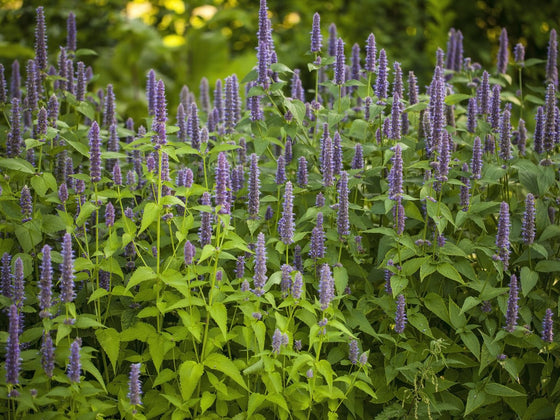
How to grow anise hyssop in Australia from seed: surface sowing, free-draining soil, sowing months for six zones, cutting back, and picking leaves and flowers.
| Position | Full sun or light shade |
|---|---|
| Depth | Surface, or 1 mm |
| Spacing | 30 to 40 cm apart |
| First pick | Leaves from about 10 weeks |
Anise
How to grow anise in Australia: when to sow in all six climate zones, sowing where it grows, spacing and watering, then harvesting and drying seed and leaves.
| Position | Full sun, sheltered from wind |
|---|---|
| Depth | 6 to 10 mm |
| Spacing | 25 to 30 cm apart |
| First pick | Seed 17 to 20 weeks from sowing |