
How to Grow Mullein in Australia
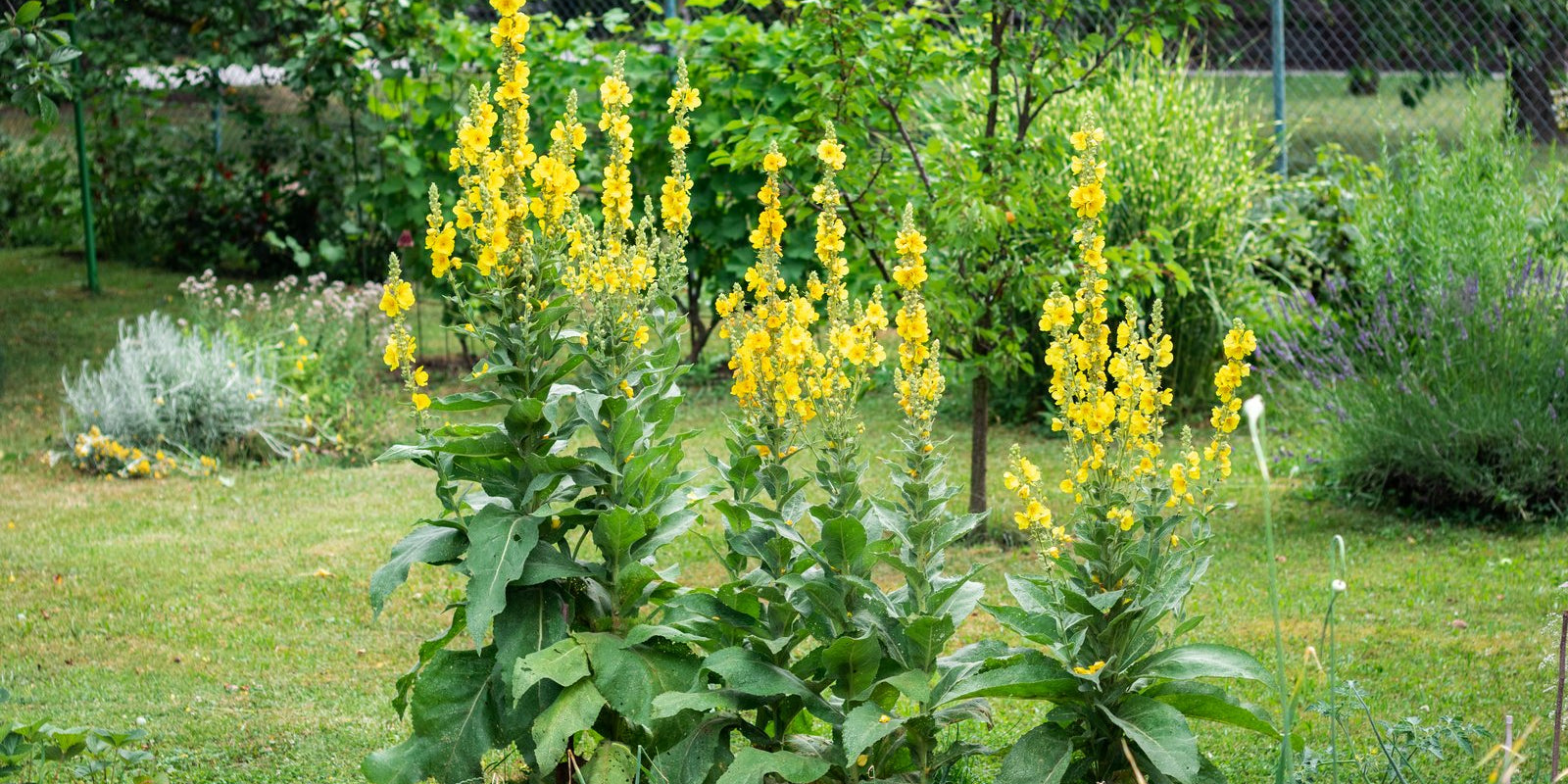
Mullein is a biennial grown for a broad rosette of silver felted leaves and tall spikes of yellow flowers in its second summer. Press the tiny seed onto damp mix without covering it, and keep it warm and bright. Plant 60 cm apart in full sun and lean, free-draining soil. Cut each spike before its seed pods ripen, and do not grow common mullein in Victoria.
| Sun | Full sun |
|---|---|
| Water | Low once established; water seedlings regularly |
| Soil | Poor, sandy or stony, free-draining |
| Feed | Minimal; half-strength feed for seedlings and pots |
| Spacing | 60 cm apart |
| Depth | Surface; press in, uncovered |
| Germination | 1 to 3 weeks, surface sown in warmth |
| Harvest | Leaves in year one; flowers the next summer |
| Container | Yes; at least 40 L, 40 cm deep |
| Frost | Frost hardy; the rosette overwinters |
| Use | Cottage and gravel gardens; bees; silver foliage |
Mullein (Verbascum thapsus, family Scrophulariaceae) is a biennial grown for its broad rosette of silver-grey felted leaves. In its second summer it sends up a tall spike of sulphur yellow flowers that bees visit. The store sells Mullein Common seeds, the common or great mullein. It also sells Mullein Greek seeds: Greek mullein (Verbascum olympicum) in the seed trade, whose spike branches like a candelabra. Both suit a sunny cottage or gravel garden with lean, free-draining soil. The mistake to avoid first is burying the tiny seed, which needs light to germinate.
Three mistakes that matter
- Covering the seed. Mullein seed germinates best on the surface in full light, and far fewer seedlings emerge from under even a millimetre of soil. Press it onto damp mix and leave it uncovered, as Germinating the seed explains.
- Letting the spikes ripen seed. One plant can shed 100,000 seeds or more, and they stay alive in the soil for decades. Common mullein is a declared weed in Victoria, so cut each spike before its seed pods ripen, as Deadheading describes.
- Rich, wet soil. Mullein grows wild on dry, poor ground and does not tolerate wet soil, while rich soil gives soft spikes that flop. Plant it in lean, free-draining soil and feed it little beyond the seedling stage, as Care by growth stage sets out.
When to plant
Warmth and light decide when mullein seed comes up. In one study, fresh seed gave 97 per cent germination with days of 30°C and nights of 15°C. With days of 20°C and nights of 10°C, it gave only 8 per cent. Seed that had spent a winter in the soil germinated at cooler temperatures. Sow once the days are warm, in spring or from late summer into autumn, at the times the calendar gives for each zone.
| Zone | Example cities | Sow | Harvest | Notes |
|---|---|---|---|---|
| Tropical | Darwin NT; Cairns, Townsville QLD; Katherine NT | Not recommended | Not recommended | Warm winters give too little cold for flowering, and wet season rain rots the rosette. |
| Subtropical | Brisbane, Gold Coast, Sunshine Coast QLD; Coffs Harbour, Lismore NSW | Mar-Apr and Aug-Sep | Oct-Jan | Autumn rosettes meet cool winter nights; flowering can be patchy after mild winters. Plant on a sandy mound. |
| Arid and semi-arid | Alice Springs NT; Broken Hill, Dubbo NSW; Mildura VIC; Port Augusta SA | Mar-Apr and Sep-Oct | Nov-Feb | Sow between summer heat and the coldest nights; shelter seedlings from hot wind. Mildura is in Victoria: see Safety. |
| Temperate | Sydney, Newcastle, Wollongong NSW; Melbourne, Geelong VIC | Oct-Nov and Feb-Mar | Dec-Mar | Start Oct-Nov sowings in trays on a heat mat. In Melbourne and Geelong grow Greek mullein only: see Safety. |
| Mediterranean | Perth, Bunbury WA; Adelaide and the SA coast | Mar-Apr and Sep-Oct | Nov-Feb | Autumn sowings establish on winter rain and flower in early summer; mulch spring sowings. |
| Cool and alpine | Hobart, Launceston TAS; Canberra ACT; Ballarat VIC; Orange, Armidale NSW | Oct-Jan | Jan-Mar | Start trays on a heat mat; rosettes shrug off frost. In Ballarat grow Greek mullein only: see Safety. |
At the cool edge of a window, start trays on a heat mat. Sow autumn batches early, because a rosette usually needs a spell of cold, and enough size, before it flowers.
Site, soil and setup
Mullein grows wild on roadsides, rocky outcrops and dry, sandy pasture of low fertility. It does best when the garden copies that, and it cannot stand shade.
| Get the bed right | What to do |
|---|---|
| Light | Full sun, six hours or more a day |
| Soil | Sandy, gravelly, stony or shallow soil; poor soil suits it |
| pH | Acid to alkaline, including limestone soils, so no correction is needed in most gardens |
| Preparation | None on poor sand or gravel; on heavy clay, dig in a 5 cm layer of compost; no manure |
| Drainage | Essential: on clay, build a low mound or raised bed so the rosette never sits wet |
| Room | 60 cm between plants; a first-year rosette can reach 60 cm across |
| Rotation | None: a biennial for a border, gravel or cottage bed, kept out of the vegie rotation |
Container growing
A large pot suits Greek mullein as a silver feature plant on a sunny terrace, and it keeps a single common mullein easy to watch. The store sells no compact selection, and both make a deep taproot and a flower spike well over a metre tall. Give one plant a pot of at least 40 L, 40 cm across and 40 cm deep. Fill it with premium potting mix and a few handfuls of coarse sand. Potting mix can carry Legionella bacteria, so wet it first, wear gloves and a mask, and wash your hands afterwards.
- Watering: water when the top few centimetres of mix are dry, and empty the saucer after rain.
- Feeding: fish and seaweed blend at half strength, about 12 mL per 9 L, fortnightly in spring and summer, only if leaves turn pale.
- Position: full sun, sheltered from strong wind so the spike does not topple the pot.
- Seed control: a pot does not stop the seed spreading, so cut the spike as Deadheading describes.
Germinating the seed
Mullein seed is tiny, less than 1 mm long, and it needs light and warmth rather than any cold treatment. Fresh seed is either not dormant or only conditionally dormant: it germinates readily when conditions suit and waits in the soil when they do not. That makes the seed easy to raise, provided it stays on the surface.
The figures come from North American studies of common mullein. In a greenhouse, 71 to 93 per cent of seed germinated in full light within three weeks. In the dark, only 19 to 35 per cent did. On soil, 53 to 68 per cent of surface-sown seed came up, and emergence fell sharply under even 1 mm of cover. Sow five or six seeds for each plant you want, then thin to the strongest. None of these studies covers Greek mullein. Seed sellers describe it as needing light and coming up quickly in warmth, so sow it the same way.
| Treatment | How | How long | Temperature | What success looks like |
|---|---|---|---|---|
| None needed: surface sow in warmth and light | Scatter the seed on damp seed raising mix, press it in and leave it uncovered; cover the tray with clear plastic or glass | Usually 1 to 3 weeks | Warm days, ideally near 30°C, and nights near 15°C; a heat mat helps in cool weather | Tiny green seed leaves across the surface, nearly half of the final count within about two weeks |
| A winter outdoors | Surface sow in autumn in a pot or bed left outside, and keep it moist | Some seedlings in autumn, the rest as the soil warms in spring | Outdoor autumn and winter temperatures | Seedlings in autumn or spring, the way self-sown seed comes up |
No source names a chemical treatment for mullein, and none is needed. For seed treatments in general, see soaking, scarification and cold stratification.
When nothing comes up
- Covered too deeply. Seed under soil sits in the dark. Sow again on the surface and press it in.
- Too cold. Fresh seed barely germinates in cool weather, as When to plant shows. Move the tray somewhere warmer or onto a heat mat.
- Dried out. Surface seed dries quickly. Keep the clear cover on until seedlings show, and water the tray from below.
- Shaded. Seed under a leafy canopy germinated far less in trials. Stand trays in bright light, out of hot midday sun.
- Small or poorly filled seed. The smallest seeds germinated least, so sow a little extra.
- Given up too soon. Keep the tray warm, bright and moist for four to five weeks before sowing again. Seed that stays dormant often comes up after a winter outdoors.
In Dr William Beal's buried seed experiment in Michigan, United States, mullein seed still germinated after 100 years in the soil.
Sowing Seeds
Start mullein in cells for a tidy stand and safer seedlings, or scatter it where it is to grow. Both begin with seed on the surface, as Germinating the seed explains.
Starting in trays
- Fill cells or small pots with fresh seed raising mix, firm it lightly and water it well.
- Scatter five or six seeds on each cell, press them in and mist the surface.
- Stand the tray in bright, indirect light at the warmth given in When to plant.
- Thin to the strongest seedling per cell once the first true leaves appear.
- Move seedlings on while small, before the taproot coils in the cell.
Sowing direct
Rake a bare patch fine and water it, because seedlings emerge well on open soil and poorly through grass. Mix the seed with a little dry sand, scatter it thinly and press it in with the back of a rake. Mist daily until seedlings show, then thin in stages to 60 cm apart. See how to sow tiny seeds for the sand method.
Planting out
- Plant out once seedlings have their true leaves and before the taproot fills the cell.
- Harden off first (stand the pots outdoors a little longer each day for a week, so they adjust to sun and wind).
- Lift each seedling with its whole root ball and plant it at the same depth, taking care not to break the taproot.
- Water in with seaweed solution at half strength, 15 mL per 9 L.
- Water whenever the top few centimetres of soil are dry until new leaves show, then only in long dry spells.
Care by growth stage
Over-fed plants make soft growth and spikes that may need staking, and in pasture mullein fades once soil fertility is raised. In one Michigan field, every rosette wider than about 15 cm flowered, while rosettes that size kept in a greenhouse did not.
| Stage | Water | Feed | Watch for |
|---|---|---|---|
| Seedling, in the tray | Keep the mix just moist; water from below | Seaweed solution at half strength, 15 mL per 9 L, fortnightly from the first true leaves | Damping off (seedlings rotting at soil level); drying out; stretching in low light |
| Young rosette, from planting out until settled | Water deeply whenever the top few centimetres are dry | A handful of worm castings in each planting hole | Snails and slugs at night |
| First season rosette | A deep soak only in long dry spells | None | Speckled leaves in hot, dry weather; weeds shading the rosette |
| Winter | Little or none; rain is usually enough | None | Soggy soil around the crown on clay |
| Second season, spike and flowering | Occasional deep water in dry spells | None; on very poor sand, a 5 cm compost mulch in early spring, kept clear of the crown | Spikes leaning in wind or shade; the lowest seed pods swelling |
| The weeks before leaf and flower harvest | Keep watering as usual in dry spells right up to harvest | None | Dew or rain on leaves; pick once they have dried |
If growth stalls in very poor sand, a light application of all-purpose controlled release granular (NPK around 14-5-10) scratched in each spring can help.
Deadheading
A spike opens its flowers a few at a time, from the bottom up, over several weeks. The lowest seed pods ripen while the top is still in flower, so deadheading mullein is about seed rather than tidiness.
- Watch the lowest seed pods on each spike: green at first, they turn brown as they ripen.
- Cut the spike at its base before those pods brown, and earlier near bushland or paddocks.
- Lower the spike into a bag as you cut, so no seed drops on the way.
- Put spikes carrying pods in the general waste bin, not green waste or compost.
- Dig out the plant once it has flowered, because it dies anyway. A plant cut through the root crown below the leaves does not regrow.
Companion planting
Choose neighbours that want the same full sun and lean, dry soil, and keep mullein away from ground where its seed could escape.
Grows well with
- Lavender, which wants the same sunny, sharply drained ground.
- Yarrow, whose flat flower heads contrast with the upright spikes in a dry border.
- Lamb's ear, a low silver-leaved edging for the same lean soil.
Keep apart
- Vegie beds, where self-sown seedlings compete with crop seedlings.
- Bushland edges and paddocks, where stock leave it uneaten and it spreads into open ground.
For more on planting for bees and other insects, see gardening for bees and beneficial insects.
Harvesting Leaves and Flower Spikes
Pick leaves from the first-year rosette on a dry morning, and pick flowers on the morning they open, since each closes by mid-afternoon.
- Wear gloves as a precaution against the dense hairs.
- Take a few outer leaves from each rosette, leaving the centre to keep growing.
- Pick open flowers from the spike after the dew has dried.
- Spread leaves and flowers in one layer on flywire racks, somewhere warm and airy out of direct sun.
- Turn them now and then: leaves are dry when brittle but not shattering, petals when papery and slightly crisp.
- For a vase, cut a spike when its lowest flowers open, and bin it once it fades.
Store dried leaves and flowers in airtight glass jars in a dark cupboard as soon as they are dry. If condensation forms inside a jar, take the contents out and dry them for longer. Leave the seed out of every harvest: it was used to stun fish and carries saponins, as Safety explains.
Traditional use and history
Common mullein is native to Europe, northern Africa and Asia, and it has followed people across the temperate world. The herbalist Maud Grieve recorded dozens of old English names. Aaron's rod, candlewick plant, hag's taper, torches, velvet dock and Our Lady's flannel read like a history of its uses. She gives Verbascum as a corruption of the Latin barbascum, bearded, for the shaggy leaves. North Carolina State University's extension service links mullein to the Latin mollis, soft.
| Tradition or place | Part | What the tradition recorded |
|---|---|---|
| Classical antiquity and Rome | Flowers | Used to dye hair yellow as early as the 4th century BC; Roman women steeped them for a golden colour |
| Roman and later Europe | Flower stalks | Dipped in tallow or suet and burned as torches, which gave the Latin name candela regia |
| English country life | Leaf down and leaves | The dry down served as tinder and lamp wicks, and leaves were worn in stockings to keep feet warm |
| English folk medicine | Leaves | Given for coughs in people and cattle, the source of the names clown's lungwort and bullock's lungwort |
| Greek myth | The plant | Named in classical sources as the herb Ulysses carried against the enchantress Circe |
| Colonial North America | Seeds and leaves | Settlers grew it for seed to stun fish, and women rubbed the leaves on their cheeks to redden them |
Mullein came to Australia as a garden plant. Tasmanian and Victorian nurseries listed it in the mid 19th century, when the Hobart and Adelaide Botanic Gardens also grew it. It was considered naturalised in Victoria before that century was out, and it grows wild in every state, though not in the Northern Territory.
Kew's Plants of the World Online records Greek mullein, Verbascum olympicum, as native to north-western Turkey, despite its trade name.
Safety
Happy Valley Seeds sells mullein as seed for growing, as an ornamental. Nothing here is advice to eat or take any part of the plant. Anyone considering using a plant should first seek advice from a qualified health practitioner.
| Topic | What the sources say |
|---|---|
| Toxicity | The seed is the part of concern. Early settlers crushed it to stun fish, and a Texas stream education program attributes this to saponins in the seed. Grieve records saponins in the seed of related mulleins used the same way. Weeds Australia calls the plant poisonous to stock, and a Victorian Department of Primary Industries note says it is suspected of being poisonous. LiverTox, the United States liver injury database, has no mullein entry, so it gives no likelihood score. |
| Pregnancy and breastfeeding | No record: the United States National Institutes of Health herb fact sheets, LiverTox and MedlinePlus carry no mullein entry. Anyone pregnant or breastfeeding should ask a doctor or midwife before using any plant. |
| Interactions with medicines | None recorded in the same sources, since none has a mullein entry. Anyone taking medicines should ask a doctor or pharmacist before using any plant. |
| Skin and allergy | The dense, star-shaped hairs irritate the skin and mouths of stock, Weeds Australia notes, and Grieve describes them irritating browsing animals. Neither records an allergy or skin reaction in people, so gloves and long sleeves are a precaution against the hairs. |
| Pets and livestock | The ASPCA's lists of plants toxic and non-toxic to dogs, cats and horses do not include mullein. Stock usually leave it alone, and Weeds Australia puts the risk of poisoning as minimal for that reason. Keep pets and stock from chewing any plant, and call your vet if one does. |
| Legal status | Victoria declares common mullein a noxious weed: restricted in most catchment regions, where all trade in its plants and seeds is prohibited, and regionally controlled in the rest. Anywhere in Victoria, buying, selling, propagating or transporting it or its seed needs a permit, and landowners must manage it on their land. Western Australia permits it, and it is absent from the declared lists of New South Wales, Queensland, South Australia, Tasmania, the Northern Territory and the ACT. Verbascum olympicum, the species sold as Greek mullein, is permitted in Western Australia and declared nowhere, and Victoria's list names no other mullein. Two relatives, moth mullein and wool mullein, are prohibited in Western Australia. |
Common problems
No seedlings. Usually seed covered too deeply, kept too cool or allowed to dry out; see Germinating the seed and its list, When nothing comes up.
Tall, pale, floppy seedlings. Too little light on a windowsill stretches them, so move trays to brighter light and turn them daily. Read more
A rosette but no flowers. Normal in the first season, as Care by growth stage explains; in warm districts a rosette may flower late or not at all.
Rosette rotting at the centre. Wet winter soil is the usual cause, since mullein does not tolerate wet ground; grow the next plants on a mound or in sandier soil.
Spikes leaning or falling over. Shade and rich soil both make stems soft, so stake the spike and grow the next plants in full sun without feeding.
Seedlings everywhere. Fork out unwanted rosettes while small, taking as much taproot as you can, and stop the next seed crop as Deadheading describes.
Pests and diseases
Mullein has few serious pests in the garden. North Carolina's extension service names spider mites in hot weather and occasional slugs and snails.
Two-spotted mite (Tetranychus urticae). These tiny sap-suckers leave pale, speckled leaves and multiply fast in hot, dry weather; broad-leaved weeds are among their hosts. Check leaf undersides in dry spells and avoid broad-spectrum sprays, which kill the predatory mites and ladybirds that keep them in check. Remove and bin badly affected leaves, and avoid brushing against infested plants. Read more
Common garden snail (Cornu aspersum) and grey field slug (Deroceras reticulatum). Both chew seedlings and young rosettes at night. Hand-pick them after dark, or scatter an iron-based snail bait thinly as the label directs. Read more
Damping off (Pythium species and Rhizoctonia solani). Seedlings rot at soil level and collapse, most often in wet, crowded trays. Use fresh seed raising mix and clean trays, avoid overwatering and thin seedlings for air flow. Read more
Prevention first
- Keep seed trays clear of rain and hose splash, which spread damping off.
- Water the soil, not the rosette, and let established plants dry out between waterings.
- Check leaf undersides weekly through hot, dry weather.
- Clear boards, leaf litter and loose pots from around seedlings, where snails shelter.
Tips
- Label the rosettes in the first year, because they are easily mistaken for lamb's ear and weeded out.
- Sow a small batch every year, so a spike flowers every summer.
- Choose Greek mullein for a broad, branched display and common mullein for a single tall spike.
Questions
Why did my mullein seeds not come up?
Usually they were covered, kept too cool or allowed to dry out. The seed needs light, so press it onto damp mix without covering it. Keep it warm, bright and moist, and seedlings usually show within one to three weeks. Wait four to five weeks before sowing again.
Why has my mullein not flowered in its first year?
It is a biennial. The first season it grows a broad rosette of felted leaves, and it flowers after a spell of winter cold, usually the following summer. The rosette must also grow big enough first. Leave it in place and keep weeds from shading it.
Can I grow common mullein in Victoria?
Not without a permit. Victoria declares common mullein a noxious weed. Anywhere in the state, buying, selling, propagating or moving its plants or seeds needs a permit, and landowners must manage it. Greek mullein, sold as Verbascum olympicum, is declared in no state. Check with Agriculture Victoria if unsure.
Is mullein safe to grow around dogs, cats and livestock?
The ASPCA's toxic and non-toxic plant lists for dogs, cats and horses do not include mullein. Weeds Australia calls it poisonous to stock, but the hairy leaves mean animals rarely eat it. Keep pets and stock from chewing any plant, and call your vet if one does.
Will mullein take over my garden?
It can spread by self-sown seed, and the seed lives for decades in the soil. Cut each spike before its lowest seed pods turn brown, bag it and put it in the general waste bin. Fork out unwanted rosettes while small, and keep mullein away from bushland and paddocks.
What is the difference between common and Greek mullein?
Common mullein, Verbascum thapsus, usually makes a single tall spike of yellow flowers. Greek mullein, sold in the seed trade as Verbascum olympicum, branches into a candelabra of yellow spikes. Both are biennials grown the same way, from seed sown on the surface in full sun.
More herbs to sow in October
All herbs
Agrimony
How to grow agrimony in Australia from seed: chilling the burrs, sowing months for six climate zones, sun and soil, cutting back, harvest, history and safety.
| Position | Full sun, light shade tolerated |
|---|---|
| Depth | 5 mm |
| Spacing | 30 cm apart |
| First pick | Summer; 12 to 18 weeks from spring sowing |

Angelica
How to grow angelica in Australia from seed: fresh or chilled seed sown on the surface, part shade, months for six climate zones, stems, history and safety.
| Position | Part shade, morning sun |
|---|---|
| Depth | Surface; press in, uncovered |
| Spacing | 50 to 90 cm |
| First pick | Stems at about 18 months |
Anise Hyssop
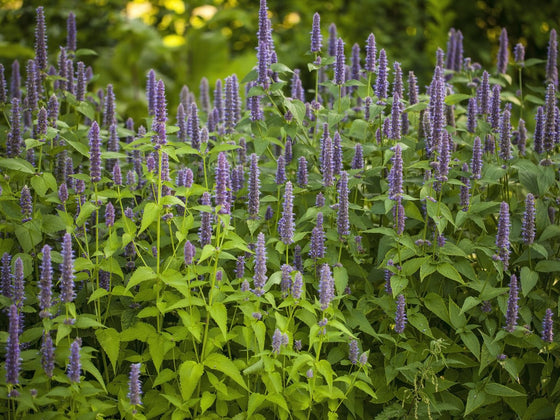
How to grow anise hyssop in Australia from seed: surface sowing, free-draining soil, sowing months for six zones, cutting back, and picking leaves and flowers.
| Position | Full sun or light shade |
|---|---|
| Depth | Surface, or 1 mm |
| Spacing | 30 to 40 cm apart |
| First pick | Leaves from about 10 weeks |
Anise
How to grow anise in Australia: when to sow in all six climate zones, sowing where it grows, spacing and watering, then harvesting and drying seed and leaves.
| Position | Full sun, sheltered from wind |
|---|---|
| Depth | 6 to 10 mm |
| Spacing | 25 to 30 cm apart |
| First pick | Seed 17 to 20 weeks from sowing |