
How to Grow Lemon Mint in Australia
Lemon mint is a frost-tender annual grown for tiered pink flowers and lemon-scented leaves. Sow after the last frost into soil of 16°C to 22°C, pressing the seed onto the surface without covering it. Seedlings appear in 10 to 21 days. Space plants 30 to 45 cm apart in full sun and lean, well-drained soil. Flowers open 12 to 17 weeks from sowing.
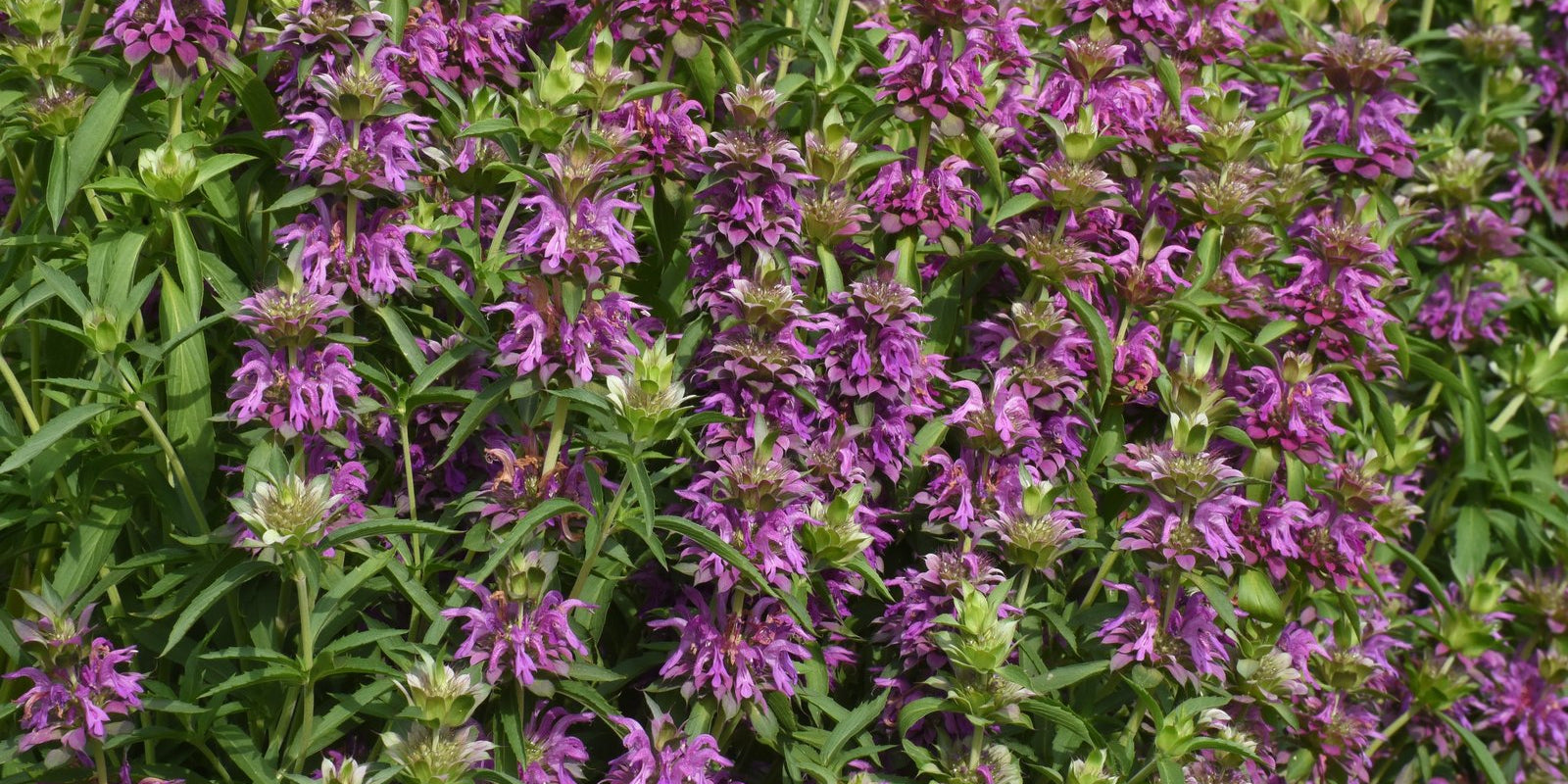
| Sun | Full sun; tolerates part shade |
|---|---|
| Water | Moist until established, then drought tolerant |
| Soil | Lean, well-drained; tolerates lime |
| Feed | Minimal in beds; half strength in pots |
| Spacing | 30 to 45 cm apart |
| Depth | Surface; press in, do not cover |
| Germination | 10 to 21 days in 16 to 22°C soil |
| Harvest | Flowers 12 to 17 weeks |
| Container | Yes, 30 cm pot, 10 to 15 L |
| Frost | Tender; the first frost kills it |
| Use | Leaves for flavour and tea; cut flowers |
Lemon mint (Monarda citriodora) is an annual of the mint family, Lamiaceae. It is grown for its tiered whorls of pink to purple flowers and its lemon-scented leaves. It is also sold as lemon bee balm or lemon bergamot, but it is neither a true mint nor lemon balm. Bees work the flowers for weeks. It goes wrong most easily at sowing, when the tiny seed is buried too deep to see the light it needs.
Three mistakes that matter
- Covering the seed. Lemon mint seed needs light to germinate, and seed buried under soil may never come up. Press it onto the surface of moist mix and leave it uncovered, as Sowing Seeds describes.
- Sowing into cold soil. The plant is frost tender and the seed waits for warmth, so an early sowing sits idle or is lost to frost. Wait until frosts are over and the soil has warmed, as When to plant explains.
- Growing it like a vegetable. Rich soil, heavy feeding and constant watering give soft, floppy stems, and wet ground rots the roots. Choose lean, well-drained soil, and water only as Care by growth stage sets out.
When to plant
Sow once the last frost has passed and the soil holds 16°C to 22°C. In that range seed usually emerges in 10 to 21 days. Under cover, start seed 6 to 9 weeks before the last frost is expected. One sowing a season is enough, and plants often self-sow for the next year.
| Zone | Example cities | Sow | Harvest | Notes |
|---|---|---|---|---|
| Tropical | Darwin, Katherine NT; Cairns, Townsville QLD; Broome WA | Apr-Jul | Jul-Nov | Sow in the dry season. Plants may live longer here, but humid build-up weather brings mildew. |
| Subtropical | Brisbane, Gold Coast, Bundaberg QLD; Coffs Harbour, Lismore NSW | Apr-Sep | Jul-Dec | Mild winters let it grow through the cooler months, before humid summer weather favours mildew. |
| Arid and semi-arid | Alice Springs NT; Broken Hill, Dubbo NSW; Mildura VIC; Kalgoorlie WA | Aug-Oct | Nov-Mar | Start seed under cover in August and plant out after inland frosts. Mulch, and water until plants reach 30 cm. |
| Temperate | Sydney, Newcastle, Wollongong NSW; Melbourne, Geelong VIC | Sep-Dec | Dec-Apr | Sydney sowings can start in September; in Melbourne, wait until frosts are over, usually October. |
| Mediterranean | Perth, Bunbury WA; Adelaide and the SA coast | Sep-Nov | Dec-Mar | Sow in spring so plants establish before the dry heat, then water in long dry spells. |
| Cool and alpine | Hobart, Launceston TAS; Canberra ACT; Ballarat VIC; Orange NSW | Oct-Dec | Jan-Apr | Raise seedlings under cover and plant out after the last frost, often around Melbourne Cup weekend. |
At the early edge of a window, sow under cover rather than outdoors. At the late edge, sow promptly, because the first frost kills the plant and a late sowing has less time to flower.
Site, soil and setup
This is a wildflower of dry American prairies and roadsides, and it grows best on a little neglect.
| Factor | Setup |
|---|---|
| Light | Full sun for the sturdiest plants and most flowers; it tolerates part shade |
| Soil | Lean, well-drained loam or sandy soil; it also grows in clay loam that never becomes waterlogged |
| pH | Acid to alkaline soil suits it, and it tolerates lime; if a pH test shows strongly acid soil, apply garden lime at 100 to 200 g per square metre, 4 weeks before sowing |
| Bed preparation | Dig in a 5 cm layer of compost on poor sand; skip manure and high-nitrogen feeds on average soil |
| Drainage | On heavy clay, plant in a raised bed or mound, because wet roots rot |
| Rotation | It belongs to none of the main vegetable families, so it fits any gap in a rotation away from thirsty crops |
Container growing
Lemon mint grows well in a pot on a sunny balcony or where frost comes early. Use a pot with drainage holes, at least 30 cm across and holding about 10 to 15 L of quality potting mix. Grow one plant in it. Sow lemon mint seed on the surface of the pot or plant a seedling. Allow for a plant of 60 to 90 cm.
- Water: when the surface of the mix feels dry, and check daily in hot weather. See watering pots in summer.
- Feed: fish and seaweed blend at half strength, about 12 mL per 9 L, fortnightly from first flowers.
- Position: full sun, with air moving around the pot.
- Handling mix: potting mix can carry Legionella bacteria, so dampen it first, wear gloves and a P2 mask, and wash your hands afterwards.
Sowing Seeds
Start lemon mint from seed, either in trays for an early start or direct into the bed once the soil is warm.
Starting under cover
- Fill a tray with moist seed-raising mix and firm it level.
- Scatter the seed thinly over the surface and press it in. At about 2,000 seeds to the gram, mixing it with dry sand helps spread it, as sowing tiny seeds shows.
- Do not cover it. Mist to keep the surface damp, and keep the tray bright and at the warmth When to plant gives.
- Prick out seedlings into small pots once they can be handled.
Sowing direct
Rake the bed fine, water it, then scatter the seed and press it into the surface with a board. Keep it damp until seedlings appear. Thin in stages to 30 to 45 cm apart, moving the spare seedlings elsewhere.
Planting out
Plant out after the last frost, when seedlings are 5 to 10 cm tall. Harden them off first (get them used to outdoor sun and wind a little more each day) for about a week. Hardening off seedlings covers the method. Set them 30 to 45 cm apart and water them in.
Care by growth stage
Restraint decides this crop: in the ground, water until plants are about 30 cm tall, then only in long dry spells.
| Stage | Water | Feed | Watch for |
|---|---|---|---|
| Germination, weeks 1 to 3 | Mist so the surface never dries | No feed before true leaves appear | Seedlings collapsing at soil level; slugs and snails after rain |
| Seedlings, weeks 3 to 8 | Evenly moist, never soggy | Seaweed solution at half strength, 15 mL per 9 L, fortnightly until planting out | Crowding, so thin on time; aphids on soft tips |
| Establishing, to about 30 cm tall | Water deeply whenever rain is poor | None in average soil | Wilting in hot wind; waterlogged soil |
| Flowering, from about week 12 | Water in long dry spells so flowering continues | None in the ground | Powdery mildew in late summer; spent whorls to cut off |
| Late season and seed | Keep watering steady in dry spells while you still pick | No feed | Heads drying brown; the first frost |
If growth stalls in very poor soil, a light dose of all-purpose controlled release granular (NPK around 14-5-10) scratched into the surface can help.
Deadheading
Cutting off fading whorls keeps new flowers coming for longer.
- Cut each stem back to the next pair of leaves as its top whorls fade.
- Cut flowers for the vase often, which does the same job.
- From late summer, leave a few stems in a spare corner to ripen seed. Plants self-sow freely, so cut the rest before seed drops.
- After the first frost, pull the plants and compost any free of mildew.
Companion planting
Lemon mint is a bee plant first, so it earns a place beside crops that need pollinating.
Grows well with
- Pumpkins and zucchini, which set fruit poorly when too few bees visit.
- Oregano, a mint-family herb that shares its need for sun and well-drained soil.
- Alyssum and yarrow, which draw in the predators of aphids.
Keep apart
- Mint, which spreads by creeping runners and wants moist soil.
- Tall crops such as sweet corn and sunflowers, which shade a plant that flowers best in full sun.
Harvesting Leaves and Flowers
Flowers usually open 12 to 17 weeks from sowing; cut them for the vase as the whorls colour and begin to open.
- Pick leaves as needed once plants are growing strongly, taking young leaves for the brightest lemon scent.
- Cut flower stems in the cool of the day and stand them in water straight away.
- Strip any leaves that would sit below the water line.
- For drying, cut stems with the whorls fully open and hang them in bunches somewhere dry and airy.
- For seed, cut heads once they are dry and brown, then shake the seed into a paper bag.
Chop fresh leaves into ice cube trays to keep them. Once dried leaves are brittle, store them and the seed in airtight jars away from light, and dry them longer if condensation forms.
The leaves flavour salads, fish and chicken dishes and herbal teas, and the flowers make an edible garnish.
Common problems
Seedlings collapse at soil level. Damping off (a seedling rot caused by soil fungi) strikes in wet, cold mix, so use fresh seed-raising mix and water less often. Read more
Flowering stops in midsummer. Dry soil and uncut seed heads both end flowering early, so water in long dry spells and deadhead as Deadheading describes.
Stems flop over. Rich soil, extra fertiliser or shade makes lanky, soft growth, so grow it lean and in full sun, as Three mistakes that matter explains.
Pests and diseases
Few pests trouble lemon mint, and before any spray, read its label and use it only as directed.
Powdery mildew (Golovinomyces and related fungi). A white, powdery film spreads over the leaves, often from late summer and in crowded, humid plantings. Remove affected leaves and spray 1 part full-cream milk to 10 parts water. Read more
Aphids (Aphididae). Clusters of small sap-sucking insects gather on soft new tips, which curl and distort. Squash them by hand or knock them off with a strong jet of water. Otherwise, late in the day once bees have left, spray insecticidal soap on leaf undersides, never onto open flowers. Read more
Slugs and snails (Gastropoda). They chew young seedlings to the ground overnight, most often after rain. Search with a torch after dark and remove them. Read more
Prevention first
- Keep plants at the spacing Sowing Seeds gives, so air moves between them.
- Water the soil rather than the leaves, and water in the morning so plants dry before night.
- Keep mulch pulled back from young seedlings, because snails hide in mulch and under pots.
- Grow flowering herbs nearby to keep aphid predators in the garden, as hoverflies explains.
Tips
- Plant it in a drift rather than as a single plant. Massed flowers suit bees, butterflies and native bees, and make a better show in a border.
- Pick leaves early in the season for cooking. Later in the season, older leaves often smell more of oregano than lemon.
- Grow a few extra plants just for drying, because the flowers are excellent in dried arrangements.
Questions
Is lemon mint the same as lemon balm?
No. Lemon mint is Monarda citriodora, an annual grown from seed each year, with tiers of pink to purple flowers. Lemon balm is Melissa officinalis, a perennial with white or pale pink flowers. Both belong to the mint family and both have lemon-scented leaves, which is why the names get mixed up.
Is lemon mint a true mint, and will it spread like mint?
It is in the mint family but is not a true mint, which belongs to the genus Mentha. Lemon mint grows as an upright clump of stems rather than spreading by runners. It spreads by self-sown seed instead, so cutting most heads before they ripen keeps it in place.
Is lemon mint the same plant as bee balm or bergamot?
Bee balm and bergamot are common names for the whole genus Monarda. The garden bee balm Monarda didyma is a perennial that returns each year, while lemon mint is an annual species. The bergamot in Earl Grey tea is a citrus fruit, Citrus bergamia, and not related.
Does lemon mint come back every year?
Usually not. Lemon mint is an annual that dies with the first frost, although in warm, frost-free gardens a plant may live into a second year. Seed that drops in autumn often comes up the next spring once the soil warms.
Can you eat lemon mint leaves and flowers?
Yes. The leaves are used fresh or cooked to flavour salads, fish and chicken dishes, and in herbal teas. Young leaves carry the most lemon scent. The flowers are edible and make a colourful garnish.
Grow it
More herbs to sow in September
All herbs
Agrimony
How to grow agrimony in Australia from seed: chilling the burrs, sowing months for six climate zones, sun and soil, cutting back, harvest, history and safety.
| Position | Full sun, light shade tolerated |
|---|---|
| Depth | 5 mm |
| Spacing | 30 cm apart |
| First pick | Summer; 12 to 18 weeks from spring sowing |

Angelica
How to grow angelica in Australia from seed: fresh or chilled seed sown on the surface, part shade, months for six climate zones, stems, history and safety.
| Position | Part shade, morning sun |
|---|---|
| Depth | Surface; press in, uncovered |
| Spacing | 50 to 90 cm |
| First pick | Stems at about 18 months |
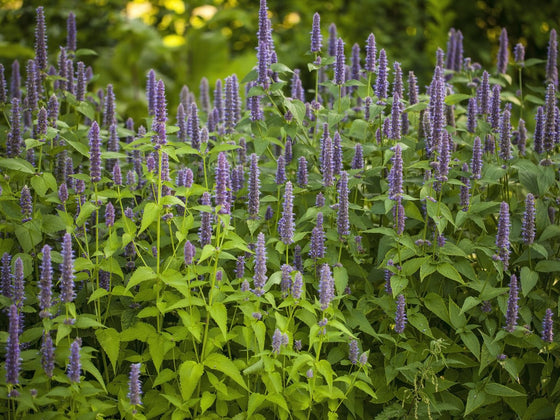
Anise Hyssop
How to grow anise hyssop in Australia from seed: surface sowing, free-draining soil, sowing months for six zones, cutting back, and picking leaves and flowers.
| Position | Full sun or light shade |
|---|---|
| Depth | Surface, or 1 mm |
| Spacing | 30 to 40 cm apart |
| First pick | Leaves from about 10 weeks |
Anise
How to grow anise in Australia: when to sow in all six climate zones, sowing where it grows, spacing and watering, then harvesting and drying seed and leaves.
| Position | Full sun, sheltered from wind |
|---|---|
| Depth | 6 to 10 mm |
| Spacing | 25 to 30 cm apart |
| First pick | Seed 17 to 20 weeks from sowing |