
How to Grow Oregano in Australia
Oregano grows from tiny seed pressed onto the surface of moist seed-raising mix at about 20°C, and seedlings appear in 7 to 21 days. Plant out 30 cm apart in full sun and lean, free-draining soil, and water only once the top dries. Pick sprigs once the plants are established, and taste young plants, since seed-raised oregano varies in flavour.
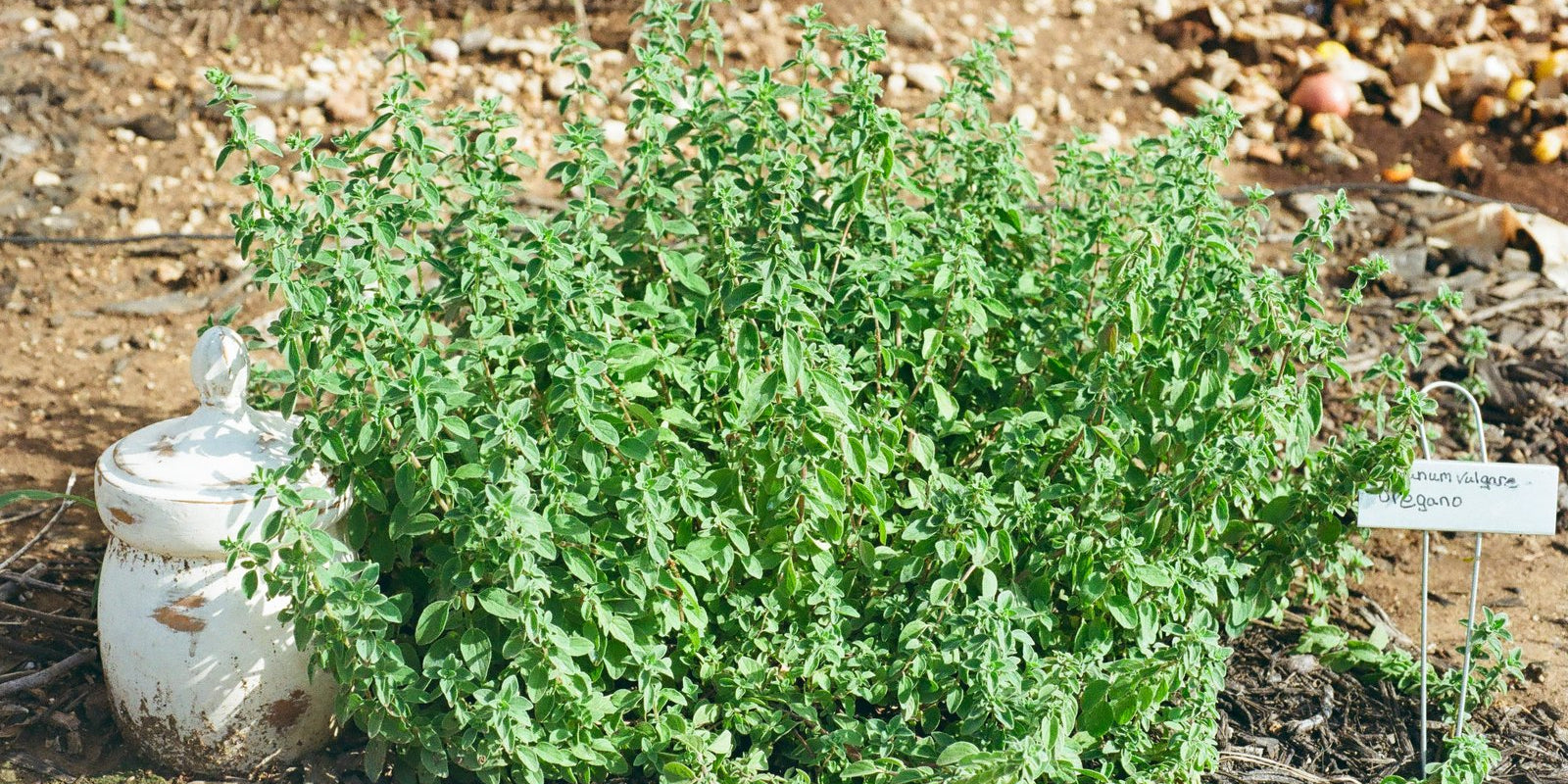
| Sun | Full sun |
|---|---|
| Water | Let the soil dry between waterings |
| Soil | Lean, free-draining, pH about 6.8 to 7 |
| Feed | Minimal; half-strength feeds at most |
| Spacing | 30 cm apart |
| Depth | Surface, or barely covered |
| Germination | 7 to 21 days at about 20°C |
| Harvest | Once established; best just before flowering |
| Container | Yes; 30 cm pot or wider, about 13.5 L |
| Frost | Hardy; may die back in cold winters |
| Use | Leaves fresh or dried; flowers edible |
Oregano (Origanum vulgare) is a low, spreading perennial of the mint family, Lamiaceae, grown for its aromatic leaves, used fresh or dried. It comes from dry Mediterranean hillsides, so Perth sand, a sunny rockery or a pot on a hot balcony suits it well. Plants raised from seed vary in flavour, and the strongest are kept going by division or cuttings. The usual mistake is kindness: rich soil, steady water and regular feeding give soft, bland leaves and rotting roots.
Three mistakes that matter
- Burying the seed. Oregano seed is tiny and needs light to germinate, so a normal covering of mix leaves a bare tray. Press it onto the surface, or cover it with no more than a fine dusting of mix.
- Planting into rich, wet ground. Compost-heavy, damp soil grows lush plants with weaker flavour, and roots rot in a wet winter or a humid wet season. Plant into lean, free-draining soil and water only once the top dries.
- Never cutting it back. An untrimmed clump turns woody and open, with fewer young leaves each year. Trim it through the year as Trimming and Shaping describes, and divide or replace it every three to four years.
When to plant
Seed germinates best with the mix at 18 to 25°C, ideally about 20°C, which is why most zones sow in spring. The tropics sow at the start of the dry season instead.
| Zone | Example cities | Sow | Harvest | Notes |
|---|---|---|---|---|
| Tropical | Darwin NT; Cairns, Townsville QLD; Broome WA | Apr-Jul | Jun-Nov | Sow as the dry season starts. Humidity is hard on it, so move pots under cover for the wet. |
| Subtropical | Brisbane, Gold Coast, Bundaberg QLD; Coffs Harbour, Lismore NSW | Mar-Apr and Aug-Sep | Oct-May | Sow in autumn or early spring, not humid heat. Raised beds or pots help prevent root rot in summer rain. |
| Arid and semi-arid | Alice Springs NT; Broken Hill, Dubbo NSW; Mildura VIC; Kalgoorlie WA | Mar and Aug-Oct | Oct-May | Sow in March to settle before inland frost, or in spring. Afternoon shade and mulch help the first summer. |
| Temperate | Sydney, Newcastle, Wollongong NSW; Melbourne, Geelong VIC | Sep-Dec | Nov-May | Sow once spring nights warm up. Around Melbourne, start trays under cover in September and plant out later. |
| Mediterranean | Perth, Bunbury WA; Adelaide and the SA coast | Sep-Nov | Nov-May | Sow once spring nights warm up. Water spring sowings through the first dry summer; autumn suits divisions. |
| Cool and alpine | Hobart, Launceston TAS; Canberra ACT; Ballarat VIC; Orange NSW | Oct-Dec | Dec-Apr | Sow after the last frost, or start under cover. Tops may die back in winter and regrow in spring. |
Late sowings can be raised in pots and kept under cover through the first cold or wet months, then planted out.
Site, soil and setup
Poor, free-draining soil suits oregano better than a rich vegie bed, so resist the urge to improve it.
| Get the bed right | What to do |
|---|---|
| Light | Full sun for the best flavour; at least three hours of direct sun a day |
| Soil | Sandy loam or any free-draining soil of low to moderate fertility; no manure |
| Heavy or damp soil | Plant in a raised bed, a mound or a pot, because roots in wet clay rot |
| Preparation | Dig in a 5 cm layer of compost only on very poor sand; leave ordinary garden soil as it is |
| pH | About 6.8 to 7; on acid soil, garden lime at 100 to 200 g per square metre 4 weeks ahead |
| Mulch | Fine gravel, which keeps the crown dry and the soil cool |
When a clump is replaced, plant the new divisions into a different bed, away from any soil where roots have rotted.
Container growing
A pot suits oregano well, because drainage and wet weather are both easier to control. Give one plant a pot at least 30 cm across; a standard 30 cm pot holds about 13.5 L. Fill it with a premium potting mix, with coarse sand or grit added up to a quarter of the volume for drainage. Both packets grow common oregano, a low clump whose flowering stems reach 30 to 60 cm.
- Water: once the top 2 cm of mix is dry, until water runs from the drainage holes, and never leave the pot standing in water.
- Feed: fish and seaweed blend at half strength, about 12.5 mL per 9 L, fortnightly from spring to late summer.
- Position: full sun, moved under the eaves in a long wet spell or the wet season.
Sowing Seeds
Start oregano in a punnet or tray of seed-raising mix, then plant it out. Direct sowing also works into a fine, weed-free bed once the soil is warm. Thin those seedlings to their final spacing at two true leaves.
Starting under cover
- Mix the seed with a pinch of dry sand so it spreads evenly.
- Scatter it thinly over moist seed-raising mix and press it in gently, or cover it with no more than a fine dusting.
- Keep the mix at the temperature When to plant gives, under a clear cover, and mist it; lift the cover once seedlings appear.
- Expect seedlings in 7 to 21 days.
- Once the seedlings have several leaves, lift each by a leaf, never the stem, into its own 7.5 cm pot.
A seedling heat mat holds that temperature in a cool spring.
Planting out
- Harden off the young plants (move them outdoors a little longer each day so they adjust to sun and wind) over about a week.
- Start when they have four true leaves: 2 to 3 hours in light shade on day one, then 1 to 2 hours more each day.
- Plant them out at 5 to 10 cm tall, at the depth they grew in the pot.
- Space plants 30 cm apart, because each clump spreads outwards over time.
- Water them in with seaweed solution at half strength, 15 mL per 9 L.

Care by growth stage
Over-feeding reduces the essential oils that give oregano its flavour and aroma, so feed at half strength at most.
| Stage | Water | Feed | Watch for |
|---|---|---|---|
| Seedlings, until 5 to 10 cm tall | Fine spray; keep the mix moist but never soggy | None until the first true leaves, then seaweed solution at half strength, 15 mL per 9 L, fortnightly | Damping off; pale, stretched seedlings |
| Planting out, first 4 weeks | Whenever the top 2 cm of soil is dry, until the plants are growing | Seaweed solution at half strength at planting | Wilting on hot, windy days |
| Spring growth | Let the soil dry between waterings; established plants in the ground seldom need more | Pelletised chicken manure, a light 50 g per square metre, once in early spring | Aphids on soft shoot tips |
| Summer heat | A deep soak in hot, dry, windy spells, since the roots are shallow | None in the ground; pots as Container growing describes | Two-spotted mite stippling on the leaves |
| Main harvest, just before flowering | Keep to the same steady routine through the cut | Pelletised chicken manure, 50 g per square metre, again after the main cut or flowering | Flower buds, the cue to cut for drying |
Ease off watering in the cool months, when wet soil causes rot. If growth stalls in very poor sand, a light scatter of all-purpose controlled release granular (NPK around 14-5-10) in spring can help.

Trimming and Shaping
Regular cutting keeps oregano compact and leafy, and stops the clump turning woody.
- Pinch out the tips once new stems reach about 15 cm, so they branch.
- At the end of winter, cut out old, woody and straggly stems to make room for new growth.
- Remove spent flower heads, which also lengthens the picking season.
- After flowering, cut the whole clump back hard to fresh growth near the base.
- Every three to four years, dig up the clump in spring or early autumn, and replant healthy outer pieces.
- Take 8 to 13 cm cuttings from new shoots of the best-flavoured plant in late spring or summer, and root them in sandy mix.
Companion planting
Oregano suits sunny, lean-soil neighbours, and a few stems left to flower draw hoverflies, whose larvae eat aphids.
Grows well with
- Thyme and sage, which want the same full sun and free-draining soil.
- Tomatoes, with oregano in pots beside them, because its flowers draw hoverflies and ladybirds that eat tomato pests.
Keep apart
- Mint, which spreads by underground runners, overruns a low clump and wants moist soil.
- Basil and parsley, which need the richer soil and steady water that make oregano soft and bland.
- Deciduous trees, whose fallen leaves smother the clump.
Harvesting Sprigs
Start picking lightly once the plants are established and growing strongly; the flavour peaks just before the flowers open.
- Pick in the morning, once the dew has dried and before watering.
- Snip whole shoot tips, leaving 4 to 6 pairs of leaves on each stem so it branches again.
- Take no more than a third of the plant at a time for kitchen use.
- For drying, cut stems with their flower buds just before they open.
Tie the stems in small bundles and hang them upside down in a dark, dry, airy spot. They take one to two weeks in dry air, longer where it is humid. Strip the leaves once brittle into a clear airtight jar kept away from light; condensation inside means they need more drying. Use them within about 6 months, or freeze fresh leaves for shorter storage.
Use the leaves in tomato sauces, pizza, lamb and Greek dishes, and scatter the edible flowers over salads. Dogs and cats that chew the plant may get a mild stomach upset, so keep pots out of their reach.
Common problems
Seedlings with little flavour. Plants raised from seed vary in how pungent they are, so some taste mild; keep the strongest, as Tips describes.
No seedlings. Seed covered too deeply or allowed to dry out rarely comes up, so see Three mistakes that matter and sow again. Read more
Tall, pale seedlings. Seedlings kept in too little light stretch towards it, so move the tray to bright light at once. Read more
Leaves stop coming once it flowers. Flowering slows or stops new leafy growth and weakens the flavour, so cut the flower stems as Trimming and Shaping describes.
Pests and diseases
Oregano has few pest problems, and most of them follow hot, dry weather or wet roots.
Two-spotted mite (Tetranychus urticae). These tiny mites, under 0.5 mm, suck the leaves from below and leave yellow stippling, then webbing. They build up fast in hot, dry weather, so hose the undersides of the leaves and avoid broad-spectrum sprays that kill predatory mites. Read more
Aphids, mainly green peach aphid (Myzus persicae). Colonies on soft tips stunt seedlings, deform leaves and leave sticky honeydew. Squash small colonies by hand, or spray the leaf undersides with an insecticidal soap registered for herbs, following its label and withholding period. Read more
Damping off (Pythium and Rhizoctonia species). Seedlings collapse at soil level, most often in wet mix sown thickly. Sow thinly into fresh, clean mix, avoid overwatering and keep trays well drained. Read more
Root and crown rot (Rhizoctonia solani and other soil fungi). The base of the stem darkens and rots, and the plant wilts, most often in damp soil. Lift and discard it, then replant a healthy division in drier ground.
Prevention first
- Plant into free-draining soil or a raised bed, and water only when the top has dried.
- Keep the spacing Planting out gives, so air moves through the clump.
- Check the undersides of leaves often in hot, dry weather.
- Grow flowering plants nearby, since ladybirds, lacewings and hoverflies eat aphids.
Tips
- Before choosing which young plants to keep, taste a leaf from each and grow on the most pungent.
- Look for low stems that have rooted where they touch the soil, and pot them up as new plants.
- Plant a row along a path or bed edge, where its spreading habit smothers weeds.
Questions
Can you grow oregano from seed?
Yes. Press the tiny seed onto the surface of moist seed-raising mix at about 20°C, and seedlings appear in 7 to 21 days. Plants raised from seed vary in flavour, so taste them as they grow. Keep the strongest and multiply them later by division or cuttings.
Why does my oregano have no flavour?
Usually one of four things. Some seed-raised plants are naturally mild, and rich soil, heavy watering or regular feeding give soft, bland growth. Shade weakens flavour too, and so does letting the plant flower. Grow it hard, in full sun and lean soil, and pick just before the flowers open.
Is oregano the same as marjoram?
Not quite. Oregano is Origanum vulgare, sometimes called wild marjoram. Sweet marjoram, Origanum majorana, is a separate, related species with a milder, sweeter taste. Greek oregano is usually sold as a named plant. The two names are often mixed up in shops and recipes.
Does oregano come back every year?
Yes, it is a perennial. In cold districts the tops may die back in winter and regrow in spring. Clumps turn woody with age, so divide or replace them every three to four years.
When is the best time to harvest oregano for drying?
Just before the flowers open, when the flavour is strongest. Cut in the morning once the dew has dried, then hang small bundles in a dark, dry, airy spot. Store the dry leaves in an airtight jar away from light and use them within about six months.
Grow it


More herb guides
All herbs
Agrimony
How to grow agrimony in Australia from seed: chilling the burrs, sowing months for six climate zones, sun and soil, cutting back, harvest, history and safety.
| Position | Full sun, light shade tolerated |
|---|---|
| Depth | 5 mm |
| Spacing | 30 cm apart |
| First pick | Summer; 12 to 18 weeks from spring sowing |

Angelica
How to grow angelica in Australia from seed: fresh or chilled seed sown on the surface, part shade, months for six climate zones, stems, history and safety.
| Position | Part shade, morning sun |
|---|---|
| Depth | Surface; press in, uncovered |
| Spacing | 50 to 90 cm |
| First pick | Stems at about 18 months |

Ashwagandha
Grow ashwagandha from seed in Australia: warm germination, sowing, site, care and root harvest, with its history and safety, for all six climate zones.
| Position | Full sun |
|---|---|
| Depth | 5 mm |
| Spacing | 45 to 60 cm apart |
| First pick | Roots 21 to 26 weeks |

Astragalus
How to grow astragalus (huang qi) in Australia from hard-coated seed: rubbing and soaking, sowing months for six zones, care, pests and lifting the taproot.
| Position | Full sun |
|---|---|
| Depth | 5 mm |
| Spacing | 20 to 45 cm apart |
| First pick | Roots after 2 to 3 years |