
How to Grow Plantain in Australia
Plantain, or ribwort plantain, is a low perennial herb with ribbed, lance-shaped leaves. Press the seed onto damp mix or cover it with 2 mm at most, and keep it at 15 to 22°C. Plant 20 to 30 cm apart in full sun and lean, free-draining soil. Pick the young inner leaves, and cut flower spikes before the seed ripens, because it self-sows readily.
| Sun | Full sun to part shade |
|---|---|
| Water | Moderate; drought hardy once rooted |
| Soil | Any free-draining soil; pH(Ca) 4.2 to 7.8 |
| Feed | Minimal; compost and half-strength feeds only |
| Spacing | 20 to 30 cm apart |
| Depth | Surface, or 2 mm at most |
| Germination | 10 to 21 days at 15 to 22°C |
| Harvest | Young leaves once rosettes have 8 or more |
| Container | Yes; at least 10 L, 25 cm wide |
| Frost | Frost hardy once established |
| Use | Herb garden, edible young leaves, pots |
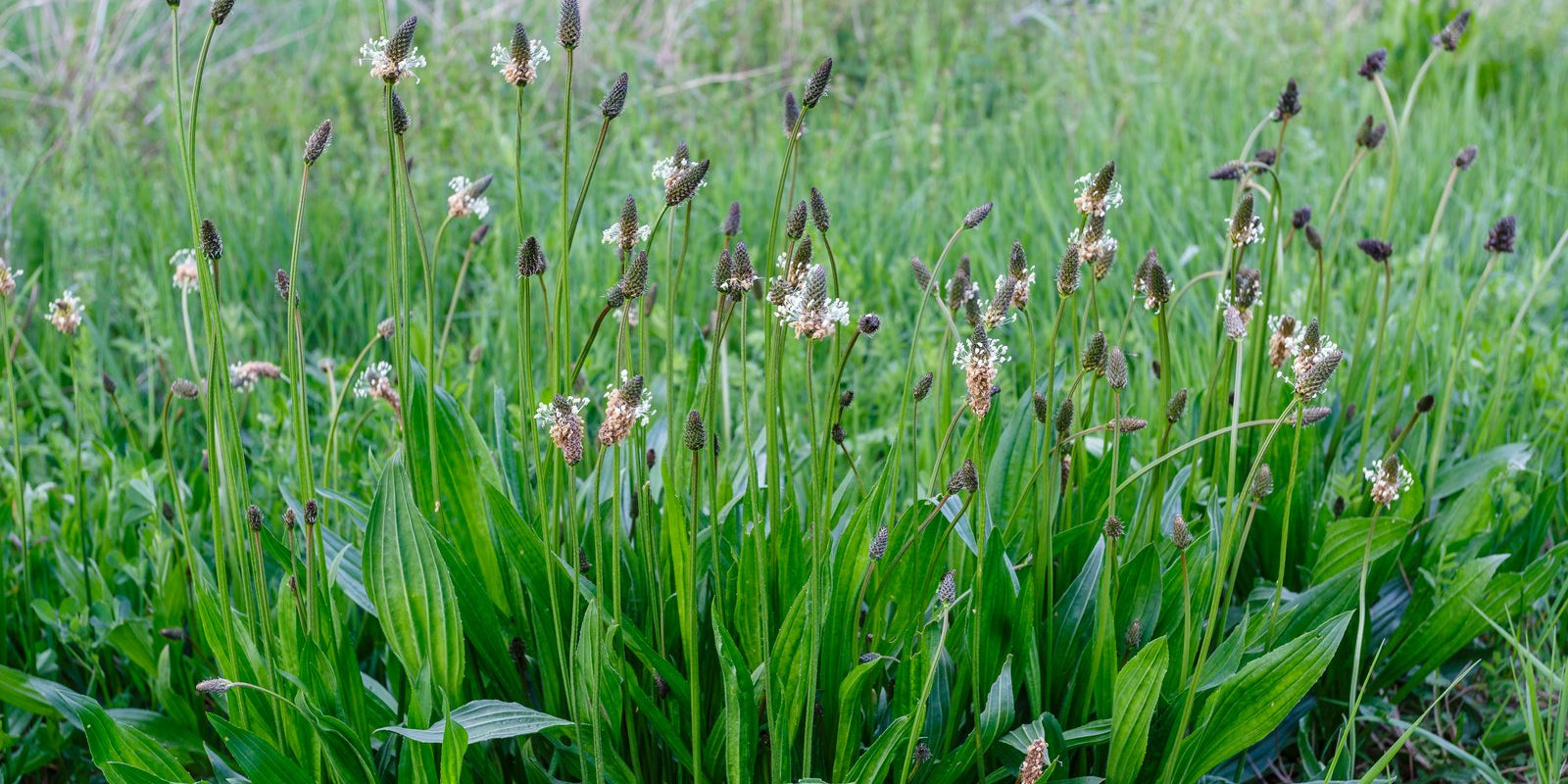
Plantain (Plantago lanceolata, family Plantaginaceae), also called ribwort plantain, is a low perennial rosette for the herb garden. It is grown for its ribbed, lance-shaped leaves and the short brown flower spikes it holds up on wiry stalks. The store sells plantain seeds of this species, which has nothing to do with the cooking banana also called plantain (Musa). It thrives in lean soil almost anywhere in Australia. That is also the catch: it is a naturalised lawn and roadside weed, and the common mistake is letting it set seed.
Three mistakes that matter
- Letting the spikes ripen. Every flower on a spike ripens small brown seed that drops and self-sows into lawns and beds. Cut spikes once they fade, as Trimming Flower Spikes explains.
- Burying the seed. Plantain seed is tiny and comes up at or near the surface, where light reaches it. Press it onto damp mix or cover it with no more than 2 mm, as Germinating the seed describes.
- Crowding and shading it. Plantain competes poorly for light, and vigorous grasses or taller plants smother young rosettes. Give each plant 20 to 30 cm of open, sunny ground, and weed around seedlings until they fill out.
When to plant
Seed starts to germinate once the soil reaches about 10°C, and trays held at 15 to 22°C usually show seedlings in 10 to 21 days. That puts the main windows in autumn and spring in most zones, and in the cooler dry season in the tropics. One sowing is enough, because each plant is a perennial that regrows from its crown.
| Zone | Example cities | Sow | Harvest | Notes |
|---|---|---|---|---|
| Tropical | Darwin NT; Cairns, Townsville QLD; Broome WA | Apr-Jul | Jul-Nov | Sow early in the dry season; plants may struggle through the heat and heavy rain of the wet. |
| Subtropical | Brisbane, Gold Coast, Sunshine Coast QLD; Coffs Harbour, Lismore NSW | Mar-May and Aug-Sep | Jun-Dec | Autumn sowings grow through the mild winter; late winter sowings establish before summer heat. |
| Arid and semi-arid | Alice Springs NT; Broken Hill, Dubbo NSW; Mildura VIC; Kalgoorlie WA | Mar-Apr and Aug-Sep | Jun-Dec | Sow between the extremes; keep seedlings moist and shelter them from hot wind. |
| Temperate | Sydney, Newcastle, Wollongong NSW; Melbourne, Geelong VIC | Mar-May and Sep-Nov | Jun-Apr | Sow once the soil holds 10°C and trays reach 15°C; growth is strongest in winter and spring. |
| Mediterranean | Perth, Bunbury WA; Adelaide and the SA coast | Mar-May and Sep-Oct | Jun-Jan | Autumn sowings establish on winter rain; water through the dry summer to keep leaves coming. |
| Cool and alpine | Hobart, Launceston TAS; Canberra ACT; Ballarat VIC; Orange, Armidale NSW; Stanthorpe QLD | Sep-Nov and Feb-Mar | Nov-Jun | Sow in spring after hard frosts, or late summer so rosettes settle before winter; hardy once established. |
In frosty districts, sow early in autumn so rosettes settle before the hard frosts, or start spring trays indoors. In hot inland summers, hold off until autumn, because seed on the surface dries out fast.
Site, soil and setup
Ribwort comes from the meadows, pastures and roadsides of Europe, northern Africa and western and central Asia.
| Get the bed right | What to do |
|---|---|
| Light | Full sun for compact rosettes; part shade is tolerated, deep shade is not |
| Soil | Sand, loam or clay; free-draining soil is best, and poor soil is fine |
| pH | About pH(Ca) 4.2 to 7.8, so most garden soils need no correction |
| Preparation | On very poor sand, dig in a 5 cm layer of compost; no manure is needed |
| Depth | Loose soil at least 20 cm deep, so the taproot can run down |
| Room | 20 to 30 cm between plants, clear of grass and vigorous neighbours |
| Rotation | None: a perennial for a herb bed or pot, kept out of the vegie rotation |
Container growing
A pot is the tidiest way to grow plantain, because dropped seed lands on paving rather than in the lawn. Give each plant a pot of at least 10 L, 25 cm across and as deep, filled with a premium potting mix.
- Watering: water when the top few centimetres of mix are dry, and empty the saucer after rain.
- Feeding: fish and seaweed blend at half strength, about 12 mL per 9 L, fortnightly in spring and autumn, only if leaves pale.
- Position: full sun or light afternoon shade, away from lawn edges.
- Renewal: replace a tired plant with a fresh seedling once roots fill the pot.
Germinating the seed
Plantain seed needs no treatment: most fresh seed germinates when it is moist, mild and in the light. Dormancy varies between seed lots, and cold winter weather lifts it, which is why a winter outdoors works. The Seed Information Database, which carries the Royal Botanic Gardens, Kew, data, lists many untreated collections at 50 to 100 per cent. Several reached 100 per cent within a week at 15 to 25°C.
Light helps but is not essential. In a Dutch study, ribwort still germinated in darkness, unlike broadleaf plantain, which needs light. A study of two wild Mediterranean populations found 27 to 85 per cent, varying with temperature and seed source. Sow three seeds for each plant you want.
| Treatment | How | How long | Temperature | What success looks like |
|---|---|---|---|---|
| None needed: surface sow in light | Press dry seed onto damp seed raising mix, or cover with no more than 2 mm of fine mix; mist, and keep in bright light out of hot sun | Usually 10 to 21 days | 15 to 22°C | Two narrow seed leaves, then slender, ribbed true leaves |
| A winter outdoors | Sow a pot or bed in autumn and leave it in the open through winter | Some seedlings in autumn, stragglers in late winter and spring | Outdoor autumn and winter weather | A second flush of seedlings as the soil warms |
The seed is 2.6 to 2.8 mm long, and its coat turns into a sticky gel when wet. Sow it dry, mixed with a pinch of dry sand, so it spreads evenly.
No source names a chemical treatment for home use. Seed banks sometimes add gibberellic acid in tests, but untreated seed gave much the same results. For seed treatments in general, see soaking, scarification and cold stratification.
When nothing comes up
- Buried too deep. Sow again on the surface, pressed in, in bright light.
- Dried out. Cover the tray with clear plastic or glass until the first leaves show.
- Too cold. Little happens below about 10°C. Keep trays at 15 to 22°C.
- Seed stuck in clumps. Wet seed glues together in its gel, so sow it dry with sand.
- Given up too soon. Some batches trickle up over six weeks, so keep the tray moist that long before sowing again.
Sowing Seeds
Start plantain in trays for evenly spaced plants, or scatter it where it is to grow. Both begin from untreated seed on the surface, as Germinating the seed explains.
Starting in trays
- Fill a punnet or cell tray with fresh seed raising mix, firm it lightly and water it well.
- Press three seeds into each cell and cover them with no more than 2 mm of fine mix.
- Keep the tray just moist, in bright, indirect light at the warmth given in When to plant.
- Thin each cell to the strongest seedling once the first ribbed leaves show, snipping the rest.
- Plant out about eight weeks after sowing.
Sowing direct
Rake the bed fine and level, water it, then scatter the seed and sand thinly and press it in with the back of a rake. Mist daily until seedlings show, then thin them in stages to 20 to 30 cm apart. For more on handling small seed, see how to sow tiny seeds.
Planting out
- Plant out seedlings with four to six true leaves.
- Harden off first (stand the pots outdoors a little longer each day, so they adjust to sun and wind).
- Plant at the same depth as in the pot, keeping the crown level with the soil.
- Water in with seaweed solution at half strength, 15 mL per 9 L.
- Keep the soil moist until new leaves show, then water only in dry spells.
More on the move from pot to garden is in hardening off seedlings before planting out.
Care by growth stage
Light and room decide how well plantain grows, not feeding. It draws what it needs from poor soil, and graziers value it on low-fertility ground for exactly that reason.
| Stage | Water | Feed | Watch for |
|---|---|---|---|
| Seedling, weeks 0 to 8 in the tray | Keep the mix just moist; mist or water from below | Seaweed solution at half strength, 15 mL per 9 L, fortnightly from the first true leaves | Damping off; the surface drying out; stretching in low light |
| Young rosette, weeks 8 to 15 | Keep moist after planting out, then water when the top few centimetres are dry | A handful of worm castings in each planting hole | Snails and slugs at night; grass and weeds shading the rosette |
| Established rosette | A deep soak in long dry spells; drought hardy once rooted | None in most soils | The first flower spikes, the cue to start trimming |
| Flowering, August to May | As for the established rosette | None | Spikes fading from white stamens to brown: cut them before seed ripens |
| Older plants, each autumn | Little in wet months; soggy soil rots the roots | A 5 cm compost mulch on poor sand, kept clear of the crown | Leaf spots and declining plants in old clumps |
| The weeks before picking | Keep watering as usual right up to picking | None | Tough outer leaves: pick the young inner ones |
If growth stalls in very poor sand, a light application of all-purpose controlled release granular (NPK around 14-5-10) scratched in each spring can help.
Trimming Flower Spikes
Spikes keep coming from late winter into autumn, and each flower on them ripens two small seeds. Trimming them is the one regular job: it stops self-sowing, cuts down pollen and keeps the plant in leaf.
- Cut each stalk at its base once the ring of white stamens fades, before the spike turns brown.
- Check plants weekly through the flowering months.
- Drop cut spikes into a bag, not onto the ground, so ripe seed does not fall.
- Pull off yellowed and tough outer leaves to make room for young ones.
- For seed, bag one or two spikes on a potted plant and cut them as they brown.
- Dig out self-sown seedlings while small, taking the whole taproot, because the crown regrows.
More on keeping self-sown seedlings in check is in organic weed control.
Companion planting
Choose neighbours that stay low or share its liking for lean, sunny ground, and keep it clear of anything that will shade it.
Grows well with
- Clovers, the usual pasture partner, kept trimmed so vigorous growth does not shade the rosettes.
- Chicory, another deep-rooted perennial herb that tolerates drought and poor soil.
- Dandelion, a low rosette herb for the same sunny, lean corner.
Keep apart
- Vigorous grasses and tall, leafy crops, which shade young rosettes out.
- Lawns and vegie beds you want weed free, where dropped seed comes up as weeds.
Harvesting Leaves
Pick young leaves once a rosette has eight or more leaves, and keep picking from established plants while they grow.
- Choose the soft, upright inner leaves.
- Snap or cut them off at the base, close to the crown.
- Leave at least half the rosette so the plant keeps growing.
- Skip older outer leaves, which turn coarse and bitter.
- For drying, spread leaves in a single layer somewhere airy, warm and shaded.
- Discard any that turn dark brown or black as they dry.
Plantain leaves dry slowly, and slow drying turns them dark brown. Spread them thinly, or use a dehydrator at 40 to 50°C, and store crisp leaves in a labelled, airtight jar in a cool, dark cupboard.
Ribwort is an edible weed whose young leaves are eaten, and an early English gardening book listed its broadleaf relative among the salad herbs. Eat only leaves you have identified with certainty, picked from unsprayed ground.
Traditional use and history
Ribwort has followed farming wherever it went. Pollen analysts read its pollen as a sign of early farmers and their grazing animals. At a Neolithic lake village at Chalain, in eastern France, its pollen curve shifts through settlements dated to about 3000 to 2600 BC.
| Tradition | Name | Part | What the tradition recorded |
|---|---|---|---|
| Anglo-Saxon England | Weybroed, waybread | Leaves of broadleaf plantain | The Lacnunga, an Old English manuscript, counted it among nine sacred herbs |
| Medieval Europe | Costa canina, Quinquenervia | Leaves | Latin names for the prominent ribs, the same feature behind the English name ribwort |
| English country children | Kemps | Flower heads on their stalks | A game of striking heads together until a stalk broke; kemps comes from cempa, Anglo-Saxon for a soldier |
| English farming | Ribgrass, ribwort | Leaves | Farmers counted it a favourite sheep food, and shops sold the seed for sowing meadows |
| European herbal tradition | Spitzwegerich (German) | Leaves | The German Pharmacopoeia listed the dried herb as Spitzwegerichkraut, and the European Pharmacopoeia carries a monograph on the leaf |
| Traditional Chinese medicine | Che qian zi | Seed of two related species, not ribwort | The Chinese Pharmacopoeia names the dried ripe seed of Plantago asiatica or Plantago depressa |
Broadleaf plantain (Plantago major) travelled with English settlers. In North America and New Zealand, Indigenous peoples called it Englishman's foot or white man's foot, because it sprang up wherever the English took land. Longfellow refers to the name in Hiawatha.
The mucilage on the seed was once used in France to stiffen muslin. The store's listing gives several of these names, and some belong to broadleaf plantain or to the Chinese species rather than to ribwort. Graziers in New South Wales and Victoria still sow bred ribwort varieties as a pasture herb.
Safety
Happy Valley Seeds sells plantain as seed for growing. Apart from the kitchen note in Harvesting Leaves, nothing here is advice to eat or take any part of the plant. Anyone thinking of using a plant should first seek advice from a qualified health practitioner.
| Topic | What the sources say |
|---|---|
| Toxicity | No poisoning record was found for ribwort. The European Medicines Agency lists no known side effects for its leaf preparations and no reported overdose. Its assessment notes that aucubin, one of the leaf's iridoid compounds, can cause gastroenteritis when swallowed. LiverTox, the United States liver injury database, has no entry for plantain, so it gives no likelihood score. |
| Pregnancy and breastfeeding | Safety has not been established. For lack of data, the European Medicines Agency advises against use while pregnant or breastfeeding. |
| Interactions with medicines | The European Medicines Agency records none reported. That reflects little study, so anyone taking medicines should ask a doctor or pharmacist before using any plant. |
| Allergy and skin | The pollen is a recognised hay fever allergen in Australia, where the plant flowers from August to May. European studies found about 30 per cent of pollen allergy patients allergic to it. The sources read record no skin reaction from handling the leaves. |
| Pets and livestock | The ASPCA's lists of plants toxic to dogs, cats and horses have no entry for plantain of this genus. Graziers sow it as livestock feed, and the NSW pasture note records no livestock disorders. Call your vet if a pet eats a plant and seems unwell. |
| Legal status | Not on the declared, restricted or prohibited weed lists kept by NSW WeedWise, Agriculture Victoria, Biosecurity Queensland, Primary Industries and Regions SA, NRE Tasmania, the NT Government or the ACT Government. The Western Australian Organism List gives it as permitted. It is regarded as an environmental weed in New South Wales, Victoria and Western Australia. The store has no shipping restriction on this seed. |
The United States Food and Drug Administration once warned that foxglove leaf (Digitalis lanata) may have been sold in bulk as broadleaf plantain leaf. The warning followed a woman's hospital admission with heart problems. For any suspected poisoning, call the Poisons Information Centre on 13 11 26. In an emergency, call triple zero (000).
Common problems
No seedlings. Usually seed buried too deep, allowed to dry out or kept too cold; see Germinating the seed and its list, When nothing comes up.
Tall, pale, floppy seedlings. Too little light on a windowsill stretches them, so move trays to brighter light and turn them daily. Read more
Rosettes that fade among other plants. Shade and competition from grass or taller neighbours starve plantain of light; see Three mistakes that matter.
Seedlings everywhere. Spikes were left to ripen and drop seed; see Trimming Flower Spikes.
Tough, stringy leaves. Older outer leaves and plants in full flower turn coarse, so pick young inner leaves and keep cutting spikes.
Leaves that blacken as they dry. Slow drying lets them darken; see Harvesting Leaves.
Pests and diseases
The NSW pasture notes record few problems on plantain, and damp, crowded conditions favour most of them.
Common garden snail (Cornu aspersum) and grey field slug (Deroceras reticulatum). Both graze seedlings and young leaves at night in damp weather. Hand-pick them after dark, or scatter an iron-based snail bait thinly as the label directs. Read more
Damping off (Pythium species and Rhizoctonia solani). Seedlings rot at soil level and collapse, most often in wet, crowded trays. Use fresh seed raising mix and clean trays, water sparingly and thin seedlings for air flow. Read more
Ascochyta leaf spot (Ascochyta species). This leaf spot has been noted on plantain in NSW pastures. Pick off spotted leaves, water the soil rather than the foliage, and keep plants spaced for air flow.
Rhizoctonia root rot (Rhizoctonia species). It has been noted in older plantain stands, where plants decline. Keep the soil free-draining and replace tired clumps with fresh seedlings.
Meadow argus (Junonia villida). This native butterfly's caterpillars feed on ribwort and shelter under its leaves by day, and around Adelaide it is their preferred host. Leave them be: a few chewed leaves are a fair trade for the butterflies.
Prevention first
- Keep seed trays clear of rain and hose splash, which spread damping off.
- Water the soil, not the leaves, and let established plants dry out between waterings.
- Clear boards, leaf litter and loose pots from around seedlings, where snails shelter.
- Replace old, declining clumps with young plants every few years.
Tips
- Learn the two common plantains apart. Ribwort has long, narrow leaves with ribs running their length; broadleaf plantain has smooth oval blades on long stalks.
- Label the plant with its botanical name: plantain also names broadleaf plantain, a cooking banana and the hosta sold as plantain lily.
- Save seed from one bagged spike. It keeps well: in one test, 94 per cent still germinated after five years at room temperature.
Questions
Why is my plantain seed not coming up?
It is most often buried too deep, dried out or kept too cold. Press the seed onto damp mix or cover it with 2 mm at most. Keep it moist at 15 to 22°C. Seedlings usually show in 10 to 21 days, and some batches trickle up for six weeks.
Is this plantain the same as the cooking banana called plantain?
No. This plantain is Plantago lanceolata, ribwort plantain, a low herb of the plantain family with ribbed leaves and brown flower spikes. The cooking plantain is a banana (Musa), an unrelated tropical plant. Check the botanical name on any seed or plant you buy.
Is plantain a declared weed in my state?
No state or territory declares it, and the Western Australian Organism List gives it as permitted. It is regarded as an environmental weed in New South Wales, Victoria and Western Australia, so cut the flower spikes before the seed ripens.
Is plantain safe to grow around dogs and cats?
The ASPCA's lists of plants toxic to dogs, cats and horses have no entry for it, and graziers sow it as livestock feed. No source read records poisoning in pets. Call your vet if a pet eats a plant and seems unwell.
Can growing plantain set off hay fever?
It can. Plantain pollen is a recognised hay fever allergen in Australia, where the plant flowers from August to May. If you have hay fever or asthma, cut the flower spikes before they shed pollen, or choose a different herb.
How long does plantain take to grow from seed?
Seedlings usually appear in 10 to 21 days at 15 to 22°C. Young leaves are ready to pick once a rosette has eight or more leaves. Plants are perennial and keep producing leaves in later seasons.
Grow it
Choose a size to add it to your cart. You stay on this page.
- Plantain (Plantago) seedsFrom $2.99

More herbs to sow in September
All herbs
Agrimony
How to grow agrimony in Australia from seed: chilling the burrs, sowing months for six climate zones, sun and soil, cutting back, harvest, history and safety.
| Position | Full sun, light shade tolerated |
|---|---|
| Depth | 5 mm |
| Spacing | 30 cm apart |
| First pick | Summer; 12 to 18 weeks from spring sowing |

Angelica
How to grow angelica in Australia from seed: fresh or chilled seed sown on the surface, part shade, months for six climate zones, stems, history and safety.
| Position | Part shade, morning sun |
|---|---|
| Depth | Surface; press in, uncovered |
| Spacing | 50 to 90 cm |
| First pick | Stems at about 18 months |
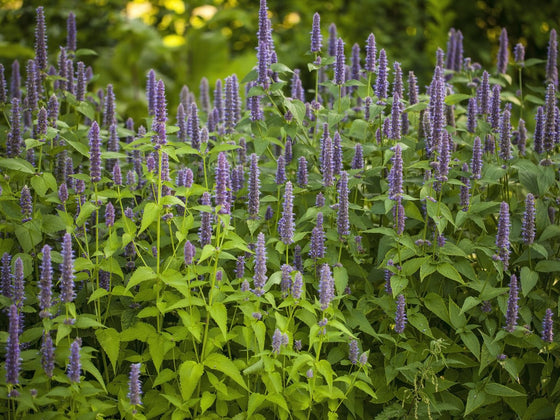
Anise Hyssop
How to grow anise hyssop in Australia from seed: surface sowing, free-draining soil, sowing months for six zones, cutting back, and picking leaves and flowers.
| Position | Full sun or light shade |
|---|---|
| Depth | Surface, or 1 mm |
| Spacing | 30 to 40 cm apart |
| First pick | Leaves from about 10 weeks |
Anise
How to grow anise in Australia: when to sow in all six climate zones, sowing where it grows, spacing and watering, then harvesting and drying seed and leaves.
| Position | Full sun, sheltered from wind |
|---|---|
| Depth | 6 to 10 mm |
| Spacing | 25 to 30 cm apart |
| First pick | Seed 17 to 20 weeks from sowing |