
How to Grow Selfheal in Australia
Selfheal is a low, creeping perennial of the mint family, grown for its violet flower spikes, its bees and as a ground cover. Sow the tiny seed on damp mix, covered by 2 mm at most, at 15 to 25°C; it needs no treatment. Plant out about 30 cm apart in moist soil in sun or part shade, and cut spent spikes to stop it spreading.
| Sun | Full sun to part shade |
|---|---|
| Water | Keep moist; deep water in dry spells |
| Soil | Moist, rich loam; wide pH range |
| Feed | Minimal; compost and half-strength feeds only |
| Spacing | About 30 cm apart |
| Depth | Surface; cover 2 mm at most |
| Germination | 10 to 21 days; no treatment needed |
| Harvest | Flowering stems in full flower; leaves once spread |
| Container | Yes; at least 8 L, 25 cm wide |
| Frost | Frost hardy |
| Use | Ground cover, flowering lawns, bees, herb gardens |
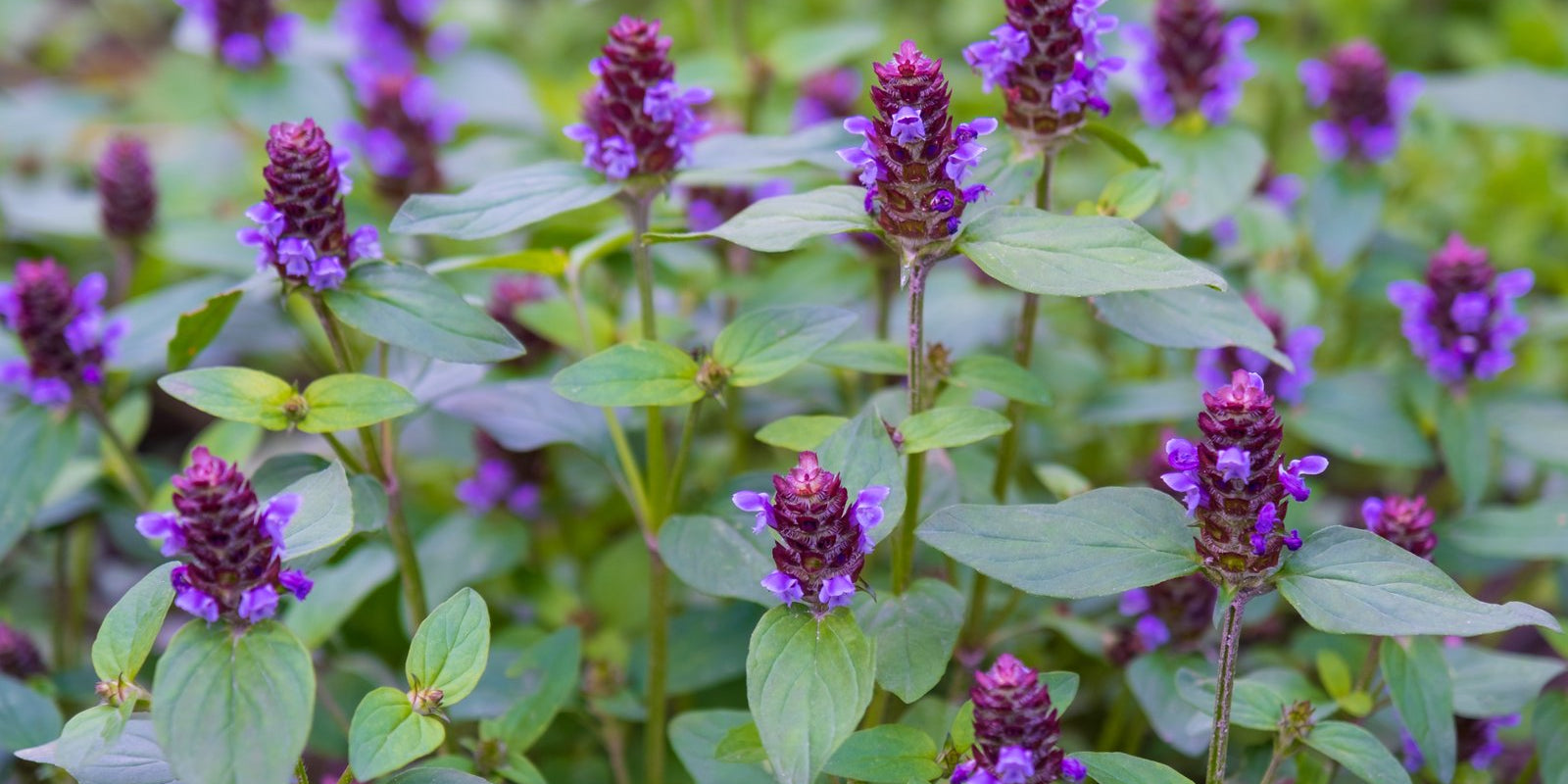
Selfheal (Prunella vulgaris, family Lamiaceae) is a low, creeping perennial of the mint family, grown for its dense spikes of violet, two-lipped flowers. It makes a soft ground cover, a flowering lawn plant and a steady source of nectar for bees, 10 to 30 cm tall in flower. The store sells selfheal seeds of the common species. The seed is among the easiest of the traditional herbs to raise. Where gardeners go wrong is afterwards: a patch left to seed spreads well beyond its bed.
Three mistakes that matter
- Burying the seed. The seed is tiny, about a thousand to the gram, so it belongs within a few millimetres of the surface. Sow it on the surface, barely covered, as Germinating the seed describes.
- Letting it seed into lawns and bushland. Selfheal has escaped gardens into stream banks, pastures and roadsides, and its seed can lie in the soil for at least five years. Cut off the flower spikes as they fade; Safety gives its status by state.
- Treating it as a dry-garden plant. In a long dry spell it drops its lower leaves and turns yellow-green. Give it moist soil and, in hot districts, afternoon shade, and water new plants through their first year.
When to plant
The seed germinates freely anywhere from 15 to 25°C, so sow while the soil or trays sit in that range. That puts the main windows in spring and autumn in the south, and in the cooler, drier months in the north. One sowing is usually enough, because an established patch keeps itself going by creeping stems and self-sown seedlings.
| Zone | Example cities | Sow | Harvest | Notes |
|---|---|---|---|---|
| Tropical | Darwin NT; Cairns, Townsville QLD; Broome WA | Apr-Jun | Aug-Nov | Dry-season sowing in part shade; few flower in year one, and plants may not outlast the wet, so save seed. |
| Subtropical | Brisbane, Gold Coast, Sunshine Coast QLD; Coffs Harbour, Lismore NSW | Mar-May and Aug-Sep | Oct-Apr | Sow as trays cool in autumn or warm in late winter; give afternoon shade and steady water in summer. |
| Arid and semi-arid | Alice Springs NT; Broken Hill, Dubbo NSW; Mildura VIC; Kalgoorlie WA | Mar-Apr and Aug-Sep | Oct-Apr | Grow in shade near a tap or in pots; hot, dry wind strips leaves, so mulch and water often. |
| Temperate | Sydney, Newcastle, Wollongong NSW; Melbourne, Geelong VIC | Sep-Nov and Mar-Apr | Nov-Apr | Sow once trays hold 15°C in spring, or in early autumn so plants settle before winter. |
| Mediterranean | Perth, Bunbury WA; Adelaide and the SA coast | Mar-May and Sep-Oct | Oct-Mar | Autumn sowings establish on winter rain; summer needs steady water and shade. Keep it out of bushland. |
| Cool and alpine | Hobart, Launceston TAS; Canberra ACT; Ballarat VIC; Orange, Armidale NSW; Stanthorpe QLD | Sep-Nov and Mar | Dec-Mar | Start spring trays in warmth and plant out after frosts, or sow in March; established plants shrug off frost. |
In fields grown for seed, few plants flower in year one, more from autumn sowings, so a patch usually flowers best in its second summer. At the hot edge of a window, sow in a shaded tray and keep it evenly moist.
Site, soil and setup
In the wild it follows damp ground: stream banks, moist meadows, woodland edges and roadside drains. Match that in the garden with steady moisture and some shade from the hottest sun. Keep it well back from creeks and bushland.
| Get the bed right | What to do |
|---|---|
| Light | Full sun to part shade; afternoon shade in hot, dry districts |
| Soil | Moist, well-drained loam rich in organic matter; most other soils are tolerated |
| pH | Grows across a wide pH range, so no correction is needed |
| Preparation | Dig in a 5 cm layer of compost; no manure or strong fertiliser |
| Room | About 30 cm between plants; they spread by creeping stems into a mat |
| Rotation | None: a perennial for a lawn, border edge, path edge or wildflower patch, outside the vegie rotation |
Container growing
A pot holds its creeping stems in check, which suits a small garden. Seed still travels on water, birds and animals, so deadhead potted plants too. Choose a wide, shallow pot at least 25 cm across and about 8 L, filled with a premium potting mix.
- Watering: water when the top 2 cm of mix feels dry; pots dry faster than beds, so check daily in hot weather.
- Feeding: fish and seaweed blend at half strength, about 12 mL per 9 L, fortnightly in spring and summer, only if leaves look pale.
- Position: morning sun and afternoon shade, or bright dappled light under a tree.
Germinating the seed
Selfheal seed has little or no dormancy. A United States Department of Agriculture fact sheet describes high germination at most temperatures with no pretreatment. The Millennium Seed Bank at the Royal Botanic Gardens, Kew, recorded 94 to 100 per cent in most of its tests across that range.
Those tests ran on a moist gel surface in daily light, and counted seedlings over two to eight weeks. Garden guides give 10 to 21 days for most seed, with stragglers for up to eight weeks. Sow two or three seeds for each plant you want, then thin.
| Treatment | How | How long | Temperature | What success looks like |
|---|---|---|---|---|
| None needed: shallow sowing | Press the seed onto damp seed raising mix and cover it with no more than 2 mm of fine mix or vermiculite; keep it moist and in bright, indirect light | Usually 10 to 21 days; some up to 8 weeks | 15 to 25°C; a heat mat helps in cool weather | Pairs of small, rounded seed leaves, then the first pair of true leaves |
| Optional cold spell | Mix the seed with a little damp sand in a sealed bag in the fridge, then sow sand and seed together | About 30 days in the fridge | About 1 to 5°C, then 15 to 25°C | An even stand, often within 2 to 3 weeks of sowing |
| Outdoor autumn sowing | Scatter seed on raked, damp soil in autumn and let winter chill it where it lies | Through winter | Outdoor winter temperatures | Seedlings in spring; a few plants may flower that first summer |
Seed banks have also tested gibberellic acid, but untreated seed at steady warmth reached the same high rates, so no chemical is needed. For seed treatments in general, see soaking, scarification and cold stratification.
When nothing comes up
- Buried too deep. Seed under more than a few millimetres of mix may never show. Sow again on the surface, barely covered.
- Dried out. Tiny surface seed dries in an afternoon. Cover the tray with clear plastic or glass, lift the cover once seedlings show, and water from below.
- Too hot. Trays in full summer sun can climb well above 25°C. Move them into bright shade, or wait for autumn.
- Old or warm-stored seed. The seed stores well cool and dry; stored seed still gave 85 per cent after a year at 5°C. Keep packets sealed in the fridge.
- Given up too soon. Keep the tray moist and in the light for eight weeks before resowing. Outdoor autumn sowings may wait for spring.
Sowing Seeds
Start selfheal in trays for plants that fill a pot or bed quickly, or scatter it where it is to grow. Both begin with seed sown on the surface, as Germinating the seed explains.
Starting in trays
- Fill a punnet or cell tray with fresh seed raising mix, firm it lightly and water it well.
- Sow each cell at the rate and depth given in Germinating the seed.
- Keep the tray at the warmth given in When to plant, in bright, indirect light, and never let it dry.
- Thin to the strongest seedling per cell once the first true leaves open.
- Move seedlings into 9 cm pots once they are large enough to handle.
Mixing the seed with dry sand makes it far easier to spread evenly. See how to sow tiny seeds for the sand method.
Sowing direct
Rake the soil fine and level, water it, then scatter the seed thinly and press it in with the back of a rake. Keep the surface damp until seedlings show, then thin them in stages to the spacing in Site, soil and setup.
Planting out
- Plant out in spring or autumn, once seedlings have several pairs of leaves.
- Harden them off first (stand the pots outdoors a little longer each day for about a week, so they adjust to sun and wind).
- Set each plant at the depth it grew in the pot, at the spacing in Site, soil and setup.
- Water in with seaweed solution at half strength, 15 mL per 9 L.
- Keep the soil moist until new growth shows, and water through the first dry season.
More on the move from pot to garden is in hardening off seedlings before planting out.
Care by growth stage
Steady moisture decides how well selfheal grows; feeding matters little. Like most herbs it needs restraint, so feed at half strength at most.
| Stage | Water | Feed | Watch for |
|---|---|---|---|
| Seedling, weeks 0 to 6 in the tray | Keep the mix just moist; water from below | Seaweed solution at half strength, 15 mL per 9 L, fortnightly from the first true leaves | Damping off (seedlings rotting at soil level); drying out; stretching in low light |
| Young plant, from planting out until it spreads | Keep the soil moist through the first year; water whenever the top few centimetres dry | A handful of worm castings in each planting hole | Snails and slugs grazing new leaves at night |
| First summer | Deep water in dry spells; keep the soil evenly moist | None in good soil | Wilting in hot wind; water before the soil dries out |
| Autumn and winter | Rain is often enough in the south; in the northern dry season, water whenever the top few centimetres dry | None | Runners creeping into paths and beds |
| Established patch, each spring | Deep water in dry spells | A 5 cm compost mulch around the patch | Taller neighbours shading it out |
| The weeks before picking | Keep watering as usual right up to picking | None | Spikes in full flower, the time to cut |
If growth stalls in very poor soil, a light application of all-purpose controlled release granular (NPK around 14-5-10) scratched in each spring can help.
Trimming and Deadheading
Trimming keeps selfheal dense and, more importantly, keeps its seed at home. The flowers open in tiers up the spike, so a spike can look ragged while still flowering.
- Cut spent flower spikes off as the last flowers fade, before the brown seed heads ripen.
- Shear the whole patch back after the main flowering to renew the foliage.
- Mow a lawn planting as you would the grass; it keeps flowering even when mown fairly short.
- Cut back taller plants around it at the end of the season, so they do not smother it.
- Lift runners that root into paths or beds, and pot them up or discard them.
- Divide crowded clumps in spring or autumn to renew a tired patch.
Division is the quickest way to more plants: see dividing perennials for the method.
Companion planting
Choose low neighbours that like the same moist soil, because taller, vigorous plants shade selfheal out.
Grows well with
- Violas, low and happy in the same moist, part-shaded ground.
- Forget me nots, which share the damp, dappled edges of a garden.
- Alyssum, a low edging that flowers alongside it and leaves it the light.
Keep apart
- Tall, dense perennials, which shade it out within a season.
- Vegetable beds and fine lawns, where its runners and seedlings become a weeding job.
Harvesting Leaves and Flowers
Cut flowering stems on a dry morning when most spikes are in full flower; in New South Wales it flowers from November to April. Leafy shoots can be picked at any time once a plant has spread well.
- Pick only from unsprayed plants in clean garden soil, as Safety explains.
- Cut stems about 5 cm above the ground with clean scissors or secateurs.
- Take no more than a third of a patch at one picking.
- Shake off insects and discard yellowed or damaged leaves.
- Tie small, loose bunches and hang them in an airy, shaded place indoors.
- Dry until the leaves crumble and the stems snap cleanly.
Store the dried stems in a closed, labelled jar in a cool, dry, dark place.
Traditional use and history
Selfheal grows wild across Europe, much of Asia, north-west Africa and North America. It has been recorded in herbals for close to two thousand years. Its many English names include prunella, sicklewort, carpenters weed, blue curls, heart of the earth and thimble-flower.
Grieve's A Modern Herbal notes that it found its way from Europe to North America, where it tended to crowd out native flowers. The same has happened here: selfheal is now naturalised in every Australian state and the ACT.
| Tradition | Name | Part | What the tradition recorded |
|---|---|---|---|
| Chinese materia medica | Xia ku cao | Dried fruit spikes | First recorded in Shen Nong's Classic of the Materia Medica, of the Eastern Han dynasty; still listed in the Chinese Pharmacopoeia |
| English herbals | Prunella, brunella | Whole herb | John Gerard counted it among the best wound herbs, and Grieve records it gathered in midsummer |
| North American peoples | Heart of the earth, blue curls | Plant juice | Many peoples used it, which gave rise to its common names; the Quileute, Quinault and Coast Salish rubbed the juice on boils |
| Dyers | Selfheal | Flowers and stems | An olive-green dye |
The Chinese name means summer-withering herb. It was given, a review of the old texts explains, because the plant flowers in spring and dies back after summer. The spikes were gathered in summer, once they had turned brownish red.
In the seventeenth century, William Cole traced Brunella to a German name for a mouth and throat inflammation among soldiers in camp. He took the throat-like shape of the flowers as a sign, a belief known as the doctrine of signatures. In the eighteenth century, Linnaeus used the spelling Prunella.
Safety
Happy Valley Seeds sells selfheal as seed for growing, as an ornamental and bee plant. Nothing here is advice to eat or take any part of the plant. Anyone considering using a plant should first seek advice from a qualified health practitioner.
| Topic | What the sources say |
|---|---|
| Toxicity | No poisoning record was found, and LiverTox, the United States liver injury database, has no entry for it, so it gives no likelihood score. A review of Chinese use notes that large amounts can upset the stomach and bowel, with diarrhoea and abdominal pain. A United States monograph finds too little reliable information to say whether it is safe. |
| Pregnancy and breastfeeding | There is not enough reliable information on use in pregnancy or breastfeeding, and the same monograph advises avoiding it. |
| Interactions with medicines | No interaction with any medicine is recorded, which means no information, not proof of none. Anyone taking medicines should ask a doctor or pharmacist before using any plant. |
| Skin and allergy | Reactions are rare; one case of contact dermatitis from the plant has been reported. Wear gloves if your skin reacts to garden plants. |
| Pets and livestock | The ASPCA's lists of plants toxic to dogs, cats and horses do not include it. Grazing animals find it bitter and avoid it, though cattle and sheep eat some along with pasture grass. No veterinary poisoning record was found. |
| Legal status | Not on the declared or prohibited weed lists of New South Wales, Victoria, Queensland, South Australia, Tasmania, the Northern Territory or the ACT. The Western Australian Organism List gives it as permitted. It is regarded as an environmental weed in Victoria and Western Australia, so keep it from spreading. The store has no shipping restriction on this seed. |
The sources name no toxic look-alike, but bugle (Ajuga species) has similar blue flower spikes, and sanicle, an unrelated plant, shares an old common name. Check the botanical name on seed and plants.
Common problems
No seedlings. Usually seed sown too deep, allowed to dry, or held in a hot tray; see Germinating the seed and its list, When nothing comes up.
Tall, pale, floppy seedlings. Too little light on a windowsill stretches them, so move trays to brighter light and turn them daily. Read more
Yellow-green plants losing their lower leaves. Drought stress in a long dry spell; see Three mistakes that matter.
Tiny leaves and short spikes. Frequent mowing or grazing keeps it as a dense mat with small leaves, which is normal in a lawn.
Plants dying out after a few years. Individual plants are often short-lived, so let a few spikes seed, or divide young runners to keep the patch going.
Seedlings everywhere. Pull strays while small, and deadhead as Trimming and Deadheading describes. Read more
Pests and diseases
Selfheal has no serious pest or disease recorded, so trouble is most likely at the seedling stage.
Damping off (Pythium species and Rhizoctonia solani). Seedlings rot at soil level and collapse, most often in wet, crowded trays. Use fresh seed raising mix and clean trays, avoid overwatering and thin seedlings for air flow. Read more
Common garden snail (Cornu aspersum). This snail, introduced from Europe, damages seedlings and is most active at night and after rain. Hand-pick it by torchlight on damp evenings. Read more
Grey field slug (Deroceras reticulatum). It feeds on the surface at night and becomes active after the autumn break, leaving shredded leaf edges. Hand-pick it as for snails. Read more
Prevention first
- Keep seed trays clear of rain and hose splash, which spread damping off.
- Water trays from below, and let the surface breathe between waterings.
- Plant out sturdy seedlings rather than tiny ones where slugs are common.
- Clear rocks, boards and dead plant material from around young plants, where slugs and snails shelter by day.
Tips
- Plant a patch where a garden tap drips or a downpipe drains: selfheal thrives on the extra moisture.
- Save seed by shaking spikes that have just turned brown over a paper bag: raindrops striking the ripe heads flick the seed out.
- Edge the patch with a mowing strip or a sunken garden edge, so creeping stems stay where you want them.
Questions
Why did my selfheal seeds not come up?
Check first whether they were buried, dried out or cooked in a hot tray. Sow on damp seed raising mix, cover by 2 mm at most, and keep it moist at 15 to 25°C in bright, indirect light. Most seed shows in 10 to 21 days, but some takes up to eight weeks.
Does selfheal seed need cold stratification?
No. Untreated seed germinated at 94 to 100 per cent in most seed bank tests. A month in damp sand in the fridge, or an autumn sowing outdoors, can give a more even stand, but it is optional.
Is selfheal a weed in Australia?
No state or territory declares it, and the Western Australian Organism List gives it as permitted. It is naturalised in every state and the ACT, and is regarded as an environmental weed in Victoria and Western Australia. Cut off spent flower spikes and keep it away from bushland and creeks.
Is selfheal safe around dogs, cats and livestock?
No animal poisoning record was found, and the ASPCA's toxic plant lists do not include it. Grazing animals tend to avoid its bitter leaves. Still, discourage pets from chewing garden plants, and call your vet if an animal becomes unwell.
Will selfheal grow and flower in a lawn?
Yes. It grows well among short grass in damp soil and keeps flowering even when mown fairly short, though the leaves and spikes stay small. Sow it into bare, damp patches. An edge holds its runners; cut spent spikes too, or seedlings will come up in nearby beds.
Grow it
Choose a size to add it to your cart. You stay on this page.
- Self Heal seedsFrom $2.99

More herbs to sow in September
All herbs
Agrimony
How to grow agrimony in Australia from seed: chilling the burrs, sowing months for six climate zones, sun and soil, cutting back, harvest, history and safety.
| Position | Full sun, light shade tolerated |
|---|---|
| Depth | 5 mm |
| Spacing | 30 cm apart |
| First pick | Summer; 12 to 18 weeks from spring sowing |

Angelica
How to grow angelica in Australia from seed: fresh or chilled seed sown on the surface, part shade, months for six climate zones, stems, history and safety.
| Position | Part shade, morning sun |
|---|---|
| Depth | Surface; press in, uncovered |
| Spacing | 50 to 90 cm |
| First pick | Stems at about 18 months |
Anise Hyssop
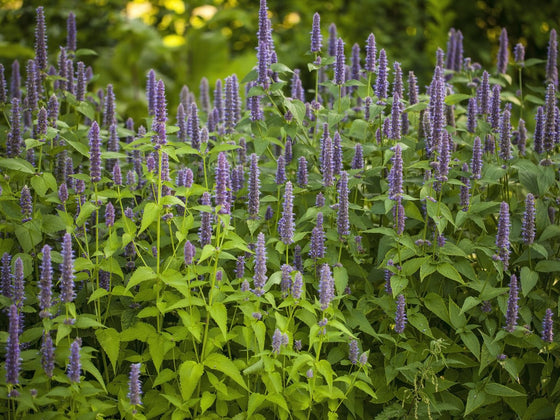
How to grow anise hyssop in Australia from seed: surface sowing, free-draining soil, sowing months for six zones, cutting back, and picking leaves and flowers.
| Position | Full sun or light shade |
|---|---|
| Depth | Surface, or 1 mm |
| Spacing | 30 to 40 cm apart |
| First pick | Leaves from about 10 weeks |
Anise
How to grow anise in Australia: when to sow in all six climate zones, sowing where it grows, spacing and watering, then harvesting and drying seed and leaves.
| Position | Full sun, sheltered from wind |
|---|---|
| Depth | 6 to 10 mm |
| Spacing | 25 to 30 cm apart |
| First pick | Seed 17 to 20 weeks from sowing |