
How to Grow Korean Mint in Australia
Sow Korean mint seed in trays in spring, and in autumn too in the subtropics, once the soil sits at 15 to 20°C. Press the tiny seed in and barely cover it; seedlings appear in 10 to 36 days. Plant out 40 to 50 cm apart in sun and free-draining soil. Pick leaves from about 12 to 14 weeks.
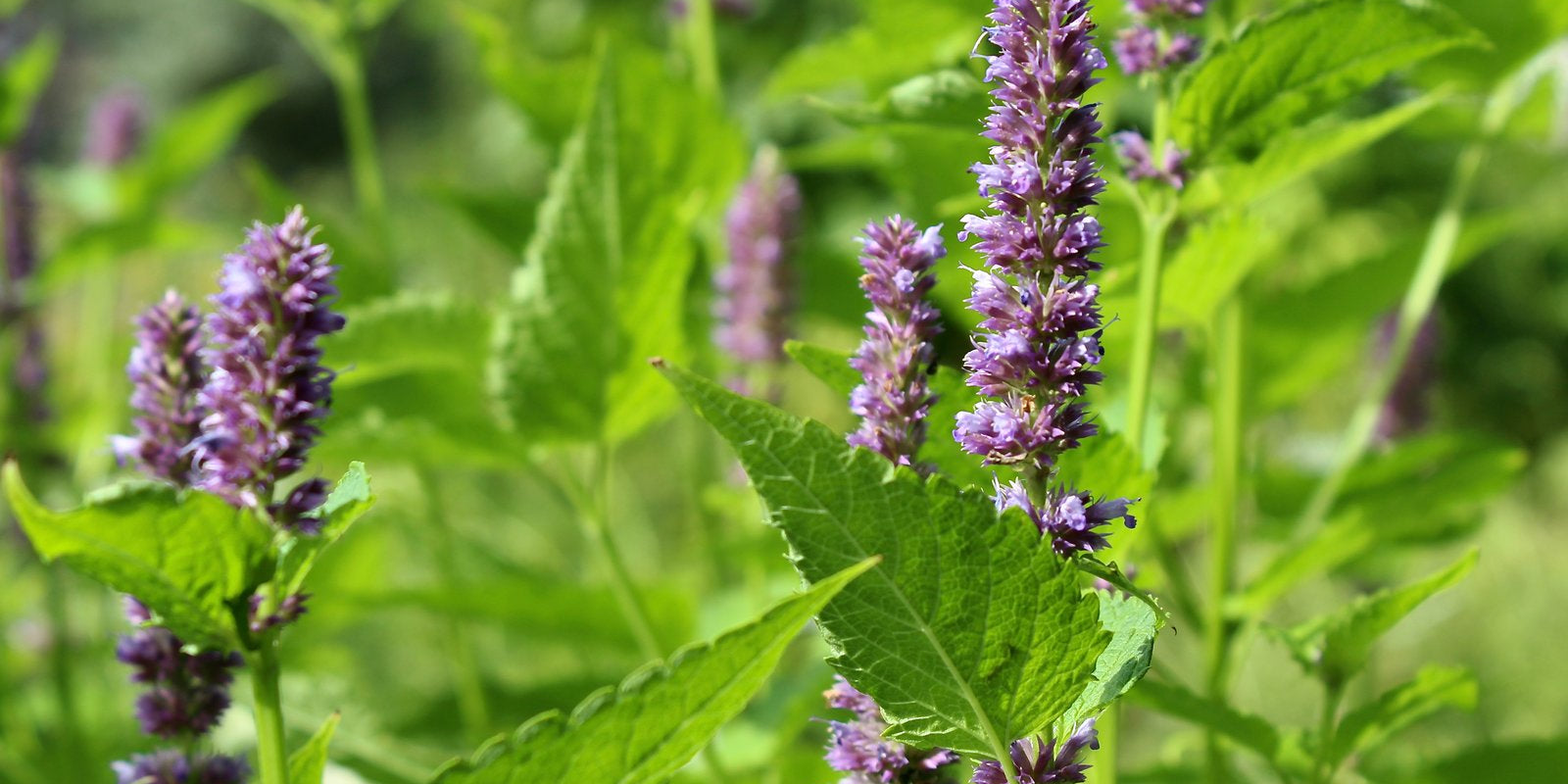
| Sun | Full sun or light shade |
|---|---|
| Water | Moist but free-draining; copes with dry spells |
| Soil | Fertile, free-draining, pH 5.0 to 8.0 |
| Feed | Minimal; half-strength feeds at most |
| Spacing | 40 to 50 cm apart |
| Depth | Barely covered, 1 to 2 mm |
| Germination | 10 to 36 days at 15 to 20°C |
| Harvest | Leaves from 12 to 14 weeks |
| Container | Yes; 40 cm pot, about 28 L |
| Frost | To about minus 5 to minus 10°C; dies back |
| Use | Leaves for salads, stews, pancakes and tea |
Korean mint (Agastache rugosa) is a clump-forming perennial of the mint family, Lamiaceae, grown for anise-flavoured leaves and violet flower spikes that bees love. Despite the name it is not a true mint: it grows as an upright clump about 1 m tall and does not run. The usual mistake is burying its tiny seed, which then often fails to come up.
Three mistakes that matter
- Burying the seed. The seed is tiny and easily buried too deep, so a normal covering of mix can stop it coming up at all. Press it onto the surface and barely cover it, as Starting in trays describes.
- Planting into heavy, wet soil. Korean mint dislikes heavy, poorly drained clay and damp ground, so the crown can rot over a wet winter. Lift the bed as Site, soil and setup describes, and keep mulch clear of the crown.
- Pulling it out in winter. It is herbaceous, so in frosty districts the stems die back to the ground and the clump looks dead. Mark the spot and cut the old stems as Cutting Back describes; new shoots follow in spring.
When to plant
Sow when the soil sits between 15 and 20°C, which in most zones means spring, with a second autumn window in the subtropics. One sowing gives a clump that lasts a few years, and its self-sown seedlings often carry it on.
| Zone | Example cities | Sow | Harvest | Notes |
|---|---|---|---|---|
| Tropical | Darwin NT; Cairns, Townsville QLD; Broome WA | Apr-Jul | Jul-Nov | Sow in the dry season. Grow it in a raised bed or pot so wet-season downpours drain away. |
| Subtropical | Brisbane, Gold Coast, Bundaberg QLD; Coffs Harbour, Lismore NSW | Aug-Nov and Mar-Apr | Nov-Aug | Spring and autumn both suit. Free drainage matters most through humid, rainy summers. |
| Arid and semi-arid | Alice Springs NT; Broken Hill, Dubbo NSW; Mildura VIC; Kalgoorlie WA | Sep-Nov | Dec-Apr | Sow after the last frost. Mulch and deep watering carry young plants through the first hot summer. |
| Temperate | Sydney, Newcastle, Wollongong NSW; Melbourne, Geelong VIC | Sep-Jan | Dec-May | Sow once spring soil reaches 15°C. Late sowings in January need steady water through the summer heat. |
| Mediterranean | Perth, Bunbury WA; Adelaide and the SA coast | Sep-Nov | Dec-Apr | Sow in spring so plants establish before the dry heat arrives; mulch and water steadily. |
| Cool and alpine | Hobart, Launceston TAS; Canberra ACT; Ballarat VIC; Orange NSW | Oct-Dec | Jan-Apr | Start trays under cover and plant out after the last frost. Clumps die back over winter. |
Where frost lingers, start seed in trays under cover. Plant out after the last frost, which around Canberra and Ballarat often means Melbourne Cup weekend. At the hot end of a window, keep trays in light shade.
Site, soil and setup
In the wild it grows in sunny, stony meadows and along mountain creeks in East Asia.
| Get the bed right | What to do |
|---|---|
| Light | Full sun or light shade; the leaves taste stronger in full sun |
| Soil | Fertile, free-draining soil that still holds some moisture; sandy and loamy soils suit it best |
| pH | About 5.0 to 8.0; below 5.0, dig in garden lime at 100 to 200 g per square metre 4 weeks ahead |
| Preparation | Dig in a 5 cm layer of compost, or well-rotted manure 4 to 6 weeks before planting |
| Heavy clay | Build a raised bed or mound so winter rain drains away from the crown |
| Position | A permanent spot at the middle or back of a herb bed or border, since it grows about 1 m tall |
As a perennial it stays put for years, so it sits outside the vegetable rotation. See soil pH explained before liming.
Container growing
Korean mint suits a large pot on a sunny balcony or courtyard. Choose a pot at least 40 cm across, about 28 L, and fill it with premium potting mix. Potting and seed-raising mixes can carry Legionella bacteria, so wet them down, wear gloves and a P2 mask, and wash your hands afterwards. The store sells one Korean mint with no named variety, so there is no compact form to choose.
- Water: when the top few centimetres of mix feel dry, until water runs from the drainage holes.
- Feed: fish and seaweed blend at half strength, about 12.5 mL per 9 L, fortnightly while the plant is growing actively.
- Position: full sun, with afternoon shade for pots in hot inland districts.
Sowing Seeds
Start the seed in trays and plant the young plants out, because tiny seed is easier to keep moist and safe in a tray. The store's Korean Mint seeds are Agastache rugosa, not its close relative anise hyssop.
Starting in trays
- Scatter the seed thinly over a punnet of moist seed-raising mix, press it in and barely cover it, 1 to 2 mm at most.
- Water gently from below or with a mist spray, because a heavy stream washes the seed away.
- Keep the mix evenly moist; seedlings usually appear in 10 to 36 days at the soil temperature When to plant gives.
- Prick the seedlings out into their own cells or small pots once they are large enough to handle.
Planting out
- Harden off the young plants (set them outdoors a little longer each day so they adjust to sun and wind) for one to two weeks.
- Plant them out at 5 to 10 cm tall, 40 to 50 cm apart, at the depth they sat in the pot.
- Water them in with seaweed solution at half strength, 15 mL per 9 L.
- Keep the soil moist for the first few weeks while the roots settle.
Care by growth stage
Drainage decides the crop, so set the bed up as Site, soil and setup describes. Established plants then cope with dry spells and need little feeding.
| Stage | Water | Feed | Watch for |
|---|---|---|---|
| Seedlings in trays, first 6 weeks | Mist or water from below; keep the mix moist, never soggy | None until the first true leaves, then seaweed solution at half strength, 15 mL per 9 L, fortnightly | Seedlings collapsing at the base; stretched, pale seedlings |
| Young plants, weeks 6 to 12 | A deep soak when the top few centimetres dry | None in a compost-rich bed; in pots, the half-strength blend Container growing gives | Slugs and snails on soft new growth |
| Picking and flowering, from about week 12 through summer | Water deeply in long dry spells; mulch to hold moisture | None in a bed; in pots, keep up the fortnightly blend | Aphids on the tips; white powder on the leaves |
| After flowering, autumn in most zones | Water less as growth slows | None | Spent spikes to cut off, or to leave for seed |
| Winter rest where frost falls, and regrowth, second season on | Little while dormant; keep watering steady right through picking once shoots return | Compost as a 5 cm mulch each spring, kept clear of the crown | Water lying around the crown; a crowded clump ready to divide |
Korean mint tolerates frost down to about minus 5 to minus 10°C. If growth stalls in poor soil, a light scatter of all-purpose controlled release granular (NPK around 14-5-10) can help.
Cutting Back
Pinching and deadheading keep the clump bushy and flowering, and a late winter tidy makes way for new shoots.
- Pinch out the growing tip once young plants are growing strongly, so they branch.
- Deadhead spent flower spikes through the season to bring on more flowers, leaving a few to ripen if you want self-sown seedlings.
- Cut the dead stems to the ground in late winter or early spring, before the new shoots grow through them.
- Divide a crowded clump every 3 to 5 years in autumn or early spring (see dividing perennials).
Companion planting
Korean mint sits best among other sun-loving perennials that want free drainage and little feeding.
Grows well with
- Lavender, which wants the same full sun and free-draining soil.
- Echinacea, another bee plant that also dies back in winter and suits a sunny border.
Keep apart
- Mint, whose runners crowd a clump and which wants richer, damper soil.
- Annual beds dug over every season, where digging damages the perennial crown.
Harvesting Leaves and Flowers
Start picking leaves about 12 to 14 weeks after sowing, once the plant is big enough to spare them. Take only a few until it is established.
- Pick young leaves and shoot tips as needed through the growing season.
- Pick in the morning, when the plant is full of water.
- Cut flower spikes for a vase, and stand them in water for a few hours before arranging.
- For drying, cut leafy stems and open flower spikes in full bloom.
Use the leaves fresh, or dry leaves and flowers flat, out of direct sun, where air moves freely. They are ready in one to two weeks, when the leaves are brittle and the flowers feel papery. Store them in a sealed jar somewhere dark, and dry them longer if condensation forms inside.
Chop young leaves into salads, add them to stews in the last minute of cooking, fold them into savoury pancakes or brew them as tea.
Common problems
Seed slow to come up. Buried, dry or cold seed can sit dormant for months, so check the covering and moisture in Starting in trays. Read more
Leggy seedlings. Seedlings grown in dim light stretch and flop, so move trays to bright light and prick them out before they crowd. Read more
Floppy stems and few flowers. Too much fertiliser, very rich soil or shade makes soft stems that lean and flower less; stop feeding and move plants into sun.
Clump fades after a few years. Korean mint is a short-lived perennial, so keep it going by dividing the clump or by potting up self-sown seedlings in spring.
Pests and diseases
Korean mint is generally free of serious pests, so most trouble falls on seedlings.
Slugs and snails, including grey field slug (Deroceras reticulatum). They feed at night and after rain, and can strip young seedlings. Search with a torch about two hours after sunset, and set beer traps where they are active. If you need a bait, use an iron-based one, far safer around pets and wildlife than metaldehyde pellets. Read more
Aphids (family Aphididae). These small sap-suckers cluster on soft tips in warm weather. Hose them off with a firm jet of water, and leave ladybirds and lacewings to finish the job. Read more
Powdery mildew (fungi of the order Erysiphales). White, powdery patches can spread over the leaves, most often on crowded or dry, stressed plants. Remove the worst leaves and spray early outbreaks with 1 part full-cream milk to 10 parts water. Read more
Damping off (Pythium species and Rhizoctonia solani). Seedlings rot at the base and fall over, most often in wet, crowded trays. Sow into fresh seed-raising mix and water from below without overwatering. Read more
Prevention first
- Sow in fresh seed-raising mix, in clean trays.
- Plant out at the full spacing Planting out gives, so air moves between plants.
- Water at the base, never over the leaves.
- Check the soft tips each week while plants are in active growth.
Tips
- Mix the seed with four to ten parts of dry, washed sand, so you can see where it lands (see how to sow tiny seeds).
- Take 5 cm cuttings from young shoots and trim off the lower leaves. Keep them moist in pots of potting mix, since roots can take a few months.
- Use the leaves in place of tarragon in cooking.
- Save seed by letting a few spikes dry on the plant, then rub the tiny seeds free over a tray.
Questions
Is Korean mint a real mint?
No. It belongs to the mint family, Lamiaceae, but it is Agastache rugosa, not a Mentha. It grows as an upright clump about 1 m tall. It does not spread by runners, so it needs no barrier in a bed.
Is Korean mint the same as anise hyssop?
No. Anise hyssop, Agastache foeniculum, is a close relative from North America with a similar anise scent and purple flower spikes. Korean mint, Agastache rugosa, comes from East Asia. The two names are sometimes mixed up in the trade.
What does Korean mint taste like?
The leaves taste of anise and spearmint, with a liquorice note. They are strongest when the plant grows in full sun. Use them fresh in salads, add them to stews at the end of cooking, or brew them as tea.
Does Korean mint come back every year?
Yes, for a few years. It is a short-lived perennial that dies back to the ground in frosty winters and reshoots in spring. Divide the clump in autumn or early spring, or keep a few self-sown seedlings, to carry it on.
Can you grow Korean mint in a pot?
Yes. Choose a pot at least 40 cm across, about 28 L, filled with premium potting mix. Put it in full sun and water when the top few centimetres dry. Feed with fish and seaweed blend at half strength, 12.5 mL per 9 L, fortnightly while it grows.
Grow it
More herbs to sow in September
All herbs
Agrimony
How to grow agrimony in Australia from seed: chilling the burrs, sowing months for six climate zones, sun and soil, cutting back, harvest, history and safety.
| Position | Full sun, light shade tolerated |
|---|---|
| Depth | 5 mm |
| Spacing | 30 cm apart |
| First pick | Summer; 12 to 18 weeks from spring sowing |

Angelica
How to grow angelica in Australia from seed: fresh or chilled seed sown on the surface, part shade, months for six climate zones, stems, history and safety.
| Position | Part shade, morning sun |
|---|---|
| Depth | Surface; press in, uncovered |
| Spacing | 50 to 90 cm |
| First pick | Stems at about 18 months |
Anise Hyssop
How to grow anise hyssop in Australia from seed: surface sowing, free-draining soil, sowing months for six zones, cutting back, and picking leaves and flowers.
| Position | Full sun or light shade |
|---|---|
| Depth | Surface, or 1 mm |
| Spacing | 30 to 40 cm apart |
| First pick | Leaves from about 10 weeks |
Anise
How to grow anise in Australia: when to sow in all six climate zones, sowing where it grows, spacing and watering, then harvesting and drying seed and leaves.
| Position | Full sun, sheltered from wind |
|---|---|
| Depth | 6 to 10 mm |
| Spacing | 25 to 30 cm apart |
| First pick | Seed 17 to 20 weeks from sowing |