
How to Grow Nettles in Australia
Nettle is a fast-growing perennial grown for its young leafy tops, butterfly caterpillars and liquid feed. Press the tiny seed onto damp mix without covering it, because it needs light, and keep it at 18 to 22°C. Grow it in a large pot or behind a barrier in rich, moist soil. Wear gloves for every task, and cook or dry the tops before eating.
| Sun | Sun to part shade |
|---|---|
| Water | Keep moist; not drought tolerant |
| Soil | Rich, moist, well drained; pH 6 to 7.5 |
| Feed | Manure before planting; half-strength liquid feeds |
| Spacing | 30 to 45 cm apart |
| Depth | Surface; 2 mm at most |
| Germination | 10 to 21 days, uncovered, at 18 to 22°C |
| Harvest | Young tops from 11 to 13 weeks |
| Container | Yes; at least 30 L, 40 cm wide |
| Frost | Hardy; frost kills tops back to roots |
| Use | Cooked young tops, liquid feed, butterfly food plant |
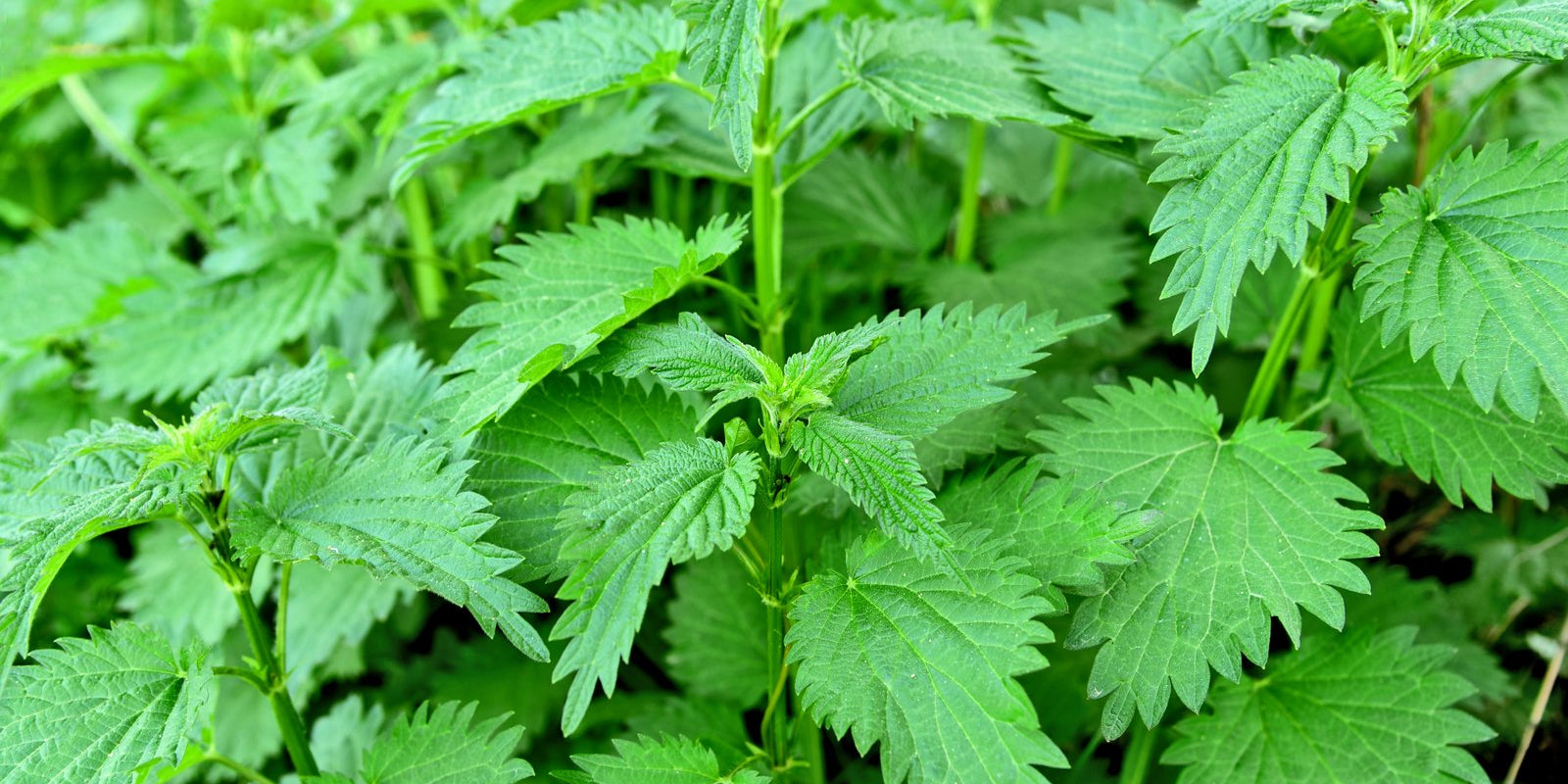
Nettle (Urtica dioica, family Urticaceae), the stinging or common nettle, is a fast-growing perennial grown for its young leafy tops. It also feeds butterfly caterpillars and gives rich material for compost and liquid feed. The store sells nettle seeds of this European and Asian species, which grows 60 to 150 cm and spreads into clumps by creeping roots. The step to get right is leaving the seed uncovered, because darkness stops it germinating.
Three mistakes that matter
- Burying the seed. Nettle seed will not germinate in darkness, so a layer of mix on top can leave a tray bare. Press it onto the surface, or give it a dusting of 2 mm at most, as Germinating the seed describes.
- Planting it loose in a bed. Creeping underground stems carry one plant well beyond where it was sown, and a patch soon crowds out its neighbours. Grow it in a large pot or behind a buried barrier, as Container growing explains.
- Hot, dry, hungry soil. Nettle is not drought tolerant: it goes limp as the soil dries and stays stunted in poor ground. Give it rich, moist soil, a mulch, and afternoon shade in hot districts.
When to plant
Seed germinates well at about 18 to 22°C in light, and a cooler night than day helps it along. Below about 15°C it still comes up, but over weeks rather than days. Sow from spring to early summer, and again in early autumn where winters are mild. One sowing is usually enough, because the plants come back from their roots each year.
| Zone | Example cities | Sow | Harvest | Notes |
|---|---|---|---|---|
| Tropical | Darwin NT; Cairns, Townsville QLD; Broome WA | Apr-Jun | Jun-Oct | Grow it in a pot in part shade through the dry season; wet-season heat often knocks it back. |
| Subtropical | Brisbane, Gold Coast, Sunshine Coast QLD; Coffs Harbour, Lismore NSW | Mar-May and Aug-Sep | May-Dec | Sow as the mix cools in autumn or before spring warms; give afternoon shade and steady water in summer. |
| Arid and semi-arid | Alice Springs NT; Broken Hill, Dubbo NSW; Mildura VIC; Kalgoorlie WA | Mar-Apr and Aug-Sep | May-Nov | Grow it in a shaded pot with regular water; hot, dry wind wilts it fast. |
| Temperate | Sydney, Newcastle, Wollongong NSW; Melbourne, Geelong VIC | Sep-Nov and Mar-Apr | Oct-May | Sow once trays hold 18°C in spring, or in early autumn so plants settle before winter. |
| Mediterranean | Perth, Bunbury WA; Adelaide and the SA coast | Mar-May and Aug-Oct | Jun-Dec | Autumn sowings grow on winter rain; water and shade it through the long, dry summer. |
| Cool and alpine | Hobart, Launceston TAS; Canberra ACT; Ballarat VIC; Orange, Armidale NSW; Stanthorpe QLD | Sep-Dec | Nov-Apr | Start seed indoors in early spring; frost kills the tops each winter and shoots return in spring. |
At the cold edge of a window, start seed indoors on a bright windowsill or a heat mat. In frosty districts, a pot sown in autumn and left outdoors over winter often comes up by itself in spring.
Site, soil and setup
Nettle follows people and livestock. It springs up among cow pats in paddocks and on the sites of old settlements, where the soil is rich, especially in phosphorus. Copy that in the garden with moist, fertile ground and some shelter from hot afternoon sun.
| Get the bed right | What to do |
|---|---|
| Light | Sun to part shade; afternoon shade in hot inland and northern districts |
| Soil | Rich, moist, well-drained loam; not ground that stays waterlogged |
| pH | About 6 to 7.5; below 6, dig in garden lime at 100 to 200 g per square metre, 4 weeks before planting |
| Preparation | Dig in a 5 to 10 cm layer of well-rotted cow or horse manure 4 to 6 weeks before planting, or a 5 cm layer of compost |
| Containment | A root barrier or bottomless drum sunk at least 30 cm deep, with its rim just above the soil |
| Room | 30 to 45 cm between plants and 60 cm between rows; plants reach 60 to 150 cm |
| Rotation | None: a perennial for a pot, a contained corner or a wild patch, not the vegie rotation |
Container growing
A pot is the simplest way to keep nettle in its place. Give one plant a pot of at least 30 L and 40 cm across, filled with premium potting mix and a few handfuls of compost. Stand it on paving rather than soil, so roots cannot escape through the drainage holes.
- Watering: keep the mix evenly moist, and check pots daily in hot weather, when they dry fast.
- Feeding: fish and seaweed blend at half strength, about 12 mL per 9 L, fortnightly in spring and summer.
- Position: morning sun and afternoon shade, away from paths where people and pets brush past.
- Renewal: lift, divide and repot once roots fill the pot, usually every year or two.
Dividing a crowded clump is covered in dividing perennials.
Germinating the seed
Nettle seed has no deep dormancy; what it needs is light. In British laboratory tests, soaked seed germinated well in light and even in deep shade, but not at all in darkness. Alternating warm days and cooler nights also spur it on, which is why seed on bare, freshly dug soil comes up so readily.
This is not hard seed. Fresh seed gave 60 per cent germination at 20°C in one study, half of it within a week, and months of chilling made little difference. In Kew's seed bank tests at cooler or alternating temperatures, 52 to 86 per cent came up over 7 to 11 weeks. The seed is dust-fine, roughly 5,000 to 10,000 to the gram, so sow a pinch of three or four for each plant you want.
| Treatment | How | How long | Temperature | What success looks like |
|---|---|---|---|---|
| None needed: surface sow in light | Press the seed onto damp seed raising mix and leave it uncovered, or dust it with 2 mm of mix at most; cover with a clear lid; bright light but no hot direct sun | Usually 10 to 21 days | 18 to 22°C, a little cooler at night | Green specks, then pairs of small, oblong, slightly fleshy seed leaves |
| Optional short chill | Mix the seed into a teaspoon of damp sand in a sealed bag in the fridge, then scatter sand and seed onto the tray | 1 to 2 weeks in the fridge | About 1 to 5°C in the fridge; then 18 to 22°C | Seedlings that come up more evenly; trials found chilling makes little difference to the total |
| A winter outdoors | Surface sow a pot in autumn, cover it with fine mesh against birds, and leave it outside through winter | Until spring | Outdoor winter cold, then spring warmth | Seedlings in spring, as soil and days warm |
For handling seed this small, see how to sow tiny seeds without losing them.
When nothing comes up
- Buried or kept dark. Seed under a layer of mix, or kept in the dark, stays put. Sow again on the surface, in the light.
- Dried out. Surface seed dries fast. Keep a clear lid on the tray and mist it until the first leaves show.
- Too cold. Cool mix slows it: Kew's tests at 10 and 15°C ran for 7 to 11 weeks. Move the tray somewhere warmer, or onto a heat mat.
- Old or badly stored seed. Seed usually keeps for about 3 years when stored cool and dry in a sealed container.
- Given up too soon. Keep a slow tray moist and in the light for eight weeks before resowing. Seed that sits out a winter can still come up in spring.
Sowing Seeds
Start nettle in cells for the most control, or scatter it where it is to grow, inside its pot or barrier. Both begin with seed pressed onto the surface, as Germinating the seed explains.
Starting in trays
- Fill a punnet or cell tray with fresh seed raising mix, firm it lightly and water it well.
- Press a pinch of three or four seeds onto each cell, and do not cover them.
- Keep the tray under a clear lid in bright, indirect light, at the warmth given in When to plant.
- Lift the lid once seedlings show, and keep the mix moist.
- Thin each cell to the strongest seedling once the first true leaves appear.
- Wear gloves from the start, for sowing and transplanting as well as picking.
Sowing direct
Rake a fine, moist seedbed inside the barrier, mix the seed with a little dry sand and scatter it thinly. Press it in with the back of the rake and mist it daily until seedlings show. Thin them to the spacing in Site, soil and setup.
Planting out
- Plant out when seedlings have two or three pairs of true leaves, usually 4 to 6 weeks after sowing.
- Harden them off first (stand the pots outdoors a little longer each day for a week, so they adjust to sun and wind).
- Plant at the same depth as in the pot and water in with seaweed solution at half strength, 15 mL per 9 L.
- Water deeply after planting, then whenever the top few centimetres of soil are dry.
More on the move from pot to garden is in hardening off seedlings before planting out.
Care by growth stage
Moisture and fertile soil decide how well nettle grows. Plants that never dry out, and are cut back as they start to flower, keep producing soft, leafy shoots.
| Stage | Water | Feed | Watch for |
|---|---|---|---|
| Seedling, weeks 0 to 6 in the tray | Keep the mix just moist; mist or water from below | Seaweed solution at half strength, 15 mL per 9 L, fortnightly from the first true leaves | Damping off (seedlings rotting at soil level); drying out; stretching in low light |
| Young plant, from planting out until settled | Keep the soil moist while roots settle; water deeply when the surface dries | A handful of worm castings in each planting hole | Snails and slugs at night; wilting in hot wind |
| Spring and summer growth | Keep the soil moist; water whenever the top few centimetres dry; mulch 5 cm deep | Pelletised chicken manure, 100 g per square metre, each spring; fish and seaweed blend at half strength, about 12 mL per 9 L, fortnightly | Limp leaves in heat; flower tassels, the cue to cut back; runners escaping the barrier |
| After each cutting back | Water deeply to carry the regrowth | Fish and seaweed blend at half strength, about 12 mL per 9 L, once | A flush of soft new shoots |
| Autumn and winter | Less often; rain is often enough | A 5 cm layer of compost over the root zone | Frost killing the tops back to the roots in cold districts |
| The weeks before picking | Keep watering as usual right up to picking | Nothing extra | Dusty or insect-eaten tops; pick clean, soft growth |
If growth stalls in poor soil, a light application of all-purpose controlled release granular (NPK around 14-5-10) scratched in each spring can help.
Cutting Back
Cutting plants back as they come into flower brings a flush of soft new shoots, richer in water and nitrogen than the old growth. It also stops female plants seeding across the garden. Wear gloves and long sleeves for every cut.
- Cut all stems close to the ground with shears once the green flower tassels appear.
- Slice a spade around the pot or barrier each spring to cut any runners that have crept over.
- In frosty districts, clear the dead stems in winter; shoots return from the roots in spring.
- Put cut stems in the compost before seed forms, or into a bucket for liquid feed, as Tips explains.
Cutting every shoot as it reaches 15 to 30 cm is the recognised way to kill a nettle patch. Let plants regrow well past that between cuts.
Companion planting
Nettle suits a damp, rich, part-shaded corner, and its neighbours there need to hold their own.
Grows well with
- Comfrey, which wants the same rich, moist soil and is also cut for compost and liquid feed.
- Mint, another runner, which suits a sunk pot or barrier in the same damp corner.
Keep apart
- Vegetable beds and low herbs, since its dense canopy and spreading roots crowd them out.
- Paths, play areas and gates, where people and pets brush past the stinging hairs.
Harvesting Leaves and Tops
Pick the soft tops while plants are 15 to 30 cm tall and before they flower, usually from about 11 to 13 weeks after sowing. After that, pick from each flush of regrowth that follows cutting back.
- Wear gloves and long sleeves, and pick on a dry day.
- Take the top two or three pairs of leaves from each stem.
- Take no more than a third of a plant at one picking.
- Skip old and flowering growth: by autumn the leaves turn gritty with mineral crystals.
- Never pick from roadsides, drains or soil that may be contaminated.
Use fresh tops the day they are picked. To dry them, spread the leaves one layer deep on a screen in an airy, shaded place until crisp. Store them in a sealed, labelled jar away from light. Cooking or drying disarms the stinging hairs, and the cooked tops are used like spinach, in soups, or blanched for salads. The stinging hairs on leaves and stems inject histamine and other irritants, so never eat the leaves raw; see Safety.
Traditional use and history
Nettle is native from Europe to Siberia and western China, and to north-western Africa. Its genus name Urtica comes from the Latin uro, to burn. The name dioica means two houses, because each plant usually bears only male or only female flowers. Grieve's A Modern Herbal traces the English name to the Anglo-Saxon netel. It may come from a word for a needle, or from an old verb meaning to spin and sew.
| Tradition | What the record shows |
|---|---|
| Bronze Age Denmark | A burial cloth about 2,800 years old from Voldtofte proved to be woven from nettle fibre, most probably brought from the region of modern Austria |
| Scotland | Nettle cloth was woven for household linen into the sixteenth and seventeenth centuries, and early shoots were forced under glass as spring kail |
| Germany and Austria in the First World War | Nettle fibre stood in for cotton when supplies ran short, and cloth woven from it went into army clothing |
| European kitchens | Young tops were boiled as a spring pot-herb; the diarist Samuel Pepys recorded eating nettle porridge, and Cornish Yarg cheese is wrapped in the leaves |
| Dyers | The leaves gave a green dye, and the roots boiled with alum gave a yellow one |
| Farms | Cut, wilted or dried nettles lost their sting and were fed to cattle, which will not touch the growing plant |
| European herbals | The Greek physician Dioscorides wrote about it in the first century |
Grieve records the old rhyme "Nettle in, dock out", spoken over a sting. In Hans Christian Andersen's fairy tale of the princess and the eleven swans, she weaves their coats from nettles. In Britain it has become the most abundant broad-leaved plant in the national Countryside Survey, and needs no protection.
Safety
Happy Valley Seeds sells nettle as seed for growing. Nothing here is advice to eat or take any part of the plant. Anyone considering using a plant should first seek advice from a qualified health practitioner.
| Topic | What the sources say |
|---|---|
| Stinging hairs | Each hair is a hollow, glass-like needle whose tip snaps off on contact and injects fluid. Histamine, acetylcholine and serotonin are the irritants usually named; a study of a related nettle in Taiwan points to oxalic and tartaric acids for the lasting pain. Skin goes red, itchy, swollen and burning for a few hours, and up to 36 hours in sensitive people. |
| Toxicity | Raw leaves should not be eaten; see Harvesting Leaves and Tops. LiverTox, the United States liver injury database, finds no reported liver injury and scores nettle E, an unlikely cause. |
| Pregnancy and breastfeeding | European regulators say safety has not been established and do not recommend its use while pregnant or breastfeeding. |
| Interactions with medicines | European regulators report none. Their assessment notes that vitamin K in the leaf could weaken blood thinners such as warfarin, a caution German labels carry. Anyone taking medicines should ask a doctor or pharmacist before using any plant. |
| Allergy and skin | A sting can trigger anaphylaxis, a severe allergic reaction, in some people. Allergic reactions have also been reported with nettle leaf products. Hairs cling to clothing, so take off gardening clothes with care. |
| Pets and livestock | Dogs and horses that chew it can suffer mouth swelling, itching and pain, then stumbling and muscle twitching; dogs may vomit and horses may break out in hives. Cattle and rabbits rarely eat the growing plant. Call your vet if a pet is stung in the mouth. |
| Legal status | Not on the declared or prohibited weed lists of New South Wales, Victoria, Queensland, South Australia, Tasmania, the Northern Territory or the ACT. The Western Australian Organism List gives it as permitted. It is naturalised in Victoria, New South Wales and Queensland. The store has no shipping restriction on this seed. |
| Look-alikes | Stinging nettle has stems finely hairy between its longer stinging hairs, and each plant bears only male or only female flowers. Scrub nettle (Urtica incisa) is the native nettle, smooth between its stinging hairs. Small nettle (Urtica urens) is a widespread annual garden weed from Europe, to about 60 cm, also smooth between its stinging hairs, with male and female flowers on one plant. Stinging trees (Dendrocnide species) grow in the rainforests of eastern Australia. |
For a nettle sting, wash the skin with soap and water, do not scratch or rub it, and apply a damp cloth or ice pack. See a doctor if the pain has not eased after 2 hours. For breathing trouble, a swollen tongue or throat, or collapse, call triple zero (000). For poisoning advice, call the Poisons Information Centre on 13 11 26.
Common problems
No seedlings. Usually seed buried, kept dark or allowed to dry out; see Germinating the seed and its list, When nothing comes up.
Limp, scorched plants in summer. Nettle wilts once the soil dries, and hot sun makes it worse. Water deeply, mulch, and give it afternoon shade.
Pale, stunted growth. Poor soil, often short of phosphorus, holds nettle back. Dig in manure or compost and feed as Care by growth stage sets out.
Tough, gritty leaves. Old and flowering growth coarsens; cut plants back, as Cutting Back explains, and pick the regrowth.
Nettles popping up across the garden. Runners and self-sown seed carry it well beyond its bed; see Three mistakes that matter and Cutting Back.
Plants dying in wet ground. Roots cannot survive long spells of waterlogging. Move plants to better-drained soil or a pot.
Pests and diseases
Snails and damping off trouble the seedlings, and older plants feed a native butterfly worth keeping.
Yellow admiral (Vanessa itea). Grey-green to black caterpillars with a yellow side band live inside folded leaves and eat the soft growth. This native butterfly has taken to introduced nettles, so leave them be: the spines are harmless to people.
Common garden snail (Cornu aspersum) and slugs. Snails and slugs find nettle leaves palatable and graze seedlings at night in damp weather. Hand-pick them after dark, or scatter an iron-based snail bait thinly as the label directs. Read more
Damping off (Pythium species and Rhizoctonia solani). Seedlings rot at soil level and collapse, most often in wet mix. Use fresh seed raising mix and clean trays, and avoid overwatering. Read more
Prevention first
- Keep seed trays clear of rain and hose splash, which spread damping off.
- Water the soil, not the tops, and mulch to keep the roots evenly moist.
- Clear boards, loose pots and leaf litter from around seedlings, where snails shelter.
- Check plants weekly, and look inside folded leaves before spraying anything.
Tips
- Drown cut stems in a bucket of water for a few days to make liquid feed. Dilute it 1 part to 10 parts water before use.
- Add cut stems to the compost before seed forms, where they help the heap break down faster.
- Keep one pair of heavy gloves for nettle work only, since the hairs cling to fabric.
- Leave a small patch uncut in spring for yellow admiral caterpillars, and cut the rest for picking.
Questions
Why did my nettle seeds not come up?
Check first whether they were covered. Nettle seed does not germinate in darkness. Press it onto damp seed raising mix and leave it uncovered, or dust it with 2 mm at most. Keep it moist under a clear lid at 18 to 22°C. Seedlings usually show in 10 to 21 days.
How do I stop stinging nettle spreading through the garden?
Grow it in a pot of at least 30 L, stood on paving, or behind a root barrier sunk at least 30 cm deep. Cut plants back as they flower so female plants do not seed, and slice around the barrier each spring to catch runners.
How long does nettle take to grow from seed?
Seedlings are usually ready to plant out 4 to 6 weeks after sowing. The first young tops can usually be picked about 11 to 13 weeks after sowing. Pick while plants are 15 to 30 cm tall and before they flower.
Is stinging nettle native to Australia?
No. Urtica dioica comes from Europe, Asia and north-western Africa and is naturalised in parts of eastern Australia. The native scrub nettle is Urtica incisa, and the small nettle, Urtica urens, is an annual weed from Europe.
Is stinging nettle dangerous to dogs and horses?
It can be. Dogs and horses that chew it can suffer mouth swelling, itching and pain, and sometimes stumbling and muscle twitching. Grow it away from paths and yards, and call your vet if an animal is stung in the mouth.
Is stinging nettle a declared weed in any Australian state?
No. It is not on any state or territory declared weed list, and the Western Australian Organism List gives it as permitted. It spreads readily, so keep it contained and cut it back before seed forms.
Grow it
Choose a size to add it to your cart. You stay on this page.
- Nettle seedsFrom $2.99

More herbs to sow in October
All herbs
Agrimony
How to grow agrimony in Australia from seed: chilling the burrs, sowing months for six climate zones, sun and soil, cutting back, harvest, history and safety.
| Position | Full sun, light shade tolerated |
|---|---|
| Depth | 5 mm |
| Spacing | 30 cm apart |
| First pick | Summer; 12 to 18 weeks from spring sowing |

Angelica
How to grow angelica in Australia from seed: fresh or chilled seed sown on the surface, part shade, months for six climate zones, stems, history and safety.
| Position | Part shade, morning sun |
|---|---|
| Depth | Surface; press in, uncovered |
| Spacing | 50 to 90 cm |
| First pick | Stems at about 18 months |
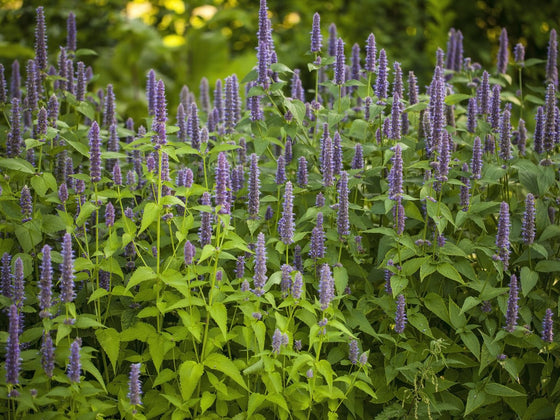
Anise Hyssop
How to grow anise hyssop in Australia from seed: surface sowing, free-draining soil, sowing months for six zones, cutting back, and picking leaves and flowers.
| Position | Full sun or light shade |
|---|---|
| Depth | Surface, or 1 mm |
| Spacing | 30 to 40 cm apart |
| First pick | Leaves from about 10 weeks |
Anise
How to grow anise in Australia: when to sow in all six climate zones, sowing where it grows, spacing and watering, then harvesting and drying seed and leaves.
| Position | Full sun, sheltered from wind |
|---|---|
| Depth | 6 to 10 mm |
| Spacing | 25 to 30 cm apart |
| First pick | Seed 17 to 20 weeks from sowing |