
How to Grow Ashitaba in Australia
Ashitaba is a Japanese leafy perennial grown for tender, glossy leaves and stems. Soak the seed overnight and chill it damp in the fridge for four to eight weeks. Then sow it on the surface, half covered, in cool, bright conditions. Plant 30 cm apart in moist, rich soil with afternoon shade, and pick young stems from the second year.
| Sun | Morning sun, afternoon shade |
|---|---|
| Water | Keep evenly moist; water deeply in heat |
| Soil | Deep, fertile, moist and free-draining |
| Feed | Half-strength liquid feed fortnightly; pelletised manure twice yearly |
| Spacing | 30 cm apart |
| Depth | Surface; half cover the seed |
| Germination | 2 to 8 weeks, after fridge chilling |
| Harvest | Second year onwards |
| Container | Yes; at least 30 L, 35 cm deep |
| Frost | Tolerates light frost; mulch crowns in cold districts |
| Use | Herb garden; young leaves and stems cooked as greens |
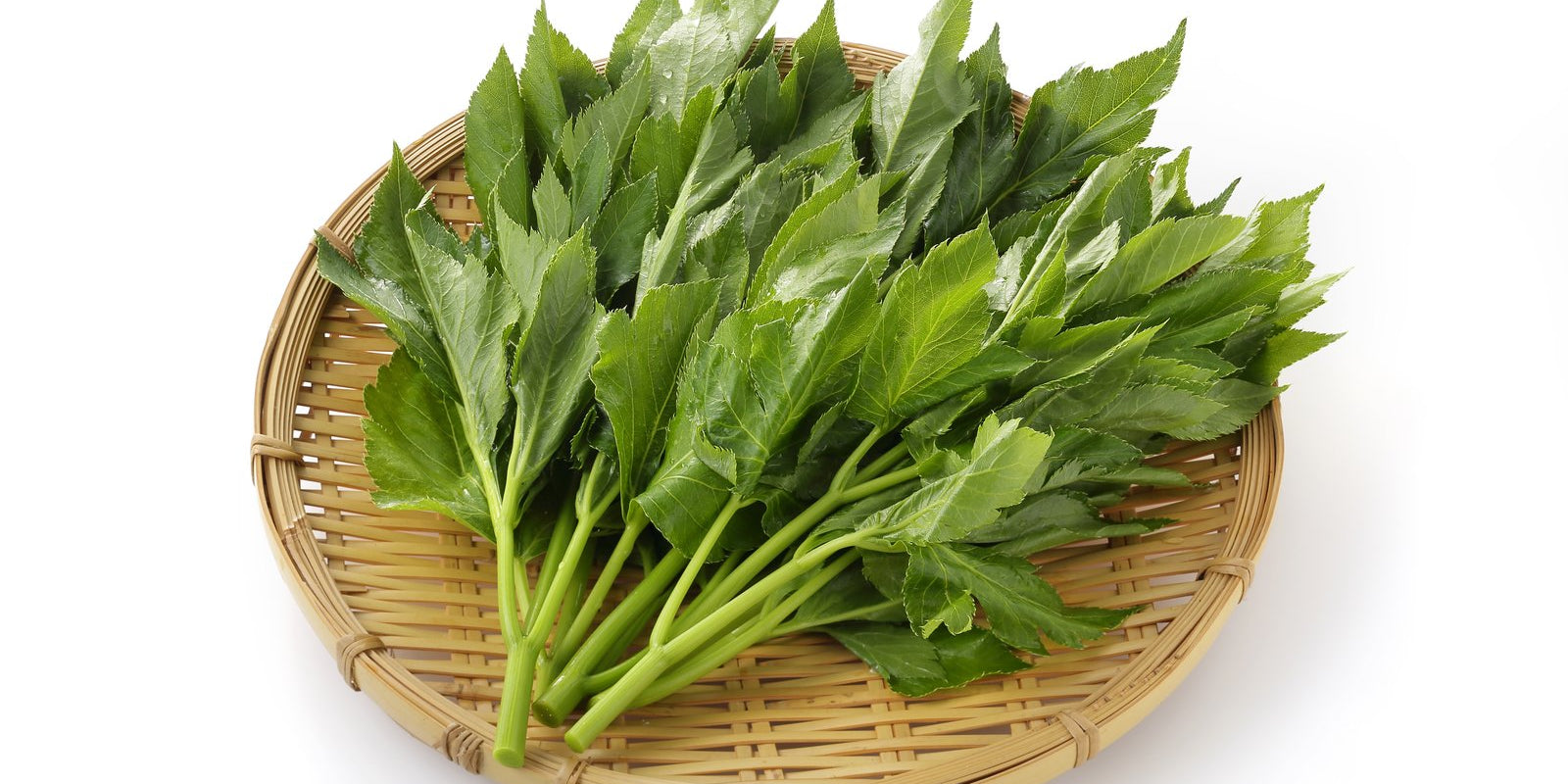
Ashitaba (Angelica keiskei, family Apiaceae) is a leafy Japanese perennial, grown for glossy, divided leaves and tender stems that can be picked again and again. The store sells it as Ashitaba seeds. Plants grow 50 to 120 cm tall, and cut stems bleed a yellow sap. It is a different plant from garden angelica, which has its own guide. The step that decides success comes first: the seed needs a spell of cold and moisture before it will germinate.
Three mistakes that matter
- Sowing seed straight from the packet. In a laboratory study, the embryo in fresh seed did not grow until a cold spell broke its dormancy. Chill the seed damp in the fridge for four to eight weeks, as Germinating the seed explains.
- Burying the seed or sowing into heat. The seed needs light, and chilled seed germinated poorly once days reached 30°C. Press it onto the surface or half cover it, and sow while days are still cool.
- Letting it flower. A plant that flowers and sets seed then dies, usually two to four years after sowing. Cut rising flower stems while small, as Cutting Back and Removing Flower Stems describes, unless you want seed.
When to plant
No Australian planner lists ashitaba, so the windows below are set from laboratory temperatures. Chilled seed germinated best with days of 15 to 20°C and nights of 5 to 10°C. Germination fell to 63 per cent with 25°C days, and 14 per cent with 30°C days. Sow in the cool months, mostly in autumn around Anzac Day, or in late winter and spring where winters are frosty.
| Zone | Example cities | Sow | Harvest | Notes |
|---|---|---|---|---|
| Tropical | Darwin, Katherine NT; Cairns, Townsville QLD | May-Jun | May-Sep | Marginal: heat cuts germination and growth. Sow chilled seed in the coolest dry-season weeks; grow in shade. |
| Subtropical | Brisbane, Gold Coast, Sunshine Coast QLD; Coffs Harbour, Lismore NSW | Apr-Jul | Apr-Nov | Chill seed in the fridge, then sow as nights cool; afternoon shade and mulch carry plants through summer. |
| Arid and semi-arid | Alice Springs NT; Broken Hill, Dubbo NSW; Mildura VIC; Port Augusta SA | Mar-Apr and Aug-Sep | Apr-Nov | Shade from hot afternoon sun and wind, water often, and shelter young plants from winter frosts. |
| Temperate | Sydney, Newcastle, Wollongong NSW; Melbourne, Geelong VIC | Mar-May and Aug-Sep | Mar-Dec | Chill seed in the fridge first. Autumn sowing around Anzac Day suits best; spring sowings need summer afternoon shade. |
| Mediterranean | Perth, Bunbury WA; Adelaide and the SA coast | Mar-May and Aug-Sep | Apr-Dec | Chill seed first and sow on the autumn break; shade and deep mulch get plants through the long, dry summer. |
| Cool and alpine | Hobart, Launceston TAS; Canberra ACT; Ballarat VIC; Orange, Armidale NSW | Apr-May and Sep-Nov | Oct-May | Sow outdoors in autumn for winter chilling, or chill seed and sow in spring after hard frosts; mulch crowns deeply. |
At the warm edge of a window, start trays in the coolest bright spot you have, and keep them off heat mats. At the cold edge, hold seedlings in a cold frame or greenhouse until hard frosts pass.
Site, soil and setup
Ashitaba grows wild in damp places by the sea in central Japan, and it does best where a bed copies that. Japanese home-garden advice notes that it suffers in heat, strong sun and drought, so light shade and steady moisture matter more than rich feeding.
| Get the bed right | What to do |
|---|---|
| Light | Morning sun and afternoon shade; full sun only in mild coastal gardens |
| Soil | Deep, fertile, moist soil that drains well; sand, loam and clay all suit once improved |
| pH | Mildly acid to mildly alkaline; on strongly acid soil, dig in dolomite lime at 100 to 200 g per square metre four weeks before planting |
| Preparation | Dig in a 5 cm layer of compost and pelletised chicken manure at 100 g per square metre |
| Drainage | On heavy clay, build a raised bed or low mound, because warm, wet soil favours root and crown rots |
| Room and air | 30 cm between plants, with open air around them; plants reach 50 to 120 cm |
| Rotation | None: a perennial that stays in one spot for several years, outside the vegie rotation |
Container growing
A pot suits hot or frosty districts, because it can move into summer shade and winter shelter. The store sells one selection, with no compact form. Give one plant a pot of at least 30 L, 40 cm across and 35 cm deep, filled with premium potting mix. Potting mix can carry Legionella bacteria, so wet it down first, wear gloves and a mask, and wash your hands afterwards.
- Watering: keep the mix evenly moist; in summer that can mean watering every day or two.
- Feeding: fish and seaweed blend at half strength, about 12 mL per 9 L, fortnightly in spring and autumn, none in summer heat.
- Position: morning sun and afternoon shade, out of hot, drying wind.
- Winter: in frosty districts, move the pot under a verandah or against a sheltered wall.
Germinating the seed
Ashitaba seed is flat and about 1 cm long. Inside, the embryo is small and underdeveloped, and the seed is also dormant (it will not grow until the right conditions release it). In a laboratory study, a spell of cold and moisture broke this dormancy. The embryo then grew inside the seed before the root emerged. The coat lets water in freely, so nicking or sanding it does nothing.
Germination rose the longer the seed was chilled, reaching 75 to 78 per cent after eight weeks at the temperatures in When to plant. Even so, the study calls germination of this seed complex, and the store's own sowing notes call it erratic. The seed is short lived, so sow it soon after it arrives, allowing three or four seeds per plant wanted.
| Treatment | How | How long | Temperature | What success looks like |
|---|---|---|---|---|
| Cold moist stratification (chilling) | Soak the seed overnight in cool, unchlorinated water, then fold it into damp, not wet, sand, coir or paper towel in a sealed, labelled bag in the fridge | 4 to 8 weeks; the longer end gave more seedlings | About 4 to 5°C, never frozen; then sow with days of 15 to 20°C | Swollen seed at the end of the chill; most show no root in the fridge, so sow on time, and sow any seed with a pale root tip at once |
| A winter outdoors | Sow in autumn in a pot or bed left outside in light shade, and keep it moist | Seedlings from late winter into spring | Outdoor winter cold, in frosty districts of the cool and alpine and arid zones; elsewhere, chill in the fridge | Seedlings at the start of the growing season, the way dropped seed comes up |
Nurseries sometimes use gibberellic acid, which stood in for the cold spell in the laboratory study, but a fridge does the same job at home. For seed treatments in general, see soaking, scarification and cold stratification.
When nothing comes up
- Not chilled, or chilled too briefly. Unchilled seed stays dormant. Chill the next batch for the full four to eight weeks.
- Sown too deep. Buried seed sits in the dark. Sow on the surface or half cover it, leaving part of each seed in the light.
- Too warm. Germination falls away above 25°C. Move trays to a cool, bright place, out of direct afternoon sun.
- Bag too wet, too dry or frozen. Seed rots in a soggy bag. Keep the medium damp, not wet, check the bag weekly, and keep the damp bag in the fridge, not the freezer.
- Old or warm-stored seed. Buy fresh and keep any spare sealed in the fridge.
- Given up too soon. Seedlings can take two to eight weeks after sowing. Keep the tray moist, cool and bright for at least ten weeks before sowing again.
Sowing Seeds
Start ashitaba in trays, where slow seedlings can be watched, using seed already chilled as Germinating the seed explains.
Starting in trays
- Fill cells or small pots with fresh seed raising mix, firm it lightly and water it well.
- Lay three or four seeds flat on each cell, press them in and half cover them with a light sprinkle of mix.
- Mist daily so the surface never dries, because uncovered seed dries quickly.
- Stand the tray in bright, indirect light at the temperatures in When to plant.
- Thin to the strongest seedling per cell once the first true leaves open.
Sowing direct
Where winters are frosty, sow direct in autumn and let the weather do the chilling; elsewhere, sow fridge-chilled seed. Scatter seed thinly on a fine, moist, part-shaded bed, press it in and keep it damp. Thin seedlings to 30 cm apart as they appear.
Planting out
- Seedlings grow slowly at first and can take about two months to reach planting size.
- Harden off first (stand the pots outdoors a little longer each day for a week, so they adjust to sun and wind).
- Plant 30 cm apart at the same depth, keeping the root ball whole.
- Water in with seaweed solution at half strength, 15 mL per 9 L.
- Mulch with compost, kept clear of the crown, and water whenever the top few centimetres dry.
Care by growth stage
Ashitaba grows best at about 15 to 20°C and slows in summer heat. Over-feeding gives soft, lanky stems and poorer leaves, so feed at half strength at most.
| Stage | Water | Feed | Watch for |
|---|---|---|---|
| Seedling, weeks 1 to 8 in the tray | Keep the mix just moist; water from below | Seaweed solution at half strength, 15 mL per 9 L, fortnightly from the first true leaves | Damping off (seedlings rotting at soil level); drying out; stretching in low light |
| Young plant, first months in the bed | Water deeply whenever the top few centimetres dry | A handful of worm castings in each planting hole, then fish and seaweed blend at half strength, about 12 mL per 9 L, fortnightly | Snails and slugs at night; aphids on new shoots |
| First year, building up | Keep the soil evenly moist under mulch | Pelletised chicken manure at 100 g per square metre, scratched in at the start of each growing season and again mid-season | Picking too soon; leave the plant unpicked until its second year |
| Summer heat | Water deeply, daily in hot, dry spells; add afternoon shade | None while growth is slow | Leaves yellowing in heat and dry wind; stem rot in warm, wet soil |
| Winter | In cold districts, water lightly while plants rest; in the tropical dry season, keep watering as for young plants | None while plants rest; where they keep growing through a mild winter, feed as for their stage | Frost browning the tops in cold districts; soggy soil around the crown |
| Picking seasons, from the second year | Keep watering as usual right through harvest | Fish and seaweed blend at half strength, about 12 mL per 9 L, fortnightly while picking heavily | A flower stem rising above the other shoots |
If growth stalls in poor soil, a light application of all-purpose controlled release granular (NPK around 14-5-10) scratched in each spring can help. In frosty districts, spread extra mulch over the crown in late autumn.
Cutting Back and Removing Flower Stems
A plant flowers once it is large enough, as Three mistakes that matter warns. The warning sign shows in spring: one shoot rises higher than the rest. Removing it keeps the plant leafy for more years.
- Check each crown in spring, and cut any shoot rising above the others at its base while it is small.
- Keep picking young stems, because a plant left unpicked grows large quickly and ages sooner.
- Cut old, yellowing leaves at the base.
- Stop picking in midsummer, when new shoots slow, and let the plant rest.
- To save seed, let one strong plant flower and cut the heads when about half the seeds turn brown.
Companion planting
Choose neighbours that want the same dappled light and moist soil, and keep crops prone to the same soil rot at a distance.
Grows well with
- Mitsuba, a Japanese herb that shares the same part shade and moist soil.
- Shiso, a leafy herb for the sunnier edge of the same bed.
Keep apart
- Beans, carrots and tomatoes in warm, humid districts, because the sclerotium fungus attacks all of them and builds up in the soil.
- Mint and other spreading plants, which compete for the moist root zone.
The flowers are pollinated by insects. For more on planting for bees and other helpful insects, see gardening for bees and beneficial insects.
Harvesting Leaves and Stems
Leave the plant unpicked in its first year so it can build up. Pick young leaves and stems from the second year, once a plant stands about 30 cm tall.
- Choose soft, glossy leaves, from when the shoot is half unfolded to two or three days after it opens.
- Cut each stem at its base, close to the crown.
- Leave two or three mature stems on every plant.
- Wear gloves, as Safety explains.
Use the leaves fresh where you can, or wrap them in newspaper inside a plastic bag and stand them upright in the fridge. In Japan the young leaves and stems are cooked as tempura, fried in butter or blanched and dressed, methods that soften their strong, distinctive flavour.
Traditional use and history
Ashitaba is native to Japan, on the Pacific coast of central Honshu and the Izu Islands. Tokyo's farm cooperatives list it among the traditional vegetables of Edo, the old name for Tokyo. It grows wild from the Bōsō, Miura and Izu peninsulas to the Kii Peninsula, and on islands such as Ōshima and Hachijō-jima.
| Name | Meaning or origin |
|---|---|
| Ashitaba | Written with the characters for tomorrow and leaf: a leaf picked today is followed by a new one tomorrow |
| Ashitagusa | An older name, tomorrow's herb |
| Hachijōsō | Hachijō plant, after Hachijō-jima, the island long known for it |
| Tomorrow's leaf | The English rendering of ashitaba |
Japan's National Institute of Health and Nutrition notes that the plant appears in the Bencao Gangmu, a Chinese herbal of the Ming dynasty. In the middle Edo period, the naturalist Kaibara Ekiken described it in his Yamato Honzō as a herb cultivated on Hachijō-jima. It was also grown as fodder for dairy cattle. Folk practice valued it as a tonic, a use the institute says spread by experience and word of mouth, not scientific proof.
| Island line | What sets it apart |
|---|---|
| Red stem | Izu Ōshima and the islands north of Miyake-jima; hardier in cold, with a stronger aroma |
| Green stem | Hachijō-jima; generally rated good quality |
| Mikura-jima | Thicker stems than plants from the other islands; leaves and stems both eaten |
On the islands the young shoots are the part mainly picked and eaten. On Izu Ōshima, ashitaba tempura fried in camellia oil is a local speciality. Miyake-jima ships the most fresh leaves of the Izu Islands, and the plant is also cultivated in Korea and Indonesia. A seed study from China reported that wild populations have declined under market demand and habitat disturbance.
Safety
Happy Valley Seeds sells ashitaba as seed for growing. Nothing here is advice to eat or take any part of the plant beyond the kitchen use in Harvesting Leaves and Stems. Anyone considering using a plant should first seek advice from a qualified health practitioner.
| Topic | What the sources say |
|---|---|
| Toxicity | LiverTox, the United States liver injury database, has no entry for ashitaba, so it gives no likelihood score. Japan's National Institute of Health and Nutrition described it, on long experience as a food, as a vegetable without major safety problems. The European Food Safety Authority's assessment concerns a supplement made from the sap, not the garden plant. |
| Pregnancy and breastfeeding | The safety sources are silent on the leaves. The European Food Safety Authority's assessment of a sap supplement covered adults only, excluding pregnant and breastfeeding women. |
| Interactions with medicines | Japan's food composition tables give the raw leaves and stems 500 micrograms of vitamin K per 100 g. Healthdirect advises people taking warfarin to eat foods high in vitamin K, such as green leafy vegetables, regularly rather than in bursts. The European Food Safety Authority noted that compounds in the sap could affect blood clotting. One drug reference lists a moderate interaction with medicines broken down by the liver enzyme CYP1A1. Anyone taking warfarin, another blood thinner or other regular medicines should ask a doctor or pharmacist before eating ashitaba. |
| Skin and allergy | The European Food Safety Authority found small amounts of furanocoumarins in the sap. Compounds of this kind, found across the genus, increase skin sensitivity to sunlight and can cause dermatitis (skin inflammation). A test of leaf extracts on rabbit and guinea pig skin found no significant irritation or sun reaction. Known allergens in the carrot family include parsley, coriander and celery. |
| Pets and livestock | The ASPCA's lists of plants toxic and non-toxic to dogs, cats and horses do not include ashitaba. Their angelica tree is Aralia spinosa, a different plant in another family. In Japan ashitaba was grown as fodder for dairy cattle. Keep pets from chewing garden plants, and call your vet if one does. |
| Legal status | Permitted under section 11 on the Western Australian Organism List, subject to any import requirements. Not on the declared or prohibited weed lists of New South Wales, Victoria, Queensland, South Australia, Tasmania, the Northern Territory or the ACT. |
Hemlock (Conium maculatum), a carrot-family weed of most regions of New South Wales and declared noxious in Victoria, is highly toxic if eaten. Its hollow stems carry reddish-brown or purple spots, and crushed leaves smell sharp. Eat only ashitaba grown from labelled seed, never a wild carrot-family plant. For any suspected poisoning, call the Poisons Information Centre on 13 11 26. Call triple zero (000) if someone collapses, is unconscious or unresponsive, has difficulty breathing or has a seizure.
Common problems
No seedlings. Usually seed that was not chilled, was buried or was kept too warm; see Germinating the seed and its list, When nothing comes up.
Seedlings barely growing. Slow early growth is normal, as Planting out notes, so keep seedlings moist and cool rather than feeding harder.
Tall, pale, floppy seedlings. Too little light stretches them, so move trays to brighter light and turn them daily. Read more
Leaves yellowing in summer. Heat, strong sun and dry soil stress the plant, so add afternoon shade, water deeply and thicken the mulch.
Pale leaves and slow growth in spring. Often too little feed, so apply pelletised chicken manure and fish and seaweed blend as Care by growth stage describes.
Plant dying after flowering. This is the end of its life, not a disease; see Three mistakes that matter, and keep a younger plant coming on.
Pests and diseases
Japanese home-garden advice names aphids among the main pests and sclerotium rot among the main diseases.
Aphids (family Aphididae). Colonies cluster on soft new shoots, leaving sticky honeydew, sooty mould and distorted growth. Squash them by hand or knock them off with a strong jet of water. Read more
Sclerotium rot (Sclerotium rolfsii). A brown to black rot girdles the stem base, and plants wilt suddenly and die. White, cottony growth carries small round bodies like cabbage seed. It is most active in warm, wet weather in tropical and subtropical districts. Remove affected plants with the soil around their roots, clean your tools, and replant elsewhere in free-draining soil.
Damping off (Pythium species and Rhizoctonia solani). Seedlings rot at soil level and collapse, most often in wet, crowded trays. Use fresh seed raising mix, avoid overwatering and thin seedlings for air flow. Read more
Snails and slugs, including the grey field slug (Deroceras reticulatum). They feed mostly at night and graze seedlings and young shoots. Hand-pick them after dark, or scatter an iron-based snail bait thinly as the label directs, out of reach of children and pets. Read more
Prevention first
- Raise seedlings in fresh seed raising mix in clean trays, and water without splashing.
- Plant in free-draining soil, and keep mulch a hand's width from each crown.
- Check new shoots weekly for aphids from spring.
- Clear boards, leaf litter and loose pots, where snails and slugs shelter.
Tips
- Let one old plant drop its seed every few years: Japanese growers renew beds from self-sown seedlings and keep picking for five or six years.
- Mark each crown with a short stake in frosty districts, so a plant whose tops brown off in winter is not dug up by mistake.
- Dry saved seed heads in the sun for two or three days, then in shade. Keep the seed in a paper bag with a sachet of desiccant in the fridge until you chill it.
Questions
Why are my ashitaba seeds not coming up?
Usually the seed was not chilled, was buried or was kept too warm. Soak it overnight, then chill it in damp sand or paper towel in the fridge for four to eight weeks. Sow it on the surface, half covered, in cool, bright conditions. Seedlings can take two to eight weeks to appear.
How long does ashitaba take from seed to first picking?
About a year. Seedlings grow slowly and can take two months to reach planting size. Leave plants unpicked in the first year, then pick young stems regularly from the second year, once plants stand about 30 cm tall.
Can I grow ashitaba in Brisbane or other warm areas?
Yes, in the cooler months. Chill the seed, sow from April to July as nights cool, and give plants afternoon shade and mulch through summer. In the tropics it is marginal, because heat cuts germination and growth.
Is ashitaba safe around dogs and cats?
The ASPCA's toxic and non-toxic plant lists do not include it, and the safety sources are silent on pets. The cut stems bleed a yellow sap. Keep pets from chewing garden plants, and call your vet if one does.
Can I grow ashitaba in Western Australia?
Yes. The Western Australian Organism List gives Angelica keiskei the status Permitted, subject to any import requirements. No other state or territory declares it a weed.
Is ashitaba the same as garden angelica?
No. Ashitaba is Angelica keiskei, a Japanese species grown for its leaves and stems. Garden angelica is Angelica archangelica, a different plant with its own guide. Check the botanical name on any seed or plant you buy.
More herbs to sow in October
All herbs
Agrimony
How to grow agrimony in Australia from seed: chilling the burrs, sowing months for six climate zones, sun and soil, cutting back, harvest, history and safety.
| Position | Full sun, light shade tolerated |
|---|---|
| Depth | 5 mm |
| Spacing | 30 cm apart |
| First pick | Summer; 12 to 18 weeks from spring sowing |

Angelica
How to grow angelica in Australia from seed: fresh or chilled seed sown on the surface, part shade, months for six climate zones, stems, history and safety.
| Position | Part shade, morning sun |
|---|---|
| Depth | Surface; press in, uncovered |
| Spacing | 50 to 90 cm |
| First pick | Stems at about 18 months |
Anise Hyssop
How to grow anise hyssop in Australia from seed: surface sowing, free-draining soil, sowing months for six zones, cutting back, and picking leaves and flowers.
| Position | Full sun or light shade |
|---|---|
| Depth | Surface, or 1 mm |
| Spacing | 30 to 40 cm apart |
| First pick | Leaves from about 10 weeks |
Anise
How to grow anise in Australia: when to sow in all six climate zones, sowing where it grows, spacing and watering, then harvesting and drying seed and leaves.
| Position | Full sun, sheltered from wind |
|---|---|
| Depth | 6 to 10 mm |
| Spacing | 25 to 30 cm apart |
| First pick | Seed 17 to 20 weeks from sowing |