
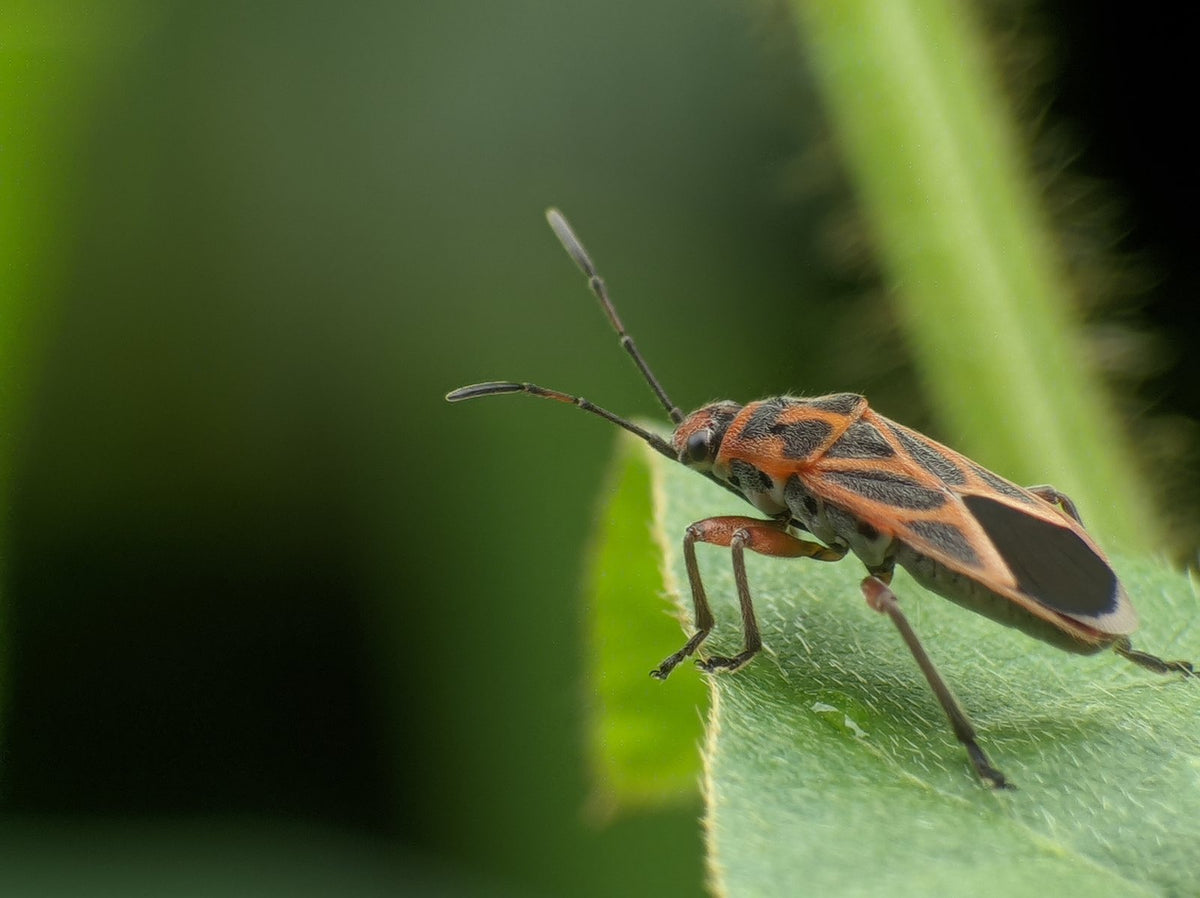
The short version: The Rutherglen bug is a tiny grey-brown native bug that breeds up on inland weeds and then migrates into gardens and crops in huge numbers during hot, dry spells. It sucks sap from growing tips, flowers and developing seeds and fruit, wilting seedlings and blemishing fruit. Because the swarms are so mobile, the practical defences are weed control around the garden, fine netting over seedlings and ripening fruit, and keeping plants well watered, rather than spraying.
Rutherglen bug is a boom-and-bust pest. Most of the time you barely notice it, and then a hot, dry spell brings a sudden influx of tiny grey bugs that seem to get into everything, sunflowers especially.
Because they arrive in such numbers and move on again, the sensible approach is to protect the plants that matter and let the swarm pass, rather than trying to spray your way through it.
How to spot the Rutherglen bug
The Rutherglen bug (Nysius vinitor) is a small native sap-sucking bug, one of the seed bugs, only about three to four millimetres long. The adults are slender and mottled grey-brown to grey-black, with clear wings folded flat over a narrow body and prominent dark eyes, and they are very mobile, flying readily and arriving in large numbers. The nymphs are wingless, pear-shaped and reddish-brown, and gather on the soil and on plants.
A very similar species, the grey cluster bug, can occur with it, mainly in northern New South Wales and Queensland, but elsewhere the Rutherglen bug is the one gardeners meet. Its defining habit is appearing in huge migratory swarms.
Why they arrive in swarms
Rutherglen bugs breed up on inland native herbs, pasture and weeds after winter and spring rain. As those host plants dry off in hot, dry conditions, vast populations take flight and migrate, sometimes hundreds of kilometres, often on storm fronts, mainly in spring and summer. Numbers boom and then crash once they disperse.
They are sap-suckers, feeding on growing tips, flowers, and developing seeds and fruit. That causes wilting and death of seedlings as they dehydrate, and shrivelled, lighter seed with reduced germination. It also blemishes soft and stone fruit. The damage is worst on moisture-stressed plants and when large numbers arrive all at once, and they are a well-known pest of sunflowers.
How to manage the Rutherglen bug
- Control weeds in and around the garden. Keeping down the weeds they breed on, especially before those weeds dry off, removes the breeding sites that feed a swarm.
- Net seedlings and ripening fruit. Fine insect netting or covers protect the vulnerable stages from an incoming swarm.
- Keep plants vigorous and well watered. Stressed plants suffer the most, so steady watering helps plants shrug off the feeding.
- Back the predators and be patient. Birds and spiders take them, and where you can, tolerate a transient swarm, since spraying rarely keeps pace and the bugs soon move on, with reinvasion common after spraying.
Hand-removal is impractical at swarm scale, so exclusion and weed hygiene are the mainstays. Avoid broad-spectrum sprays, which harm bees and beneficial insects for little lasting gain against a mobile pest.
How to keep Rutherglen bug damage down
- Keep the garden and its surrounds weeded, particularly heading into a hot, dry spell.
- Have netting ready to throw over seedlings and ripening crops when a swarm arrives.
- Water consistently so plants are not moisture-stressed when the bugs turn up.
- Protect sunflowers in particular, as they are a favoured host.
Rutherglen bug across Australia's climate zones
- Arid and semi-arid (inland New South Wales, western and inland Queensland, South Australia, inland Western Australia, the Northern Territory interior): the breeding heartland and the source of the swarms, so the highest risk.
- Mediterranean (South Australia, the southern Western Australian wheatbelt and south-west, north-west Victoria): high risk during the spring and summer migrations.
- Temperate (coastal and southern New South Wales, Victoria, south-east South Australia, coastal southern Western Australia, lowland Tasmania): regular influxes during hot, dry spells.
- Subtropical (south-east Queensland, northern New South Wales): present, and the grey cluster bug also occurs here.
- Cool and alpine (the Tasmanian highlands, alpine New South Wales and Victoria): less affected, with the occasional influx.
- Tropical (far north Queensland, the Northern Territory Top End, the Kimberley in Western Australia): the least affected.
Frequently asked questions
What are these swarms of tiny grey bugs?
Most likely Rutherglen bug, a three to four millimetre native sap-sucker that flies in on hot, dry days.
Where do they come from?
They breed on inland weeds and pasture, then migrate long distances when those plants dry off.
Do they bite, or are they a household nuisance?
They can be a nuisance around the house and occasionally give a minor bite, but they are not a health threat, and pest treatment is not recommended.
Do they damage sunflowers and tomatoes?
Yes. Sunflower is a favoured host, feeding on buds, seeds and stems, and they also feed on vegetables and soft fruit including tomatoes.
How do I protect my seedlings?
Clear nearby weeds, cover with fine netting, and keep the young plants well watered and growing strongly.
Will they move on?
Usually yes. The swarms are transient, and numbers crash once the bugs disperse.
Keep the weeds down, have the netting ready, and water well, and you can ride out a Rutherglen bug swarm with your seedlings and fruit intact.
Related growing guides
Ready to plant? Browse our flower seeds, including sunflowers, and our vegetable seeds.