
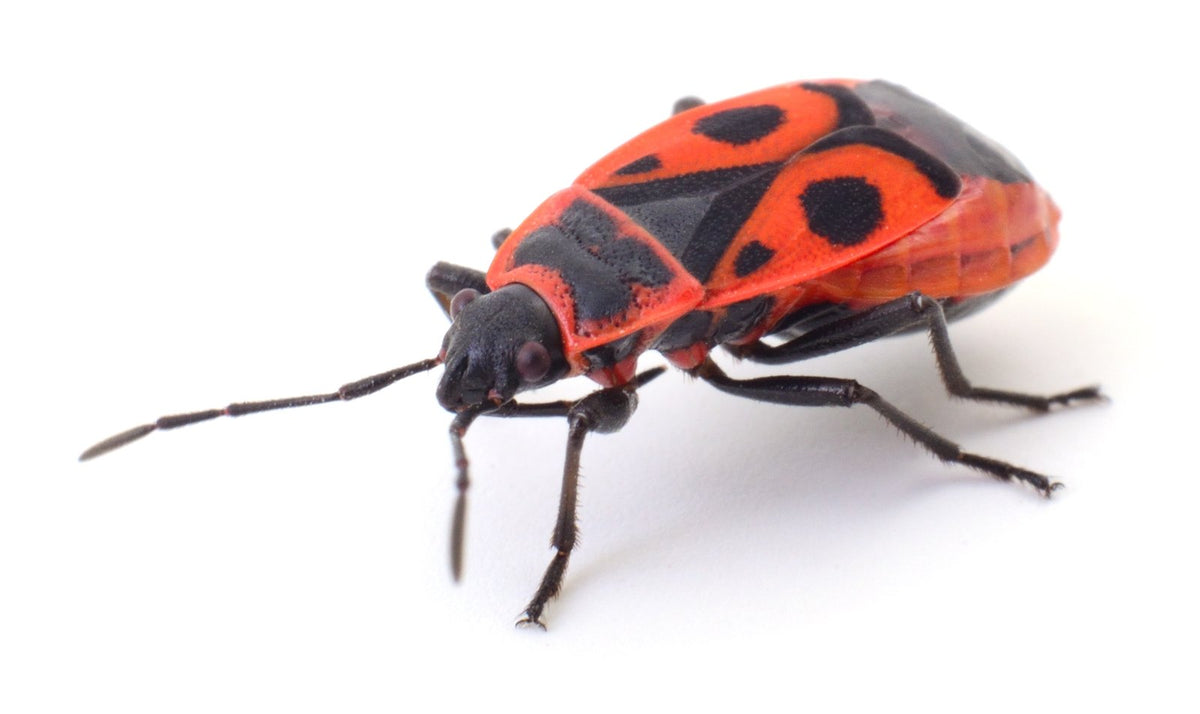
The short version: The harlequin bug, or red bug, is a bright red and black sap-sucking bug common in southern and eastern Australian gardens, often seen in clusters and in mating pairs joined rear to rear. It wilts soft growth and spots and shrivels soft fruit like strawberries. Control it by hand-picking into soapy water in the cool of the morning, clearing the litter and mallow weeds it shelters and breeds in, and trapping under boards, rather than reaching for a broad spray.
The harlequin bug is hard to miss, all bright red and black, and it has a habit of turning up in numbers, often in mating pairs joined rear to rear. On strawberries and soft new growth it can do real damage.
It responds well to a bit of hand work and a tidy-up, especially clearing the weedy mallow it loves, so you rarely need to spray for it.
How to spot the harlequin bug
The Australian garden harlequin bug (Dindymus versicolor), also called the harlequin red bug or simply red bug, is a true bug, native and common across southern and eastern Australia. The adults are oval and up to about 12 millimetres long, bright red or orange with black head, legs and wing bands, showing two red triangles when the wings are folded. They are often seen in groups and in mating pairs joined rear to rear.
It is worth not confusing it with two look-alikes. The North American harlequin bug is a different species, a brassica-feeding stink bug, and not the one in Australian gardens. And the cotton, or hibiscus, harlequin bug is a larger, metallic orange and blue jewel bug found mostly on hibiscus and cotton, which is largely a minor pest. This article is about the red and black Dindymus versicolor.
Why they cluster and build up
Harlequin bugs are thought to pass through several generations across the warmer months, with numbers building in warm, humid spring weather and peaking into summer, then crashing in cold or very dry spells. The adults shelter over winter in dark, sheltered spots, under compost, timber, hedges, fence palings and garden litter, and they aggregate in large numbers, strongly linked to weedy mallow, which is a key host and breeding reservoir.
They are sap-suckers, so the damage shows as wilting of tender growing tips and flower buds, and spotting, dimpling, shrivelling or discolouring of young fruit, which may then drop early. Soft fruit and new growth are hit hardest, which is why strawberries so often bear the brunt.
How to control the harlequin bug organically
- Hand-pick into soapy water. Shake or knock them into a bucket of strong soapy water, best early in the morning when they are sluggish and clustered together.
- Remove their harbourage. Clear garden litter, timber, debris and fallen fruit, and control mallow and other weeds to cut the shelter and breeding sites that let numbers build.
- Trap them. Lay boards or hessian on the ground, where they gather underneath, then collect and destroy them.
- Keep beds clean and back the predators. Encourage birds, including poultry such as guinea fowl, along with assassin bugs and spiders, and spot-treat heavy clusters with horticultural soap or oil only if needed.
Avoid broad-spectrum sprays, which take out the beneficial insects along with the harlequin bugs. Because so much of the population overwinters and breeds in litter and mallow, a good clean-up does more lasting good than any spray.
How to keep the harlequin bug down
- Pull mallow weeds wherever they appear, since they are the bug's favoured host.
- Clear winter shelter such as loose timber, debris and dense litter around beds.
- Check strawberries and soft fruit through spring and summer and pick bugs off early.
- Pick up fallen fruit promptly, as it draws them in.
Harlequin bug across Australia's climate zones
- Cool and cool-temperate (Tasmania, highland and southern Victoria, the New South Wales tablelands, the ACT): present, as part of its native range.
- Temperate (coastal and inland Victoria, most of New South Wales, southern South Australia): its main stronghold, and a common garden pest.
- Mediterranean (South Australia around Adelaide, south-west Western Australia around Perth): well suited and present.
- Subtropical (south-east Queensland, northern New South Wales): it occurs, but is usually a smaller problem.
- Arid and semi-arid (inland South Australia, western New South Wales, inland Western Australia, southern Northern Territory): uncommon, limited by the dryness.
- Tropical (far north Queensland, the Northern Territory Top End, the Kimberley in Western Australia): largely absent. In the warm subtropical and tropical east, a red or orange harlequin on hibiscus is more likely the cotton harlequin bug.
Frequently asked questions
What are the red and black bugs on my strawberries, joined in pairs?
The harlequin bug, a native sap-sucking true bug. The paired ones are mating adults joined rear to rear.
Do they bite?
They are plant sap-suckers, not biters, and are not aggressive to people, with no venom or medical significance.
How is it different from the cotton harlequin bug?
The garden harlequin bug is a red and black pest of many crops in southern and eastern gardens. The cotton, or hibiscus, harlequin bug is a larger, metallic jewel bug found mostly on hibiscus and cotton, and is mostly minor.
Why are there so many?
They are believed to breed over several generations in warm, humid weather, and they shelter and breed on mallow weeds and garden litter, so numbers surge and cluster quickly.
What damage do they do to fruit?
Their sap-sucking causes spotting, dimpling, shrivelling and discolouring, premature drop and reduced quality, with soft fruit and new growth hit hardest.
How do I control them without spraying?
Hand-pick or shake them into soapy water early in the morning, clear mallow and litter, trap them under boards or hessian, keep beds tidy, and encourage birds and predatory insects.
Clear the mallow and the winter shelter, pick them off in the cool of the morning, and the harlequin bug loses both its hiding places and its foothold in your beds.
Related growing guides
Ready to plant? Browse our vegetable seeds and flower seeds for the season ahead.