
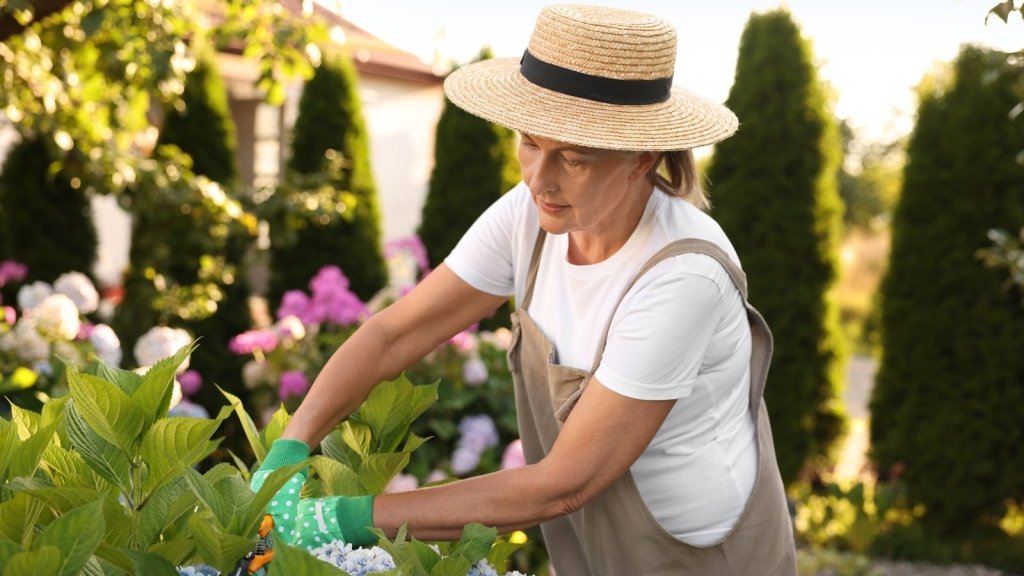
The short version: Most gardening injuries are small and avoidable: a cut hand, a scratched eye, a sore back, a bad sunburn. The serious ones in Australia come from a short list, and each has a simple habit that cuts the risk. Wet down potting mix and wear a P2 mask and gloves. Cover up whenever the UV Index is 3 or above. Lift with your knees and swap tasks every 15 minutes or so. Keep every chemical in its original container, locked away, with the Poisons Information Centre number (13 11 26) on the fridge. Learn the first aid for a snake bite before you ever need it. And wash your hands before you eat.
Gardening is one of the healthiest things you can do with a spare hour, and we would never want a safety article to put anyone off. The point of this one is the opposite: a few habits, learned once, mean you can garden hard for decades. We have grouped the risks the way they turn up in a real backyard, from the bag of potting mix to the snake in the woodpile, and we have leaned on Australian health authorities for every number.

Potting mix, compost and soil: the Legionella habit
Australian potting mixes, composts and garden soils commonly carry the bacterium Legionella longbeachae. Breathe in enough contaminated dust and it can cause Legionnaires' disease, a form of pneumonia. NSW Health recorded 106 cases of Legionella longbeachae infection in 2024, up from 87 in 2023, and people over 50, smokers and anyone with a lung condition, diabetes or a weakened immune system are most at risk. The habit that protects you takes ten seconds:
- Open the bag slowly, in a ventilated spot, with the opening pointed away from your face.
- Dampen the mix with a light spray of water before you handle it, so it raises less dust.
- Wear gloves and a mask. A P2 or N95 mask is the recommended type, not a paper dust mask.
- Wash your hands with soap and water afterwards, and always before eating, drinking or smoking.
Symptoms usually appear two to ten days after exposure: fever, chills, a cough, shortness of breath and aching muscles. If you get them after a weekend in the garden, tell your doctor what you were doing. The same precautions apply to turning compost, spreading mulch and sieving soil.

Tetanus, cuts and scratches
The tetanus bacterium lives in soil, dust and manure, and it enters through exactly the wounds gardeners get: a rose thorn, a rusty nail, a dirty scrape. Clean every cut with running water and an antiseptic, and cover it. Adults are advised to have a booster at 50 and again at 65 if they have not had one in the previous ten years, and a doctor may recommend a booster sooner, often around the five-year mark, after a deep or dirty wound, so ask rather than calculate. If you cannot remember when you were last vaccinated, that is a good enough reason to ask.
Sun, heat and water
Of everything on this list, skin cancer is the risk most Australian gardeners will eventually face, and the trigger is not temperature. Sun protection is needed whenever the UV Index is 3 or above, which in Sydney is at least ten months of the year and in Brisbane, Darwin and Perth is close to all of it. UV can be just as high on a cool day as on a hot one, especially under clear skies, and it gets through thin cloud. The routine is the one you learned at school:
- Slip on a long-sleeved shirt and long trousers, which also protect against scratches, thorns and insects.
- Slop on SPF 50 or 50+ broad-spectrum, water-resistant sunscreen, 20 minutes before you go out, and reapply every two hours.
- Slap on a broad-brimmed or legionnaire hat. A cap does not cover your ears or neck.
- Seek shade for the jobs you can do there, and avoid the middle of the day in summer.
- Slide on sunglasses that meet the Australian Standard.
Heat is the other half of the story. Do the heavy work early in the morning or late in the day, take a break in the shade about every hour, and keep drinking. SafeWork NSW's guideline for people working in heat is a small cup of water every 15 to 20 minutes, and less coffee, soft drink and alcohol, which all increase urine output. Thirst, weakness, dizziness, headache, nausea, cramps and heavy sweating are heat exhaustion: stop, lie down somewhere cool with your legs raised, loosen clothing, cool the skin with water and sip fluids. Confusion, slurred speech, a stumbling walk, a seizure or a collapse is heatstroke. Call Triple Zero (000), then start cooling the person straight away while you wait: get them into shade, take off excess clothing, and soak them with cold water, using ice packs and fanning if you have them. People over 65, small children, pregnant women and anyone on heart, kidney or diuretic medication overheat sooner.
Backs, knees and lifting
Back injuries are among the most common manual handling injuries, and the movement that does the damage is bending, twisting and lifting all at once. A bag of potting mix, a full watering can or a heavy pot deserves the same respect as a removalist's box: feet apart, squared up to the load, bend the knees, keep it close to your body and do not twist as you stand. Warm up first with a brisk walk around the yard and a few gentle squats. Then break the day into chunks: fifteen minutes of raking, then some pruning, then some planting, rather than two hours bent over one bed. Kneeling mats, a low stool, a wheelbarrow, a trolley and long-handled tools all move the work into the zone between your shoulders and your mid-thigh, where your back is happiest. If something is too heavy, get help or split the load.
Tools, mowers, eyes and ears
Many gardening injuries involve the hands and fingers, and eyes are at risk too. Secateurs belong in a holster on your belt, not in a pocket, and the right tool for the job is also the safest one. Keep blades sharp, because a blunt blade needs force and force is what slips.
Eye injuries come from two directions. Flying debris from mowers, line trimmers and hedge trimmers is the obvious one: wear safety glasses or goggles with wraparound sides for any power tool and for pruning above your head. The less obvious one is the garden stake. Bending into a bed and meeting the end of a bamboo cane is a classic corneal injury, and plant material in a scratched eye carries a real risk of infection. Cane toppers, an upturned pot or an old tennis ball on every stake costs almost nothing, and any eye injury from plant matter should be seen to the same day.
For mowers and brush cutters, wear enclosed shoes with a solid toe, ideally steel-capped, and long trousers in a heavy fabric. Mind the hot engine, keep cords behind you, take slopes slowly on a ride-on and never carry a child on one. Petrol equipment is loud enough to damage hearing: the rule of thumb from WorkSafe Victoria is that if you would have to raise your voice to talk to someone a metre away, you need ear muffs or plugs, and the damage adds up over years.

Sprays, fertilisers and chemicals
Garden pesticides, herbicides and fungicides sold in Australia must be registered by the APVMA, apart from a few exempt products, and the label is the rule book: the crops it can be used on, the protective gear, the withholding period before harvest and the first aid. Read it every time. Beyond the label, the habits that keep a household safe are the ones healthdirect and Kidsafe recommend:
- Keep products in their original, labelled containers. Never pour anything into a drink bottle or jar.
- Store them in a locked cupboard at least 1.5 metres off the ground, away from food and out of reach of children and pets.
- Wear the gloves, eye protection and mask the label calls for, and take extra care with concentrates, which are far stronger than the mixed spray.
- Do not spray in wind, and do not let spray or rinse water reach drains, gutters or ponds.
- Wash your hands and any splashed skin straight away, and wash contaminated clothes separately.
If someone swallows, inhales or is splashed with a product, call the Poisons Information Centre on 13 11 26, any hour of the day, and do not wait for symptoms. Do not make them vomit. For a splash in the eye, hold the eyelids open and flood the eye with running water for 15 minutes. If they stop breathing, collapse, have a seizure or a severe allergic reaction, call 000 first. Our guides to pyrethrum spray and white oil show how even "natural" sprays need this care.

Snakes
Australia records somewhere between one and four snake bite deaths a year, and brown snakes are responsible for the largest share of serious bites, somewhere between a third and a half depending on the study. Snakes come into gardens for shelter and food, so a tidy yard is the best deterrent: short grass, no stacks of timber, sheets of iron or rubble left for months, and no rats and mice, which draw them in. Wear boots, long trousers and gloves when you clear a corner that has been undisturbed, and lever pots and sleepers towards you so that whatever is underneath moves away.
The first aid is worth memorising. Call 000. Keep the person still and calm, because movement pumps venom through the lymphatic system. Apply a firm pressure immobilisation bandage, starting over the bite and then covering the whole limb from the fingers or toes upward, splint the limb so it cannot move, and mark the bite site on the bandage. Do not wash the bite, do not cut it, do not try to suck out venom, do not apply a tourniquet and do not try to catch the snake. Leave the bandage and splint on, and start CPR if the person becomes unresponsive and is not breathing normally.

Spiders, ticks, bees and wasps
Redbacks live in exactly the places gardeners put their hands: under pot rims, in stacked bricks, inside gumboots left outside. A redback bite is painful but the first aid is simple: wash the area, apply a cold pack for 15 minutes and see a doctor if the pain is severe or spreading or the person is unwell, and get them to hospital, ideally by ambulance, if they collapse or the person bitten is a young child. Do not apply a pressure bandage. Funnel-webs are a different matter. They are found around the Sydney region and nearby coast and ranges, with related species elsewhere along the east coast, and a bite is treated exactly like a snake bite: pressure immobilisation, keep still, call 000. There have been no recorded funnel-web deaths since antivenom was introduced, but a bite can become life-threatening within minutes, so act straight away. Gloves and a check of your shoes before you put them on prevent most garden spider bites.
Ticks live in long grass and shrubs mainly along the east coast, especially after rain. Tuck a long-sleeved shirt into your trousers and your trousers into your socks, use a repellent containing picaridin or DEET, check your skin before you go inside and put clothes through a hot dryer for 20 minutes. Australian advice for removing a tick is to freeze it with an ether-based spray from the pharmacy and let it drop off, not to squeeze it with tweezers. If you have ever had a severe reaction to a tick bite, do not disturb the tick: get medical help to remove it, and keep your adrenaline injector with you if one has been prescribed.
Allergic reactions to stinging insects, including bees, wasps and ants, kill an average of three Australians a year. Flick a bee sting out as fast as you can, apply a cold pack, and watch the person. Swelling of the face or throat, trouble breathing, vomiting or a collapse after a sting is anaphylaxis: it is an emergency. Lay the person flat and do not let them stand or walk (if breathing is difficult, let them sit), use their adrenaline injector if they have one, and call 000. Antihistamine tablets do not treat anaphylaxis. Anyone who has been prescribed an adrenaline injector should keep it with them while they garden.
Mosquitoes, dust and pollen
Ross River virus is spread by mosquitoes and there is no vaccine, so the garden's job is to give them nowhere to breed. Empty saucers, buckets and anything that holds water at least once a week, screen rainwater tanks and wear repellent and long sleeves at dusk. If you have asthma or hay fever, check the pollen forecast and garden on calm days, not on windy days or around thunderstorms, wear a mask for mowing and dusty jobs, and change and shower when you come in. In Victoria the grass pollen season from October to December brings the risk of thunderstorm asthma, and anyone with springtime hay fever should have a plan and a reliever handy on high-risk days.
Digging, ladders and working alone
Before you dig a post hole, a trench or anything deeper than a spade near the house, lodge a free enquiry with Before You Dig Australia at least two business days ahead, as asset owners are asked to respond within two business days. The plans are a guide only: they mostly show network mains and the lead-ins to your property, not private pipes and cables inside your boundary, so dig by hand once you are near anything they mark. Ladders deserve more respect than they get: 36 Australians died from ladder falls in 2020, and most people hospitalised after a ladder fall are men, with people aged 65 and over admitted most often. Use a ladder that meets the Australian Standard, lock it open on firm ground, keep three points of contact, stay off the top rungs and have someone with you for anything above head height. If you garden alone on a hot day, on a ladder or in snake country, carry your phone and tell someone.
Children, pets and toxic plants
Plenty of common ornamentals are dangerous if eaten: oleander, foxglove, brugmansia (angel's trumpet), castor oil plant and white cedar among them. Know what grows in your garden, fence or remove the worst offenders where small children play, and teach children never to eat anything off a plant without asking. If a child does, call 13 11 26 straight away. Never leave a bucket of water where a toddler can reach it. For pets, lilies are the big one: even a small amount of a true lily or a daylily can cause kidney failure in a cat, and the Animal Poisons Helpline (1300 869 738, a paid service that answers around the clock) is the number to keep with the vet's. Our guide to growing from seed with kids covers the safe way to get children involved.
How the risks shift across Australia's climate zones
- Tropical (Cairns and far north Queensland, Darwin and the Top End of the Northern Territory, the Kimberley in Western Australia): heat all year, high humidity through the wet season, mosquitoes in every season, and very high to extreme UV all year. Garden at dawn and dusk and drink more than you think you need.
- Subtropical (Brisbane and coastal Queensland, Coffs Harbour and northern New South Wales): paralysis tick country, snakes active most of the year, and long hot afternoons. Cover up and check for ticks after any work in long grass.
- Arid and semi-arid (inland Queensland, Broken Hill and Dubbo in New South Wales, Mildura in Victoria, inland South Australia and Western Australia, Alice Springs in the Northern Territory): very high UV under clear skies and the driest heat. Dehydration creeps up fast, so plan work around the sun and carry water.
- Temperate (Sydney, Newcastle and the New South Wales coast, Melbourne, Geelong and Victoria): funnel-webs around Sydney, thunderstorm asthma around Melbourne in spring, and cool mornings that fool people into skipping sunscreen.
- Mediterranean (Perth and southern Western Australia, Adelaide and the Adelaide Plains in South Australia): a long dry summer with heat that peaks in the afternoon. Legionella longbeachae, the potting mix species, causes more Legionnaires' disease in Western Australia than the water-borne species does, so the potting mix habit matters here.
- Cool and alpine (Hobart and Tasmania, Canberra and the ACT, Ballarat in Victoria, Orange and Armidale on the New South Wales tablelands, and the alpine country of the Snowy Mountains and the Victorian high country): UV is still high through spring and summer, tiger snakes and copperheads are about on warm days, and frost makes paths slippery early in the day.
These are broad groupings. Wherever you garden, the UV Index for your suburb is in the Bureau of Meteorology forecast and the free SunSmart app.
Frequently asked questions
Do I really need a mask for potting mix?
Yes. Legionnaires' disease from potting mix is diagnosed in Australia every year. The bacteria live in the mix itself, and people are thought to catch them by breathing in dust or fine mist from it, or from hand to mouth. A damp mix, a P2 mask, gloves and clean hands afterwards remove most of the risk.
What is the first aid for a snake bite?
Call 000, keep the person still, apply a pressure immobilisation bandage over the bite and then the whole limb, splint it, and wait for the ambulance. Do not wash, cut or suck the bite and do not use a tourniquet.
Which garden sprays are safe to use without gloves?
Wear gloves for all of them. Many soap, oil and pyrethrum sprays list safety directions on the label, and concentrates are far stronger than the diluted spray. Read the label every time and store everything locked away.
Is sunscreen enough on a cool day?
UV, not temperature, causes skin damage. If the UV Index is 3 or above, you need the hat, sleeves and sunglasses as well as the sunscreen, and in most of Australia that is the case for most of the year.
None of this takes long once it is habit, and every item on the list is cheaper than a day in emergency. Keep a first aid kit and two or three elasticised roller bandages, 10 to 15 cm wide, in the shed, put 13 11 26 on the fridge, and enjoy the garden. NSW Health's Legionnaires' disease factsheet and healthdirect's guide to snake bite first aid are worth a read before the season starts.
Related growing guides
- Garden hygiene: simple habits to reduce pests and disease
- Pyrethrum spray: how to use it safely, and why bees matter
- Rats and mice in the garden: humane, wildlife-safe control
Hat on, gloves on, mix dampened? Browse our vegetable seeds and flower seeds for the season ahead.