
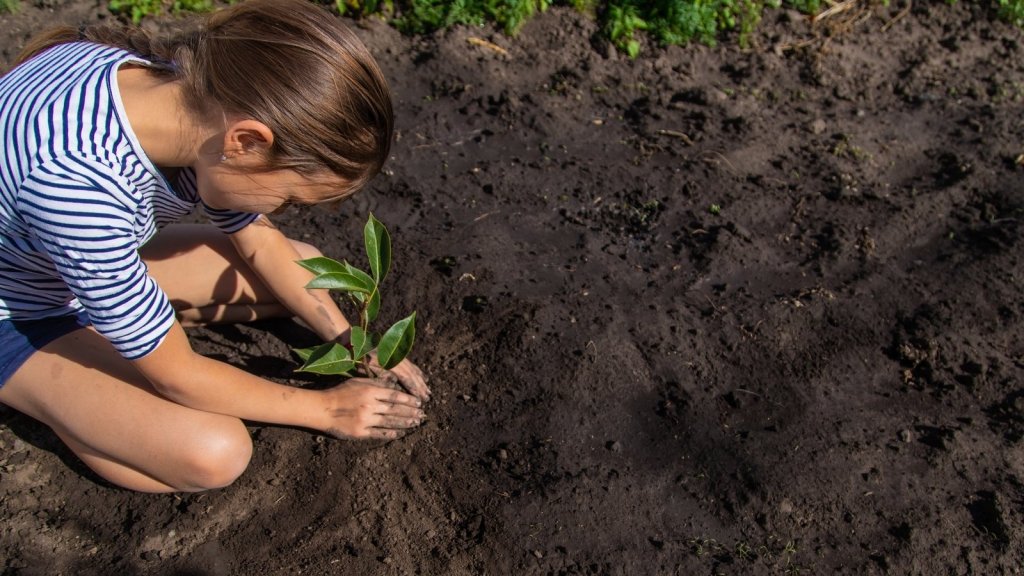
The short version: Children learn patience, responsibility and where food comes from by growing it, and Australian school garden programs report that kids who grow vegetables are more willing to try them. Start with big, fast, reliable seed: beans, peas, radish, sunflowers, nasturtiums, pumpkin and zucchini, plus a cherry tomato seedling raised by an adult. Give them their own pot or patch, a small watering can and jobs they can finish. And build in the safety habits from day one: an adult opens and wets down the potting mix, hats and sunscreen whenever the UV Index is 3 or above, no buckets left where a toddler can reach them, hands washed before eating, seeds kept out of reach of children under three, and toxic ornamentals such as foxglove and oleander kept out of the play garden. The Poisons Information Centre is 13 11 26.
A bean in a jar is one of the simplest science lessons there is. It costs nothing, it happens in a week, and it teaches a child that a hard brown seed contains a plant that will feed them. Everything in this guide is about making that first experience work, because a child whose first seeds come up is far more likely to want to do it again.

Why it is worth doing
The Stephanie Alexander Kitchen Garden program, which has put cooking and gardening into more than a thousand Australian schools and early childhood services, reports that children who grow and cook food become more willing to try new foods and more confident and skilled in the kitchen and the garden, and independent evaluations of the program have pointed the same way. Outdoor play organisations point to the physical side as well: digging, carrying and pouring build motor skills, and time outside is linked to better sleep and mood. Growing from seed adds the lessons that a packet cannot promise but a garden can teach: patience, because a carrot takes three months or more; responsibility, because a seedling forgotten for a weekend in January can die; and the plain fact that food comes from soil and effort rather than a shelf.
The best seeds to start with
Choose seed that is big enough to handle, quick enough to hold attention and reliable enough to come up. Good first choices:
- Radish: up in three to seven days and ready to pull in three to six weeks. The novelty often gets a child past the peppery taste.
- Beans and peas: big seeds that fit small fingers, up in a week or two, with pods to pick and eat on the spot. Snow peas and sugar snaps are a sweet reward straight off the vine.
- Sunflowers: the classic. A giant variety in a sunny spot becomes a height competition, and the seed head is a lesson in where seed comes from.
- Nasturtiums: large seeds, fast, edible flowers, and they forgive neglect.
- Pumpkin and zucchini: huge leaves, huge flowers, and fruit that grows visibly from one day to the next.
- Cherry tomatoes: slower and best started as a seedling by an adult, but nothing beats picking them straight off the bush.
- Lettuce and salad mixes: sow them thickly in a pot and cut the leaves with scissors at 10 cm, and a child can grow their own sandwich filling.
- Marigolds, cosmos and zinnias: bright, fast, and good for the bees, which is its own lesson.
Carrots are a lovely surprise to pull but take up to three weeks to germinate and three months or more to grow, so grow them alongside something fast rather than first.

Six projects that work
- The bean in a jar. A dried bean on damp paper towel in a clear jar or zip-lock bag, kept warm. The root appears in days and the shoot follows, and the whole thing is visible through the side. Plant it out once it has leaves.
- Egg carton seedlings. A dozen cells of seed-raising mix, one seed per cell, a name written on each lid flap. Peas, beans, sunflowers and marigolds all work.
- The sunflower race. One seed each, a stake, and a measurement every Sunday marked on the stake.
- A pizza garden. A pot of basil, a cherry tomato, some oregano and a capsicum, harvested for one meal at the end of summer.
- Cress heads. Cress or mustard seed sprinkled on damp cotton wool in an eggshell or yoghurt pot with a face drawn on it grows green hair in a week.
- Saving the sunflower seed. Let the head dry, rub the seed out, keep some for next spring and put the rest out for the birds. The cycle closes. Use an open-pollinated variety for this: pollen-free and F1 hybrid types can set little seed or grow into plants unlike their parent.

Jobs by age
- Toddlers (roughly two to three): watering with a small can, patting soil over seeds an adult has sown, pressing in seedlings and picking peas. Everything hand over hand, everything supervised, and no seeds within reach.
- Preschool and early primary: sowing big seeds, writing labels, watering on a schedule, checking for snails and slugs (look, do not touch, or wear gloves, because they can carry rat lungworm), harvesting radishes and beans, decorating pots.
- Older primary: a large pot or a patch of a couple of square metres of their own, with their own choices, thinning seedlings, keeping a diary of sowing and harvest dates, cooking what they grew.
- Teenagers: a crop with a purpose, whether that is chillies for a hot sauce, a cut-flower row to sell or give away, or saving and swapping seed.
The point at every age is ownership. A child who chose the seed, wrote the label and did the watering is invested in a way that a child handed a trowel is not. Let them get muddy, let some of the sowing be random, and quietly take over the watering if the seedlings are about to die of neglect rather than letting the project fail.

The safety habits, and why each one matters
- Potting mix and seed-raising mix. Bagged mixes and composts in Australia can carry the bacterium Legionella longbeachae, which can cause a form of pneumonia, Legionnaires' disease, when dust or mist from the mix is breathed in. An adult opens the bag, away from everyone's face, wets the mix down and wears a P2 mask and gloves. Children join in once the damp mix is in the pot, and everyone washes their hands afterwards.
- Sun. Whenever the UV Index is 3 or above, which is most of the year across the tropics and subtropics and roughly spring to autumn further south, children need a broad-brimmed hat, a shirt with sleeves, SPF 50+ sunscreen applied 20 minutes before going out and again every two hours, sunglasses if they will wear them, shade for the potting bench, and gardening in the morning or late afternoon in summer.
- Water. Children can drown in a few centimetres of water. Never leave a bucket, wading pool, wheelbarrow or watering can full within a toddler's reach, cover ponds and water features, and put lids on rainwater tanks and any wicking-bed reservoir. Lack of supervision is the biggest single factor in child drownings.
- Seeds, choking and treated seed. Beans, peas, pumpkin and sunflower seeds are a choking hazard for children under three, so an adult sows those and toddlers handle only things too big to put in their mouths. Some commercial seed is coated with a fungicide, usually dyed pink, blue or green: keep it away from children entirely.
- Toxic plants. Many garden ornamentals are poisonous if eaten, including oleander, foxglove, brugmansia (angel's trumpet), castor oil plant and white cedar, and Kidsafe NSW also lists lily of the valley and delphinium, especially its seeds, while sweet pea and larkspur seeds are poisonous too. Keep them out of a child's garden, teach children never to eat anything from a plant without asking, and if a child does eat something, call the Poisons Information Centre on 13 11 26 straight away rather than waiting for symptoms.
- Soil, sandpits and pets. Cat droppings in soil and sand can carry the parasite that causes toxoplasmosis, and cat and dog droppings can carry roundworm eggs, which can infect children who put dirty fingers in their mouths. Cover the sandpit when it is not in use, keep cats off the vegetable beds, wash hands before eating, every time, and give anything picked straight from the garden a rinse before it goes in a mouth.
- Tools, cuts and chemicals. Child-sized tools, an adult on anything with a blade, every fertiliser, spray and bait locked away out of reach, and the family's tetanus vaccinations up to date, because the bacteria live in soil.
- Stings. Bees and wasps are part of a garden. Scrape or flick a bee sting out straight away and use a cold pack for a normal sting. Swelling of the face or throat, trouble breathing, a young child who goes pale and floppy, or a collapse is anaphylaxis: lay the child flat, do not let them stand or walk, use their adrenaline injector if they have one and call Triple Zero (000).
None of this is a reason to keep children out of the garden. It is the short list that lets you relax while they are in it.

Setting expectations
Tell children what will happen and when, because waiting is easier with a date. Radish and cress show in three to seven days, beans and sunflowers in about a week to ten days, peas in one to two weeks, and carrots in two to three weeks. Seeds sown too deep, too cold or too wet may not come up at all, and that is a lesson too: sow a few extra, and try again.

Sowing with kids across Australia's climate zones
- Tropical (Cairns and far north Queensland, Darwin and the Top End of the Northern Territory, the Kimberley in Western Australia): bush beans, sunflowers, pumpkins, radish and lettuce sown in the cooler dry season (roughly April to August), and snake beans through the wet, and hats every single day.
- Subtropical (Brisbane and coastal Queensland, Coffs Harbour and northern New South Wales): peas and radish through autumn and winter, beans and sunflowers from spring, and the summer garden done before ten in the morning.
- Arid and semi-arid (inland Queensland, Broken Hill and Dubbo in New South Wales, Mildura in Victoria, inland South Australia and Western Australia, Alice Springs in the Northern Territory): spring and autumn are the children's seasons; summer sun and heat are too fierce for a midday project.
- Temperate (Sydney, Newcastle and the New South Wales coast, Melbourne, Geelong and Victoria): peas and radish in autumn and late winter, beans, sunflowers and pumpkins after the last frost, and a school-holiday sowing in early October that is ready by Christmas.
- Mediterranean (Perth, Margaret River and southern Western Australia, Adelaide, the Barossa Valley and the Adelaide Plains in South Australia): the winter garden is the easy one for children; summer projects need shade and a wetting agent on sandy soil.
- Cool and alpine (Hobart and Tasmania, Canberra and the ACT, Ballarat in Victoria, Orange and Armidale on the New South Wales tablelands, and the alpine country of the Snowy Mountains and the Victorian high country): a short season, so start sunflowers and pumpkins in pots indoors in spring and plant out after the frosts; peas and radish are the reliable autumn crop.
Frequently asked questions
What is the easiest seed for a child to grow?
Beans or radish. Beans are big, fast and forgiving; radish is the quickest harvest. Sunflowers are the most fun.
Is potting mix safe for children?
It is low risk once it is damp and in the pot, but not risk free: the bacteria stay in the mix and can be breathed in from dust or carried from hand to mouth. An adult opens and wets it down wearing a mask and gloves, children wear gloves if they will, and everyone washes their hands afterwards and before eating.
At what age can a child start gardening?
As soon as they can hold a watering can, with an adult beside them. Real sowing jobs suit children from about four, and a pot or patch of their own suits older primary children.
What should I do if my child eats a seed or a plant?
Call the Poisons Information Centre on 13 11 26 immediately, any time of day, and do not wait for symptoms. If they are choking, collapse, have trouble breathing, have a seizure or a severe allergic reaction, call 000.
Give a child a bean, a pot and a job, and stand back. Nature Play WA's summary of the benefits of outdoor play and the Sydney Children's Hospitals Network factsheet on poisonous plants and children are both worth ten minutes.
Related growing guides
- Sunflowers from seed: a complete Australian growing guide
- 12 tips for beginning seed gardeners
- Staying safe in the garden: sun, soil, tools, chemicals and wildlife
Big seeds for small hands: browse our sunflower seeds, bean seeds, radish seeds and nasturtium seeds.