
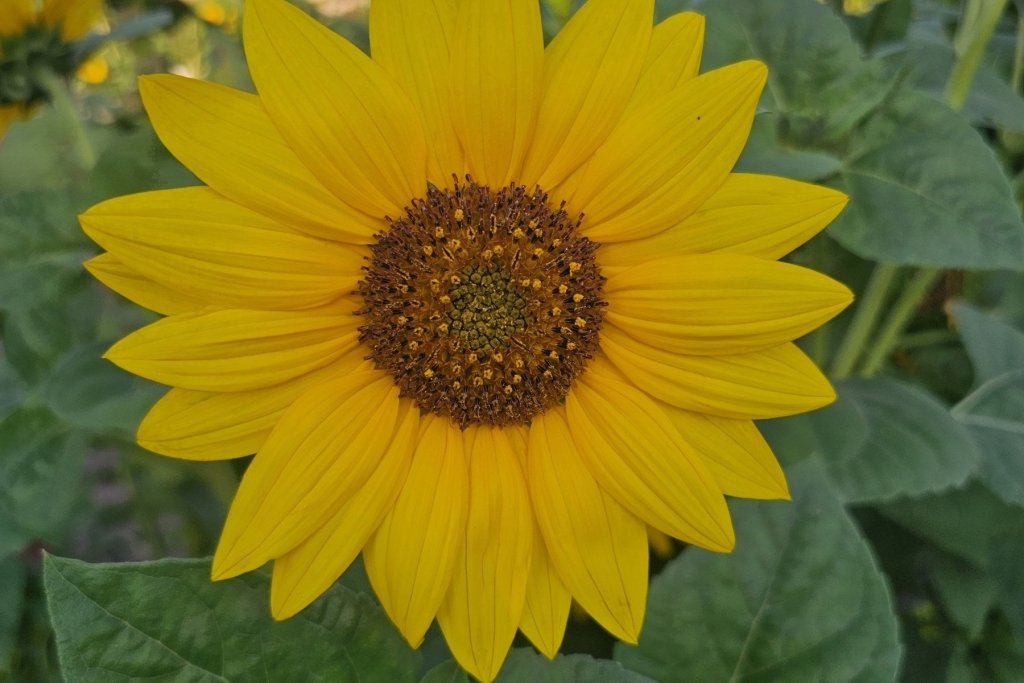
The short version: Sunflowers are one of the easiest and most cheerful things you can grow from seed. They are warm-season annuals that you sow straight into a sunny spot once the frosts have passed, and then watch race away. Choose from towering giants to compact branching types, give them sun, water and something to lean on if they get tall, and they can feed the bees through summer and often hand you, or the birds, a head full of seed in autumn. The heirloom Sunbird is a classic tall, big-headed favourite for exactly that.
Few plants reward a packet of seed quite like a sunflower. Push the seeds into warm soil, keep the water up, and within a couple of months you can be looking up at a wall of golden faces taller than you are. They are the plant that turns children into gardeners, and they earn their keep long after flowering, feeding bees, then birds, and giving you seed to save or roast.

Sunflowers are made for beginners
If you have never grown a thing from seed, start here. The sunflower (Helianthus annuus) is a fast, forgiving, warm-season annual that is happiest sown straight where it is to grow, once the soil has warmed and the danger of frost has passed. The seeds are big and easy to handle, they come up quickly, and the plant does most of the rest itself. If you like an Australian reference as you go, AgriFutures Australia's sunflower profile is a good one.
All they really demand is sun, and plenty of it. Give a sunflower a full-sun position and a steady drink through the warm months, and you have done the hard part. Everything after that is just watching them grow.

Choosing a type: giants, multi-heads and dwarfs
Not all sunflowers are towering giants, and it pays to pick a type to suit your spot. The tall single-stem kinds are the classic show-offs, racing up to head height and beyond on one thick stalk topped with a single huge face. Branching or multi-head types stay a little shorter and throw out many smaller flowers over a longer season, which makes them wonderful for cutting.
At the other end, dwarf and compact varieties are bred for pots and small gardens, flowering at knee or waist height. One more thing worth knowing for the vase: some modern types are pollen-free, which keeps your tablecloth clean and still offers bees nectar, while the old open-pollinated kinds also carry the pollen that bees particularly value.

Meet the Sunbird
If you want the full sunflower experience, the heirloom Sunbird is hard to beat. It is a tall, open-pollinated Helianthus annuus that climbs to around two metres or more, topped with a single big golden face, and it is a generous producer of the large grey-striped seeds that are good for eating or for handing to the birds.
Sunbird earns its place for more than looks. On a warm afternoon you can hear the bees working its big face, and by autumn each head hangs heavy with grey-striped seed. It is hardy and drought-tolerant once established, a magnet for bees and other beneficial insects, and quick to flower, often in around seventy to ninety days from sowing, depending on conditions. Being so tall and sturdy, a row of them can even double as a living trellis for a light climber, or a summer windbreak for shorter crops nearby.

Growing them well
Sunflowers need a sunny, free-draining spot and steady water while they grow fast and fill their seed, easing off only as the seeds ripen. A little attention to water and support is what turns a floppy stem into a proper garden feature. The tall single-stem types benefit from a stake or a sheltered position, since a heavy head on a windy day can snap a stem or pull a plant over.
The one early hurdle is the seedling stage. Snails, slugs and birds all enjoy a young sunflower, so it is worth protecting the seedlings until they are away, whether with a cut-off plastic bottle as a mini cloche, a small wire cage, or a piece of netting pegged over the row for the first week or two. After that, sunflowers are about as low-maintenance as a flower gets.

For bees, birds and seeds
A sunflower works for the garden as much as it decorates it: once the petals fade you can either leave the heads standing for the birds or harvest the seed yourself. While it flowers, the big open face is also a landing pad for bees and hoverflies, so a few plants do the whole garden good.
To harvest the seed yourself, cut the head when the back is brown and the seeds are plump, hang it somewhere dry and airy with good airflow, and rub the seeds free once it has dried. From there they are ready to roast for the kitchen, save for next season, or put out for the birds.

Sunflowers across Australia
Sunflowers are warm-season plants, so wherever you garden the rhythm is the same: warm soil, the last frost behind you, and steady water through the fast growth. Only the timing really shifts with your climate:
- Tropical (Darwin, Cairns, Townsville): grow through the drier months, since heavy wet-season humidity can bring disease to the big leaves and heads.
- Subtropical (Brisbane, Sunshine Coast): a long warm season gives a generous window from spring into autumn.
- Arid and semi-arid (Alice Springs, Broken Hill, Mildura): plenty of sun suits them, with steady water the main thing to manage in the heat.
- Temperate (Sydney, Melbourne, Canberra): sow from after the last frost in spring through early summer for flowers into autumn.
- Mediterranean (Perth, southern WA, Adelaide): long hot summers are ideal, as long as the hose keeps up and a good mulch stops the bed baking dry by February.
- Cool and alpine (Tasmania, Ballarat, the tablelands): wait until the soil warms in late spring, and choose quicker types to make the most of a shorter season.

So pick a type to suit your space, wait for the frosts to finish, and push a few seeds into a sunny patch of warm soil. You can browse our flower seeds for the Sunbird and other sunflowers, and if you are new to raising plants this way, our tips for beginning seed gardeners will get you off to a good start.
For sheer return on a packet of seed, little beats a sunflower. They are tall, fast, full of life, and generous to the very end of the season.
Frequently asked questions
When should I plant sunflowers in Australia?
Sow sunflowers from spring into early summer, once the soil has warmed and the last frost has passed, since they are warm-season annuals that dislike cold. In the cool south, wait until late spring; in the warm north, the window is longer.
How tall do sunflowers grow?
It depends entirely on the type. Tall heirlooms like Sunbird reach around two metres or more, branching types stay a little shorter, and dwarf varieties bred for pots may flower at knee or waist height. Always check the variety before you sow.
Do sunflowers need full sun?
Yes. The clue is in the name. Sunflowers want a full-sun position and will lean and stretch towards the light if they do not get enough, so give them the brightest, most open spot you have.
Is the Sunbird sunflower good for eating seeds?
Yes. Sunbird is an heirloom grown for its large grey-striped seeds, which are good for eating or for feeding to poultry and birds, and each big head produces a generous crop.
How do I harvest sunflower seeds?
Wait until the back of the head turns brown and the seeds are plump, then cut the head and hang it somewhere dry and airy. Once it has dried fully, rub the seeds free, and they are ready to roast, save or put out for the birds.
Do I need to stake sunflowers?
The tall single-stem types often benefit from a stake or a sheltered spot, since a heavy head can topple a plant in strong wind. Shorter branching and dwarf types usually stand up well on their own.
Related growing guides
- A Beginner's Guide to Growing Annual Flowers from Seed
- Eight Easy Cut Flowers to Grow From Seed in Australia
- How to Grow Zinnias from Seed (and Keep Them Blooming All Summer)
Ready to plant? Browse our Flower Seeds.