
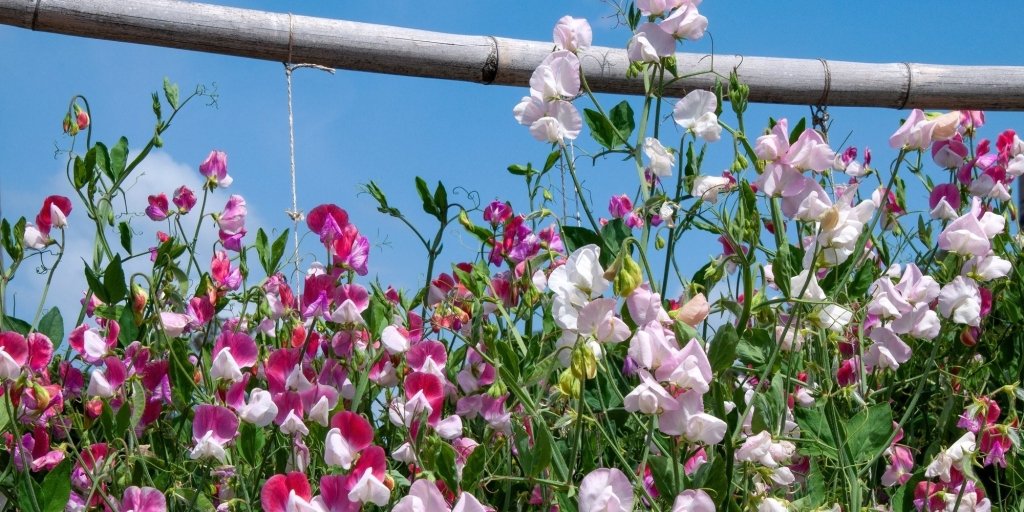

Sweet peas, scent and colour on a bare trellis
Sweet peas bring colour and strong fragrance to the garden in late winter and spring. They cover a bare trellis while the spring vegetables get going, and cut well for the house.

They are grown for scent and colour, not for eating. Every part of the plant is toxic, the seeds and pods most of all, and the pods look enough like eating peas to fool a child or a dog. Keep them away from children and pets, and never train them up the same support as your eating peas.
When to sow, zone by zone
Sweet peas want cool weather to grow in and lengthening days to flower in, so the window sits in autumn for most of the country, late winter for the coldest districts.
- Temperate (coastal New South Wales, most of Victoria, settled South Australia): March to April, around Saint Patrick's Day on 17 March by the old rule, and on to August for a later flush.
- Mediterranean (Perth, the south west of Western Australia, Adelaide, the South Australian gulf country): the same months, with March to May the sweet spot, so the vines finish before the dry summer.
- Subtropical (south east Queensland, the northern rivers of New South Wales): April to May.
- Arid and semi arid (inland New South Wales, Queensland and Western Australia, the Mallee, the Alice Springs country): April to June once the heat breaks, with frost protection for June sowings.
- Cool and alpine (Tasmania, Canberra, the Victorian and New South Wales high country, the New England tablelands): late winter into early spring is safer. Sow direct in August as soon as the soil can be worked, or start under cover six to eight weeks before your last hard frost. Autumn sowings work in milder pockets, but plants that sit through a hard winter often sulk.
- Tropical (the Top End, far north Queensland, the Kimberley): not a sweet pea climate, and rarely worth the effort.
These are broad groupings rather than hard borders, so if you garden between two of them, lean on your own local frost dates.
Where to plant
Crops grown for their flowers or their fruit want full sun. It is the leaf and root crops that put up with part shade. Give sweet peas a bright, open position, then mulch with straw, lucerne or leaf litter to keep roots cool. Put the support in before you sow.
Varieties
Go loud with Royal Crimson, or go soft with Elegance Lavender.

For something darker, Mammoth Navy Blue and Elegance Burgundy hold their colour well in a vase.

With no height to spare, the short types earn their keep. Knee High Mixed, Bijou Mix and Little Sweetheart hold themselves up in a low clump, which suits a pot or a border.

Sowing
Soaking is optional. If the seed looks hard, give it a few hours in water, or nick the coat lightly on the side away from the small eye. A long soak can rot the seed.
Sow 10 to 20mm deep and about 10 to 15cm apart along the base of the support. They can take two weeks to come up. Sweet peas dislike root disturbance, so direct sowing is easiest. Under cover, use deep cells and harden seedlings off before planting out.
Care
Sweet peas are thirsty, but a daily sprinkle does more harm than good. Water deeply two or three times a week from the start of spring, at soil level rather than over the leaves, and keep the vines open to moving air, because powdery mildew builds up in a crowded, humid canopy. Keep picking: once pods set, the vine slows down.
Sweet peas and corn
Corn is also thirsty and likes the same open position, so the sweet pea bed can go to corn once the flowers are done. Pull the sweet peas out first, rather than sowing corn among old vines that would sprawl over the seedlings. This reuses the space, it is not a proven pairing.
Related growing guides
- Eight Easy Cut Flowers to Grow From Seed in Australia, For Armfuls on a Budget
- Growing Calendula from Seed: A Hardy Winter Flower for Every Australian Garden
- A Beginner's Guide to Growing Annual Flowers from Seed
Ready to plant? Browse our Sweetpea seeds.