
How to Grow Raspberries in Australia
Plant dormant bare-root raspberry canes in winter, 50 cm apart along a wire trellis, in deep, rich, free-draining soil with shelter from hot afternoon sun. Keep the soil evenly moist from flowering to harvest. Know your type before pruning: cut autumn fruiting canes to the ground in winter, but cut out only the fruited canes of summer types. Pick berries that slip off easily.
| Sun | Full sun; shade hot afternoons |
|---|---|
| Water | Even moisture; drip under mulch, not overhead |
| Soil | Deep, rich, free-draining, pH 6.0 to 6.5 |
| Feed | Medium; spring feed, potash at flowering |
| Spacing | 50 cm; rows 1.5 m |
| Depth | 10 cm, old soil mark |
| Germination | Not from seed: plant dormant bare-root canes |
| Harvest | First autumn or second summer |
| Container | At least 30 L, 40 cm across |
| Frost | Hardy when dormant; frost harms flowers |
| Support | Post-and-wire trellis, two or three wires |
| Use | Fresh, desserts, jam and freezing |
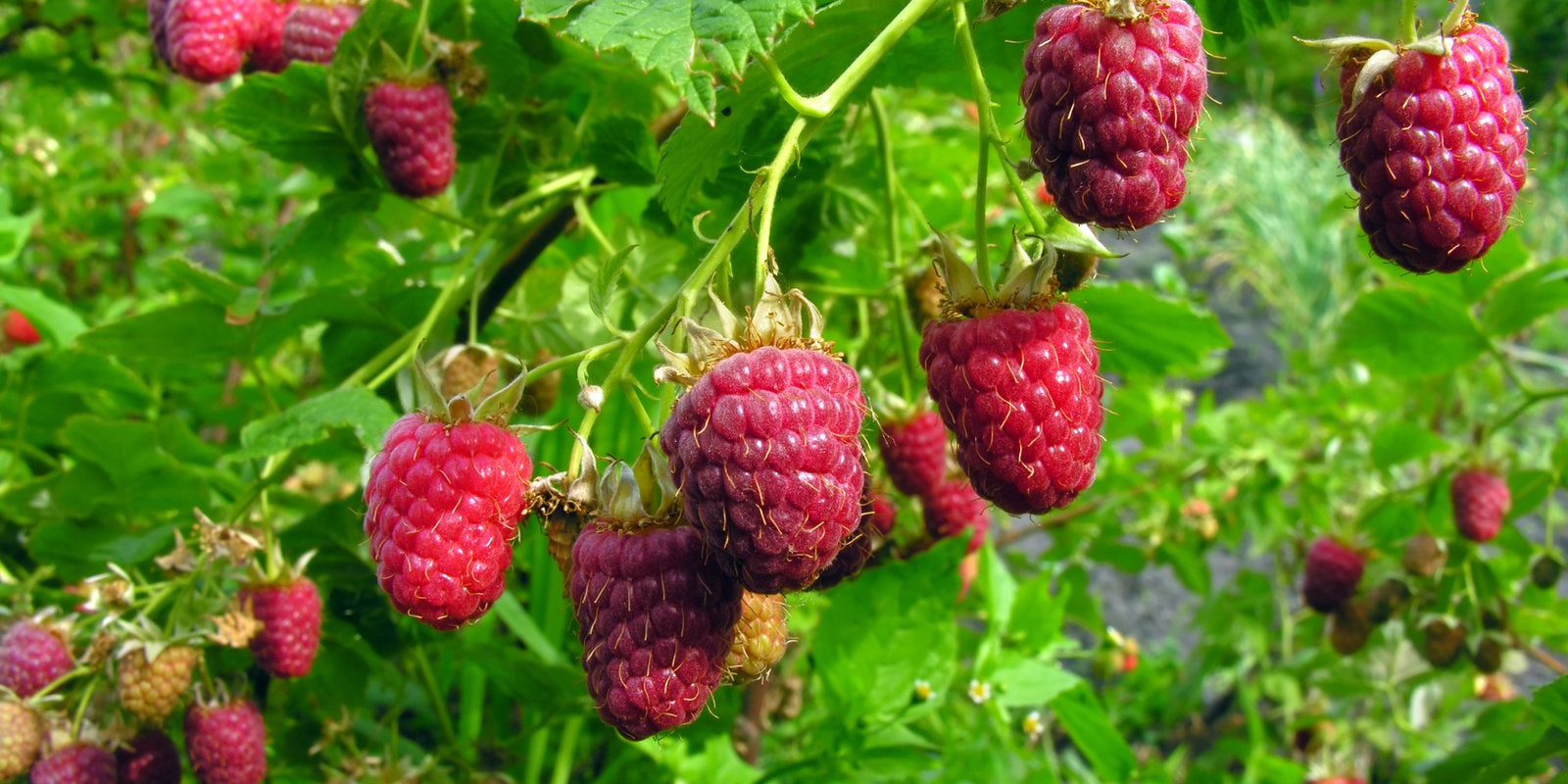
Raspberry (Rubus idaeus) is a deciduous, perennial cane plant in the rose family, Rosaceae, grown for its soft red or golden fruit. A well-kept row planted from bare-root canes in winter can crop for many years, from about December into autumn. The mistake most gardeners make is pruning without knowing whether their variety fruits in summer or in autumn.
Three mistakes that matter
- Pruning the wrong canes. Summer fruiting varieties crop on last year's canes, so cutting the whole row to the ground in winter removes next summer's fruit. Check the type in the table under Planting Canes, and label each row.
- Letting suckers run. Raspberries spread by suckers, new canes that come up away from the row. Left alone, they make a crowded thicket of thin canes, small fruit and poor airflow. Keep the row narrow, as Pruning and Training explains.
- Choosing a summer type for a warm district. Summer fruiting varieties need a cold winter to break bud evenly. They crop poorly on the Sydney coast, in the subtropics and in warm Perth suburbs. Grow a low-chill autumn type such as 'Heritage' there instead.
When to plant
Plant bare-root canes while they are dormant, from late autumn through winter, before the buds break in spring. Plant as soon as they arrive. A good planting lasts over ten years, so there is nothing to sow in succession. Summer fruiting types need more than 800 hours between 0 and 7°C over winter. 'Heritage' needs far less: about 250 hours, counted below 10°C.
| Zone | Example cities | Plant | Harvest | Notes |
|---|---|---|---|---|
| Tropical | Darwin, Katherine NT; Cairns, Townsville QLD; Broome WA | Not recommended | Not recommended | Winters are too warm for the chill raspberries need, and wet-season heat and humidity bring fungal disease. |
| Subtropical | Brisbane, Gold Coast, Sunshine Coast QLD; Coffs Harbour, Lismore NSW | Jun-Jul | Feb-May | Marginal on the warm coast. Plant low-chill autumn types such as 'Heritage' before buds break; summer types lack chill. |
| Arid and semi-arid | Alice Springs NT; Mildura VIC; Broken Hill, Dubbo NSW; Kalgoorlie WA | Jun-Aug | Dec-Apr | Marginal: hot, dry wind scorches canes. From October, give afternoon shade, deep mulch and water whenever the soil dries. |
| Temperate | Sydney, Newcastle, Wollongong NSW; Melbourne, Geelong VIC | Jun-Aug | Dec-Apr | Plant before buds break. Melbourne suits both types; the warm Sydney coast suits autumn types, 'Heritage' or 'Autumn Bliss'. |
| Mediterranean | Perth, Bunbury WA; Adelaide and the SA coast | May-Jul | Dec-Apr | Plant before buds break. Perth suits low-chill 'Heritage' with afternoon shade; the Adelaide Hills also suit summer types. |
| Cool and alpine | Hobart, Launceston TAS; Canberra ACT; Ballarat VIC; Stanthorpe QLD | May-Aug | Dec-Apr | The best raspberry country. Plant before buds break in September; summer types pick from December, autumn types to April. |
Potted canes can still go in during spring, as long as they are planted before hot weather arrives.
Site, soil and setup
| Get the bed right | What to do |
|---|---|
| Sun | Full sun in cool districts; in hot ones, morning sun with shelter from afternoon sun and the hot north-westerly winds of summer |
| Rows | Run rows north to south so sun reaches both sides of the canes |
| Soil | Deep, free-draining and rich in organic matter; on heavy clay or poorly drained ground, plant in a raised bed or mounded row |
| pH | 6.0 to 6.5; below 6.0, dig in dolomite lime at 100 to 200 g per square metre, 4 weeks ahead. See soil pH |
| Bed preparation | Clear all perennial weeds, then dig in a 5 cm layer of compost and 5 to 10 cm of well-rotted cow or horse manure, 4 to 6 weeks ahead |
| Base feed | Blood and bone at 100 to 150 g per square metre, raked in at planting |
| Trellis | Two or three wires about 50 cm apart, the top one 1.2 to 1.5 m above the ground, strung between sturdy posts, built before planting so the roots are not disturbed later |
| Room | Rows 1.5 m apart, in a bed of their own; cane spacing is under Planting in the row |
Do not plant where tomatoes, capsicum or eggplant grew in the last three years, to avoid Verticillium wilt, a soil-borne fungus they share with raspberries.
Container growing
A large pot suits a courtyard or balcony, and is a good option in Perth. Autumn fruiting 'Heritage' and 'Autumn Bliss' suit pots best, because their short, stout canes are close to self-supporting. Give them a pot at least 40 cm wide and 30 cm deep, holding about 30 L of premium potting mix, with drainage holes.
- Watering: check pots daily in warm weather and water whenever the mix is dry 5 cm down. See watering pots in summer.
- Feeding: mix a controlled release fertiliser for containers into the mix at planting, at the label rate. From bud burst to harvest, add fish and seaweed blend at 25 mL per 9 L, fortnightly.
- Support: push a sturdy stake or three into the pot at planting and tie canes to them as they grow.
- Position: full sun through spring; in hot districts, move pots into afternoon shade for summer.
Planting Canes
Raspberries start from dormant bare-root canes planted straight into the bed or a pot. Due to quarantine restrictions and our shipping policy, we cannot send raspberry canes to Western Australia or Tasmania. Blackberry, boysenberry, loganberry, youngberry, tayberry, silvanberry and lawtonberry each have their own guide.
Bare-root preparation
Bare-root canes arrive with no leaves and a short length of stem above the roots. Never let the roots dry out. Soak them for one to two hours in a bucket of water with seaweed solution at 30 mL per 9 L. Longer soaking can rot them. Leave the short piece of old cane, called the handle, attached to the roots.
Planting in the row
- Dig holes 50 cm apart along the trellis line, wide enough to spread the roots.
- Set each cane at the depth it grew in the nursery, shown by the soil mark on the stem, roots about 10 cm down.
- Backfill, firm gently and water in well.
- Cut the cane back to about 20 cm above the soil to push the plant into making roots and new canes.
- Mulch with compost and lucerne or straw, keeping it clear of the crown, where roots and canes meet.
Summer or autumn fruiting
| Variety | Type | Main crop | What to know |
|---|---|---|---|
| 'Autumn Bliss' | Autumn (primocane) | Late summer into autumn | Ripens two to three weeks before 'Heritage', a head start where early frosts end the autumn crop; low chill; can crop in its first season |
| 'Heritage' | Autumn (primocane) | From February, for 8 to 12 weeks | The low-chill choice for warm districts, including south-east Queensland; thorny canes |
| 'Lloyd George' | Dual crop | Summer, with a smaller autumn crop | An old variety with few spines; low chill |
| 'Chilcotin' | Summer (floricane) | Mid-summer, for 4 to 5 weeks | Few thorns and good disease resistance; a small late autumn crop |
| 'Chilliwack' | Summer (floricane) | Summer, for 4 to 5 weeks | Large fruit; stout, nearly thornless canes stand up well |
| 'Nootka' | Summer (floricane) | Summer, for 4 to 5 weeks | Canadian bred; firm fruit; a smaller autumn crop |
| 'Sandford' | Summer (floricane) | From December | One of the earliest summer types, in time for Christmas |
| 'Willamette', including Serpells 'Willamette' | Summer (floricane) | Early to mid-summer | Fruit ripens close together, which suits jam; a smaller autumn crop |
| Golden Yellow | Summer (floricane) | Mid-summer | Golden fruit, less acidic than red raspberries |
| Summer Fruiting | Summer (floricane) | Early to late summer | Prune as a summer type |
Summer types fruit from the second summer after planting, while autumn types usually crop in their first autumn.
Care by growth stage
Steady moisture from flowering to harvest, and a moderate hand with nitrogen, decide the crop. Too much nitrogen makes fruit soft.
| Stage | Water | Feed | Watch for |
|---|---|---|---|
| Planting and dormancy, winter | Water in well, then keep the soil just moist, never soggy | Seaweed solution at 30 mL per 9 L, fortnightly, until leaves open; nothing else yet | Waterlogged soil, which invites root rot |
| Bud burst and new canes, late winter to spring | Keep the soil evenly moist, watering at soil level | First year: the planting feed is enough. From the second year: a 5 cm top dressing of well-rotted manure once in late winter, then blood and bone at 100 g per square metre at bud burst; or a controlled release granular (NPK around 14-5-10) at the label rate | Suckers outside the row; two-spotted mite (Tetranychus urticae) once weather warms |
| Flowering, spring for summer types, summer for autumn types | Steady moisture; drip under mulch rather than overhead sprinklers | Sulphate of potash at 30 to 50 g per square metre once, at first flowers; or a fruiting and flowering soluble (NPK around 15-4-26) at the label rate, fortnightly | Grey mould (Botrytis cinerea) on flowers in cool, wet weather; plague thrips (Thrips imaginis) in flowers |
| Fruiting and picking | Keep watering steady right through picking, daily in hot, dry weather | Fish and seaweed blend at 25 mL per 9 L, fortnightly, or a fruiting and flowering soluble (NPK around 15-4-26) at the label rate, fortnightly; autumn types also take pelletised chicken manure at 100 g per square metre midway | Birds and possums; Queensland fruit fly (Bactrocera tryoni); earwigs (Forficula auricularia) in ripe fruit; light brown apple moth (Epiphyas postvittana) caterpillars in rolled leaves, mostly cosmetic and kept down by natural enemies |
| After harvest to leaf fall | Water less as leaves colour and fall | None: late feeding keeps canes soft into winter | Yellow rust (Phragmidium rubi-idaei) on leaves after cold, wet weather |
As berries colour, cover the row with white, wildlife-safe netting stretched taut over the trellis, with mesh too small to push a finger through. Loose netting traps birds and possums. Tie new canes to the wires as they grow, since wind blows loose canes into tangles and damages them.
Pruning and Training
Prune from the end of harvest through winter. Wear gloves, because most varieties carry prickles.
- Autumn types ('Heritage', 'Autumn Bliss'): cut every cane to ground level as soon as the leaves have fallen.
- Summer types: cut canes that have fruited to ground level. Keep the five or six strongest new canes in each clump and tie them to the wires.
- Autumn crop on summer types (such as 'Willamette', 'Nootka' and 'Chilcotin'): once it is picked, trim each cane to just below the fruited tip. The rest fruits next summer.
- Tipping: in late winter, cut summer canes off just above the top wire so the fruit stays within reach.
- Suckers: keep each row to a strip of canes about 40 to 50 cm wide. Pull up suckers outside it, and cut, rather than pull, extra canes inside it to spare the roots.
Prune 'Lloyd George' as a summer type to keep both its crops. Cutting it to the ground each winter gives the autumn crop only.
Companion planting
Raspberries are shallow rooted and spread by suckers, so give them a permanent bed of their own and keep neighbours to the edges.
Grows well with
- Garlic, which companion planting charts say deters aphids from raspberries.
- Alyssum, sown along the edge of the bed, whose small flowers draw beneficial insects and help suppress weeds.
Keep apart
- Blackberries and the hybrid berries, which share raspberry viruses and cane diseases.
- Tomato, capsicum and eggplant, for the Verticillium wilt named under Site, soil and setup.
- Potato, a poor neighbour whose yearly digging disturbs shallow raspberry roots.
Harvesting Fruit
A berry is ripe when it is fully coloured and slips off with a gentle tug, leaving its core on the plant.
- Pick often: a summer type ripens over about four weeks, an autumn type such as 'Heritage' for 8 to 12 weeks.
- If a berry needs any pressure to come away, leave it for another day.
- Remove mouldy or damaged fruit as you go.

Raspberries taste best on the day they are picked. Stored in a shallow container lined with paper towel in the fridge, they keep for two to three days. For longer keeping, freeze them for desserts, or cook them into jam.
Common problems
No fruit in the first summer. A first-year row of a summer type grows only the canes that fruit the following summer; see Planting Canes.
Crumbly berries that fall apart. Raspberry bushy dwarf virus, spread in pollen, causes poorly formed fruit and yellow flecks on leaves, while ageing 'Heritage' rows crumble late in the season.
Hollowed-out berries. Earwigs chew into ripe fruit at night, so remove loose straw where they shelter and trap them under upturned pots. Read more
Scorched leaves and shrivelled fruit. Hot sun and hot, dry wind burn new growth and fruit, so give plants afternoon shade and wind shelter in warm districts.
Shrivelled or speckled drupelets. Green vegetable bugs (Nezara viridula) suck sap and shrivel drupelets, and plague thrips leave a silvery speckle near the calyx. Keep the bed free of the weeds that shelter both. Read more
Fruit gone before you pick it. Birds and possums strip ripe berries quickly; net the row as Care by growth stage describes. Read more
Pests and diseases
Most raspberry troubles in Australian gardens start in wet weather, crowded rows or wet soil.
Two-spotted mite (Tetranychus urticae). These tiny mites feed under the leaves in warm weather, leaving pale spots that can turn to a silver sheen. Avoid needless sprays, which kill the predatory mites that usually keep them down. Read more
Grey mould (Botrytis cinerea). Short, grey fur grows on ripening berries, often at the open end, after infection at flowering. Cool, wet weather favours it, so keep new canes apart from fruiting canes and let the row dry quickly after rain.
Queensland fruit fly (Bactrocera tryoni). Females lay eggs in ripening fruit, and maggots feed inside. After flowering, net the row with fine insect mesh secured to the ground and kept off the fruit. Freeze fallen or stung fruit in a sealed bag for two days, then bin it, never compost it. Read more
Yellow rust (Phragmidium rubi-idaei). Yellow-orange pustules appear on the leaves in spring, then orange spots underneath that turn black. It is usually cosmetic, but a long wet spring can strip the canes, and copper fungicides labelled for raspberry rust can be used.
Cane anthracnose (Elsinoe veneta). Round purple spots on new canes in late spring grow into grey-centred blotches, and rain can spread it to fruit. Spray a copper fungicide labelled for raspberry, starting as the buds begin to move.
Phytophthora root rot (Phytophthora species). Roots rot in wet soil, and canes wilt and die, often just as leaves open or fruit ripens. Control starts with drainage: plant in raised beds or mounded rows and never let the soil stay waterlogged.
Prevention first
- Start with healthy canes from a reliable supplier, since viruses cannot be cured.
- Remove diseased canes as soon as they show, and keep the base of the row clean and weed-free.
- Thin crowded canes in spring, removing the weakest at ground level, so air moves through the row.
- If a spray is needed, choose one registered for the pest and follow the label and its withholding period. Pyrethrum harms bees, so spray late in the day away from open flowers.
Tips
- Grow one summer and one autumn variety in separate rows to spread picking from December into autumn.
- Tie a length of wool around canes as they fruit, so they are easy to find at pruning time.
- Dig up healthy suckers while plants are dormant to fill gaps in the row or give to friends, unless the variety is protected from propagation.
Questions
When do you plant raspberry canes in Australia?
Plant bare-root canes while they are dormant, from late autumn through winter, before the buds break in spring. Plant them as soon as they arrive, and never let the roots dry out. Potted raspberries can go in during spring, as long as they are planted before hot weather arrives.
What is the difference between summer and autumn fruiting raspberries?
Summer fruiting (floricane) varieties, such as 'Chilliwack' and 'Willamette', fruit on canes grown the year before, mostly from December into January in cool districts. Autumn fruiting (primocane) varieties, such as 'Heritage' and 'Autumn Bliss', fruit on the tips of this year's canes, from late summer into autumn. The two types are pruned differently.
How do you prune raspberries?
Cut every cane of an autumn type to the ground once the leaves fall. For a summer type, cut out only the canes that have fruited. Keep the five or six strongest new canes in each clump and tie them to the trellis. Those new canes carry next summer's fruit.
Can you grow raspberries in Queensland?
In Brisbane and the warm coast, grow a low-chill autumn type such as 'Heritage', in morning sun with afternoon shade. Summer types need colder winters. Stanthorpe, high on the Granite Belt, sits in the cool zone, where both types can grow. The tropical north is too warm for raspberries.
Why are my raspberry canes spreading everywhere?
Raspberries spread by suckers, new canes that come up from the roots away from the row. Pull up suckers outside the row a few times a year, and keep the row itself narrow. Healthy suckers can be dug up while dormant and replanted to fill gaps.
How long do fresh raspberries last in the fridge?
They taste best on the day they are picked. In a shallow container lined with paper towel, they keep for two to three days in the fridge. For longer keeping, freeze them or cook them into jam.
More edible produce guides
All edible produce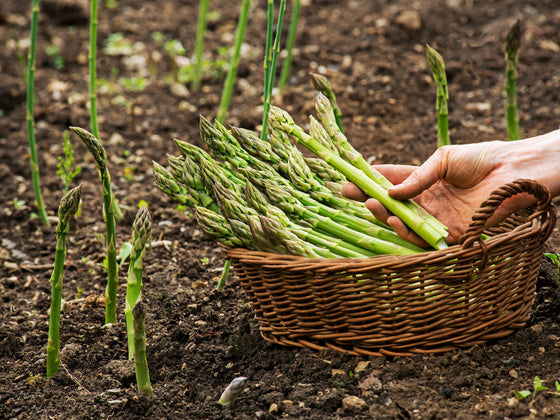
Asparagus
How to grow asparagus from seed in Australia: raising seedlings, planting crowns, a bed of its own, when to start picking spears and cutting back the fern.
| Position | Full sun |
|---|---|
| Depth | Seed 1 to 2 cm |
| Spacing | 30 to 40 cm |
| First pick | Third spring from sowing |
Blackberry
Grow thornless blackberries in Australia: each state's weed rules, planting bare-root canes in winter, trellis training, pruning, feeding and picking the fruit.
| Position | Full sun, afternoon shade inland |
|---|---|
| Depth | Old soil mark, or 3 to 5 cm deeper |
| Spacing | 150 to 180 cm apart |
| First pick | Second summer after planting |
Boysenberry
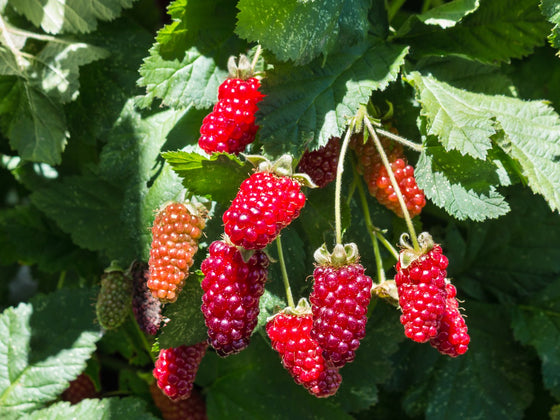
Grow boysenberries in Australia from bare-root canes: winter planting by climate zone, building a wire trellis, feeding, pruning fruited canes and picking.
| Position | Sun; afternoon shade where hot |
|---|---|
| Depth | Stem base level with soil |
| Spacing | 1.5 to 2 m apart |
| First pick | Early summer, from year two |
Elephant garlic
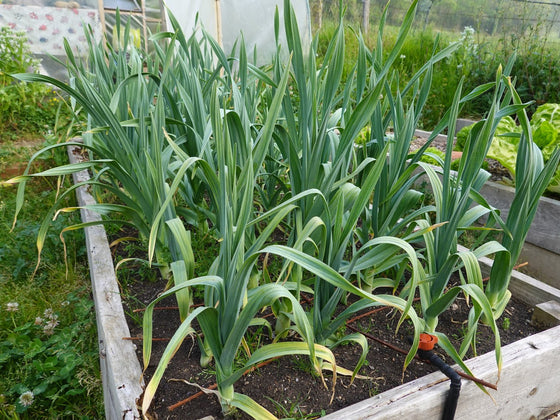
Also sold as Russian garlic. Plant the large cloves in April or May, keep the bed weeded and watered, and use the finger test to judge when the bulbs are ready.
| Position | Full sun, 6 hours or more |
|---|---|
| Depth | 5 cm of soil over tip |
| Spacing | 20 to 30 cm |
| First pick | 6 to 8 months |