
How to Grow Silvanberries in Australia
Plant dormant bare-root silvanberry canes in winter, in full sun and humus-rich, free-draining soil at pH 6.3 to 6.8. Space them 1.5 to 3 m apart beside a three-wire trellis 2 m high, with roots about 10 cm deep. Berries form on last summer's canes and ripen from about mid-December. Cut fruited canes out after picking, and check your state's blackberry rules first.
| Sun | Full sun, afternoon shade in heat |
|---|---|
| Water | Steady deep water, especially flowering to picking |
| Soil | Humus-rich, free-draining, pH 6.3 to 6.8 |
| Feed | Medium; potash from flowering |
| Spacing | 1.5 to 3 m apart |
| Depth | Roots about 10 cm deep |
| Germination | Not from seed: plant dormant bare-root canes |
| Harvest | Early summer, best from year two |
| Container | Not suited to pots |
| Frost | Frost hardy once established |
| Support | Wire trellis 2 m high, three wires |
| Use | Fresh, pies, sauces, desserts, jam and freezing |
Silvanberry (Rubus 'Silvan') is a trailing blackberry in the rose family, Rosaceae, grown for its large, glossy black berries in early summer. It was bred at Silvan in Victoria by the state agriculture department, with 'Marion' blackberry and boysenberry in its parentage. The mistake many gardeners make is cutting out next summer's canes in winter.
Three mistakes that matter
- Cutting out the wrong canes. Fruit forms only on canes that grew the summer before, so a hard winter prune of every cane removes the coming crop. Cut out only the canes that have fruited, as Pruning and Training shows.
- Planting without a trellis. Canes can trail 2 to 7 m, tangle into a thicket and root wherever their tips touch the soil. Put the posts and wires in before planting, and tie canes up as they grow.
- Dry soil from flowering on. Without steady moisture while the fruit forms, berries stay small and lack flavour. Mulch well and water deeply right through flowering and picking.
When to plant
Plant canes in winter, while they are dormant, leafless and sold bare-root. The cue is dormancy rather than soil warmth, so plant once the soil is workable and not waterlogged. One planting crops for many years, so there is nothing to sow in succession. Like most blackberries, it needs a cool winter to fruit well, which rules out the tropics.
| Zone | Example cities | Plant | Harvest | Notes |
|---|---|---|---|---|
| Tropical | Darwin, Katherine NT; Cairns, Townsville QLD; Broome WA | Not recommended | Not recommended | Winters are too warm for the canes to fruit; see Planting Canes for the Northern Territory rules. |
| Subtropical | Brisbane, Gold Coast QLD; Coffs Harbour, Lismore NSW | Jun-Jul | Nov-Dec | Mild winters can mean lighter crops. Give afternoon shade, and Queensland readers check Planting Canes first. |
| Arid and semi-arid | Broken Hill, Dubbo NSW; Port Augusta SA | Jun-Aug | Nov-Jan | Worth growing only with a steady water supply; mulch deeply and shelter from hot wind. |
| Temperate | Sydney, Newcastle, Wollongong NSW; Melbourne, Geelong VIC | Jun-Aug | Dec-Jan | Suits it well: plant in winter, net the row before the berries colour and water steadily through picking. |
| Mediterranean | Adelaide and the SA coast; Perth, Bunbury WA | Jun-Aug | Dec-Jan | Summers arrive hot and dry: mulch deeply, water steadily and give afternoon shade once fruit sets. |
| Cool and alpine | Canberra ACT; Ballarat VIC; Orange, Armidale NSW | Jun-Sep | Jan-Feb | Dormant canes shrug off frost; plant once the ground is workable. Fruit ripens later than on the coast. |
In cool districts, planting can run into September, as long as the cane is still dormant when it goes in.
Site, soil and setup
| Get the site right | What to do |
|---|---|
| Sun | Full sun; in hot districts, shelter from afternoon sun and from hot north and west winds |
| Air | An open spot where air moves freely through the canes, which cuts fungal disease |
| Soil | Moderately fertile, rich in humus and free-draining; heavy loams suit it if water drains away. On ground where water lies, plant on a raised mound. See waterlogged soil |
| pH | 6.3 to 6.8; below that, dig in dolomite lime at 100 to 200 g per square metre 4 weeks ahead; above it, elemental sulphur at 25 to 50 g per square metre 3 months ahead. See soil pH |
| Bed preparation | Weed thoroughly, then dig in a 5 cm layer of compost and 5 to 10 cm of well-rotted cow or horse manure, 4 to 6 weeks ahead |
| Base feed | Blood and bone at 100 to 150 g per square metre, raked in at planting |
| Room | 1.5 to 3 m between plants along the trellis, and 2 m between rows |
Choose a permanent position. It is not rotated like a vegie crop, but avoid ground where raspberries or other brambles died of root rot.
Planting Canes
Silvanberry starts from a dormant bare-root cane. Raspberry, blackberry, boysenberry, loganberry, youngberry, tayberry and lawtonberry each have a guide of their own.
Bare-root preparation
A bare-root cane arrives as a leafless stem above a bundle of roots. If planting must wait, heel the cane into a shallow hole in a cool spot and keep it watered, so the roots stay damp. Before planting, soak the roots in a bucket of water for 1 to 2 hours, and no longer, or they may rot. Seaweed solution at 30 mL per 9 L can go into the soaking water. Trim off any broken or dried-out roots.
Where it may be planted
Wild European blackberry (Rubus fruticosus aggregate) is a Weed of National Significance, and each state and territory sets its own rules. Some name 'Silvan' as an exempt cultivar and others name none, so check the row for your state before you plant.
| State or territory | What the rules say |
|---|---|
| New South Wales | Blackberry must not be sold anywhere in the state, but 'Silvan' is one of the named exempt varieties |
| South Australia | Blackberry sales are banned statewide, and 'Silvan' is one of the cultivars excluded from the ban |
| Victoria | Blackberry is a declared noxious weed, regionally controlled in most catchments and restricted in the Mallee. The list names no exempt cultivar, so ask Agriculture Victoria on 136 186 before planting |
| Queensland | Blackberry is a category 3 restricted invasive plant that must not be given away, sold or released into the environment. No exempt cultivar is listed, so ask Biosecurity Queensland before planting |
| Australian Capital Territory | Blackberry is a declared pest, but the current pest declaration names 'Silvan' among the excepted cultivars |
| Northern Territory | Blackberry is a Class A declared weed, to be eradicated, and no exempt cultivar is listed. Do not plant it |
| Western Australia | Blackberry is a declared pest |
| Tasmania | The importation, sale and distribution of blackberry are prohibited |
Due to quarantine restrictions and our shipping policy, we cannot send Silvanberry canes to Western Australia or Tasmania. Wherever you garden, keep the canes on the wires and off the ground so the tips do not take root. Netting the fruit also helps, since birds spread the seed.
Planting on the trellis
- Build the trellis first, with a star picket every 4 m between strainer posts at each end. Run three wires: the lower two at 50 cm and 1 m, the top at 2 m.
- Dig a wide hole beside the wire line and spread the roots out in it.
- Set the cane shallow, with its roots about 10 cm deep and the base of the stem level with the soil surface.
- Backfill, firm gently and water in with seaweed solution at 30 mL per 9 L.
- Cut the cane back to about 20 cm to push new growth from the crown.
- Mulch with straw, lucerne or sugarcane mulch, not woodchip.
Care by growth stage
Steady water and a switch from nitrogen to potash as flowers open decide the crop. Months are for temperate gardens and run later in cool districts.
| Stage | Water | Feed | Watch for |
|---|---|---|---|
| Dormant and planting, Jun to Aug | Water in at planting, then only when the soil dries out | Seaweed solution at 30 mL per 9 L at planting; the blood and bone base feed from Site, soil and setup, or a controlled release granular (NPK around 14-5-10) mixed into the soil at planting instead | Water lying around the crown; canes left on the ground |
| Budburst and new canes, Sep to Oct | Keep the soil evenly moist as the leaves open | Pelletised chicken manure at 100 g per square metre, scratched in once, or an all-purpose soluble (NPK around 23-4-18) at the label rate, fortnightly | Rolled, webbed leaves from light brown apple moth (Epiphyas postvittana); downy mildew (Peronospora species) in humid weather |
| Flowering, Oct to Nov | Water deeply whenever the soil is dry 5 cm down, keeping water off the flowers | Sulphate of potash at 30 to 50 g per square metre once, at first flowers, then liquid potash at the label rate, fortnightly; or a fruiting and flowering soluble (NPK around 15-4-26) at the label rate, fortnightly | Browning flowers and grey mould (Botrytis cinerea) in wet, cool spells |
| Fruiting and picking, Dec to Jan | Keep watering deeply and steadily right through picking | Fish and seaweed blend at 25 mL per 9 L, fortnightly, or a fruiting and flowering soluble (NPK around 15-4-26) at the label rate, fortnightly | Birds and possums at ripe fruit; hard red drupelets from redberry mite (Acalitus essigi); two-spotted mite (Tetranychus urticae) in heat |
| After picking, Feb to May | Keep new canes watered through the dry end of summer and autumn | A 5 cm layer of compost as mulch after pruning, then fish and seaweed blend at 25 mL per 9 L, fortnightly, or an all-purpose soluble (NPK around 23-4-18) at the label rate, fortnightly | Purple spots of cane spot (Elsinoe veneta) on new canes; white to grey growth on the leaves of late new canes from powdery mildew (Podosphaera macularis and Erysiphe species), so cut those canes out; cane tips rooting into the soil |
Once berries start to colour, net the trellis with white, wildlife-safe netting stretched taut, with mesh too small to push a finger through. On very hot days, drape shade cloth over the row to save the fruit from sunburn.
Pruning and Training
Each cane lives for two summers. In its first it grows long and leafy, as a primocane (first-year cane). In its second it flowers and fruits as a floricane (fruiting cane), then dies back.
- As new canes grow, tie them along the lowest wire or bundle them loosely, off the ground and away from the fruiting canes.
- Weave or fan last year's canes along the upper wires. They are brittle, so bend them gently.
- In summer, pinch out the tips of very long new canes to encourage side branches.
- After picking, cut every cane that fruited down to the ground.
- Then lift the new canes onto the empty upper wires and tie them in for next summer.
- Remove weak, damaged or crowded canes, and pull out any shoot coming up away from the row.
If the fruited canes are missed after picking, cut them out in winter while the plant is dormant.
Companion planting
Silvanberry needs a row of its own that you can reach from both sides, so keep companions low and at the row ends.
Grows well with
- Alyssum, whose small nectar-rich white flowers draw hoverflies and other predatory insects.
- Calendula, whose open yellow and orange flowers also feed hoverflies.
Keep apart
- Raspberry and other brambles, which share cane spot and Phytophthora root rot (Phytophthora species).
- Vegie beds that are dug often, where rooting cane tips and stray shoots become weeds.
Harvesting Fruit
Berries usually ripen from about mid-December in temperate gardens; pick them when they have turned from red to fully black and feel slightly soft.
- Check and pick every 3 to 4 days once berries colour.
- Take the whole berry: its core comes away inside the fruit, unlike a raspberry.
- Ripe silvanberries hold well on the cane, so a missed day is rarely lost.
- Remove mouldy or damaged fruit as you go.
The soft fruit bruises easily and does not keep well, so chill unwashed berries and use them soon. For longer keeping, freeze them or cook them into jam, where their high pectin helps the jam set.
Eat them fresh from the cane, or use them in pies, sauces and desserts.
Common problems
Little fruit in the first summer. A new plant usually crops best from its second year; see Three mistakes if every cane was cut.
Canes wilting and leaves browning from the edges. In warm weather on wet, heavy soil this points to Phytophthora root rot, which destroys the fine roots so plants pull out easily. Read more
Small, dry or tasteless berries. Water ran short during flowering or fruiting; see Three mistakes.
Scorched leaves and shrivelled fruit. Hot summer sun burns both foliage and berries; give afternoon shade as Care by growth stage describes.
Fruit gone before you pick it. Birds and possums take ripe berries; net the row as Care by growth stage describes. Read more
New plants springing up along the row. Cane tips root where they touch the soil and form new plants, so dig them out and keep every cane tied up.
Pests and diseases
Most bramble diseases start in damp, crowded canes, so open training and clean prunings do much of the work.
Downy mildew (Peronospora species). Pale green to yellow blotches on the upper leaf turn red and purple, with pink to tan patches beneath. Infected green fruit reddens early, then shrivels and hardens, mostly in warm, wet weather. Read more
Grey mould (Botrytis cinerea). Flowers turn brown and grow grey fuzz after several wet, cool days, and the fungus moves on to the fruit. Pick off affected flowers and berries, and keep the canes thinned.
Cane spot (Elsinoe veneta). Small purple spots on young canes enlarge and turn grey in the centre, and leaves show yellow spots that can fall out as holes. Start with clean canes and give them space.
Redberry mite (Acalitus essigi). These tiny, whitish mites, about 0.5 mm long, leave berries that ripen unevenly, with some drupelets hard and red. Wild blackberries nearby harbour them, so remove any wild plants close to the row.
Two-spotted mite (Tetranychus urticae). Leaves turn speckled and bronzed, often with fine webbing underneath, in warm to hot, dry summers. Keep the soil moist, and avoid sprays that kill the predators that keep mites down. Read more
Queensland fruit fly (Bactrocera tryoni). Females lay eggs in maturing and ripe berries, and the maggots make the fruit decay and drop. Bird netting does not keep it out. Where the fly occurs, cover the row once fruit sets with fine insect netting, holes about 2 mm across, secured to the ground. Pick promptly, and freeze fallen or stung fruit in a sealed bag for two days before binning it, never in the compost. Read more
Prevention first
- Start with healthy, disease-free canes.
- Thin and train the canes so air moves through the row and leaves dry quickly.
- Cut out fruited canes each year and take old prunings away from the row.
- Keep weeds down, because light brown apple moth survives winter on weeds such as dock and capeweed.
Tips
- One plant is enough to start, because silvanberry is self-fertile.
- While you pick, tie a loop of wool around each fruiting cane, so the right canes come out afterwards.
- Wear thorn-proof leather gloves for pruning and picking, since silvanberry is one of the thorniest brambles.
- Bin or bag prunings and never dump them in bushland, where cane pieces can take root.
Questions
Is it legal to grow silvanberry in my state?
It depends on the state. New South Wales, South Australia and the ACT name 'Silvan' as exempt from their blackberry rules. Victoria and Queensland list no exempt cultivar, so ask the state department first. The Northern Territory declares blackberry a weed to be eradicated, and canes cannot be sent to Western Australia or Tasmania.
When do silvanberries fruit in Australia?
Berries usually ripen in early summer, from about mid-December in temperate gardens and later in cool districts. They form on canes that grew the summer before, so a new plant usually crops best from its second year.
How do you prune a silvanberry?
After picking, cut every cane that fruited down to the ground. Then tie the new canes that grew this summer onto the upper wires, because they carry next summer's fruit. Pinch the tips of very long new canes in summer, and remove weak or crowded canes.
What trellis does a silvanberry need?
Use a post and wire trellis about 2 m high, with three wires. Set the lower two at 50 cm and 1 m, and put it up before planting. Fruiting canes go on the upper wires and new canes on the lowest, so none touch the ground.
How far apart do you plant silvanberry canes?
Allow 1.5 to 3 m between plants along the trellis, with 2 m between rows. Plant the cane shallow, with its roots about 10 cm deep and the base of the stem level with the soil.
Is a silvanberry the same as a blackberry?
It is a trailing blackberry cultivar bred at Silvan in Victoria, with 'Marion' blackberry and boysenberry in its parentage. It is not the wild European blackberry, although some states regulate it under the same weed rules.
More edible produce guides
All edible produce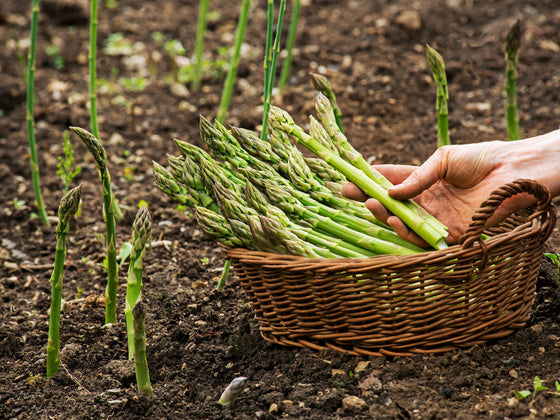
Asparagus
How to grow asparagus from seed in Australia: raising seedlings, planting crowns, a bed of its own, when to start picking spears and cutting back the fern.
| Position | Full sun |
|---|---|
| Depth | Seed 1 to 2 cm |
| Spacing | 30 to 40 cm |
| First pick | Third spring from sowing |
Blackberry
Grow thornless blackberries in Australia: each state's weed rules, planting bare-root canes in winter, trellis training, pruning, feeding and picking the fruit.
| Position | Full sun, afternoon shade inland |
|---|---|
| Depth | Old soil mark, or 3 to 5 cm deeper |
| Spacing | 150 to 180 cm apart |
| First pick | Second summer after planting |
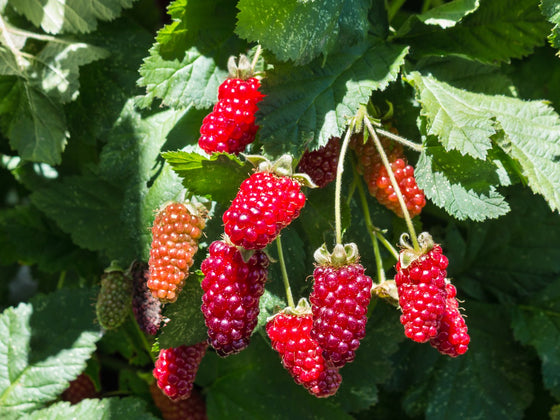
Boysenberry
Grow boysenberries in Australia from bare-root canes: winter planting by climate zone, building a wire trellis, feeding, pruning fruited canes and picking.
| Position | Sun; afternoon shade where hot |
|---|---|
| Depth | Stem base level with soil |
| Spacing | 1.5 to 2 m apart |
| First pick | Early summer, from year two |
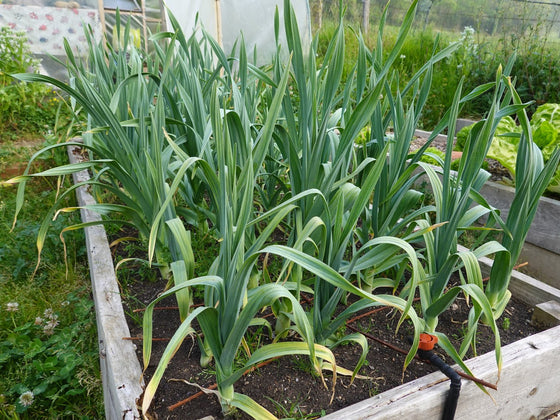
Elephant garlic
Also sold as Russian garlic. Plant the large cloves in April or May, keep the bed weeded and watered, and use the finger test to judge when the bulbs are ready.
| Position | Full sun, 6 hours or more |
|---|---|
| Depth | 5 cm of soil over tip |
| Spacing | 20 to 30 cm |
| First pick | 6 to 8 months |