
The short version: Some vegetables keep for months with no jars, no freezer and no work beyond curing them properly and storing them somewhere cool, dark and airy. Pumpkin, potatoes, onions, garlic, sweet potato, carrots and beetroot, and dried beans are the reliable ones for Australian gardens. Harvest at full maturity, cure for the right time in the right conditions (dry and airy for pumpkin, onions and garlic, warm and humid for sweet potato, dark and dry for potatoes), store only sound produce, and check the shelf every couple of weeks. The one real safety rule is potatoes: keep them dark, and never eat green skin.
Australian gardeners are spoiled by a climate that grows something fresh in every month, so few of us plan a winter's worth of stored vegetables the way northern gardeners do. That is a missed opportunity, because a few crops store themselves with almost no effort, and shopping your own shelf in July is a real pleasure. Here are the crops worth growing for storage and exactly how to keep each one.

What makes a storage crop
A storage crop is one that the plant itself designed to sit dormant for months: a tuber, a bulb, a hard-skinned fruit or a dry seed. Three things decide whether it keeps. It must be harvested at full maturity, because immature produce has thin skins and high moisture and rots. It must be cured, a short period after harvest in which the skin hardens, wounds heal and the neck or stem dries. And it must be stored in the conditions that suit it, which differ from crop to crop. Get those three right and the produce does the rest.
Pumpkin
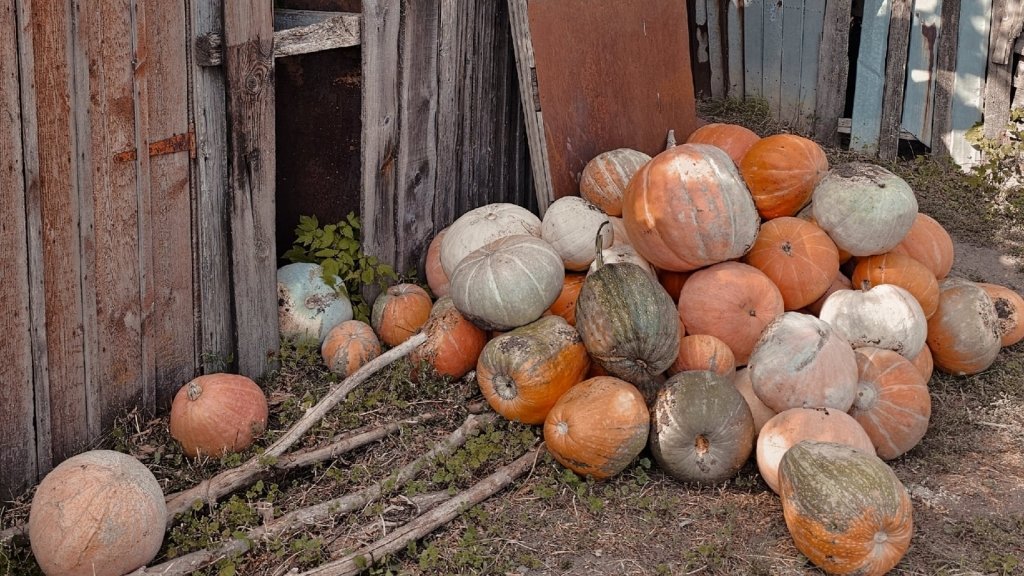
Pumpkins are ready when the stem has turned hard, woody and brown, the skin resists a fingernail and the vine leaves are dying off. Cut them with several centimetres of stem attached and never carry a pumpkin by its stem, because a snapped stem opens a door for rot. Cure them for about a week in a single layer, not touching, somewhere warm, dry and airy such as a veranda, and cover them if a frost threatens. Then store them in a dark, dry, well-ventilated spot at roughly 10 to 16 degrees. Thick-skinned types such as Queensland Blue keep up to about six months; thin-skinned butternuts keep less. Check and turn them fortnightly and use any with soft spots first. Once cut, pumpkin goes in the fridge. Our guide to growing pumpkins in Australia covers the season.

Potatoes
Harvest main-crop potatoes once the plants have flowered and the foliage has yellowed and died back. Lift them gently, let them dry on the surface for a few hours out of direct sun, brush off the loose soil without washing them, and store them in a cool, completely dark, ventilated place in a hessian sack, paper bag or ventilated crate. Sound tubers keep for several months. Darkness is a safety measure, not just a preference: light turns the skin green and raises the level of glycoalkaloids such as solanine, natural toxins that cooking does not destroy. The Food Safety Information Council's advice is to remove sprouts and any green or damaged parts before cooking, and not to eat cooked potato that still tastes bitter. A tuber that is green through much of its flesh is better thrown out than trimmed, and it pays to be stricter again with food for young children. Keep potatoes away from onions, which many gardeners find shorten their storage.
Onions and shallots
Onions are ready when the tops yellow, soften and fall over. Lift them on a dry day and lay or hang them somewhere airy and shaded for two to three weeks until the outer skins are papery and the necks are fully dry. Trim the tops or plait them and store in a mesh bag or wire basket in a cool, dark, ventilated place. How long they keep depends on the variety: some early varieties start to sprout within two or three months, while good keepers hold for six months or more. Shallots and potato onions, which form clusters of small bulbs, cure and store the same way and often keep even longer. Any bulb with a thick, soft neck goes in the kitchen first.
Garlic
Garlic is ready when the lower leaves have died back and only four to six green leaves remain, roughly six to eight months after autumn planting depending on climate and variety. Cure it by hanging bunches of five to ten plants in a dry, airy, shaded spot, or in single layers with a fan running in humid districts, for at least two to three weeks and ideally longer; a full two months of curing gives the longest storage. Then trim the roots and stems, or plait the softnecks while the stems are still pliable, and store unwashed with the cloves intact and skins on in a basket or mesh bag. Storage life varies enormously by type: turban garlics keep about four months, artichoke types about eight, and creoles and silverskins a year or more, so "keeps twelve months" is true of some garlic and not of yours unless you grew the right kind. Our guide to storing seed garlic covers the bulbs you are keeping to plant.

Sweet potato
Sweet potatoes are the exception to the dry-curing rule. Harvest about four to five months after planting, when the leaves begin to yellow, with cool districts needing the full five, and handle the tubers gently because the skins are tender. Cure them somewhere warm and humid, ideally around 25 to 32 degrees with high humidity, for about a week: a laundry, a warm covered box with a damp towel draped over it, or a warm room with the tubers in a lidded container work at home. Curing heals scrapes and converts starch to sugar. Then store them above about 12 to 13 degrees in the dark, never in the fridge, where they break down, and expect four to seven months. Our guide to growing sweet potatoes in Australia covers the crop.
Carrots and beetroot
In cool districts, carrots and beetroot store best where they grew: leave them in free-draining soil under mulch through winter and lift as needed, where they sweeten with the cold. In warmer or wetter gardens, lift them, twist off the tops, and layer the unwashed roots in a box of damp sand in a cool, dark, frost-free place. The sand slows moisture loss rather than stopping it, so check the box regularly and use them within a few months.
Dried beans and peas
Any bean or pea can be grown for dry seed. Leave the pods on the plant until they are tan, dry and rattling; if rain threatens, pull the whole plants and hang them under cover to finish. Shell, dry the seed on trays for another week or two, then store in airtight jars somewhere cool, dark and dry. A few days in the freezer before storage kills any weevil eggs, a precaution worth taking for peas especially, as our guide to pea weevil explains; broad beans and other dried beans can carry their own seed weevils, so give them the same treatment. Well-dried beans keep for a year or more.

Setting up a storage spot
Few Australian homes have a cellar, but a garage, laundry, under-house space or the coolest cupboard usually offers what most storage crops want: dark, dry, ventilated and as cool as the house gets. Use slatted shelves, crates, mesh bags and baskets rather than plastic tubs, keep produce in single layers where you can, and label with the date and variety. Store only sound, undamaged produce and use anything bruised or nicked first. Walk past the shelf every week or two, turn the pumpkins, and remove anything softening before it spoils its neighbours. Discard anything mouldy rather than cutting around it.
Storage crops across Australia's climate zones
- Tropical (Cairns and far north Queensland, Darwin and the Top End of the Northern Territory, the Kimberley in Western Australia): sweet potato and pumpkin are the natural storage crops, but humidity is the enemy of long storage; use the driest, airiest room and expect shorter times.
- Subtropical (Brisbane and coastal Queensland, Coffs Harbour and northern New South Wales): sweet potato, pumpkin, early garlic types and short-day onions, all of them cured with a fan running.
- Arid and semi-arid (inland Queensland, Broken Hill and Dubbo in New South Wales, Mildura in Victoria, inland South Australia and Western Australia, Alice Springs in the Northern Territory): the dry air makes curing onions, garlic and pumpkin easy; the challenge is a cool enough store in summer.
- Temperate (Sydney and New South Wales, Melbourne and Victoria): every crop on this list. Melbourne gardens can leave carrots in the ground through winter.
- Mediterranean (Perth and southern Western Australia, Adelaide and the Adelaide Plains in South Australia): garlic, onions and pumpkins cure superbly in the dry summer; potatoes and sweet potato need a cool store through the heat.
- Cool and alpine (Hobart and Tasmania, Canberra and the ACT, Ballarat in Victoria, Orange and Armidale on the New South Wales tablelands, and the alpine country of the Snowy Mountains and the Victorian high country): potatoes, long-day onions, garlic and in-ground roots are the strengths; pumpkins and sweet potato need the longest, warmest site in the garden to mature.
Wherever you garden, the cool, dark, ventilated rule holds, and the coldest room in the house is usually the right one.
Frequently asked questions
Can I eat a potato that has gone a little green?
Cut away all the green and any sprouts, generously, and cook the rest. If it is more than lightly green, or tastes bitter, throw it out. Cooking does not destroy the toxins.
Why did my pumpkins rot after a month?
Usually they were picked immature, carried by the stem, or stored touching each other in a damp spot. Harvest only when the stem is woody, cure for a week, and store in a single layer with air around each one.
Do onions and garlic need to be in the dark?
Dim and dry is enough; light is less of a problem than warmth and humidity. Never store them in plastic or in the fridge.
How do I know if sweet potatoes are cured?
The skin looks slightly tougher, small scrapes have dried over, and the flesh tastes sweeter. A week in a warm, humid spot is usually enough.
Grow a few of these on purpose and the winter kitchen looks after itself. For the potato safety detail, the Food Safety Information Council's notes on potatoes are short and worth reading.
Related growing guides
- Pumpkin Growing in Australia: Timing, Space, Pollination, and Curing
- How to grow sweet potatoes in Australia, from tuber to harvest
- How to Store Seed Garlic Before Planting: An Australian Guide
Plant the keepers this season: browse our pumpkin seeds, seed potatoes, seed garlic and onion seeds.