
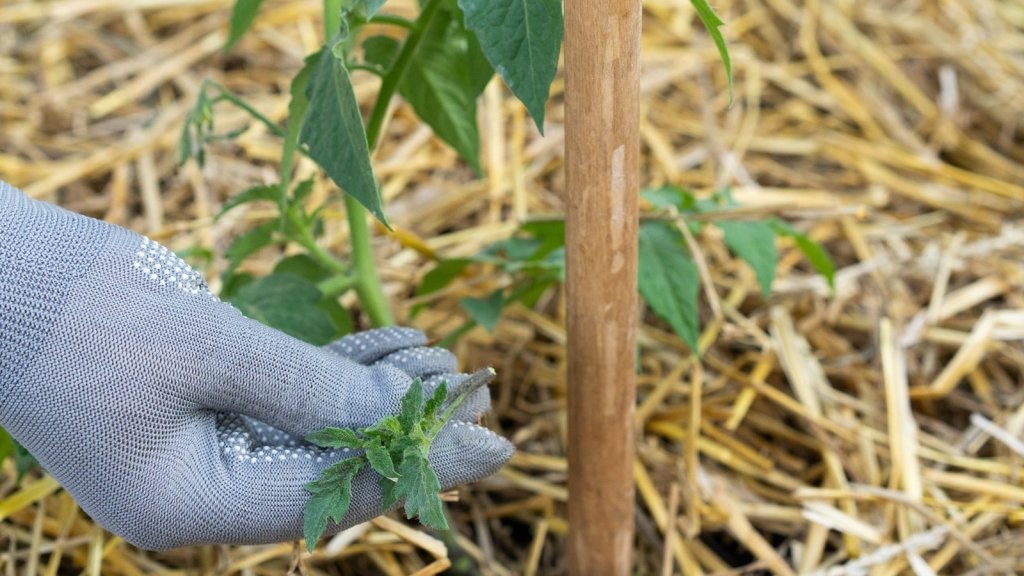
The short version: For vegetable beds, choose a soft, quick-rotting, nitrogen-rich mulch such as pea straw, lucerne or sugarcane and lay it 5 to 8 cm deep, keeping it clear of stems. Save wood chips and bark for paths, perennials and fruit trees, or put a thin layer of compost or manure under them so they do not rob the soil of nitrogen. Coarse mulch saves water; very fine mulch can actually lose more than bare soil. Mulch onto moist soil in mild weather, not onto cold spring soil or on a scorching day. Before you buy, ask two questions: could this straw, hay or manure carry herbicide residue, and could it carry weed seed. And wear a mask and gloves when you open the bag.
Mulch is the cheapest improvement most vegetable gardens can make, and one of the easiest to get slightly wrong. The right material in the right place saves water, smothers weeds, steadies soil temperature and feeds the soil as it breaks down. The wrong material, or the right one laid badly, starves seedlings, hides slugs and occasionally poisons a bed. This guide sorts the options.

What mulch actually does
A layer over the soil surface slows evaporation, shades out germinating weeds, softens the impact of rain so the surface does not crust, and buffers the soil against heat and cold. Organic mulches also feed the soil life as they rot, and over a few seasons turn a thin sandy or heavy clay bed into something darker and more crumbly. The numbers are striking: in a trial by Sustainable Gardening Australia and Yates, 25 mm of chunky mulch with particles over 5 mm cut evaporation to about 40 percent of bare soil over 13 days. The surprise was the fine mulch, mostly particles under 2 mm, which increased evaporation to about 110 percent of bare soil and soaked up well over four times as much irrigation water before any reached the soil. Texture, in other words, matters as much as depth.
The mulches, and where each belongs
- Pea straw is the vegetable gardener's default: light, easy to spread, nitrogen rich because peas fix it, and quick to rot into the soil. It needs topping up two or three times a season and can carry pea seed, which is easily pulled.
- Lucerne is the richest of the straws, high in nitrogen and potassium, and breaks down fast, so it doubles as a feed for hungry crops. It costs more. First-cut bales are commonly said to carry more weed seed than later cuts, so ask for second or third cut where you can.
- Sugarcane mulch is cheap, bulky, usually sold as seed free and easy to lay. It rots more slowly than pea straw and is said to encourage earthworms. A good all-rounder for large beds.
- Other straw and hay work if you know where they came from. Straw, the dry stalk left after grain harvest, generally carries less weed seed than hay, which is cut pasture and often seeds before cutting. Both can carry herbicide residue, covered below.
- Wood chips and bark last a year or more, look tidy and suit paths, perennials, fruit trees and ornamental beds. On annual vegetable beds they cause nitrogen drawdown unless handled as described below, and coloured or treated chips have no place near food.
- Leaves are free and excellent once shredded with a mower or rotted for a year into leaf mould. Whole leaves mat and shed water.
- Compost is the best mulch of all for soil, if it is fully mature; unfinished compost robs nitrogen and can burn stems. Its fine texture does nothing to slow evaporation and can even increase it, so cover it with straw.
- Grass clippings add nitrogen but should go on in thin layers, dried first, and only from lawns that have not been sprayed for weeds; thick wet clippings turn into a slimy, smelly mat.
- Pebbles and gravel suit paths, pots of Mediterranean herbs and beds that are never dug. They work down into vegetable soil and wreck carrot beds.
- Living mulch, such as thyme or a low green manure between rows, covers soil without a bale in sight and suits perennial beds better than annual ones.

How deep, and how to lay it
By particle size, coarse mulch with pieces over about 5 mm can go on thickly, 6 to 8 cm, while very fine mulch should stay thinner or be blended with coarser material to avoid waterlogging and a rotting surface. By weight, heavier materials such as gravel, bark and wood chips are usually kept to about 5 cm, while the light, fibrous straws and lucerne used on vegetable beds can go to 8 cm, thinner over seedlings and thicker over established crops and bare winter beds. Water the soil well before mulching, lay the mulch, then water lightly again to settle it so it does not blow away. Keep it a few centimetres clear of stems and trunks: mulch piled against a soft stem holds moisture there and invites collar rot. Do not mulch a freshly sown bed; wait until seedlings are up and a few centimetres tall, then tuck the mulch around them.
When to mulch
The best time is mild, actively growing weather, mid spring or mid autumn, onto soil that is already moist. Mulching too early in spring keeps the soil cold and slows heat-loving crops such as tomatoes, capsicum and beans, so in cool districts let the sun warm the bed first. Mulching on a scorching day seals the heat in. And in a wet winter, pull the mulch back a little from lettuce and other rot-prone crops so their crowns can dry.
Nitrogen drawdown, and how to avoid it
Woody materials such as wood chips, bark, sawdust and fresh prunings contain several hundred times more carbon than nitrogen. The microbes that break them down need nitrogen to do it, and they take it from the soil surface, which is exactly where seedling roots live. The result is stunted growth and pale, yellowing leaves. The fix is simple: on vegetable beds use a nitrogen-rich mulch such as lucerne or pea straw instead, or if you want the longevity of wood chips, lay 1 to 2 cm of well-rotted manure, a scattering of pelletised chicken manure or rich compost on the soil first and put the chips on top. That buffer feeds the microbes so the soil is left alone. Aged chips that have sat in a heap for several months to a year cause far less trouble than fresh ones, and drawdown is a surface effect, so established trees and shrubs are generally unaffected.

Two things to check before you buy
Herbicide residue. A group of long-lived hormone herbicides used on pasture and grain crops, including aminopyralid, clopyralid and picloram, passes through grazing animals largely intact and survives commercial composting. Straw, hay, manure and bought compost can all carry them into a garden, and sensitive vegetables such as peas, beans, tomatoes, spinach and lettuce show cupped, twisted, curling new growth and poor germination at tiny concentrations. Sustainable Gardening Australia has documented Australian home garden cases. Buy from a supplier who can tell you the spray history, or from a certified organic source, or make your own compost. If new growth curls and cups after mulching, stop using the material and do not compost it.
Weed seed. Hay and first-cut lucerne can sow a bed with grass and clover. Sugarcane and pea straw are the safest, and any straw of unknown origin is worth a look for seed heads before it goes on.
Safety around mulch
Bagged potting mix, compost and mulch can carry Legionella longbeachae, a bacterium that causes a form of Legionnaires' disease when inhaled; New South Wales recorded at least 96 cases in 2022, one of them fatal. Put on a mask and gloves before opening a bag, open it away from your face, dampen the contents, work in a ventilated space and wash your hands afterwards. Fine, dry organic mulches such as pine bark, pine needles and fine chips are highly flammable, so in bushfire-prone areas keep them well away from the house and use pebbles or gravel against walls, decks and under-floor spaces. Keep any mulch clear of house walls anyway, because mulch banked against a wall makes termite activity harder to spot.

Mulching across Australia's climate zones
- Tropical (Cairns and far north Queensland, Darwin and the Top End of the Northern Territory, the Kimberley in Western Australia): mulch breaks down in weeks, so top up often, use coarser materials in the wet season and keep it well clear of stems to limit rot.
- Subtropical (Brisbane and coastal Queensland, Coffs Harbour and northern New South Wales): sugarcane is local and cheap. Mulch thickly for summer and thin it back over winter crops that dislike damp crowns.
- Arid and semi-arid (inland Queensland, Broken Hill and Dubbo in New South Wales, Mildura in Victoria, inland South Australia and Western Australia, Alice Springs in the Northern Territory): mulch is not optional. Lay it deep, top it up before summer, and use it on pots as well as beds.
- Temperate (Sydney and New South Wales, Melbourne and Victoria): mulch in mid spring once the soil has warmed and again in autumn. Pea straw and lucerne suit the vegetable beds; chips suit the paths.
- Mediterranean (Perth and southern Western Australia, Adelaide and the Adelaide Plains in South Australia): the dry summer makes a coarse mulch essential from November, and sandy soils benefit most from mulches that rot into organic matter.
- Cool and alpine (Hobart and Tasmania, Canberra and the ACT, Ballarat in Victoria, Orange and Armidale on the New South Wales tablelands, and the alpine country of the Snowy Mountains and the Victorian high country): hold off in spring until the soil is warm, then mulch for summer; a late-autumn mulch insulates root crops and garlic through winter.
In every zone, moist soil under the mulch is the point, so water first.
Frequently asked questions
What is the best mulch for vegetables?
Pea straw, lucerne or sugarcane, 5 to 8 cm deep, clear of stems. Lucerne where you want to feed, sugarcane where you want to cover a lot of ground cheaply.
Can I use wood chips on the vegetable patch?
On paths, yes. On beds, only over a layer of manure or compost, and preferably aged chips, or you will see yellow, stunted seedlings from nitrogen drawdown.
Does mulch attract slugs and snails?
It gives them somewhere to hide, so check under it around seedlings, use rough materials near lettuce, and keep mulch back from the stems of young plants.
Why did my beans and tomatoes twist and curl after I mulched?
Suspect herbicide residue in the straw, hay or manure. Remove the mulch, do not compost it, and ask the supplier about spray history before buying again.
Choose a soft, clean, nitrogen-rich mulch for the vegetables, lay it on moist soil in mild weather, and the bed needs less water, less weeding and less feeding for the rest of the season. Sustainable Gardening Australia's mulch trial and buying guide is the best Australian reference on the subject.
Related growing guides
- Getting on top of weeds: organic strategies that actually work
- Water-wise gardening: getting more from every drop in a dry climate
- Sandy, clay or loam? Understanding and improving your soil type
Mulch the bed, then fill it: browse our vegetable seeds, herb seeds and heirloom seeds.