
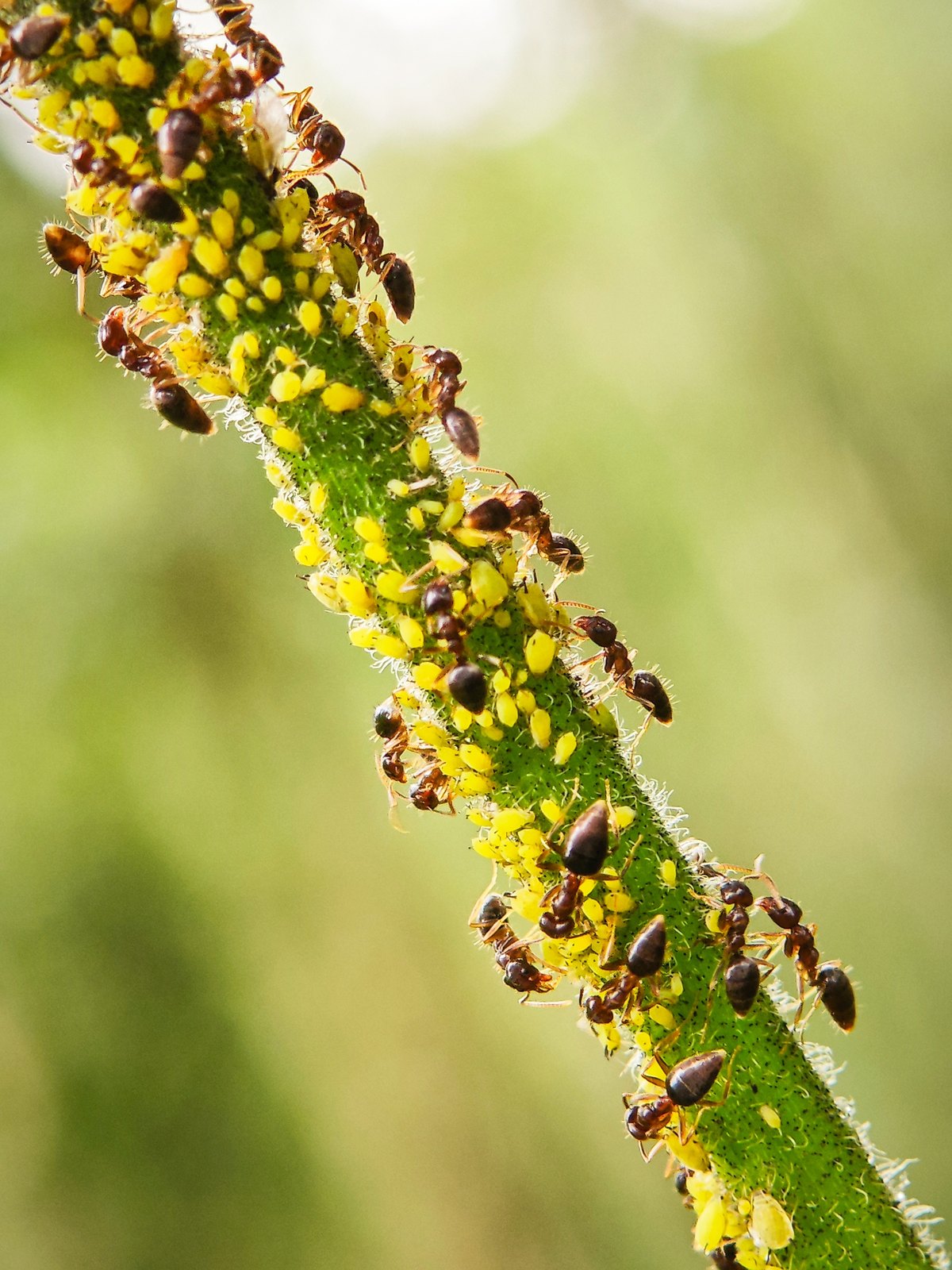
The short version: Most ants in a vegetable garden are native and genuinely useful, turning the soil, clearing away dead matter and eating other pests. They become a problem mainly when they farm sap-sucking insects such as aphids and scale for their sugary honeydew, and chase off the ladybirds that would otherwise keep those pests down. Deal with the sap-suckers, put a sticky band around the stems to keep ants off, and leave the rest of the colony alone. Fire ants are a separate and serious case, so never treat those yourself.
Ants are the pest gardeners most often worry about for the wrong reasons. A line of them running up a bean stem looks like trouble, yet the ants themselves are rarely the ones doing the damage.
It helps to know which ants matter, what they are actually doing on your plants, and when to simply let them get on with their work.
Friend far more often than foe
Australia has more than 1,275 described native ant species, and the great majority of the ants in a home garden are natives going quietly about their business. They aerate the soil as they tunnel, prey on other insects and grubs, clean up dead matter, spread seeds, and feed birds, reptiles and other wildlife.
A scattering of ants foraging across a bed or nesting in dry ground is not a problem to be solved. The trouble is specific, and it comes down to their appetite for honeydew.
Why ants and sap-suckers go together
Aphids, scale, mealybugs and whitefly all excrete a sugary waste called honeydew as they feed. Ants love it, and they will tend and protect those colonies to keep the supply flowing, driving off the ladybirds, lacewings and parasitic wasps that would normally eat the pests. A small aphid outbreak that predators would have cleaned up can turn into a heavy one under ant protection.
That honeydew also grows a black surface fungus called sooty mould, which coats leaves and slows the plant down. On top of this, ants sometimes nest in pots and raised beds, where their tunnelling dries out the mix around the roots, and they will carry off freshly sown seed. So the damage is mostly indirect, which is exactly why reaching for an ant spray so often fails to fix anything. The Sustainable Gardening Australia guide to ants and aphids explains the partnership well.
How to manage ants organically
The aim is not to wipe ants out, which is neither possible nor desirable, but to break the honeydew link and protect vulnerable plants.
- Remove the food source first. Hose or wipe off the aphids, scale or mealybugs the ants are tending, treat them with horticultural oil or soap, and the ants lose their reason to climb the plant. Our notes on aphids, scale and mealybugs cover this in detail.
- Band the stems. A short band of horticultural glue or sticky material around a stem or trunk, applied to a wrap or collar rather than straight onto thin young bark, stops ants reaching the colony and lets the predators back in.
- Keep beds moist and mulched. Ants prefer to nest in dry, disturbed soil, so steady watering and a layer of mulch make a bed less inviting and reduce plant stress at the same time.
- Use food-grade diatomaceous earth sparingly. It works only while dry, so reapply after rain or watering, and keep it off open flowers to protect bees.
Some gardeners flush ants from a pot by standing it in water until the bubbles stop and then draining it, and a well-placed borax and sugar bait in an enclosed station away from edibles, pets and children can knock back a persistent indoor-nesting colony. Borax is toxic if swallowed and harms soil in quantity, so use it only in a sealed station and only if you must. Avoid blanket-spraying a broad-spectrum insecticide, which kills the ladybirds and bees along with the ants and usually leaves you with more aphids than you started with.
When ants are a biosecurity problem
One group of ants is not an ordinary garden nuisance. Red imported fire ants (Solenopsis invicta) are a notifiable biosecurity pest, aggressive, and capable of a painful sting. They build loose, crumbly mounds with no obvious entry hole and swarm rapidly when disturbed.
Do not dig, spray or treat a suspected fire ant nest yourself, because disturbing it can help the colony spread. Report it instead. In Queensland, contact the National Fire Ant Eradication Program on 13 22 68 (132 ANT) or through fireants.org.au, which also carries the live biosecurity zone map. In other states and territories, call the Exotic Plant Pest Hotline on 1800 084 881. Several other invasive tramp ants, such as yellow crazy ants and electric ants in the tropical north, are reportable in the same way.
How to keep ant trouble down
- Watch new growth and seedlings for the sap-suckers that draw ants in, and act while numbers are low.
- Grow flowers among the vegetables to bring in the ladybirds, lacewings and hoverflies that keep aphids and scale in check.
- Keep pots and beds evenly watered so the mix does not dry into ideal nesting ground.
- Clean up spilt seed and fallen fruit that give ants an easy meal.
Ants across Australia's climate zones
Ants are everywhere, but which ones matter shifts with the region.
- Tropical (far north Queensland, the Northern Territory Top End): high ant activity for most of the year, and the zone where several invasive tramp ants are reportable.
- Subtropical (south-east Queensland, northern New South Wales): the front line for red imported fire ants, so stay alert and report suspect mounds.
- Arid and semi-arid (inland areas such as Alice Springs in the Northern Territory and Broken Hill in New South Wales): native seed-harvesting ants are ecologically important here, though dry soils also favour nesting in beds.
- Temperate (New South Wales, Victoria and the ACT, including Sydney, Melbourne and Canberra): spring and summer honeydew farming is the main issue, and the introduced Argentine ant is established in cooler pockets.
- Mediterranean (Perth and southern Western Australia, and Adelaide in South Australia): hot dry summers push ants into beds and homes, and the Argentine ant is a notable local pest.
- Cool and alpine (Tasmania, alpine Victoria and New South Wales): a shorter season and lower pressure overall, though the Argentine ant occurs in cooler parts of Tasmania.
Frequently asked questions
Are ants bad for the garden?
Mostly no. Native ants aerate soil, eat other pests and recycle dead matter. Act only when they are farming sap-suckers on your plants, or when you suspect an invasive species such as fire ants.
How do I stop ants farming aphids?
Treat the aphids or scale the ants are tending, then put a sticky band around the stem so the ants cannot get back up. With the ants gone, ladybirds and lacewings usually clean up the rest.
There are ants nesting in my pot. What do I do?
Stand the pot in water until the bubbles stop to flush them out, keep the mix evenly moist afterwards, and repot into fresh mix if the colony keeps returning.
Do ants damage plants directly?
Rarely to any real extent. Most of the harm is indirect, through the sap-suckers they protect, plus some root disturbance in pots and the odd sown seed carried off.
I think I have found fire ants. What should I do?
Do not disturb or spray the nest. Report it: in Queensland call 13 22 68 (132 ANT) or use fireants.org.au, and elsewhere call the Exotic Plant Pest Hotline on 1800 084 881.
Will an ant spray fix my aphid problem?
Usually not, and a broad-spectrum spray often makes it worse by killing the aphid predators too. Target the aphids and block the ants instead.
Sort out the sap-suckers and keep the ants off the plant, and the rest of the colony can go back to being one of the more useful things living in your soil.
Related growing guides
Ready to plant? Browse our vegetable seeds, and the flower seeds that bring the pest-eaters in.