

Why kale earns a bed
Kale is one of the easiest leafy greens to grow in an Australian garden, and one of the most generous: half a dozen plants sown in autumn will keep a household in greens through winter and into spring.
A cup of raw kale supplies more than a full day of vitamin K and around 40 percent of the daily vitamin C for an adult. It also contains manganese, calcium, copper, magnesium and potassium, along with a range of B vitamins including B6 and folate. Because kale is high in vitamin K, people taking blood thinning medication are usually advised to keep their intake steady rather than change it suddenly, and to check with their doctor.

When to sow kale, zone by zone
Kale is a cool season brassica. It grows through the cooler half of the year, sweetens after a frost, and runs to seed once the heat arrives, so the sowing window is the thing to get right. These months follow the Happy Valley Seeds sowing calendar.
- Cool and alpine (Tasmania, Canberra, and the tablelands and alpine districts of NSW and Victoria): sow Feb to early Apr, and again in Sep.
- Temperate (coastal NSW and southern Victoria, including Sydney, Melbourne and Newcastle): sow Feb to Apr, plant seedlings out in May, and sow again in Aug.
- Mediterranean (Perth, Adelaide, the south west of WA and the SA gulf country): follow the temperate months, but the dry summer ends the season early, so the Feb to Apr sowing does most of the work.
- Subtropical (south east Queensland up to Bundaberg and the NSW north coast): sow Mar and Apr, with a last sowing in Aug.
- Tropical (the Top End, far north Queensland and the Kimberley): sow in Apr, in the early dry season, and stick to quick growing types.
- Arid and semi-arid (inland NSW, SA, WA, the NT and western Queensland, from Mildura to Alice Springs): sow Mar to May, and again in early Aug.
These are broad groupings, and gardeners between zones should lean on their own local frost dates.
Sowing and growing
Sow about 10mm deep, direct into a bed with compost dug through it, or into punnets to transplant later. Seedlings appear in 5 to 10 days. Thin or plant out to 45 to 60cm apart in full sun, or with afternoon shade in the warmer zones, and keep the water up, because kale that dries out turns tough and bitter.
Pick from the bottom up, taking the oldest leaves at the base first and leaving the growing tip alone. One planting will then feed you for months rather than weeks.
Netting out the cabbage white butterfly
The pest that will beat you is the cabbage white butterfly, whose green caterpillars can strip a plant to the stalks in a week. Fine insect netting over a hoop frame, put on the day you plant and left on, is the most reliable method, and it keeps the diamondback moth and the cabbage aphid out as well. Check under the leaves each week for small yellow eggs, rub them off, and pick off any caterpillars you find. There is more in our guide to cabbage white and diamondback caterpillars.
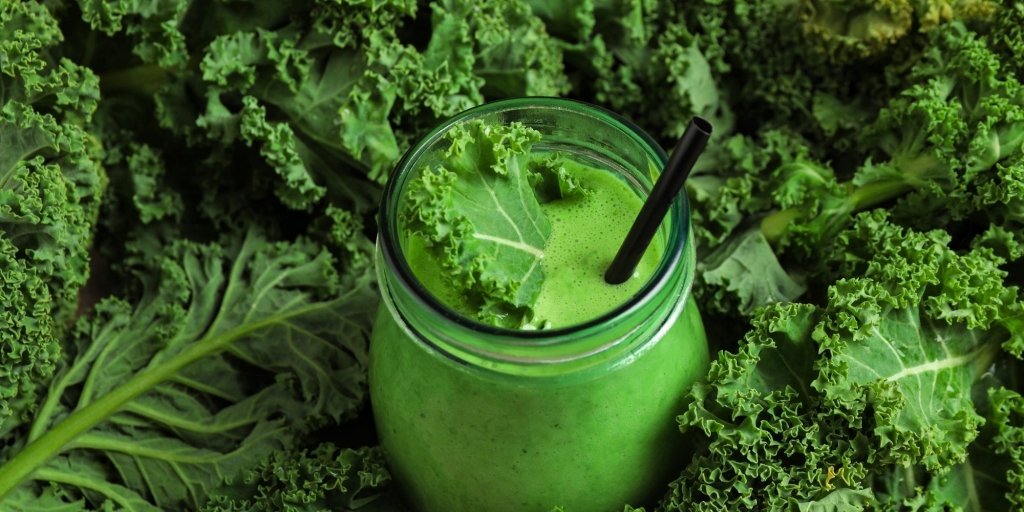
A green smoothie for the harvest
Serves 4, about 1.5 litres.
- 100g kale leaves, thick stems stripped out, roughly 4 large leaves
- 500g frozen fruit of your choice
- 1 to 2 tablespoons chia seeds
- 750ml water, plus a little more if the blender labours
- Optional: the juice of a lemon or lime, and a handful of grapes
Blend on low to break the leaves up, then on high until smooth, about a minute. Drink it fresh, because the colour dulls within an hour or two.

Related growing guides
- Cabbage White and Diamondback Caterpillars: Protecting Your Brassicas
- Cut-and-come-again: months of greens from a single planting
- What to grow in winter: cool-season vegetables across Australia
Ready to plant? Browse our Kale seeds.