
The short version: The one to check in an Australian backyard is lead, and the worst of it sits against the walls of houses painted before 1970. Test, do not guess: GardenSafe is free for Victorians, and everyone else needs a commercial laboratory while Macquarie University's VegeSafe program is suspended. The residential garden guideline for lead is 300 mg/kg, and above it means further investigation, not danger. Meanwhile grow food in pots or raised beds of clean mix, keep soil covered, and wash produce and hands.
Across over 8600 garden soil samples from almost 2000 Australian households, lead was the standout: above the residential guideline in 27 per cent of New South Wales samples, 17 per cent in Victoria and 10 per cent in Queensland. Most other metals exceeded their guideline in under 5 per cent of samples.
What gets into Australian backyard soil
Lead from paint is the main source. The Australian Paint Manufacturers' Federation records that paints with high levels of lead were used on many Australian houses before 1970, and SA Health advises assuming lead paint in any house built before the mid-1970s, especially one built before the 1940s. EPA Victoria puts the rule plainly: if your house was painted before 1970, assume there is lead in the surrounding soil. A newer house is lower risk but not free of it, because SA Health notes that newer houses, sheds and fences can still carry old lead paint.
Lead from petrol has mostly stopped accumulating, since leaded petrol for cars was phased out in Australia in early 2002, but roadside soil on once-busy roads holds what settled before then.
Arsenic and copper come from treated timber and old land uses. The APVMA cancelled copper chrome arsenate in March 2005 for timber people touch often, and restricted the products from 1 July 2012. It kept the treatment for poles, fencing and structural timber, so fence posts and bed edging may still carry it. A state EPA adds old pesticides, hydrocarbons, asbestos debris and imported fill. Cadmium occurs naturally in soil at low levels and is added by phosphate fertiliser.

How to get a real test
Contamination is patchy, the house dripline is usually the worst of it, and a colour test kit reads paint or pH, not metals.
- Victorians: GardenSafe. Free apart from postage, three samples screened for lead, arsenic and garden health, results in six weeks.
- Everyone else: VegeSafe at Macquarie University, when it reopens. A donation from $20 covers samples reported for arsenic, cadmium, chromium, copper, manganese, lead, nickel and zinc, in three to five weeks. As at September 2026 the program is suspended because of a backlog and is not accepting new samples, so check that page before posting anything, and use a laboratory in the meantime.
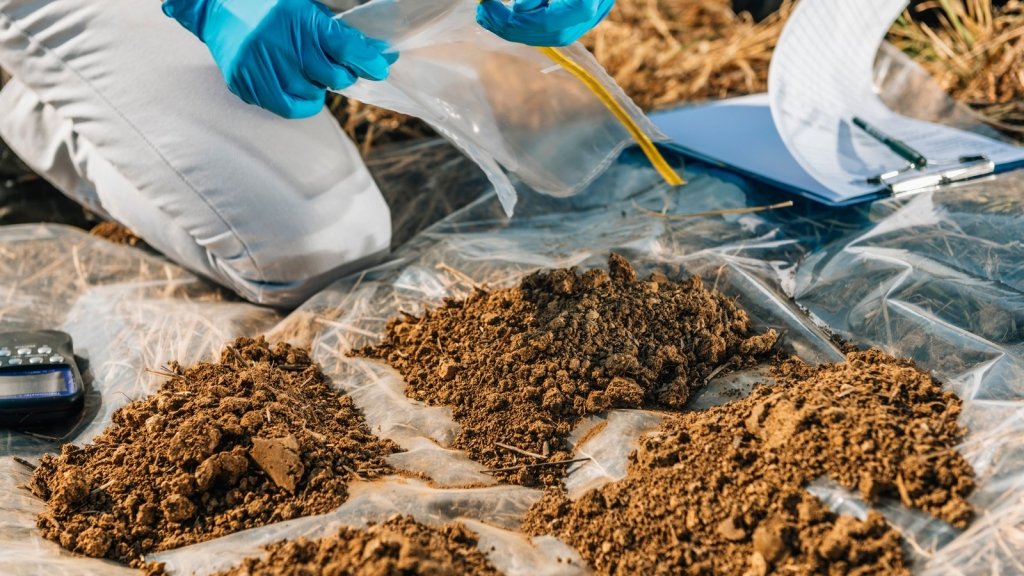
- Sample as asked. VegeSafe wants the upper 2 cm of soil from a 15 cm by 15 cm patch, about 300 g a bag. EPA Victoria asks for soil against painted walls, under roof drip edges, beside driveways, in imported fill, and in the vegetable patch and chook run.
- For a sale or a build, use a consultant or a laboratory accredited by the National Association of Testing Authorities. More accurate and dearer, so get a quote.
Reading the number you get back
Australia has one set of figures, the Health Investigation Levels in the National Environment Protection (Assessment of Site Contamination) Measure. The backyard column is HIL A, residential with garden or accessible soil.
| Contaminant | HIL A, residential with garden (mg/kg) |
|---|---|
| Arsenic | 100 |
| Cadmium | 20 |
| Chromium (VI) | 100 |
| Copper | 6000 |
| Lead | 300 |
| Nickel | 400 |
| Zinc | 7400 |
Two things matter more. The Measure states that exceeding a level means further investigation is required, not that risk is present and clean-up needed. And HIL A assumes what keen gardeners break: home grown produce under 10 per cent of the household's intake, and no poultry. Superseded versions circulate online, so check any figure against the Measure. Screening reports total chromium, while the 100 mg/kg figure is for chromium (VI) alone, so a total chromium result above it is not by itself a breach.
Below it, garden normally. Above it, stop growing edibles in that ground and move to pots or raised beds of clean mix. Well above it, get a consultant in before digging or carting soil.

Crops, chooks and the habits that matter most
EPA Victoria is blunt: handling soil is the main way you meet contamination in your own backyard, and risk from plant uptake is typically low because we eat a variety of foods. Children matter most: Queensland Health notes very young children absorb up to about 50 per cent of swallowed lead, against about 10 per cent in adults, and put more of it in their mouths.
Uptake is not nothing. For cadmium, leaves hold the most, then storage roots and tubers, then seeds and grain, then fleshy fruits, so silverbeet differs from a tomato. Where lead is detected, NSW EPA advice is to grow vegetables in a pot or a raised bed at least 30 cm tall, lined with mesh at the base so the soils do not mix, filled with certified clean soil. Frame it in hardwood, not treated or old painted timber or tyres.
Chickens are the exception. Lead reaches people through eggs from animals reared on contaminated soil, and a hen does all day what the guideline assumes nobody does. A study of 69 backyard chickens in 55 Sydney gardens put the soil lead needed to keep egg lead low well under 300 mg/kg. Where lead is suspected, NSW EPA advice is not to let chickens range on it, so house them on a sealed floor under deep clean litter.
The habits cost nothing. Gloves on, dampen soil before digging on a dry day, shoes off at the door, damp mop rather than dry sweep. Wash hands and faces after gardening and before eating, especially children's, and wash home grown produce. Where soil is affected, put 30 cm of clean soil or mulch over it, stop digging there and top the cover up, and grow ornamentals there rather than food. For beds staying in the ground, EPA Victoria's advice for land with historical mining waste is to hold soil pH between 6 and 7 and keep organic matter up.
Asbestos, and the jobs that are not yours
Asbestos was banned in Australia in 2003, and the Measure notes that bonded asbestos products were a common building material from the mid 1940s until the late 1980s, so a house built before 1990 may well contain it and one built after 1990 is unlikely to. Bonded sheeting in sound condition is best left alone: NSW Health puts living or working around asbestos at low risk to health as long as it is in good condition and not damaged. Soil screening will not detect it, or pesticides.
What you may do varies by state. In New South Wales, more than the equivalent of 10 square metres of non-friable fibro must be removed by a licensed removalist, and one must be engaged if the quantity is uncertain. In the ACT, removal from any premises, home included, is not permitted unless a licensed removalist does it. So do not borrow a method from another state: leave it damp and undisturbed and ring your own work health and safety regulator. Do the same for crumbling or fibrous sheeting, a fuel smell, a buried tank, or land that was a dip, tip, orchard or works. For your own health, see a doctor; your state health department also runs a public health line.
Where to go, across Australia's climate zones
These zones are broad groupings, and gardeners between them can lean on local cues such as first and last frosts. Here the cue is the age of your street.
- Tropical (Darwin in the Northern Territory, Cairns and Townsville in Queensland): sample near pre-1970 painted timber and old fibro sheds, because house age is the best indicator. Queenslanders can search the Environmental Management Register and Contaminated Land Register; Territorians follow NT Health and use VegeSafe when it reopens, or a laboratory accredited by the National Association of Testing Authorities.
- Subtropical (Brisbane and south-east Queensland, the Northern Rivers of New South Wales): cattle dip country. New South Wales lists 1648 dip sites on the far North Coast and the Queensland border, arsenic used until 1955 and DDT until 1962, 29 of them now under houses. In Queensland, cattle dips are a notifiable activity.
- Arid and semi-arid (Broken Hill in New South Wales, Mount Isa in Queensland, Port Augusta in South Australia, Kalgoorlie in Western Australia, Alice Springs in the Northern Territory): SA Health singles out smelting towns such as Broken Hill, Mount Isa and Port Pirie, which run their own screening. Dry, windy weather raises dust exposure from uncovered soil, so covering bare ground earns most here.
- Temperate (Sydney and the New South Wales coast, Melbourne in Victoria): the oldest housing and the highest lead results nationally. New South Wales readers can ring the EPA Environment Line on 131 555; Victorians have GardenSafe and Victoria Unearthed.
- Mediterranean (Perth and the south west of Western Australia, Adelaide and the Fleurieu in South Australia): Western Australians can search the Contaminated Sites Database under the Contaminated Sites Act 2003. South Australians can check the EPA site contamination index.
- Cool and alpine (Tasmania, the Victorian Goldfields around Ballarat and Bendigo, Orange and Armidale in New South Wales, Canberra and the ACT): test for arsenic in the Goldfields, because historical gold processing waste carries arsenic, lead and mercury, arsenic usually highest. Tasmania's EPA has precautionary lead advice for Rosebery, Lutana and parts of Hobart's eastern shore, telling residents to be lead safe in the garden, particularly growing food or keeping poultry. In Canberra, asbestos questions go to WorkSafe ACT, which does not allow householders to remove it themselves.
Frequently asked questions
Can compost or metal-absorbing plants fix contaminated soil?
Not in a home garden timeframe. Organic matter and a near-neutral pH are worth having, but neither removes metals. Australian authorities put covering the soil, replacing it, or growing in clean mix above it.
Is one soil sample enough?
No. Contamination is patchy, which is why the programmes ask for several: beside the house, mid-yard, the vegetable bed and the chook run.
Does the soil get better over time?
Lead does not. EPA Victoria says it remains in the soil and does not go away with time, so test rather than worry.
Most backyards turn out fine, and the rest are fixable with a raised bed, a bag of mulch and a tap by the back door.
Related growing guides
Sow a clean bed with our pot and container vegetable seeds or our wider vegetable seeds.