
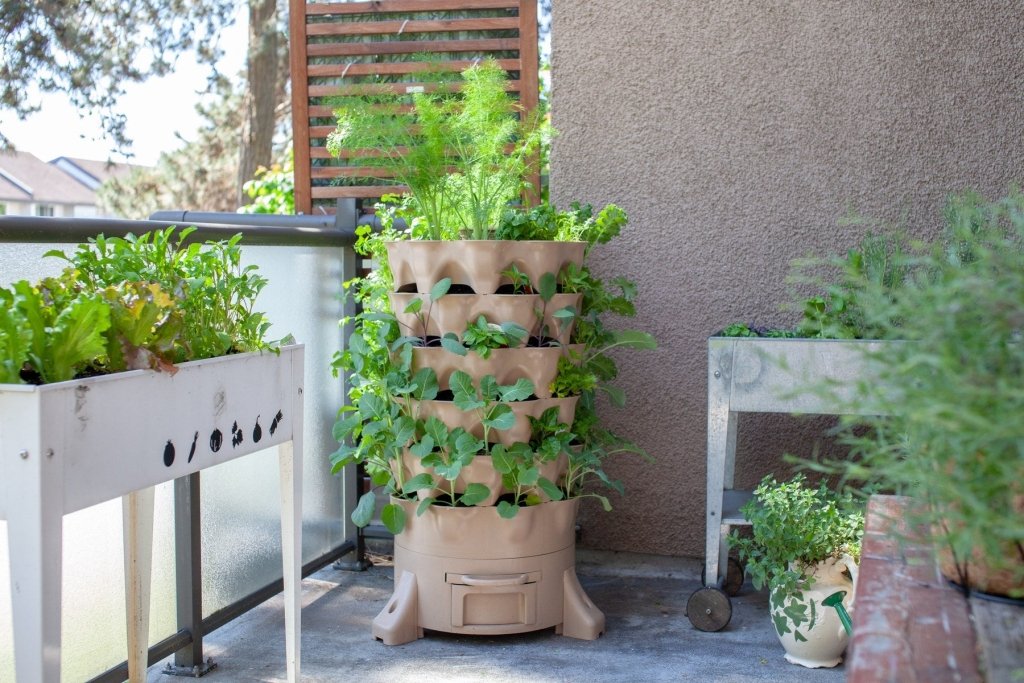
The short version: A small space can crop heavily if you stop thinking in square metres and start thinking in weeks. Lean on cut-and-come-again greens that regrow after picking, sow little and often, train climbers up instead of out, and feed and water pots steadily, since a confined root run runs out of both fast. Give the sunniest corner to the fruiters, and a balcony or courtyard can keep a kitchen in greens, herbs and beans for months.
The honest truth about a small space is that the limit is rarely the floor area. It is treating a balcony like a shrunken paddock: planting one big crop, harvesting it once, then staring at an empty pot for a fortnight.
Get the rhythm right instead, and a few well-run pots can out-pick a neglected back bed. This is not about cramming in plants until they sulk. It is about keeping every container working, week after week, so the harvest keeps coming for longer.

Why a small space can out-produce a big one
A small space wins on attention, not area. Everything is within arm's reach of the kitchen, so you notice the lettuce that needs picking, the basil running to flower, the bean ready before it turns to leather. That close watching is what lifts the yield, and it is the one thing a sprawling, half-forgotten back bed cannot buy.
Four habits do most of the heavy lifting here:
- Pick-and-come-again crops that regrow after each harvest.
- Succession sowing, so something is always coming on.
- Growing up a trellis instead of out across the floor.
- Feeding pots steadily, because a confined root run runs out fast.
Get those humming and the footprint matters far less.
One gentle reframe before we start. Aim for a steady trickle for dinner, not a single glut that buries the bench. A balcony that hands you a handful of greens most nights beats one that delivers a mountain of silverbeet in late summer and nothing after.
Lean on crops that grow back after you pick them
The highest-value crops for a small space are the ones you harvest again and again without replanting. Loose-leaf lettuce, rocket, silverbeet, kale and most loose-leaf Asian greens are cut-and-come-again: pick the outer leaves and the centre keeps pushing out new ones for weeks. One sowing, many dinners.
That is a very different deal from a heading lettuce or a cauliflower, which gives one pick and then sits empty. In a courtyard where every pot counts, a plant that keeps producing is worth two that do not.

Pick little and often and the plants stay tender and productive. Strip a plant bare and you set it back; take a few outer leaves from a few plants and a single pot can keep a salad bowl topped up for weeks. Herbs work the same way: a basil pinched from the top stays bushy, while one left alone bolts and turns bitter. It is worth choosing for this from the start, so browse vegetable seeds and lean towards the leafy croppers that earn their pot.
Sow little and often, and never waste a gap
Succession sowing is the habit that keeps a small space cropping, not just cropping once. Instead of a whole punnet of lettuce in one go, sow a few seeds every couple of weeks, and you get a rolling supply rather than thirty lettuces ready the same Sunday.
Catch crops fill the in-between time. Radishes, rocket and baby leaves are quick, so they slot into a pot waiting on something slower, or tuck in around the ankles of a tall plant while it finds its feet. The aim is simple: never let bare mix sit there sunbaking and doing nothing.
When one crop finishes, top up the mix with a little compost and replant the same day if you can. After a hungry crop like a tomato or a brassica, refresh more of the mix rather than just topping up, since pot soil tires faster than garden soil. A pot left empty for three weeks is three weeks of harvest quietly thrown away. It is the small-space version of leaving the tap running.

Grow up, not out
When the floor is full, the next garden is on the wall. Climbing beans, cucumbers, snow peas and even climbing (indeterminate) cherry tomatoes will go vertical up a trellis, a few stakes, or a string line against a sunny fence, cropping heavily from a tiny patch of floor. The tomatoes need tying in as they go, but the beans and cucumbers more or less climb themselves.
A climbing bean is the standout. It fruits over a long stretch from a pot no wider than a bucket, as long as you keep picking, and the pods sit at eye level where you will actually see them. Cucumbers trained up stay cleaner and straighter than sprawling ones, and free the ground beneath for a catch crop of leaves.
This is where a courtyard starts to feel surprisingly generous. The same square metre that holds one sprawling zucchini can carry a screen of beans, a few pots of greens underneath, and a basket of cherry tomatoes hanging above. You stop gardening on the floor and start gardening in the air.

Feed and water pots like they mean it
Pots cannot fend for themselves the way garden beds can, so steady feeding separates a thriving balcony from a tired one. A confined root run holds only so much, and every watering washes a little nutrition out the drainage holes, so container vegetables need feeding more often than the same plant in the ground. The limited soil and high water throughput in pots deplete nutrients faster than the open ground, which is why Sustainable Gardening Australia recommends feeding container plants more often.
A regular liquid feed keeps leafy crops coming. A fish and seaweed blend or fish emulsion every week or two suits most pot vegetables, with a seaweed solution as a tonic in between rather than the main feed. Ease off for herbs, since hard feeding waters down the oils that give them their flavour.

Watering is the other half of the deal. Small pots dry out and heat up fast, so through an Australian summer they can need a drink every day, sometimes twice on a baking north-facing balcony. A layer of mulch slows that loss and stops the surface setting like concrete. Huddle the pots together and they shade each other's sides and trade a little humidity, which saves a surprising amount of wilting.
Put the right crop in the right corner
Match the crop to the light and a small space punches above its size. Full sun, meaning six or more hours of direct sun, is precious on a balcony, so give the brightest spots to the fruiters: tomatoes, chillies, capsicums and beans, which usually crop poorly in shade.
Save the cooler, part-shaded corners for leaves. Lettuce, rocket, silverbeet, kale and many leafy herbs such as parsley and coriander are happy with less sun, and some, like rocket and coriander, actually last longer out of the harshest light because a little shade slows them bolting to seed. A south-facing courtyard that feels too dim for tomatoes can still turn out a steady run of salad.

Know your aspect before you buy a single seed. A balcony usually faces one way, so in most of Australia a north-facing one runs hot and bright while a south-facing one stays cool and shadier, and that single fact decides what will thrive. An east-facing spot takes gentle morning sun and suits leaves and herbs, while a west-facing one can run as hot as north in the afternoon, so treat it like a sunny corner or give it some shade.
Your zone shifts the detail more than the method:
- Tropical and subtropical (Darwin, Cairns, Brisbane): give pots airflow and watch for humid-weather leaf disease.
- Arid and semi-arid (Alice Springs, Mildura): pots dry out fastest of all, so go bigger, mulch well and group them close.
- Temperate (Sydney, Melbourne, Canberra): lean into the long spring and autumn windows for steady leafy crops.
- Mediterranean, including Perth, southern WA and Adelaide: plan for dry summers, since hot afternoon sun can cook a small pot.
- Cool and alpine (Tasmania, the tablelands): the outdoor pot season is shorter, so keep tender crops against a warm wall or sheltered corner.

The reward for all this is quiet and ongoing: a few leaves for tonight, a handful of beans tomorrow, herbs whenever you cook. Keep one eye on what is finishing and one hand ready to resow, and a balcony or courtyard becomes a real, season-long supply rather than a brief novelty. For one crop that rewards this rhythm beautifully, see our guide to months of greens from a single planting. The space was never the problem. The rhythm was always the point.
Frequently asked questions
Can you really get a worthwhile harvest from a balcony?
Yes, if you grow for value and keep the space working. Cut-and-come-again greens, herbs and climbing beans give you something to pick most days from very little floor area, as a steady trickle rather than one big glut.
What are the best crops for a small space?
Pick-and-come-again leafy greens, herbs, and vertical croppers like climbing beans and cucumbers give the most food per pot, with quick crops such as radishes and rocket to fill the gaps. Match fruiting crops to your sunniest spot and leaves to the shadier corners.
How do I keep harvesting continuously instead of all at once?
Sow little and often rather than everything in one go, harvest a few outer leaves at a time so plants keep producing, and replant a pot the day a crop finishes. That succession habit keeps the supply rolling week to week.
How often should I feed vegetables in pots?
Most pot vegetables do well with a fish emulsion or fish and seaweed blend every week or two, because watering steadily washes nutrients out of the limited mix. A seaweed solution works as a tonic in between rather than the main feed. Ease off for herbs, since heavy feeding can dilute their flavour.
How much sun does a small food garden need?
Fruiting crops like tomatoes, chillies and beans need six or more hours of direct sun, so give them the brightest spot you have. Leafy greens and many herbs cope with less, and some last longer with a little afternoon shade in hot regions.
Do I need to water balcony pots every day in summer?
Often, yes. Small pots dry out and heat up quickly, so through an Australian summer they can need watering daily, and sometimes twice on a hot, exposed balcony. Mulching the surface and grouping pots together slows the loss and reduces wilting.
Related growing guides
- The Best Vegetables and Herbs for Containers (and the Pot Sizes They Need)
- Balcony and Courtyard Veg: What to Grow in Pots in Australia
- Growing Tomatoes in Pots and Containers: The Australian Guide
Ready to plant? Browse our Vegetable Seeds.