
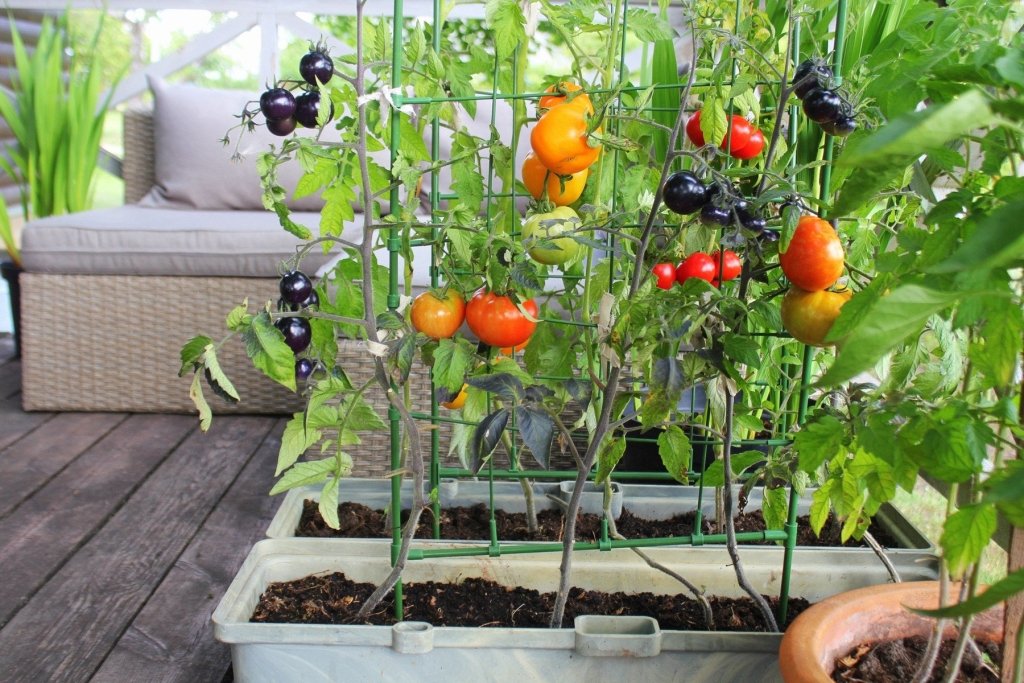
The short version: You can grow plenty of vegetables on a balcony or courtyard in Australia if you start with the spot, not the plant. Read the sun, heat and wind your space gets and what it can carry, then choose compact, fast crops like leafy greens, herbs, chillies and dwarf tomatoes in good potting mix. Skip the sprawlers like pumpkin and space hogs like sweet corn, water often in summer, and you can eat well from a few square metres.
Most people assume you need a backyard to grow food. You do not. A sunny balcony, a hot courtyard corner, even a bright landing can carry a surprising amount of dinner. The trick is to stop thinking like someone with a garden bed and start thinking like someone with a particular spot, with its own sun, heat and quirks. A few light pots rarely raise an issue, though check your lease or building rules before adding heavy tubs.

Start with your spot, not the seed packet
The spot decides far more than the seed, so read your space first. Sunlight matters most, and balconies are deceptive: in Australia a north-facing balcony catches the most sun, a south-facing one in the southern states sits in shade much of the day, and a west-facing one bakes from midday.
Watch a patch over a weekend and note when the sun reaches it and when it slides off. Fruiting crops like tomatoes, chillies and capsicums want six hours or more of direct sun, while leafy greens and softer herbs like parsley and mint manage on three to four. A shadier corner still earns its keep with lettuce, rocket and silverbeet, though basil and thyme want the sunniest spot you have.

Wind is the other quiet killer on balconies, drying pots fast and snapping soft stems, so a sheltered corner helps. A brick courtyard or glass balustrade can also bounce reflected heat back at plants on a hot afternoon.
Where you live shapes the detail:
- Mediterranean Perth, southern WA and Adelaide, and temperate Sydney and Melbourne: a little afternoon shade in summer is a kindness, not a failure. Subtropical and tropical Brisbane, Cairns and Darwin reward room between pots for airflow, and the dry season is easier.
- Arid courtyards in Mildura or Alice Springs dry fastest, so use larger, light-coloured pots and a wetting agent if the mix turns water-repellent. On exposed cool-zone balconies in Ballarat or Orange, frost bites harder, so cover tender pots on cold nights.
One last thing: a balcony has a budget for weight as well as space. Wet pots are heavier than they look, so spread the load, keep the biggest near a wall rather than at the rail, and lean on lighter ones upstairs. If you rent and want a row of half-barrels, a word with the body corporate about the load limit saves a nervous moment later.
Use potting mix, not soil from the yard

It is tempting to fill a pot with soil from the yard, but that is the quickest way to a sad, sodden pot. Garden soil compacts, holds too much water, squeezes out the air roots need, and can smuggle in pests and weed seeds. Reach for a quality potting mix instead.
A good mix is lighter and free-draining, with enough bark and coarse material to keep air moving around the roots. It costs more than a bag of dirt, but it is the difference between plants that sulk and plants that grow. Choose one marked for vegetables and top pots up each season.
Drainage matters just as much: every pot needs holes in the base, and a saucer or tray keeps the run-off off the floor below and the neighbour's washing.
One safety habit worth keeping: potting mix can carry the bacteria behind legionnaires' disease, so open the bag outdoors, dampen it, wear gloves and a mask, and wash your hands afterwards. NSW Health has the precautions.
What to actually grow (and what to skip)
The best balcony crops are the ones you pick at again and again, not those you wait months on. These genuinely earn their pot:
- Leafy greens: lettuce, rocket, silverbeet, spinach and Asian greens such as bok choy and tatsoi. Most are cut-and-come-again, so a shallow trough keeps the salad bowl going.
- Herbs: basil, parsley, coriander, chives, mint and thyme. A pot of herbs by the kitchen door is the highest-value thing on a balcony, but give mint its own pot, since it runs hard and swamps a shared trough.
- Chillies and capsicums: happy in a roomy pot and ornamental when laden with fruit. In mild or frost-free spots they may run more than one season; where frost bites, grow them as annuals.
- Dwarf and bush tomatoes: choose a compact variety bred for containers, not a tall vining type, and one good pot can keep you in cherry tomatoes when the season is kind.
- Spring onions, radishes and bush beans: fast, forgiving and good for filling gaps while the slower pots find their feet.

Some crops are the wrong shape for a small space. Pumpkins and winter squash sprawl for metres, and sweet corn needs a block for proper wind pollination, so a few plants rarely fill out. Deep-rooted parsnips or globe artichokes give a poor return too, so save these for a community garden plot.

Watering and feeding pots through an Australian summer
Pots dry out far faster than garden beds, so in summer you will water more often than feels reasonable, sometimes twice a day for a small pot on a hot balcony. The smaller the pot, the faster it dries, so favour a few larger pots.
The finger test settles it: push one into the mix to the second knuckle, and if it comes up dry, water until it runs from the base. A quick check before work soon becomes second nature. Mulch slows evaporation, and in a heatwave, a shift into afternoon shade often saves the crop.

Watering rules change with the season and where you live, so during dry spells check your local council or state water authority for the current rules.
Feeding is the other half. Frequent watering washes nutrients out, so container crops need feeding more than garden plants do. A regular liquid feed works well: a fish and seaweed blend or seaweed solution suits leafy crops, while fruiting pots such as chillies, capsicums and tomatoes appreciate a potassium-leaning feed such as sulphate of potash. Go easy with herbs, since over-feeding can dilute the oils that give them their flavour.
Start small and let the space tell you what it wants
You do not need to grow everything at once. A pot of salad leaves, a few herbs and one chilli or tomato is a real garden, and it teaches you more about your corner than any guide can, one picking at a time.

When you want more, browse our vegetable seeds for the next pot, and for a fruiting crop our guide to growing tomatoes in pots and containers covers the pot, support and feeding a tomato needs.
Frequently asked questions
What vegetables can you grow in pots on a balcony?
Leafy greens, herbs, chillies, capsicums, dwarf tomatoes, spring onions, radishes and bush beans all grow well. The best are compact plants you pick again and again.
Can you grow vegetables in pots without much sun?
Yes, but your choices narrow. With three to four hours of sun, stick to leafy greens like lettuce and rocket and softer herbs like parsley and mint. Tomatoes and chillies need six hours or more.
Can I use garden soil in pots instead of potting mix?
No. On a balcony especially, weight matters, and garden soil is heavy, packs down and drains badly in a pot. Use a quality potting mix: it is lighter to carry up, holds air around the roots, and will not bring in soil pests.
How often do I need to water vegetables in pots?
More often than a garden bed, and in an Australian summer that can mean daily for small or exposed pots. Water whenever the top few centimetres are dry.
Which vegetables should I not grow in pots?
On a balcony, leave the space hogs to a garden bed. Rambling pumpkins and melons, corn (which needs a block of plants to pollinate) and tall staking crops all struggle in a single pot. Stick to compact, productive picks like salad leaves, herbs, chillies and cherry tomatoes.
Related growing guides
- The Best Vegetables and Herbs for Containers (and the Pot Sizes They Need)
- Small-Space Food Gardening: Big Harvests from a Balcony or Courtyard
- Growing Tomatoes in Pots and Containers: The Australian Guide
Ready to plant? Browse our Vegetable Seeds.