
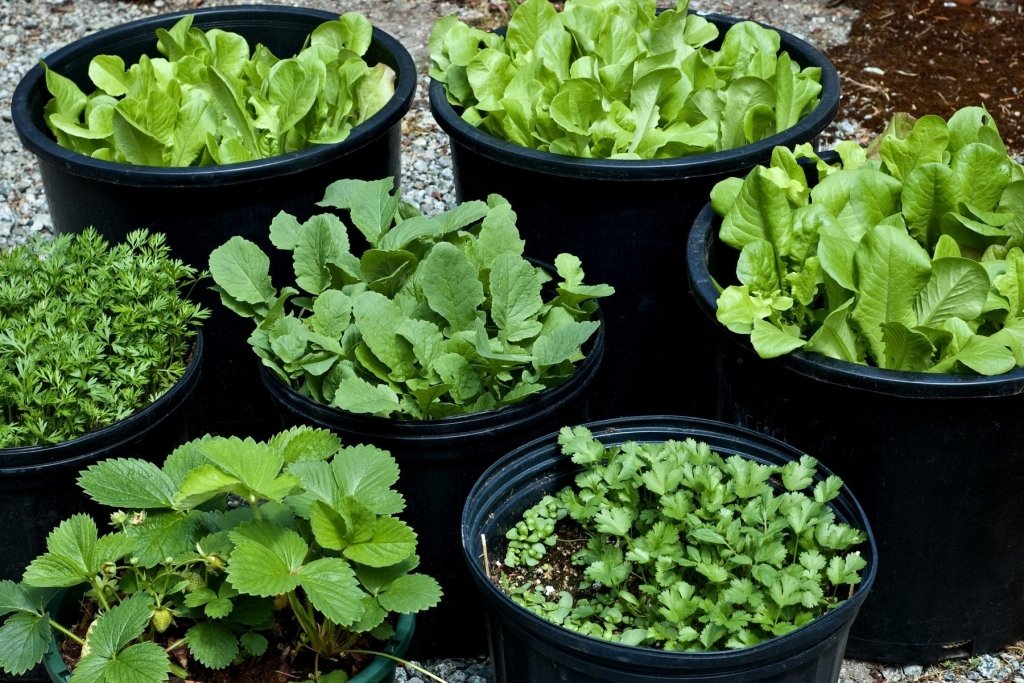
The short version: The best vegetables and herbs for containers are the ones whose roots fit the pot. Most herbs, lettuce, radish and spring onions suit small pots of roughly 5 to 10 litres; bush beans, chillies, silverbeet and compact tomatoes want a medium pot of about 15 to 25 litres; and full-size tomatoes, eggplant, capsicum and potatoes need a deep one of 30 to 40 litres or more. Get the pot right and watering becomes far easier; get it wrong and even a tough plant struggles.
Most container failures are not really about the plant. They are about the pot. A basil that wilts by Tuesday, a tomato that sets two fruit and sulks, a capsicum that never gets going: more often than not the roots ran out of room and water before the crop had a chance.
The good news is that this is one of the easiest things to get right. Most of container vegetable gardening comes down to one decision: you do not need a perfect green thumb, just a pot that suits the crop. So instead of a long list of vegetables, here are the crops worth growing, grouped by the pot size they need.

Why pot size matters more than almost anything else
Pot size decides how much water and food a plant can reach, so it sets the ceiling on everything else. A bigger pot holds more mix, and more mix means more moisture and nutrients in reserve between waterings. A small pot in full summer sun can dry to dust by lunchtime, and a crammed plant is rarely weak, just thirsty and hungry on a fuel tank that is too small.
Two rules carry most of the load. Match the pot to the root depth the crop wants, and when in doubt, go a size up: an oversized pot forgives a missed watering, an undersized one punishes it.
Every pot needs the same two basics, whatever its size: drainage holes in the base, and a quality potting mix rather than soil dug from the yard. Garden soil sets like concrete in a container and drowns the roots.

Small and shallow pots: herbs, salad leaves and quick crops
Small pots of roughly 5 to 10 litres, around 15 to 20 centimetres deep, suit the crops with shallow roots and short, hungry lives. These are the workhorses of a balcony, the pots you raid on the way to the kitchen most nights.
This group includes most of the kitchen herbs and the fast salad crops:
- Herbs: basil, parsley, chives, thyme and oregano. A pot at least 20 centimetres wide and deep keeps them happy, though coriander has a taproot and prefers a slightly deeper one.
- Leafy greens: lettuce, rocket and baby spinach, picked leaf by leaf as cut-and-come-again.
- Radishes and spring onions, which are ready before slower pots have found their feet.
A few herbs break the rules, in opposite directions. Mint runs hard and will swamp a shared trough, so give it a pot of its own and let it sprawl. Rosemary and bay, on the other hand, become small shrubs, so they eventually want a roomier 30 to 40 centimetre pot rather than a little one.
A gentle word on feeding herbs: less is more. Over-feeding pushes soft, watery growth and actually dilutes the oils that give a herb its flavour and scent. A weak seaweed solution now and then is plenty, and you can choose from our herb seeds to fill that first small pot.

Medium pots: bush beans, chillies and compact tomatoes
Medium pots of about 15 to 25 litres, roughly 25 to 30 centimetres deep, open up the crops that carry a bit of fruit but stay compact. This is the sweet spot for a balcony that earns its keep without turning into a jungle.
Good picks for this size include:
- Chillies, which crop happily in a pot of around 20 litres and look the part loaded with fruit.
- Bush beans and silverbeet, both generous and forgiving for the room they take.
- Compact and bush tomatoes, the varieties bred for containers rather than the tall, vining types. One good 15 to 20 litre pot can give a useful run of cherry tomatoes through a kind summer.
The common mistake here is treating a medium pot like a small one. A chilli squeezed into a four-litre pot will flower bravely, set a few small fruit, then stall. Give it the litres and it can keep cropping for months.

Large and deep pots: full-size tomatoes, eggplant, capsicum and potatoes
Large, deep pots of 30 litres or more, ideally 40 centimetres deep and up, are for the heavyweights with big root runs or a long season. These are the pots you commit a corner to for the whole summer, and the ones you will not want to shift once they are full and watered.
Reach for this size for:
- Full-size and tall tomatoes, which want roughly 30 litres or more so the roots can support all that vine and fruit.
- Eggplant and capsicum, which can manage in 20 litres but do best with around 40 litres each for a heavier crop.
- Potatoes, which need real depth so the tubers stay covered as the plant grows. A pot or sturdy bag of at least 40 litres, and ideally 40 to 50 centimetres deep, works well.
- Dwarf cucurbits, the bush-type cucumbers and small zucchini bred for pots rather than the sprawling kinds.
Due to quarantine restrictions and our shipping policy, we cannot send seed potatoes to Western Australia, Tasmania or Kangaroo Island. Gardeners in those areas can still grow plenty from the other groups here.
It is worth saying what to leave out. Pumpkins and full-size winter squash sprawl for metres, and sweet corn needs a block of plants for wind pollination, so neither pays its way in a pot. Save those for a garden bed or a community plot.

The watering and feeding reality, especially in a hot summer
Small pots dry out fast, so in warm weather check them daily, and in a hot, windy or full-sun spot a little pot can need watering twice a day. Potting mix in a container heats and dries far quicker than a garden bed, which is the single biggest reason small pots struggle once the weather turns.
This is where pot size quietly pays you back: the bigger the pot, the larger its water buffer, and the less often you are out there with the watering can on a 38°C afternoon. The finger test settles any doubt. Push one in to the second knuckle, and if it comes up dry, water until it runs from the base.
How hard you work at this depends on where you garden:
- Mediterranean Perth, southern WA and Adelaide, and arid Mildura and Alice Springs: paving and walls bounce reflected heat back at pots, and the mix can turn water-repellent. Larger, light-coloured pots, mulch, a wetting agent and a little afternoon shade all help.
- Humid subtropics and tropics, from Brisbane up to Cairns and Darwin: after a summer storm the risk can swing the other way and pots sit waterlogged, so good drainage and a little space between pots for airflow matter most.
- Temperate Sydney and Melbourne and the cool tablelands around Ballarat and Orange: the watering load eases right off outside high summer, and an exposed pot freezes faster than the ground, so move tender ones against a sun-warmed wall on cold nights.

Feeding is the other half of the bargain. All that watering steadily washes nutrients out of the mix, so container crops get hungry faster than plants in a bed. A regular feed keeps them going. A fish and seaweed blend or seaweed solution suits leafy crops, while fruiting pots like tomatoes, capsicum and chillies appreciate a potassium boost once they flower and fruit, from a liquid potash or a light dressing of sulphate of potash worked into the surface.
One safety habit to keep with any pot, of any size: potting mix can carry Legionella bacteria that can cause Legionnaires' disease, so open the bag outdoors, dampen the mix before you tip it, wear gloves and a mask, and wash your hands afterwards. NSW Health sets out the simple precautions.
Start with a couple of pots and build from there
You do not need the full set on day one. A small pot of herbs, a medium one with a chilli or a bush tomato, and one deep pot if you have the room is a proper container garden, and it teaches you your own corner better than any list can.
When you are ready for the next pot, browse our vegetable seeds and pick a crop to match the size you have. For more on making the most of a small space, our guide to small-space and balcony edible gardens is a good companion to this one. Right pot, right plant, and the rest is far easier to manage.

Frequently asked questions
What vegetables can be planted in pots?
Many vegetables grow well in pots if the container is big enough: lettuce, rocket, spinach, radishes, spring onions, most herbs, bush beans, chillies, capsicums, eggplant, compact tomatoes and even potatoes in a deep pot. The trick is matching each crop to a pot big enough for its roots.
What size pot do I need for tomatoes?
It depends on the type. A compact or bush tomato is happy in about 15 to 20 litres, while a full-size or tall variety wants roughly 30 litres or more. Deeper is better, and a bigger pot needs watering less often.
What is the smallest pot I can use for herbs?
Aim for a pot at least 20 centimetres wide and deep, or roughly 5 litres, for most kitchen herbs. Mint needs its own pot since it spreads, and larger herbs like rosemary and bay eventually want closer to 30 to 40 centimetres.
How often do I need to water vegetables in pots?
More often than a garden bed. In a hot Australian summer that can mean daily, or twice a day for a small pot in full sun, because potting mix heats and dries faster than the ground. Water whenever the top few centimetres are dry.
Can I use garden soil in my pots?
It is best not to. Garden soil compacts in a container, drains poorly, starves the roots of air, and can bring in pests and weed seeds. A quality potting mix is lighter and free-draining, and gives a far better result.
Which vegetables should I not grow in pots?
Skip the sprawlers and space hogs. Pumpkins and full-size winter squash run for metres, and sweet corn needs a block of plants for proper wind pollination, so both do poorly in a single pot. Save those for a garden bed or a community plot.
Related growing guides
- Small-Space Food Gardening: Big Harvests from a Balcony or Courtyard
- Balcony and Courtyard Veg: What to Grow in Pots in Australia
- Growing Tomatoes in Pots and Containers: The Australian Guide
Ready to plant? Browse our Vegetable Seeds.